
Tree Care Services That Keep Your Property Safe and Healthy
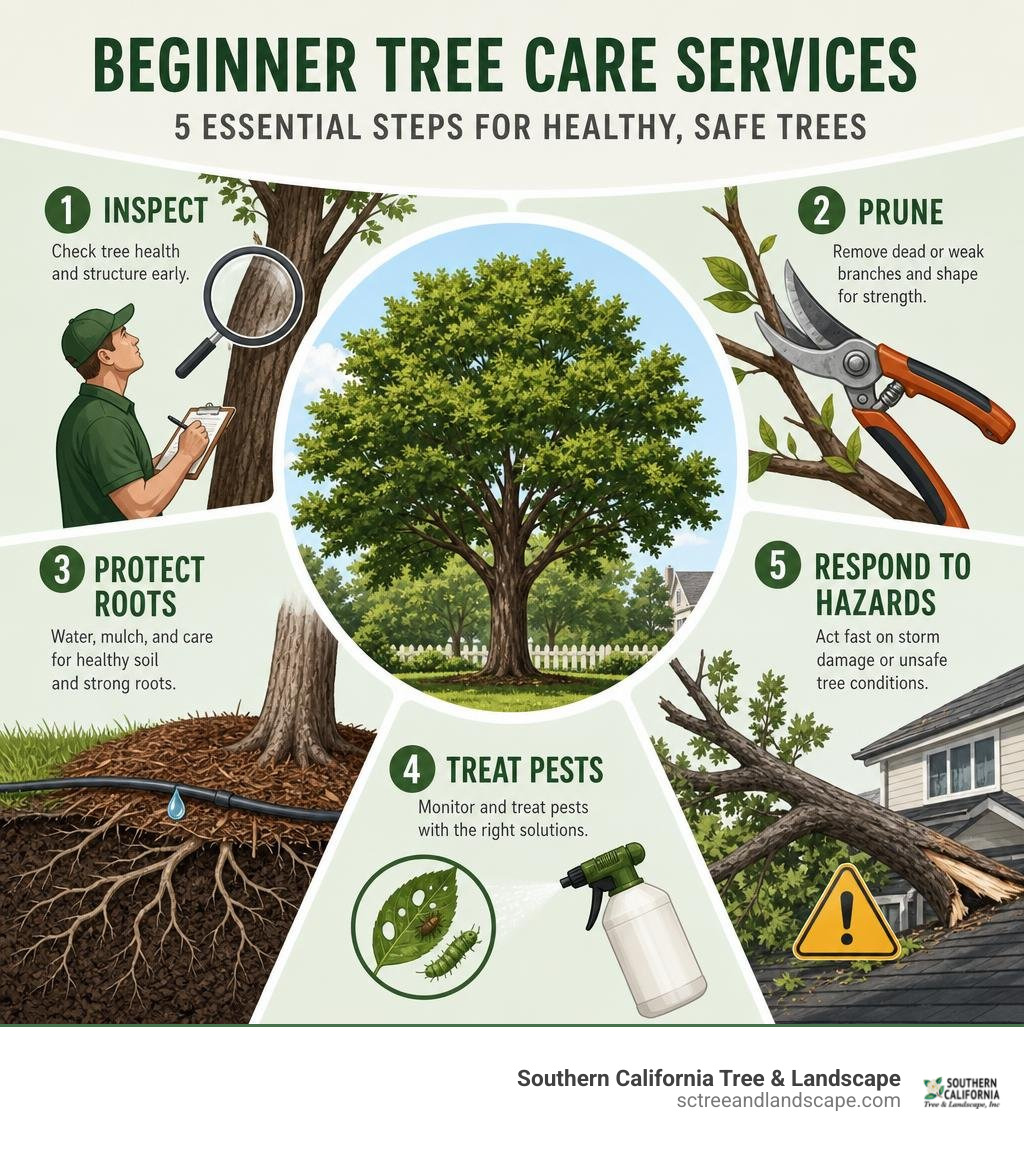
The best tree care services for beginners start with a professional inspection, routine pruning, soil and root care, and fast help when a tree becomes unsafe. For Southern California properties, prioritize these services:
- Tree health and risk inspections to spot decay, pests, weak branches, and root problems early.
- Professional pruning to remove deadwood, improve clearance, and build a stronger canopy without harmful topping.
- Watering, mulch, and soil care to protect roots from heat, drought, and compaction.
- Plant health treatments based on a real diagnosis, not a one-size-fits-all spray.
- Emergency removal and storm cleanup when a damaged tree threatens people, buildings, vehicles, or utilities.
Good tree care protects more than curb appeal. It helps young trees establish, preserves mature shade trees, reduces preventable limb failures, and supports a healthier landscape. The right plan depends on each tree’s species, age, soil, irrigation, location, and condition.
I’m Troy Basmajian, President of Southern California Tree & Landscape, with more than a decade of experience helping residential, commercial, HOA, municipal, and institutional clients manage tree care and landscape needs. Our team focuses on reliable maintenance, responsive service, and practical plans that keep properties safe, healthy, and attractive.
Common tree care vocab:
Essential Tree Care Services for Every Property Owner
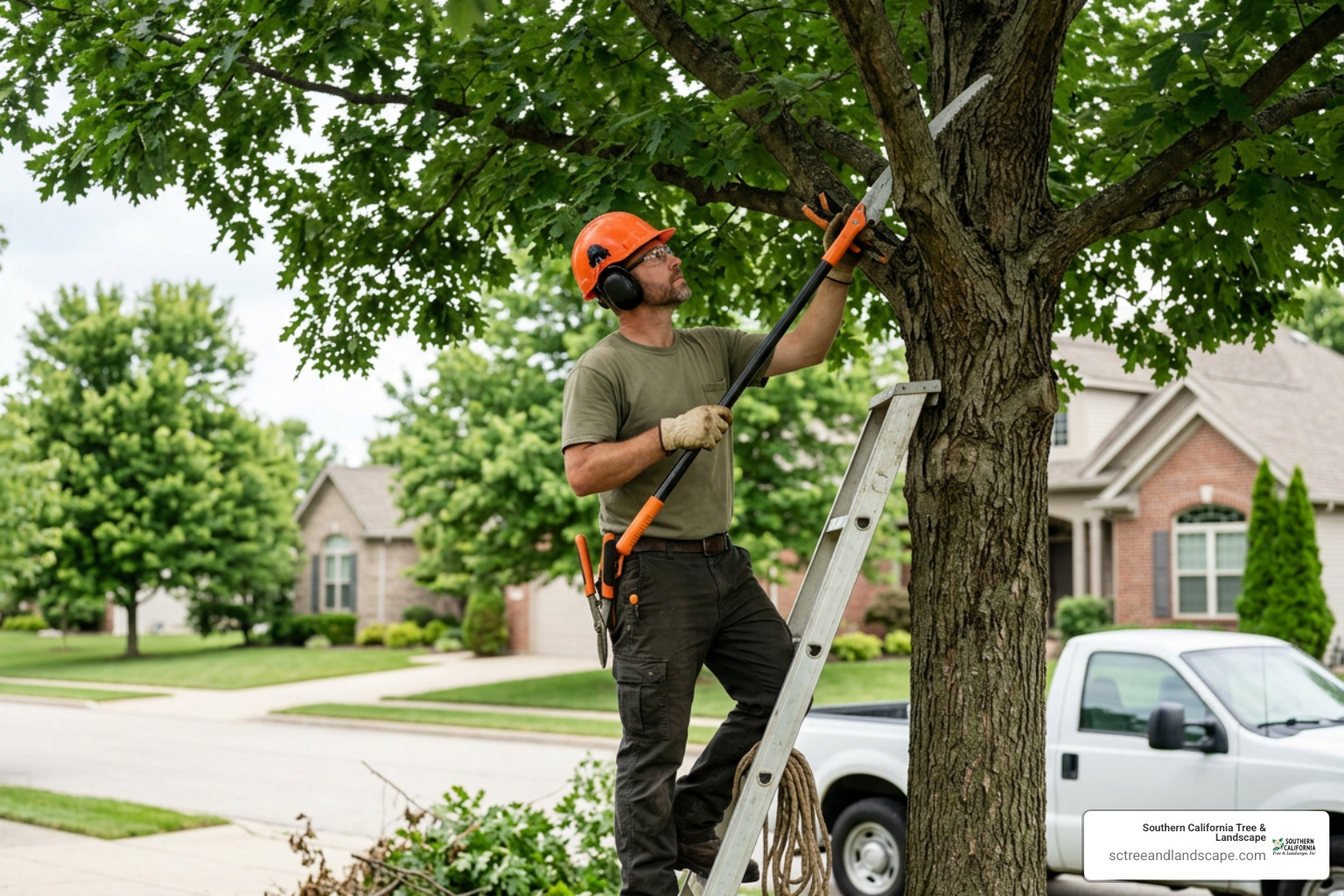
Trees are long-term assets that add beauty, cool our neighborhoods, lower energy bills, and raise property values across Southern California communities like Torrance, Covina, and Harbor City. Yet, many homeowners only think about calling an arborist when a massive branch snaps during high winds or a tree starts dropping leaves out of season.
Understanding basic tree biology makes all the difference. Trees are complex living systems balancing their root systems, trunk stability, and living crown ratio (the percentage of total tree height occupied by live foliage). Adhering to professional industry benchmarks, such as the ANSI A300 standards, ensures every cut, treatment, and soil adjustment supports vitality rather than causing unnecessary stress.
Below is an overview of the core services every property owner should keep on their radar:
| Service Type | Primary Purpose | Recommended Frequency | Best For |
|---|---|---|---|
| Comprehensive Health Inspection | Assess structural stability, trunk integrity, root collar health, and pest activity | Annually or after major storms | All mature and newly established trees |
| Structural & Maintenance Pruning | Remove deadwood, elevate low canopies, thin dense crowns, prevent limb failure | Every 1 to 3 years (species dependent) | Shade trees, fruit trees, street-facing canopies |
| Deep Root Fertilization & Aeration | Alleviate compacted soil, deliver micro/macronutrients directly to feeder roots | 1 to 2 times per year (Spring/Fall) | Trees in turf zones, urban parkways, clay soils |
| Targeted Plant Health Care (PHC) | Treat active fungal, bacterial, or insect infestations; boost natural defenses | As diagnosed (preventative or curative) | Stressed specimens, pest-prone varieties |
| Supplemental Support (Cabling) | Stabilize weak branch unions, co-dominant stems, and heavy lateral limbs | Inspected annually once installed | Mature landmark trees with structural flaws |
| Safe Tree Removal & Stump Grinding | Eliminate dead, dying, or structurally compromised trees and grind below grade | As needed for safety and space clearing | Hazardous, decayed, or unrecoverable trees |
Routine Tree Care and Health Inspections
A routine evaluation by a professional is the cornerstone of proactive landscape management. During a comprehensive assessment, an arborist performs a detailed visual risk evaluation. We examine the entire tree—from the fine tips of the canopy down to where the trunk enters the ground.
Key checkpoints during an inspection include:
- Canopy Density and Leaf Color: Sparse foliage, chlorosis (yellowing leaves), or premature leaf drop often signal vascular stress or nutrient deficiencies.
- Trunk and Bark Integrity: Cracks, peeling bark, bleeding sap, and hollow cavities indicate internal decay or insect boring activity.
- Root Collar Evaluation: Soil or excess mulch piled against the trunk can choke out oxygen and encourage fungal decay right at the base of the tree.
- Structural Defects: Weak V-shaped branch unions, heavy lateral overextension, and deadwood present safety hazards that require attention.
Investing in a regular certified arborist tree inspection provides a clear baseline of your tree’s health, allowing you to catch minor issues before they become expensive hazards.
Professional Pruning and Canopy Management
Pruning is both an art and a science. When performed correctly, pruning directs growth, enhances airflow, lets sunlight reach the interior crown, and reduces wind resistance during seasonal gusts.
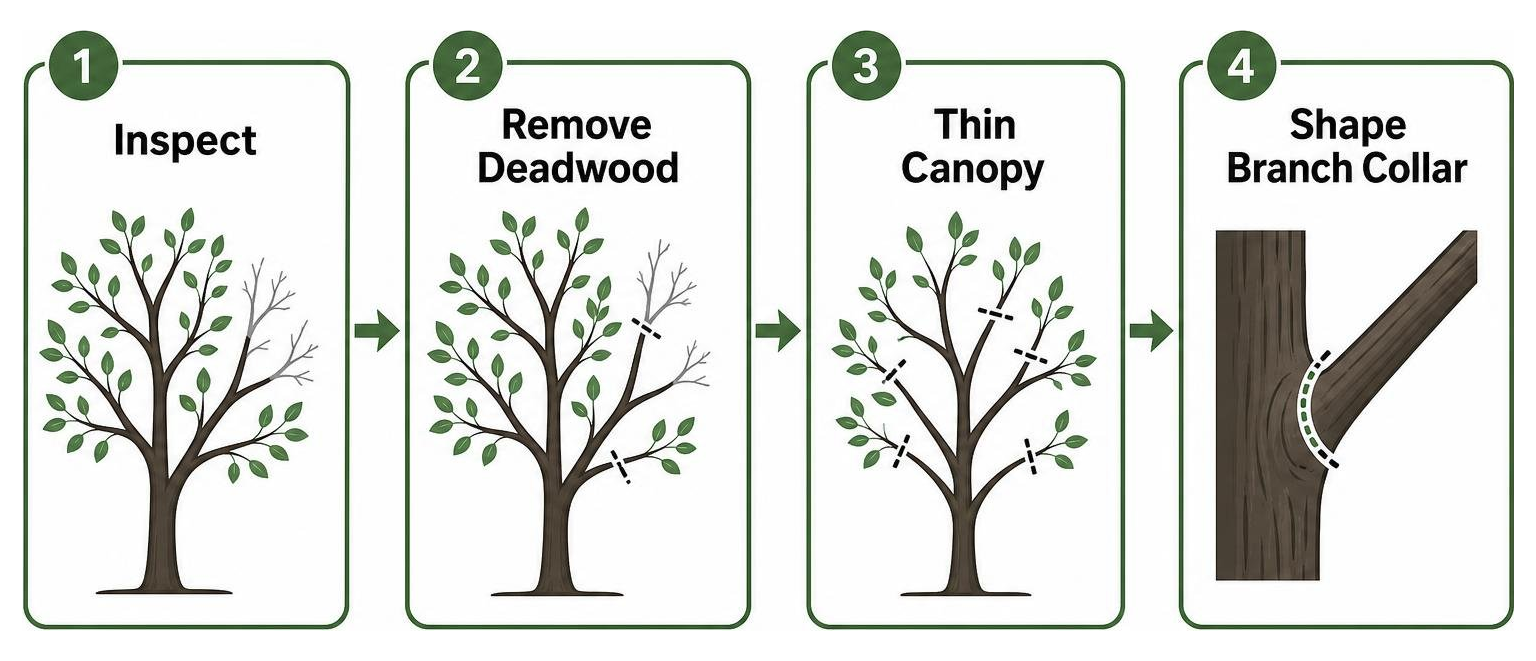
Essential pruning techniques include:
- Deadwood Removal: Cutting away dead, diseased, or dying branches eliminates safety risks and prevents decay organisms from entering the main trunk.
- Structural Pruning: Developing a strong central leader and well-spaced scaffold branches while a tree is young prevents severe structural failure decades later.
- Clearance and Aesthetic Shaping: Lifting low-hanging limbs provides vital clearance over driveways, roofs, and walkways without destroying the natural architecture of the tree.
- Crown Thinning and Reduction: Carefully managing branch density and reducing the overall spread through strategic crown reduction relieves weight on heavy, overextended limbs.
If you are new to maintaining backyard specimens, review our beginners guide to tree trimming to understand proper cutting angles. Always protect the branch collar—the swollen area where a branch joins the trunk—so the tree can naturally compartmentalize the wound.
A critical rule: Never top a tree. “Topping” involves indiscriminately shearing off the upper crown. This creates weak, weakly attached water sprouts, invites wood rot, and severely ruins the tree’s health and appearance.
Soil Health, Root Aeration, and Deep Root Fertilization
A tree is only as healthy as the soil underneath it. In urban and suburban environments throughout Southern California, soils frequently suffer from severe compaction caused by foot traffic, construction, and heavy clay content. When soil particles are packed tightly together, tree roots cannot absorb the oxygen, water, and nutrients they need.
Professional soil care focuses on:
- Root Flare Excavation: Using compressed air tools to carefully blow away excess soil and mulch that has buried the root flare, preventing root rot and uncovering harmful girdling roots.
- Vertical Mulching and Soil Aeration: Drilling small, strategically spaced holes throughout the root zone and backfilling them with porous organic matter to restore airflow and water infiltration.
- Deep Root Injections: Injecting a balanced blend of slow-release macronutrients (nitrogen, phosphorus, potassium) and essential micronutrients (iron, zinc, manganese) directly into the top 6 to 12 inches of soil, right where active feeder roots live.
Consistent root zone nutrition strengthens root volume, improves drought tolerance, and helps trees naturally resist insect attacks.
Plant Health Care and Disease Treatment
Urban trees face an array of biological threats, from microscopic fungal spores to aggressive wood-boring insects. Rather than relying on blanket chemical sprays, modern Plant Health Care (PHC) uses targeted, science-backed solutions to protect trees with minimal environmental impact.
Common health interventions include:
- Systemic Micro-Injections: Delivering liquid treatments directly into the vascular trunk tissue allows the tree to circulate protection internally, treating vascular wilts, fungal leaf spots, and sap-feeding pests quickly.
- Wood-Boring Insect Control: Applying specialized wood boring beetle insecticide protects vulnerable species from bark beetles and flatheaded borers that tunnel beneath the bark.
- Preventative Pest Injections: Treatments utilizing proven active ingredients like emamectin benzoate can achieve up to 99% efficacy against severe wood-boring threats when administered before widespread infestation sets in.
- Disease Eradication: Identifying and curing common tree diseases through soil drenches, horticultural oils, and selective sanitation pruning keeps pathogens from spreading across your yard.
- Plant Growth Regulators (PGRs): Applying soil-applied growth regulators can slow shoot elongation by 40% to 60% over a three-year period. This redirects the tree’s energy into root development, thicker leaf cuticles, and improved drought defense while reducing pruning frequency.
Specialized Support and Seasonal Tree Care Solutions
Not every structural flaw requires cutting down a beloved tree. Many mature shade trees with heavy canopies, multi-stem trunks, or split crotches can be preserved safely using supplemental support systems.
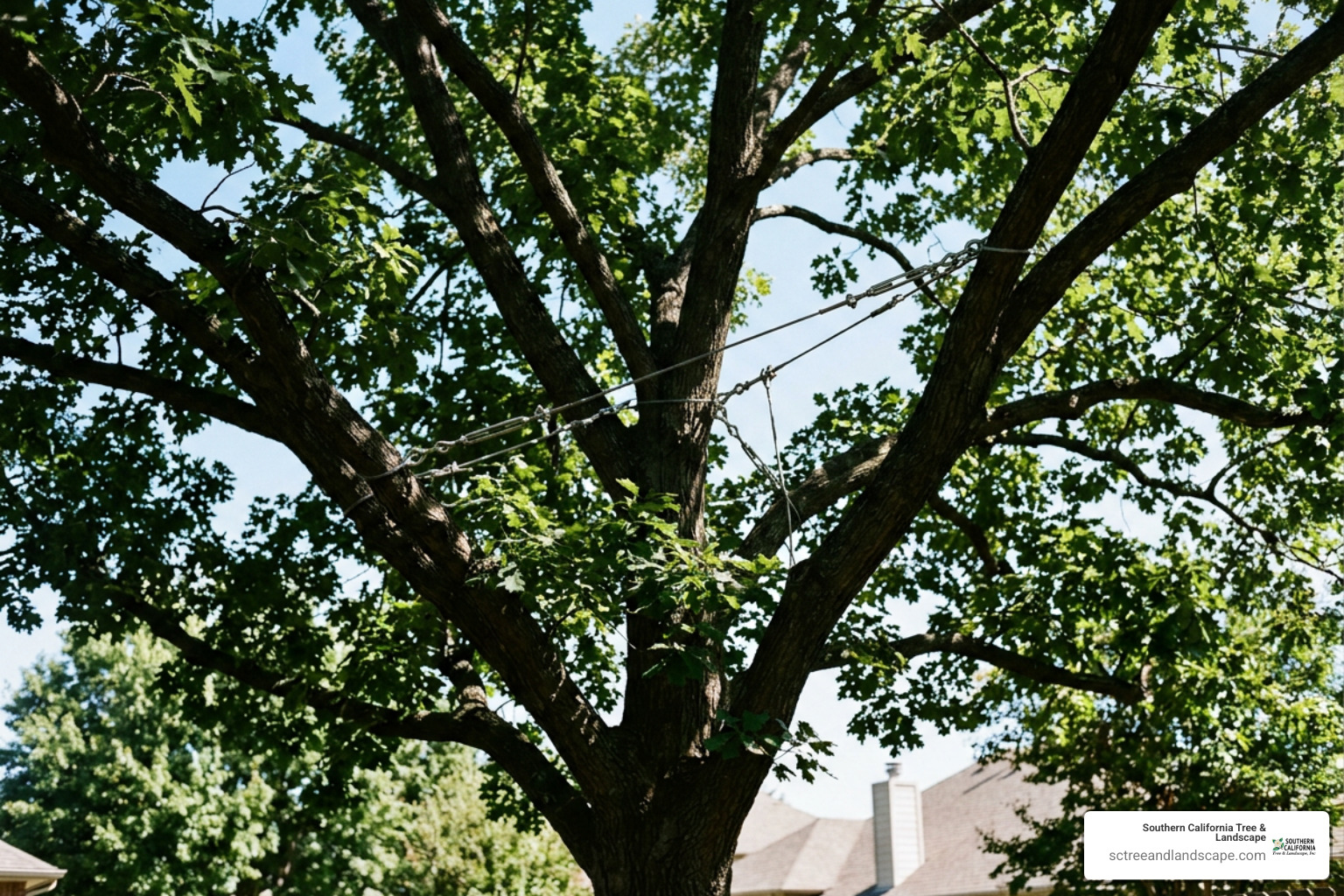
- Flexible Cabling Systems: Installing high-strength steel or synthetic dynamic cobra cables high in the canopy limits excessive branch swaying during storms, significantly reducing the risk of branch failure while allowing natural movement.
- Rigid Bracing Rods: Threaded steel rods installed across split crotches or weak V-shaped unions physically bolt co-dominant stems together, repairing structural cracks and stabilizing heavy limbs.
Seasonal Tree Care and Planting Services
Planting a new tree is an investment in your property’s future, but planting mistakes can haunt a tree for its entire life.
Follow these best practices when planting and establishing new trees:
- Select the Right Species: Choose varieties suited to your USDA hardiness zone, sun exposure, and mature canopy footprint to avoid conflicts with utility lines and structures.
- Dig the Right Hole: Dig the planting hole two to three times wider than the root ball, but no deeper. Keep the root flare slightly above ground level to ensure the roots receive adequate oxygen.
- Apply Doughnut Mulch: Lay a 2- to 4-inch layer of organic wood chips or shredded bark across a 3- to 5-foot radius around the base. Always keep mulch 3 to 4 inches away from the trunk—never pile it up like a volcano. Mulch retains soil moisture, regulates root temperature, and suppresses weed competition.
- Establish Deep Watering Schedules: Provide slow, deep soakings rather than frequent light sprinkler cycles to encourage roots to grow deep into the soil.
Construction Protection and Soil Preservation
Home remodeling, driveway repaving, and utility trenching are among the leading causes of mature tree decline in residential neighborhoods. Heavy machinery easily compacts the soil, crushing delicate root systems, while careless trenching can sever up to 50% of a tree’s anchor roots.
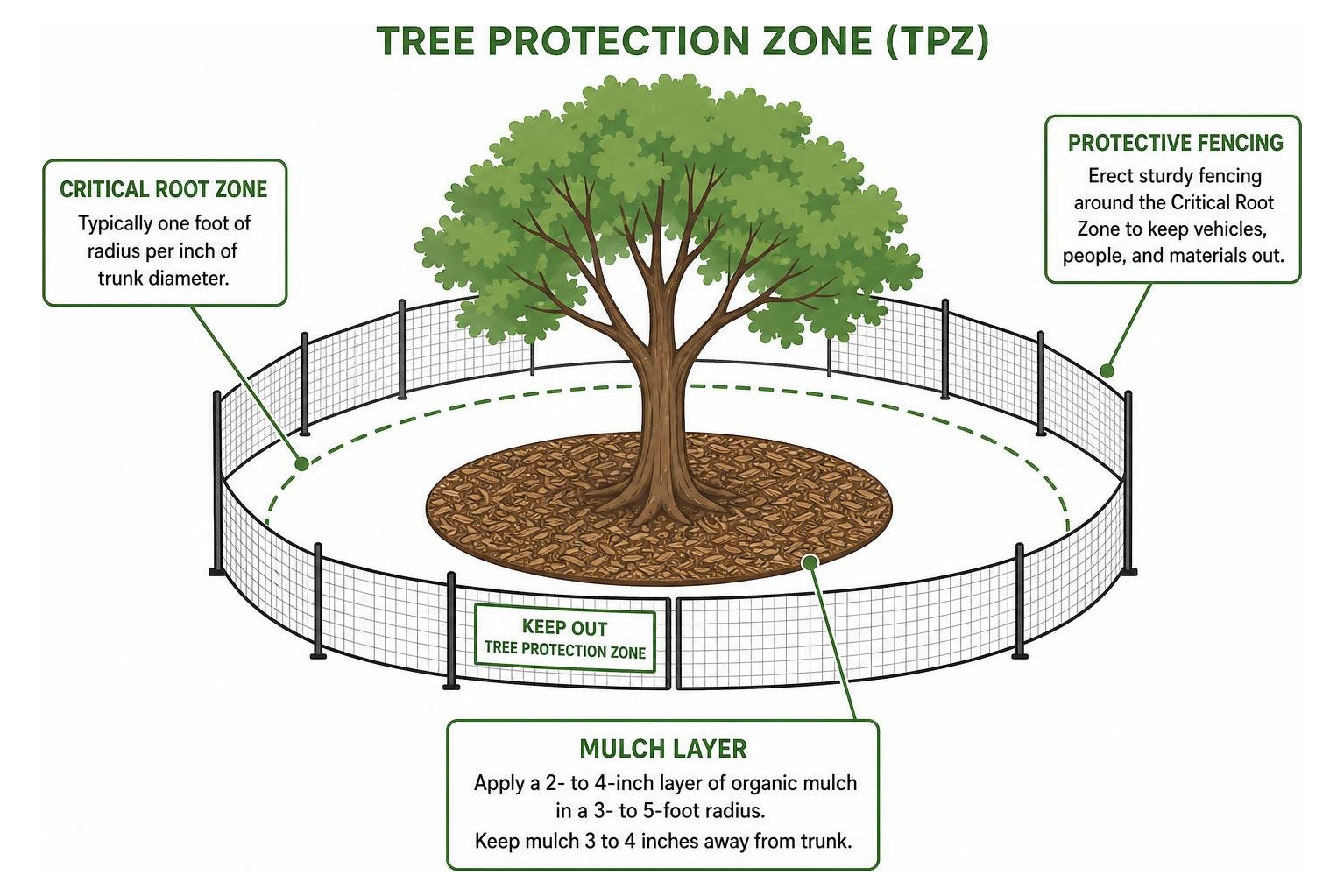
Before beginning any construction project:
- Establish a Tree Protection Zone (TPZ): Erect sturdy protective fencing around the Critical Root Zone (typically one foot of radius per inch of trunk diameter) to keep vehicles and heavy materials away.
- Use Air Spade Root Mapping: Use non-invasive supersonic air tools to expose root locations before digging utility trenches, allowing pipes and conduits to be routed beneath major roots without damaging them.
- Apply Clean Root Pruning: If root cuts are unavoidable, make sharp, clean cuts rather than tearing roots with backhoes, allowing the tree to compartmentalize the damage cleanly.
Hazardous Tree Removal and Emergency Storm Response
While our goal is always preservation, trees that are dead, dying, or structurally unstable pose real risks to people and property. Interestingly, the objective risk of death from a falling tree is extraordinarily low—close to 1 in 10,000,000, which is almost as rare as being struck by lightning. However, falling limbs cause millions of dollars in property and vehicle damage each year.
Safe Hazardous Tree Removal and Stump Grinding
When a tree suffers from severe internal decay, extensive trunk hollows, or root plate failure, safe removal becomes necessary. Removing a large tree in tight urban or suburban spaces requires professional rigging, specialized equipment, and precise execution.
Professional crews use controlled sectional dismantling—carefully lowering heavy branches and trunk sections with ropes and friction brakes to protect nearby roofs, fences, and utility lines.
Once the tree is down, an unsightly stump remains. Opting for a professional stump removal grinding service grinds the root base 6 to 12 inches below grade, eliminating tripping hazards, preventing insect colonization (like termites and carpenter ants), and leaving the area ready for replanting.
24/7 Emergency Storm Damage Cleanup
Severe storms, Santa Ana winds, and unexpected downpours can bring down heavy branches or uproot saturated trees without warning. If a tree falls onto a structure, blocks an access road, or tangles with power lines, never attempt to clear it yourself.
Call for experienced 24 hour emergency tree removal immediately. Trained crews have the cranes, bucket trucks, and rigging gear needed to safely stabilize dangerous limbs, lift fallen trunks off structures, and clear debris quickly.
Frequently Asked Questions About Tree Care
How often should mature trees be inspected by an arborist?
Mature shade trees should receive a professional health and risk assessment at least once every 12 to 24 months. In addition, schedule an inspection following severe storm events or if you notice warning signs such as sudden canopy thinning, mushrooms fruiting near the base, or new cracks along the trunk.
What is the difference between tree trimming and structural pruning?
Tree trimming is typically an aesthetic service focused on shortening overgrown tips, clearing hedge lines, or cutting back foliage. Structural pruning is a specialized arboricultural practice governed by ANSI A300 standards. It strategically removes select branches to establish strong branch architecture, eliminate weak branch unions, improve weight distribution, and increase canopy airflow.
When is tree removal necessary instead of preservation?
Tree removal is recommended when:
- More than 50% of the canopy is dead or declining.
- The main trunk exhibits severe structural hollows or extensive fungal decay.
- Roots are severed, lifting, or failing structurally.
- The tree poses an immediate safety hazard that cannot be resolved with pruning, cabling, or bracing.
Conclusion
Caring for your landscape does not have to be overwhelming. By scheduling regular health inspections, investing in proper structural pruning, protecting your soil, and addressing hazards early, you can enjoy strong, beautiful shade trees that enhance your property for decades to come.
At Southern California Tree & Landscape, we have served residential, commercial, HOA, and municipal clients across Torrance, the South Bay, Covina, Harbor City, and beyond since 1991. Our family-owned company pairs ISA-certified arborists with experienced crews to deliver dependable professional tree service, customized plant health care plans, and responsive emergency service.
Contact our team today to schedule an arborist evaluation and give your trees the expert care they deserve!