
Why So Many Property Owners Are Rethinking Landscaping in Southern California
If you manage a property in Southern California and need reliable landscaping help, here are the most important things to know upfront:
Top landscaping priorities for Southern California properties:
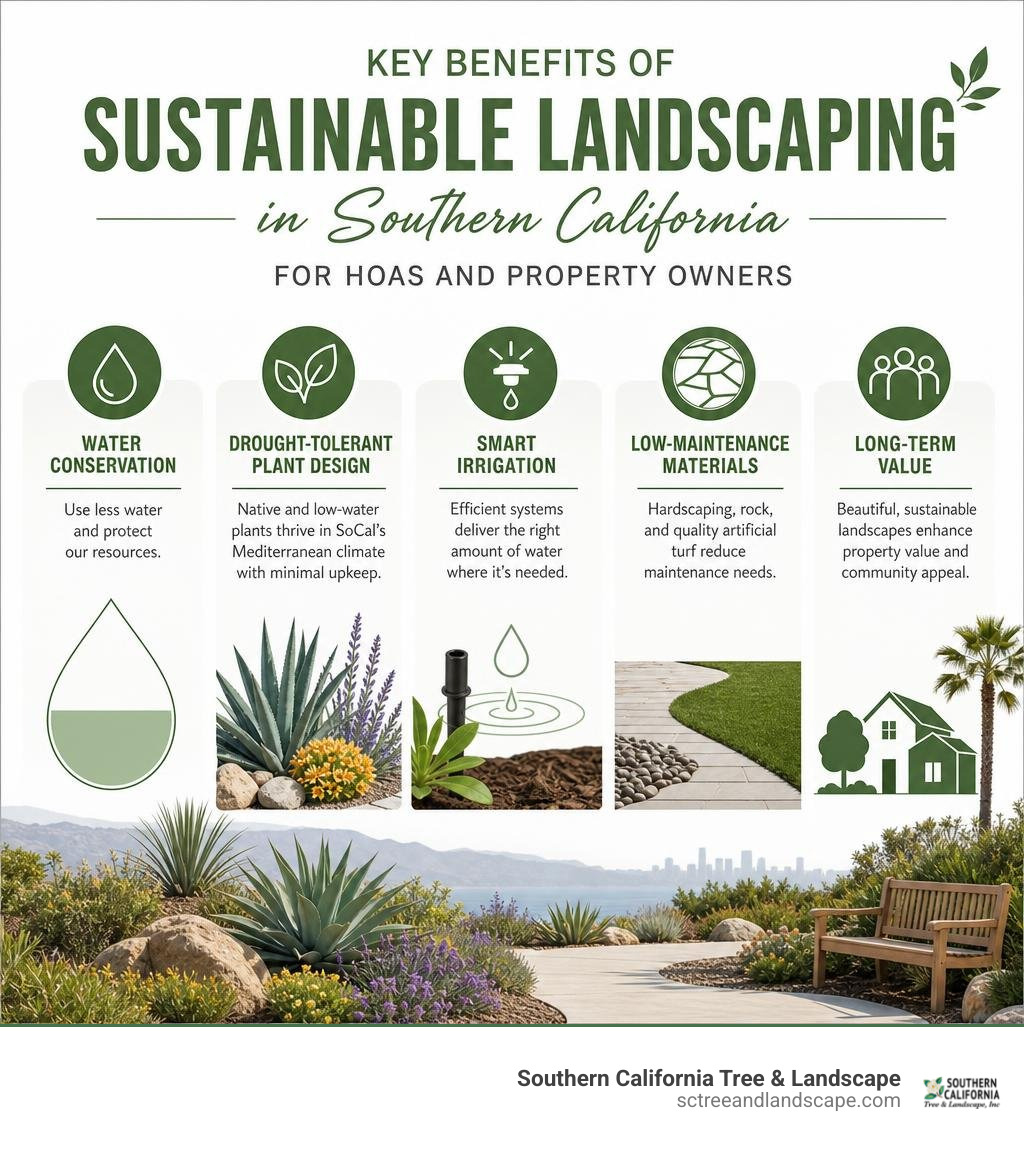
- Water conservation — Traditional lawns use as much water as an entire family uses indoors. Switching to drought-tolerant plants can cut water use by 60% or more.
- Drought-tolerant plant design — Native and low-water plants thrive in SoCal’s Mediterranean climate with minimal upkeep.
- Smart irrigation — Drip systems can save 50%–90% of outdoor water compared to traditional sprinklers.
- Hardscaping and artificial turf — Pavers, decorative rock, and quality artificial turf dramatically reduce maintenance needs.
- Professional installation and maintenance — A licensed C-27 contractor ensures compliant, long-lasting results.
Landscaping in Southern California presents a unique set of challenges and opportunities that most other regions simply don’t face. The climate is mild and dry year-round — which is great for outdoor living — but it also means traditional grass lawns and water-heavy gardens are expensive, unsustainable, and increasingly out of step with local water regulations. For HOA managers and property owners, the stakes are high: an unmaintained or poorly designed landscape means higher water bills, failed inspections, unhappy residents, and emergency repair calls at the worst times.
The good news? Southern California’s Mediterranean climate is perfectly suited for beautiful, low-maintenance landscapes — if they’re designed the right way.
I’m Troy Basmajian, President of Southern California Tree & Landscape, Inc., and over the past decade I’ve helped hundreds of commercial and residential clients across the region navigate landscaping in Southern California — from routine maintenance and irrigation upgrades to full property transformations. In this guide, I’ll walk you through exactly what works.
Sustainable Landscaping in Southern California: Core Principles
When we look at sustainable landscaping in Southern California, we are designing for a climate characterized by mild, dry weather that practically begs us to live outdoors. However, this beautiful weather comes with a catch: water is a precious resource. Designing a sustainable yard isn’t just about surviving the next drought; it is about working in harmony with our local environment.
The foundational principle of climate-smart landscaping is recognizing and designing for specific microclimates. Southern California’s geography is highly varied. If you live in a coastal South Bay neighborhood like Redondo Beach, Hermosa Beach, or Manhattan Beach, your yard experiences cooler temperatures, ocean breezes, and higher humidity. On the other hand, if you are inland in Covina CA, your yard deals with scorching summer heat and cold winter nights.
A plant that thrives in the coastal fog of the South Bay might struggle in the dry heat of Covina. By analyzing your soil type, sun exposure, and wind patterns, we can select plants that naturally thrive in your specific location. This tailored approach is the secret to creating lush yards that don’t rely on constant watering. For practical strategies on making your yard easier to manage, check out our Low Maintenance Garden Tips.
Designing with Native Plants for Landscaping in Southern California
One of the most effective ways to save water and support the environment is by designing with California native plants. When we choose native species, we aren’t just planting greenery; we are rebuilding a connected network of natural habitats across our urban spaces.
Native gardens act as life-giving sanctuaries for local wildlife, birds, and vital pollinators. Using resources like the California Native Plant Society’s Calscape tool, we can pinpoint the exact plant species that have evolved over thousands of years to thrive in your specific zip code.
Some of our absolute favorite native plants for Southern California include:
- Sages (Salvia species): Highly aromatic, drought-tolerant, and covered in purple, blue, or white flowers that hummingbirds and bees adore.
- Buckwheat (Eriogonum species): Incredibly tough plants that produce beautiful pink and white flower clusters that dry to a rich rust color in the summer.
- California Poppies (Eschscholzia californica): The iconic golden-orange state flower that brings instant, cheerful color to sunny borders.
- Yarrow (Achillea millefolium): A versatile, low-water perennial with feathery foliage and flat-topped flower clusters. Fun tip: Yarrow is so resilient that it can actually be mowed and used as a soft, green lawn alternative!
By grouping these plants by their natural plant communities and matching water requirements, we create self-sustaining ecosystems. If you are ready to reimagine your property’s layout, explore our options for Custom Landscape Design.
Adapting Popular Garden Styles to Arid Microclimates
Many homeowners worry that transitioning to a water-wise landscape means sacrificing their personal style. This is a common misconception! Modern landscape design allows us to adapt almost any aesthetic into a low-water masterpiece.
Here is how different garden styles adapt to Southern California conditions:
- California Native: This style celebrates our local flora. It uses relaxed, natural groupings of chaparral and coastal sage scrub plants to mimic the wild beauty of our local canyons and hillsides.
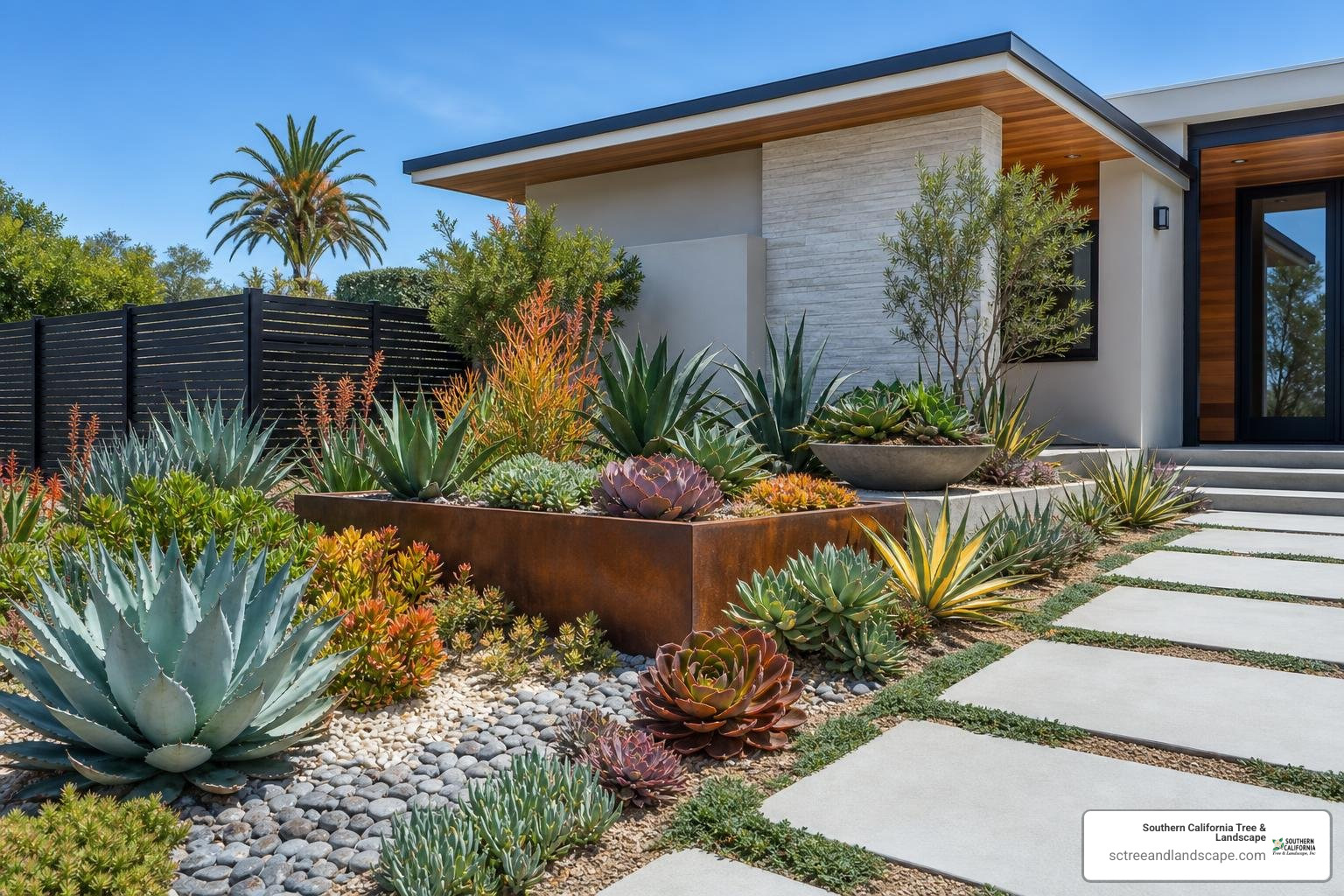
- Modern / Contemporary: Modern designs focus on clean lines, minimal palettes, and striking architectural forms. Succulents, ornamental grasses, and carefully placed boulders are treated like standalone art pieces against clean hardscape backdrops.
- Succulent: Succulents are highly favored by modern homeowners due to their low water requirements, ease of care, and diverse range of forms, textures, and colors. Grouping agaves, dudleyas, and aeoniums creates a vibrant, low-maintenance tapestry.
- Southwest: This style pairs beautifully with Spanish Colonial architecture. It incorporates warm-toned gravel, terra cotta accents, and desert-adapted plants like agave and desert spoon.
- Mediterranean: Interestingly, modern Mediterranean gardens are modeled on water-management solutions evolved over thousands of years, dating back to ancient Egypt and Mesopotamia. They use olive trees, lavender, rosemary, and stone pathways to create romantic, shaded outdoor rooms that naturally conserve water.
Even if you love the lush look of a traditional English garden, you don’t have to give up on your dream. You can learn how to adapt those soft textures using drought-tolerant alternatives in our guide on Cottage Garden Design.
Lawn Replacement: Transforming Turf into Climate-Smart Spaces
If you are looking to make a major impact on your water bill and maintenance schedule, the single best move you can make is replacing your traditional turf lawn. Lawns are incredibly thirsty, often consuming as much water as an entire family uses indoors.
| Landscape Feature | Average Water Requirement (Compared to Turf) | Estimated Annual Upkeep (per 500 sq. ft.) |
|---|---|---|
| Traditional Turf Grass | 100% (Baseline) | $1,200+ (Water, mowing, fertilizer) |
| Drought-Tolerant Native Plants | 30% to 40% (60%+ savings) | $300 – $400 (Occasional pruning) |
| Ground Covers (e.g., Sesleria) | 40% to 60% (40%-60% savings) | $200 – $300 (Minimal weeding) |
| Artificial Turf | 0% (100% savings) | $50 – $100 (Occasional rinsing/brushing) |
Removing grass and replacing it with organic mulch, compost, and climate-appropriate plants completely transforms your soil’s health. Adding high-quality compost helps your soil store more carbon, turning your yard into an active tool for fighting climate change.
Step-by-Step Lawn Conversion and Soil Preparation
Transforming a lawn into a thriving, water-wise garden requires careful preparation. You cannot simply throw mulch over live grass and hope for the best.
To help you visualize the process, here is a diagram of the lawn conversion journey:
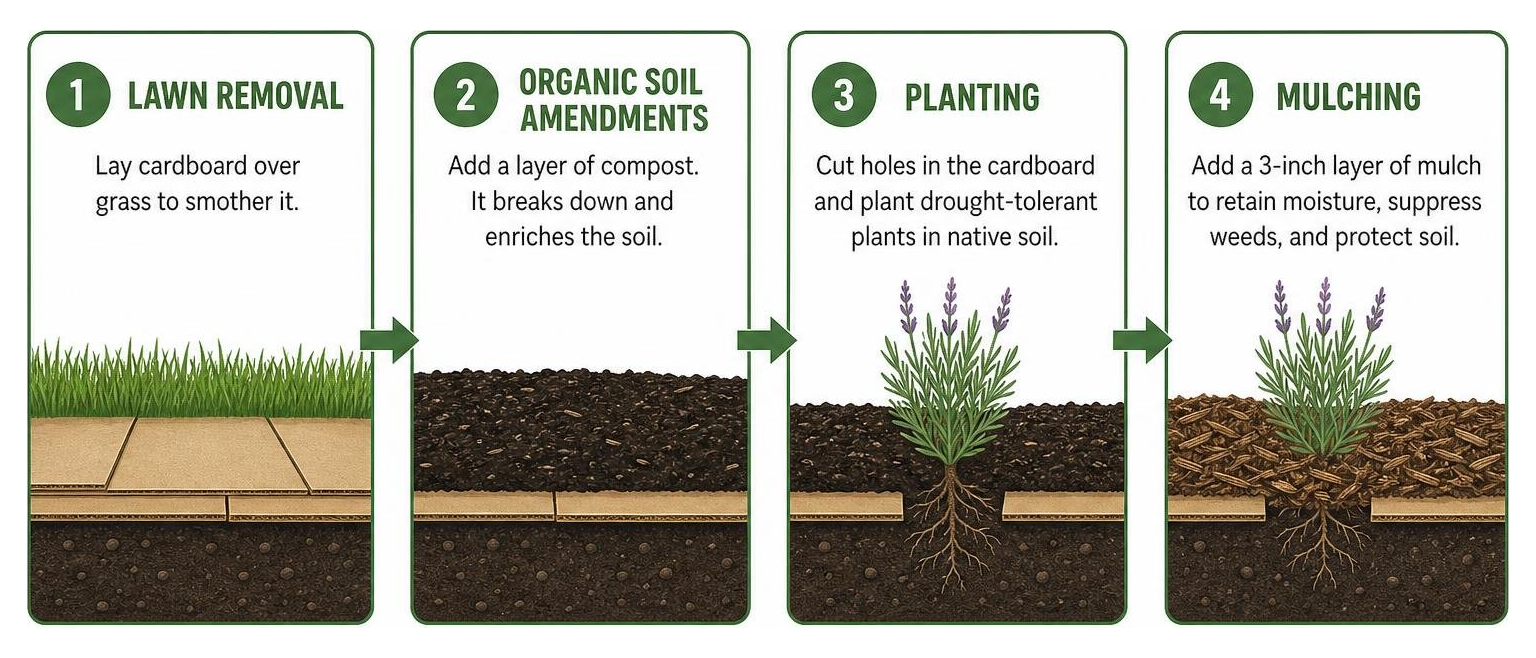
- Lawn Removal: We often use “sheet mulching” (or lasagna gardening) to suffocate the grass naturally without harsh chemicals. This involves laying down layers of cardboard directly over the grass.
- Organic Soil Amendments: We spread a rich layer of organic compost over the cardboard. Over time, the grass and cardboard decompose, returning vital nutrients to the soil and improving its structure.
- Planting: We cut holes through the cardboard layer to plant our new drought-tolerant species directly into the native soil.
- Mulching: We apply a thick, 3-inch layer of organic wood mulch over the entire area. Mulch is like magic—it keeps the soil cool, prevents weeds from sprouting, and drastically reduces water evaporation.
If you are planning a front yard makeover, our Lawn Design Guide provides excellent layouts and structural ideas to get you started.
Integrating Hardscaping and Artificial Turf
To achieve the ultimate low-maintenance balance, we highly recommend blending living plants with non-living elements. This creates a functional, multi-textured yard that looks beautiful 365 days a year.
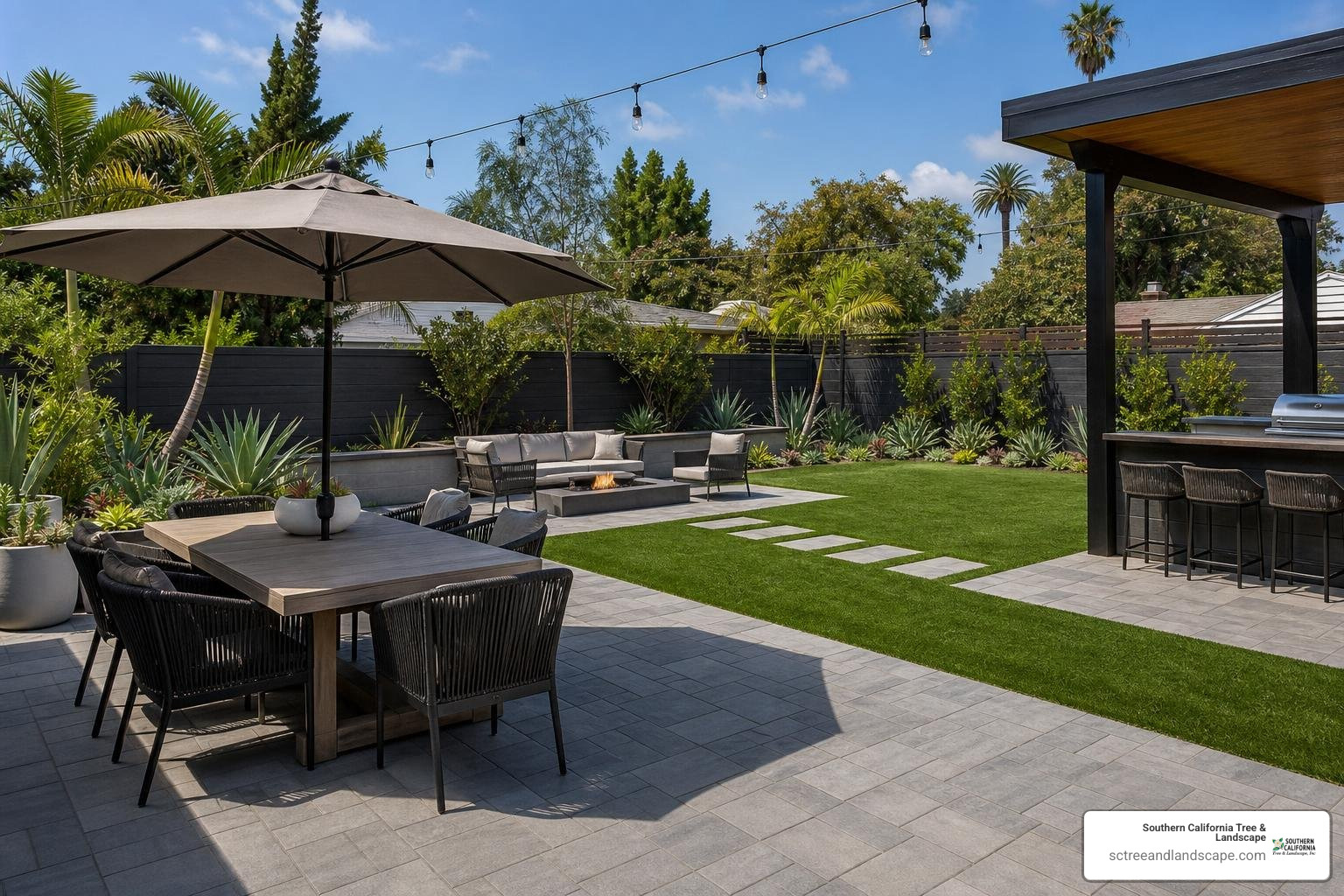
- Hardscaping: Installing concrete pavers, gravel paths, and decorative stone walls creates clear, usable zones in your yard. Large rock boulders add natural height and structural interest.
- Artificial Turf: If you have kids, pets, or simply love the look of a green lawn, high-quality artificial turf is a fantastic alternative. Modern turf is incredibly realistic. It typically lasts between 15 and 20 years and can pay for itself in roughly 6 to 7 years. For a typical 500-square-foot lawn, replacing natural grass with turf eliminates over $1,200 in annual irrigation and mowing costs.
To find the perfect aesthetic balance for your property, read our guide on why your yard needs a Rocks and Plants Balanced Diet.
Smart Water Management: Irrigation and Stormwater Solutions
In Southern California, water efficiency is everything. Simply changing what you plant is only half the battle; you also need to optimize how you water. Upgrading and repairing aging irrigation systems can reduce your property’s water consumption by up to 40%. Learn more about our professional Irrigation Services.
Optimizing Drip Irrigation and Smart Controllers
Traditional spray sprinklers lose a massive amount of water to wind drift and evaporation. By switching to drip irrigation, you apply water directly to the plant’s root zone where it is needed most. Drip irrigation can save 50% to 90% of your outdoor water compared to traditional watering methods.
To maximize these savings, we pair drip systems with smart Wi-Fi irrigation controllers. These controllers automatically adjust watering schedules based on real-time local weather forecasts, ensuring you never waste water during a rare rainy week. If you live in the South Bay, check out our guide on Smart Controllers Torrance to see how these systems pay for themselves.
Designing Rain Gardens for Stormwater Runoff
When winter rains do arrive in Southern California, they often come all at once, leading to heavy runoff and localized flooding. A rain garden is a shallow, beautifully landscaped depression designed to capture and absorb rainwater from roofs, driveways, or sidewalks.
According to water conservation data, a rain garden allows 30% more rainwater to infiltrate the ground instead of turning into dirty street runoff. Planting native grasses and deep-rooted shrubs in these zones filters pollutants naturally and replenishes our local groundwater. For a complete look at how we build these sustainable features, read our Landscape Installation Guide.
Partnering with Local Experts for Your Garden Transformation
Designing and installing a sustainable landscape is a major investment. To protect your property, ensure long-term plant survival, and guarantee compliance with local water regulations, it is critical to work with a licensed professional.
In California, a C-27 Landscape Contractor license is legally required for any major landscape construction. Working with licensed experts means your project is built with proper drainage, safe electrical work for outdoor lighting, and structurally sound hardscaping. If you are looking for local inspiration, you can browse THE BEST 10 LANDSCAPING IN TORRANCE, CA to see what is trending in our area, or stop by the Armstrong Garden Center & Landscape Design Torrance to look at climate-appropriate plant species in person.
Professional Services for Landscaping in Southern California
At Southern California Tree & Landscape, we take a comprehensive, system-first approach to every property. We believe that a successful landscape must balance beauty with rigorous site engineering—addressing soil health, root behavior, and slope stability.
Our experienced crews handle everything from concept to completion:
- Landscape Design & Build: Tailored plant palettes and hardscaping that match your home’s architecture.
- Arborist & Tree Services: Led by our ISA-certified arborists, we provide safe pruning, crown reduction, and health assessments.
- Smart Irrigation: Custom drip design, smart controller programming, and system repairs.
- Commercial & HOA Maintenance: Reliable, ongoing stewardship to keep large properties beautiful and compliant.
For expert guidance tailored to your specific yard, you can connect with our team of Landscape Consultants.
Frequently Asked Questions About Southern California Landscaping
What are the best low-water ground covers to replace grass in SoCal?
Ground covers are fantastic turf alternatives, requiring 40% to 60% less water than traditional grass. Some of the best options for our regional soils include trailing lantana, dwarf carpet nectarine, and versatile meadow grasses like moor grass (Sesleria). For more details on choosing the right ground covers, read our Low Maintenance Garden Tips.
How much water can I save by switching to drip irrigation?
Switching from traditional spray sprinklers to a drip irrigation system can save between 50% and 90% of your outdoor water. Drip systems deliver water slowly and directly to the soil, virtually eliminating evaporation and water waste. To keep your system running at peak efficiency, refer to our easy Drip Repair Guide.
When is the best time of year to plant native species in Southern California?
The absolute best time to plant native species is from fall through early spring (typically late October through March). Planting during these cooler months allows our winter rains to do the heavy lifting of establishing deep, strong root systems before the intense summer heat arrives. This timing drastically reduces transplant stress. For a complete seasonal checklist, check out our Tree & Landscape Guide 2026.
Conclusion
Transforming your property with sustainable landscaping in Southern California is one of the smartest investments you can make. By embracing native plants, smart irrigation, and functional hardscaping, you can cut your water bills, eliminate constant maintenance stress, and build a gorgeous outdoor space that naturally thrives in our beautiful Mediterranean climate.
At Southern California Tree & Landscape, we have been helping local property owners bring their outdoor visions to life since 1991. As a family-owned business based right here in Southern California, we take pride in our deep local knowledge, our experienced crews, and our team of ISA-certified arborists. Whether you need a full backyard remodel in Torrance, regular maintenance in Covina, or emergency tree care in Harbor City, we are here to help.
Ready to start your garden transformation? Explore our full range of professional services on our Services Page and let’s build your personal oasis today!