
Why Low Maintenance Gardening Is Worth Planning for Properly
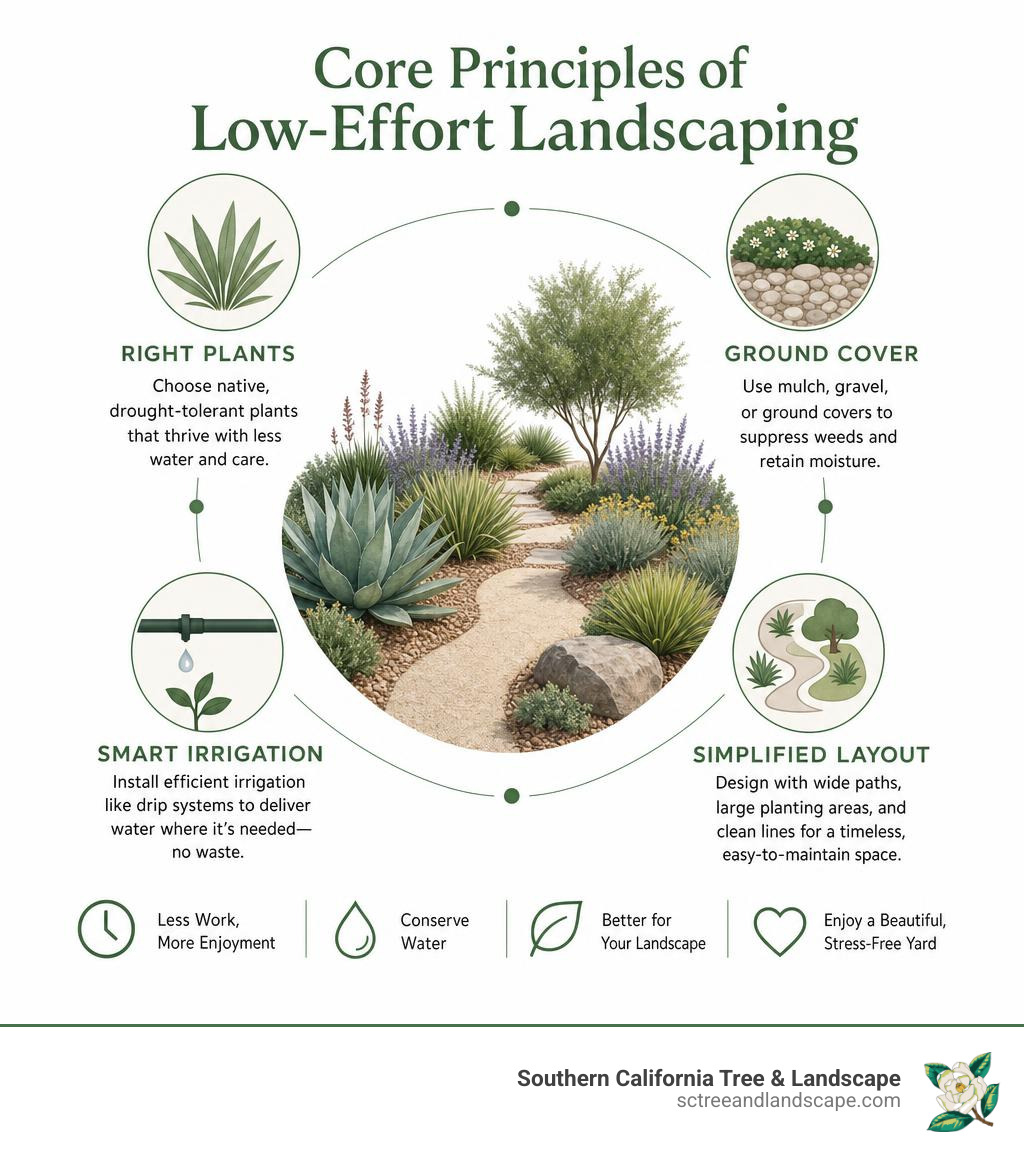
Low maintenance gardening is the art of designing an outdoor space that stays attractive without constant upkeep — less mowing, less watering, less weeding, and more time actually enjoying your yard.
Quick answer: How do you create a low-maintenance garden?
- Replace high-maintenance lawn with gravel, ground covers, or native plantings
- Choose the right plants — natives, ornamental grasses, succulents, and drought-tolerant perennials suited to your local climate
- Use mulch or gravel to suppress weeds and retain soil moisture
- Simplify your layout — wide paths, large beds, and fewer fussy edges
- Install smart irrigation — drip systems or soaker hoses cut watering time dramatically
- Pick perennials over annuals — they come back every year with little intervention
If you manage a property in Southern California, you already know the challenge. Between irrigation repairs, tree care, seasonal cleanups, and keeping everything looking sharp, the garden can feel like a second job. Many property owners and HOA managers spend the most time on the parts of their yard they enjoy the least.
The good news? A well-planned garden actually gets easier over time. As one sustainable design principle puts it: when you work with your local climate and soil instead of fighting them, the land does most of the work for you.
This guide walks you through exactly how to make that shift — from layout and plant selection to gravel, mulch, and smarter irrigation.
Defining the Low-Maintenance Garden vs. Traditional Designs
To design an outdoor space that practically takes care of itself, we first have to unlearn how traditional yards are constructed. The classic suburban landscape is built on principles of control. We plant thirsty grass that wants to grow tall, and then we spend every Saturday morning shearing it down. We plant high-maintenance annuals that die at the first sign of heat, only to replace them a few months later.
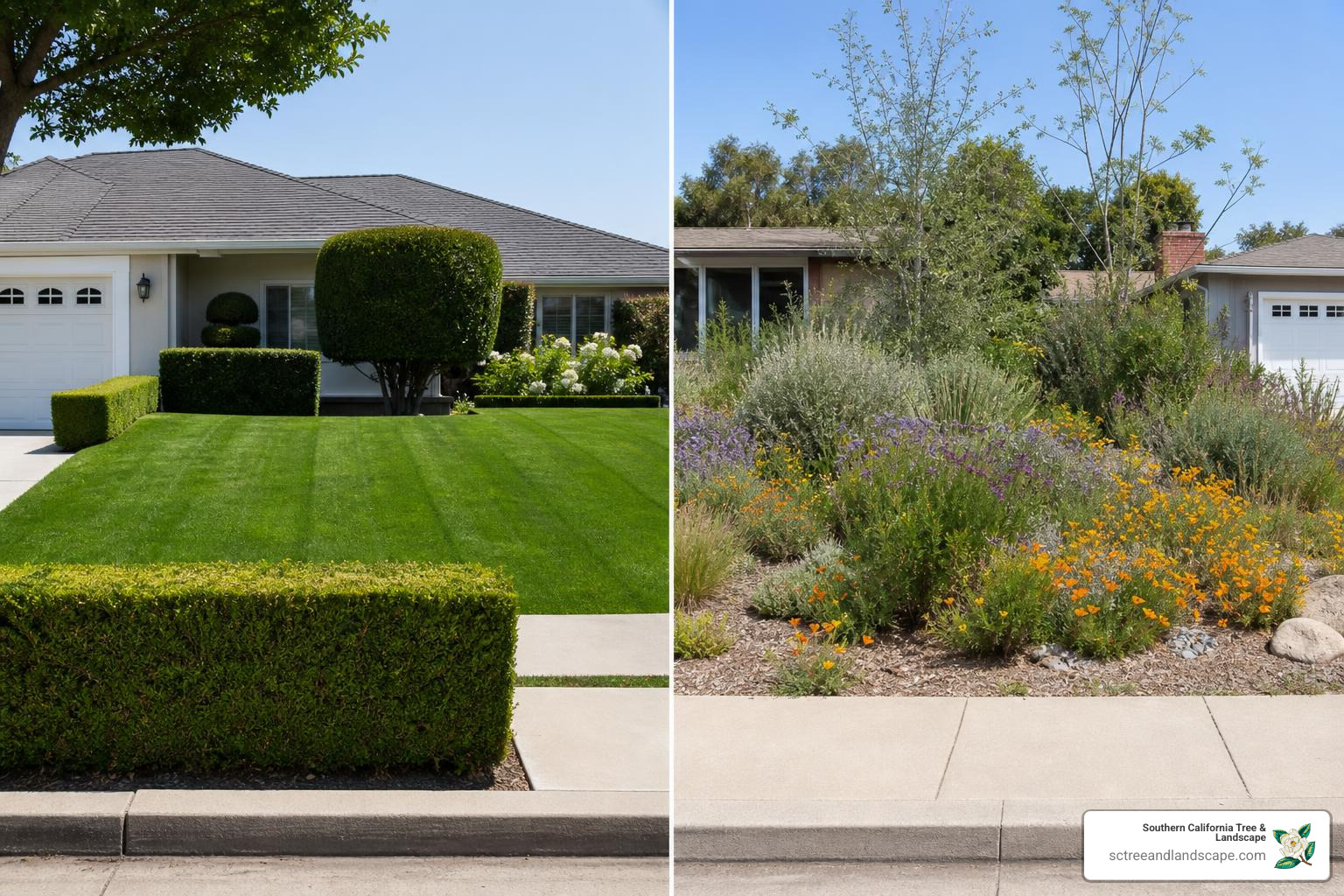
A low-maintenance garden flips this script. Instead of fighting nature, we cooperate with it. By choosing plants that naturally belong in our Mediterranean climate, we eliminate the need for constant life support. Traditional landscaping relies heavily on synthetic fertilizers, frequent mowing, and daily watering. In contrast, a modern Low-Maintenance Landscaping Guide for Homeowners focuses on simplified plant palettes, strategic spacing, and durable hardscaping that reduces repetitive chores.
Shifting from Control to Cooperation
When we shift from control to cooperation, we embrace natural plant forms and wildlife-friendly designs. Plants with natural, compact shapes require virtually no pruning or hedging to look good. Instead of perfectly manicured, boxy hedges that need clipping every two weeks, we opt for soft, naturalistic drifts of plants that look beautiful even when left to grow freely.
This philosophy has sparked a major movement in modern horticulture. In fact, if you search social media today, you will find a massive trend toward letting go of strict garden rules. For instance, there are currently more than 23,000 videos under the “chaos gardening” tag on TikTok. As noted in Experts Share a Low-Effort Gardening Trend to Try, this trend embraces a carefree, naturalistic approach where hardy, pollinator-friendly seeds are scattered and allowed to mingle spontaneously. While true chaos gardening might be a bit too wild for a front yard in Torrance, the core lesson is clear: letting plants grow naturally supports local ecosystems and takes a massive load off your weekend chore list.
The Motel Theory of Gardening
At Southern California Tree & Landscape, we like to talk about the “Motel Theory of Gardening.” Coined by relaxed garden designers, this theory states that plants are like motel guests: they check in if they like the environment, and they check out (die) if they don’t.
Instead of trying to force a plant to survive in a spot where it doesn’t belong—such as planting shade-loving hydrangeas under the blazing South Bay sun—we let our local microclimates make the decisions. By matching the right plant to your specific soil type, sun exposure, and wind conditions, you ensure the plant thrives on its own. If you want to see how this relaxed, plant-first philosophy can be styled beautifully without looking messy, check out our guide on How to Master the Art of Cottage Garden Design.
Designing for Low Maintenance Gardening: Layout and Hardscape
The layout of your yard is the foundation of your maintenance schedule. If your garden design features tight corners, narrow grass pathways, and complex flower beds, you are guaranteed to spend hours maneuvering lawnmowers and string trimmers.

By prioritizing clean lines and functional hardscaping, you can eliminate the most frustrating yard chores. If you are starting from scratch or planning a complete remodel, reading The Essential Guide to Backyard Oasis Design in Torrance will help you seamlessly blend these structural elements with our unique coastal climate.
Replacing High-Maintenance Lawns
Lawns are the ultimate time and money sinks in Southern California. They require constant mowing, weeding, feeding, and hundreds of gallons of water. To cut your chores in half, consider replacing difficult lawn areas with beautiful, low-maintenance alternatives.
For awkward slopes, narrow side yards, or deep shade under mature trees, grass is rarely the right answer. Instead, consider:
- Gravel Patios and Walkways: Creating a seating area with pea gravel or flagstone provides a functional space that never needs watering.
- Native Wildflower Meadows: For larger, out-of-the-way spaces, a native meadow mix only needs occasional strimming or mowing a few times a year.
- Drought-Tolerant Ground Covers: Low-growing plants like creeping thyme or rosemary form a dense green carpet that suppresses weeds and tolerates light foot traffic.
If you are tired of watching your water bills skyrocket just to keep a patch of turf green, you can read about how to break free from the cycle in our article Don’t Get Clipped by High Lawn Maintenance Prices.
Optimizing Beds, Paths, and Containers
How you arrange your planting beds and paths makes a world of difference. When designing your garden layout, keep these practical guidelines in mind:
- Keep Paths Wide and Straight: Main garden paths should be 6 to 8 feet wide, while secondary paths should be 4 to 5 feet wide. This allows wheelbarrows, tools, and lawn equipment to pass through easily without damaging plants.
- Smooth Out the Edges: Straight or gently curved borders are much easier to mow against than tight, complex curves. Installing a paved brick or stone mowing strip flush with the grass allows your lawnmower wheel to glide right over the edge, eliminating the need for tedious string trimming.
- Group Your Containers: Potted plants dry out quickly in the Southern California heat. To reduce watering time, group your containers together in one area, or transition to fewer, larger pots. Large pots hold a greater volume of soil, which retains moisture much longer than small, individual terracotta pots.
For more design inspiration on simplifying your layout while keeping it visually stunning, the Low Maintenance Gardening Ideas | RHS Advice guide offers excellent timeless tips on positioning labor-intensive features closer to your home or tool shed for easy access.
The Power of Gravel, Mulch, and Ground Covers
If you hate weeding, the single best thing you can do for your yard is cover bare soil. Uncovered soil is an open invitation for weed seeds to take root. By applying a thick layer of mulch or decorative gravel, you block out sunlight, prevent weed germination, and keep moisture locked in the ground.
Choosing the right ground cover depends on your aesthetic goals and your specific microclimate. Here is a quick comparison to help you choose:
| Feature / Benefit | Organic Wood Mulch | Decorative Gravel / Stone |
|---|---|---|
| Weed Suppression | Excellent (needs annual replenishment) | Excellent (long-lasting) |
| Moisture Retention | High (cools soil, reduces evaporation) | Very High (reduces moisture loss by up to 40%) |
| Soil Enrichment | Yes (decomposes and feeds soil biology) | No (inorganic, does not break down) |
| Heat Reflection | Low (absorbs heat moderately) | High (light-colored gravel reflects solar radiation) |
| Best Used For | Woodland gardens, fruit trees, shrub beds | Succulent beds, Mediterranean gardens, pathways |
Designing a Heat-Resilient Gravel Garden
Gravel gardening has surged in popularity across dry climates. Unlike a sterile rock landscape, a true gravel garden is a plant-forward design where drought-tolerant perennials and grasses are planted directly into soil, then topped with a deep layer of decorative stone.
This technique is incredibly effective at conserving water. Studies show that gravel mulch can reduce soil moisture loss by up to 40% compared to bare soil during high-temperature periods. In fact, a well-designed gravel garden can cut your total watering time by up to 80%, providing overall water savings of 50% or more compared to traditional turf-heavy beds.
To build a gravel garden that survives intense summer heatwaves, follow these key steps from How to Design a Low-Maintenance Gravel Garden That Survives – The Village Gardener:
- Choose Angular, Light-Colored Gravel: Limestone or quartzite in sizes between 10mm and 20mm works best. Light colors reflect heat away from plant roots, while angular stones lock together to create a stable walking surface.
- Lay It Deep: Spread the gravel at a depth of 2 to 3 inches (5 to 7 cm) directly over your amended soil.
- Skip the Plastic Landscape Fabric: While it might seem counterintuitive, skipping weed membrane actually allows your drought-tolerant plants to self-seed naturally, filling in gaps and creating a gorgeous, self-sustaining ecosystem.
This method has a legendary track record. The famous gravel garden created by horticulturalist Beth Chatto in 1991 was built on an old, gravelly parking lot. It received absolutely zero supplemental watering after its initial establishment and continues to thrive decades later, proving that nature-led design is incredibly resilient.
Ground Covers as Living Mulch
If you prefer a lush, green look over stone, you can use ground covers as a “living mulch.” Dense, low-growing evergreen ground covers leave absolutely no room for weeds to establish.
When establishing a living mulch, avoid using cheap plastic weed barriers under the plants, as this prevents them from spreading and rooting naturally. Instead, plant your ground covers in a matrix, allowing them to intertwine. Combining spring-blooming bulbs with drought-tolerant, evergreen ground covers creates a beautiful, layered look that requires zero weeding once established. You can learn more about this naturalistic approach in Gravel Gardening: How to Create a Beautiful, Drought-Proof Landscape – Wild Hearth Life.
Strategic Plant Selection and Care
The secret to low maintenance gardening is simple: choose plants that actually want to live in Southern California. When we select species that are genetically adapted to our dry summers and mild winters, we eliminate the need for constant fertilizing, daily watering, and winter protection.
Before you head to the local nursery, it pays to have a professional plan. If you are wondering whether your yard is ready for a water-wise transition, take a look at our services for Custom Landscape Design Is Your Yard Ready for a Makeover?.
Smart Plant Selection for Low Maintenance Gardening
When selecting plants, we look for three main categories: native plants, ornamental grasses, and hardy succulents. These species have evolved to survive dry spells and look fantastic with minimal intervention.
- Ornamental Grasses: Grasses like Stipa tenuissima (Mexican Feather Grass) or Blue Fescue provide year-round structure, movement, and texture. The best part? They are virtually disease-free and only need to be cut back once a year in late winter.
- Succulents: Agaves, Dudleyas, and Sedums store water in their fleshy leaves, allowing them to thrive during heatwaves. Planting them in containers or gravel beds creates an architectural, modern look with almost zero effort.
- Drought-Tolerant Perennials: Plants like Lavender (Lavandula angustifolia), Salvia, Yarrow, and Rosemary produce beautiful blooms that attract local pollinators while requiring very little water once their root systems are established.
For those who love the romantic look of a flower-filled yard but don’t want the endless deadheading and staking of a formal garden, you can find inspiration in Low-Maintenance Cottage Garden Ideas: Beautiful Blooms, Minimal Work | Bricks ’n Blooms with Stacy Ling. This approach embraces tough, resilient flowers like Black-Eyed Susans and Sedum ‘Autumn Joy’ that naturally mingle and hold themselves up.
Reducing Water, Weeding, and Pruning Chores
Once you have chosen the right plants, you can automate their care to save even more time. Hand-watering with a hose is not only time-consuming, but it is also highly inefficient, leading to evaporation and weed growth in surrounding bare soil.
We highly recommend installing a professional drip irrigation system. Drip lines deliver water directly to the base of each plant, keeping the leaves dry (which prevents fungal diseases) and leaving the surrounding soil dry to discourage weed growth. To learn more about how to set up an efficient system, read our guide on Irrigation Services A Smart Solution for Your Landscape.
To make your watering system truly hands-free, consider these upgrades:
- Smart Weather-Based Controllers: These systems automatically adjust your watering schedule based on real-time local weather data, saving water during cooler periods. Learn more about saving water in Torrance with Don’t Let Your Money Evaporate with These Torrance Smart Controllers.
- Drip System Maintenance: Even the best systems can develop small leaks over time. Keeping your system in top shape is easy with our tips on how to Stop the Leak and Save Your Garden with Easy Drip Repair.
- Automated Sprinklers: If you still maintain some lawn or large ground-cover beds, switching to a modern automated setup is a game-changer. Check out Stop Hosing Around and Start Automatic Sprinkler System Installation to see how we help homeowners automate their watering schedules.
Frequently Asked Questions about Low-Maintenance Landscaping
How do I transition my existing yard to a low-maintenance design?
The easiest way to transition is to take it step-by-step. Start by identifying your highest-maintenance zones—usually awkward patches of lawn or high-water flower beds—and replace them first. Sheet mulching (laying down cardboard over grass and covering it with 3 inches of wood chips) is a great, chemical-free way to kill lawn and build rich soil at the same time.
Once the grass is gone, you can install a simplified layout with wider paths and hardy native plants. If you want a professional team to handle the heavy lifting, our crew can transform your yard from start to finish. Read about our process for Landscape Design Installation Transform Your Outdoor Space.
What are the best low-maintenance plants for Southern California?
For our local climate in Torrance, Covina, and the South Bay, we highly recommend plants that are adapted to dry, coastal, or inland valley conditions. Some of the absolute best performers include:
- Yarrow (Achillea): Extremely drought-tolerant and produces flat flower heads that beneficial insects love.
- Cleveland Sage (Salvia clevelandii): A California native with highly fragrant purple blooms that require almost no water once established.
- Agave attenuata (Foxtail Agave): A stunning, spineless succulent that provides bold structural interest.
- Lantana: A tough-as-nails ground cover that blooms almost year-round and thrives in hot, sunny spots.
For a deeper dive into selecting the perfect varieties for your specific neighborhood, check out the Best Landscaping Plants for Southern California – Eric Haskell Group guide.
Common Mistakes in Low Maintenance Gardening to Avoid
When homeowners try to design a low-maintenance yard on their own, they often fall into a few common traps:
- Over-planting: It is easy to buy too many plants at the nursery because they look small in their pots. Always check the mature height and spread of a plant before putting it in the ground. Over-planting leads to crowded beds, which means you’ll have to prune constantly just to keep them from swallowing each other.
- Using the Wrong Mulch: Placing dark, organic mulch in a hot, succulent gravel garden can trap too much moisture around the plant crowns, leading to root rot. Match your mulch to your plant types.
- Planting Invasive Species: Some fast-growing ground covers are highly aggressive and will quickly invade your neighbors’ yards or local wild spaces, creating a massive weeding headache down the road. Stick to well-behaved native species and non-invasive Mediterranean climate matches.
Conclusion
Creating a low-maintenance garden doesn’t mean you have to settle for a boring, paved-over yard. By simplifying your layout, replacing high-maintenance lawns with gravel or living ground covers, and choosing smart, drought-tolerant plants, you can design an outdoor space that is both beautiful and incredibly easy to manage.
At Southern California Tree & Landscape, we have been helping homeowners and property managers across Torrance, Covina, Harbor City, and the South Bay design, install, and care for water-wise landscapes since 1991. Whether you want to install a smart drip irrigation system, transition your lawn to a stunning gravel garden, or need the help of our ISA-certified arborists, we are here to help.
Ready to stop working in your yard and start actually enjoying it? Let our experienced crews take care of the hard work for you. Get Professional Landscape Maintenance Services today and take back your weekends!