
Defining the Cottage Garden Aesthetic
The history of cottage garden design is rooted in practicality rather than high-society aesthetics. Originally, these gardens were the domain of laborers and peasants who used every square inch of their small plots to grow food, medicinal herbs, and flowers to ward off pests. It wasn’t until the late 18th century that the gentry began to idealize this “wildflower-overflow” look, transforming it into the romantic, flower-heavy style we recognize today.
The hallmark of a cottage garden is its informal layout. Unlike formal French or Italian gardens that rely on symmetry and rigid geometry, the cottage style thrives on “controlled chaos.” It is a style that favors personal sentiment over magazine-spread perfection. In fact, many designers believe that cottage gardens should feel like a reflection of the gardener’s personality, often incorporating plants shared by friends or divisions passed down through generations.
Fragrance plays a massive role in this aesthetic. A true cottage garden is an olfactory experience, filled with the scent of old roses, lavender, and jasmine. Furthermore, the modern interpretation of this style emphasizes Cottage Landscaping Ideas for a Natural, Romantic Garden Style that prioritize biodiversity. By mixing ornamental flowers with native species, you create a vital pollinator habitat. Considering that pollinators are responsible for one in every three bites of food we eat, these gardens are as functional for the environment as they are beautiful for the soul.
Key Characteristics of the Cottage Aesthetic:
- Informality: No straight lines or rigid rows.
- Abundance: Every patch of soil is filled with life.
- Romance: Soft textures, pastel colors, and draped vines.
- Utility: Mixing in herbs, fruits, and vegetables like Swiss chard or kale.
- Sensory Appeal: A focus on scent, touch (lamb’s ear), and the sound of buzzing bees.
Essential Principles of Cottage Garden Layout
While the planting looks wild, a successful cottage garden design requires a thoughtful skeleton. Without structure, “overflowing” can quickly turn into “overgrown.”
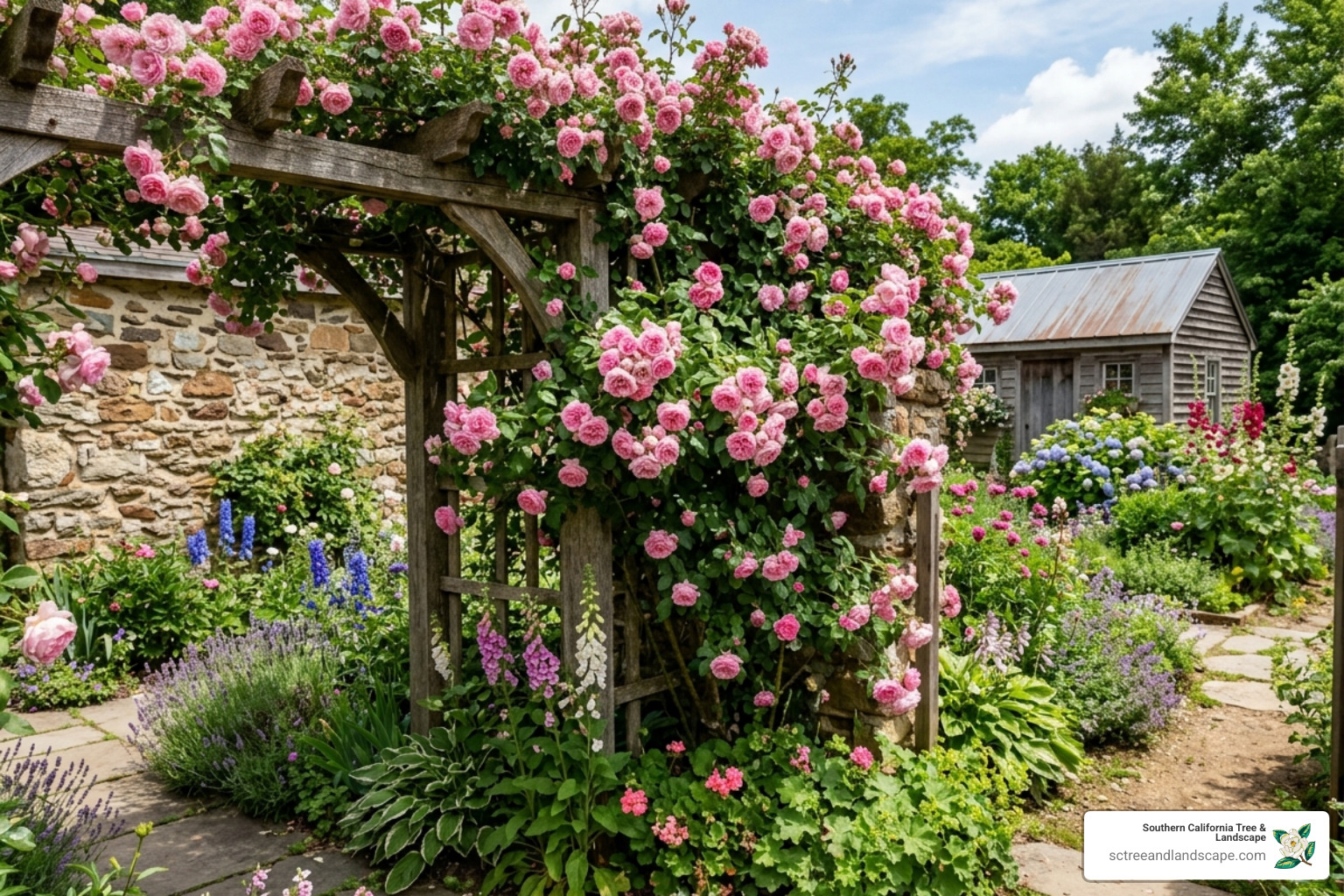
The first step is defining your boundaries. Enclosure is vital for that “secret garden” feel. Low picket fences, lattice panels, or stone walls serve as the perfect backdrop. These structures aren’t just for privacy; they act as props to showcase climbing plants. A white picket fence draped in clematis or climbing roses is the quintessential cottage image.
Paths are the next critical element. Instead of straight concrete slabs, we recommend curving paths made of natural materials like gravel, weathered brick, or flagstone. Curving paths create an air of mystery, enticing visitors to see what’s around the next bend. When planning your walkway, ensure it is at least 60–90 cm wide. This ensures that as your plants spill over the edges, you aren’t constantly fighting a “bramble wrestle” just to walk through your yard.
Vertical interest is what gives the garden its 3D quality. Arbors, trellises, and obelisks draw the eye upward and provide support for “upper layer” plants. These structures also serve as focal points or “sightlines” that guide the eye through the garden. If you’re looking to overhaul your current yard into this style, our Landscape Design & Installation – Transform Your Outdoor Space services can help you establish these foundational hardscapes.

Mastering Layers in Your Cottage Garden Design
To achieve that lush, “wall-to-wall” flower look, you must master the art of layering. Layering prevents the garden from looking flat and allows you to pack more plants into a smaller footprint.
The goal is to create “visual tension”—a look that appears unintentional but is actually carefully staged. We use a three-tier system to organize the chaos:
- Tall Backbones: These are your “drama” plants. They sit at the back of the border or center of an island bed. Think hollyhocks, which can reach 6 to 8 feet tall, or delphiniums.
- Mid-Level Anchors: These fill the bulk of the space and provide the “body” of the garden. Peonies, hydrangeas, and roses are the classic choices here.
- Low-Growing Spillers: These sit at the very edge, softening the lines of your paths. Lavender, catmint (Nepeta), and creeping thyme are excellent for blurring the boundary between the garden bed and the walkway.
Plant Height and Role Comparison Table
| Layer | Typical Height | Role in Garden | Plant Examples |
|---|---|---|---|
| Backbone | 4′ – 8′ | Vertical drama, background | Hollyhocks, Foxgloves, Sunflowers |
| Anchors | 1′ – 3′ | Structure, color blocks | Peonies, Roses, Salvia, Phlox |
| Spillers | 2″ – 12″ | Edge softening, weed suppression | Sweet Alyssum, Creeping Thyme, Dianthus |
By following these Cottage Garden Design: 5 Rules for That Wildflower-Overflow Look, you create a sense of rhythm. Repeating certain colors or plant shapes every few feet helps the eye move smoothly across the landscape, making a riot of color feel cohesive rather than cluttered.
Selecting the Best Plants for Abundance and Color
The “palette” of a cottage garden is where the magic happens. While traditional English gardens rely heavily on perennials, a true master of the style mixes perennials, annuals, and self-seeders.
- Perennials: These are the long-term residents. Roses are the undisputed kings of the cottage garden. For our Southern California climate, we often recommend disease-resistant shrub roses or climbers that can handle the sun. Peonies provide massive, romantic blooms in late spring, while Echinacea (coneflower) adds a hardy, wildflower touch.
- Annuals: These are your fillers. Because starting from seed saves 50–75% compared to buying seedlings, we often suggest direct-sowing cosmos, zinnias, and poppies. They fill the gaps while your perennials are still maturing.
- Self-Seeders: These are the “secret weapon” of cottage garden design. Plants like foxgloves and nigella (Love-in-a-mist) drop their seeds at the end of the season. Next year, they pop up in unexpected places, creating that “happy accident” look that defines the style.
When selecting plants, we always prioritize native pollinators. Native plants are four times more attractive to native pollinators than exotics. By choosing plants that belong in our ecosystem, you aren’t just building a garden; you’re building a sanctuary. You can learn more about our plant selection process on Our Services page.
Drought-Tolerant Cottage Garden Design for Southern California
In Torrance, Covina, and across the South Bay, we face unique challenges—specifically heat and water restrictions. You don’t need a rainy English climate to have a cottage garden. You just need to adapt your plant list.
This is where Your Guide to Growing an English Cottage Garden in the West becomes invaluable. Instead of water-thirsty delphiniums, we look toward heat-tolerant varieties that offer the same “spire” look.
- Native Salvias: These offer incredible vertical interest and come in brilliant blues and purples. They are exceptionally drought-tolerant once established.
- Lavender: A cottage staple that actually thrives in our well-draining, sunny Southern California soil.
- Matilija Poppies: Often called the “fried egg plant,” these California natives offer huge, crinkly white flowers that fit the cottage aesthetic perfectly.
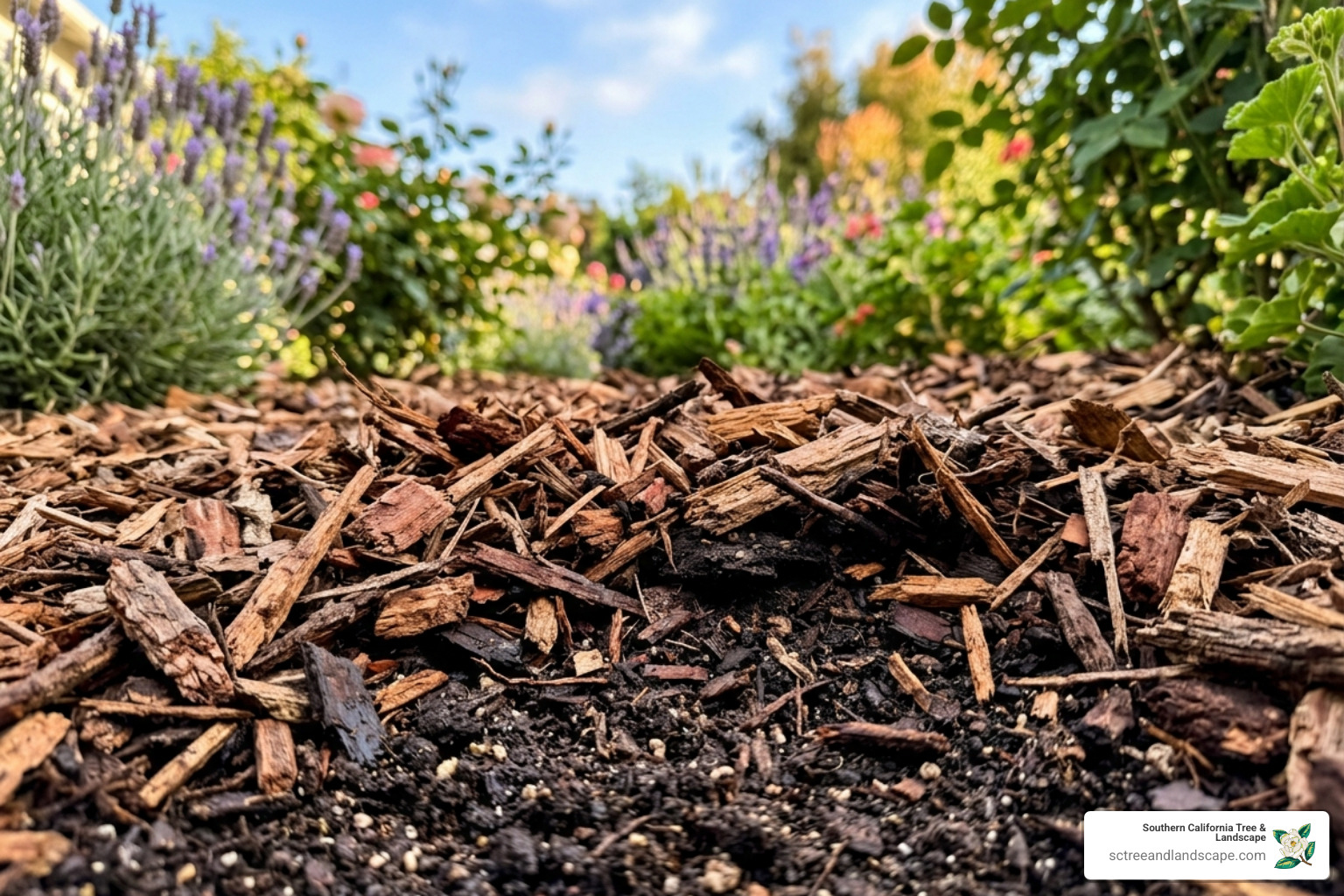
- Mulch and Irrigation: To keep these gardens lush without wasting water, we use a 2-3 inch layer of organic mulch to keep the soil cool. We also specialize in drip irrigation repair and installation to ensure water goes directly to the roots, minimizing evaporation.
Year-Round Interest in Cottage Garden Design
A common mistake is designing a garden that looks spectacular in June but like a graveyard in January. In Southern California, we are lucky to have a year-round growing season, but we still need to plan for “seasonal succession.”
Start with “evergreen bones.” Boxwood balls, rosemary shrubs, or native evergreen currants provide structure even when the flowers have faded. In the autumn, we plant spring bulbs like narcissus and ranunculus to ensure an early burst of color.
During the winter, don’t be too quick to “clean up.” Leaving seed heads on plants like Rudbeckia provides food for birds and adds a beautiful architectural element to the frost-free Southern California winter. Check out some of our Past Projects to see how we balance evergreen structure with seasonal blooms.
Maintenance and Common Mistakes to Avoid
The biggest myth about cottage garden design is that it is “no-maintenance.” While it is lower maintenance than a manicured lawn (no weekly mowing!), it does require “editing.”
1. Soil Preparation: Before a single seed goes in the ground, the soil must be prepped. We recommend loosening the soil to at least 12 inches deep and incorporating plenty of organic compost. Healthy soil is the foundation of an abundant garden.
2. Close Planting: In this style, we plant much closer than a standard landscape—often at about two-thirds of the recommended spacing. This creates the “overflowing” look and, more importantly, shades the soil to suppress weeds naturally.
3. Deadheading and Dividing: To keep the blooms coming all summer, you must “deadhead” (remove spent flowers). Every 3–4 years, you’ll also need to divide your perennials. This keeps the plants healthy and gives you free “babies” to plant in other areas or share with neighbors!
4. Irrigation Management: Because cottage gardens are packed so tightly, overhead watering can lead to fungal issues. We recommend drip systems. If you notice wilting or dry spots, our team provides expert Our Services – Design & Installation including irrigation checks to keep your romantic retreat hydrated.
Common Mistakes to Avoid:
- Too many “one-offs”: Planting one of everything looks messy. Plant in odd-numbered groups (3, 5, or 7) for a natural drift.
- Ignoring the “Bones”: Forgetting winter structure leads to a flat-looking yard for four months of the year.
- Over-cleaning: Let some plants self-seed! It’s free plants and adds to the whimsy.
Frequently Asked Questions about Cottage Gardens
Can I create a cottage garden in a shady area?
Absolutely! While many “classic” cottage flowers love 6–8 hours of sun, you can achieve the same romantic look in the shade. Swap roses for hydrangeas and foxgloves (which thrive in partial shade). Use ferns, hostas, and bleeding hearts to create a “woodland cottage” feel. The key is to focus on texture and varying shades of green.
How much maintenance does a cottage garden actually require?
Once established (usually by year three), a cottage garden requires about 2–3 hours of work per week during the peak summer season. Most of this is light work like deadheading, occasional weeding, and checking irrigation. Because the plants are so close together, they eventually act as a “living mulch,” making weed growth much less of a problem than in traditional open-mulch beds.
Is it possible to design a cottage garden in a small urban space?
Yes—cottage gardens actually excel in small spaces! In a tiny urban lot in Torrance or the South Bay, you can use vertical space to your advantage. Use arbors, wall-mounted trellises, and hanging baskets to bring the flowers up to eye level. Even a 4×8 foot “postage stamp” garden can feel like a lush oasis if you layer your heights correctly.
Conclusion
Mastering cottage garden design is about embracing the beauty of imperfection. It’s a style that celebrates the seasons, supports our local Southern California wildlife, and provides a personal sanctuary that grows and changes alongside your family.
At Southern California Tree & Landscape, we’ve been family-owned since 1991, helping neighbors in Harbor City, Torrance, and beyond bring their outdoor visions to life. Whether you need an ISA-certified arborist to prune your “evergreen bones” or a full design team to install a winding brick path through a sea of lavender, we have the experience to make it happen.
Ready to trade your thirsty lawn for a romantic, flower-filled retreat? Start your dream project with our Design & Installation services today, and let’s build something beautiful together.