
Why a Certified Arborist Tree Inspection Is Worth Scheduling
Schedule a certified arborist inspection when you manage mature trees near people, buildings, parking areas, sidewalks, or utility lines – and do it promptly after a storm, construction, or visible decline. A qualified arborist can identify decay, weak branch unions, pest or disease symptoms, root-zone damage, and other risks before they become costly failures.
For a reliable arborist tree inspection certified by a recognized professional, look for an active ISA Certified Arborist credential. If the main concern is tree safety or a formal risk report, ask whether the arborist also holds ISA Tree Risk Assessment Qualification (TRAQ).
A good inspection is about more than deciding whether to cut a tree down. It gives HOA managers and property owners a clear, practical plan: preserve healthy trees, address hazards, prioritize urgent work, and document findings for maintenance planning, insurance, or municipal requirements.
I am Troy Basmajian, President of Southern California Tree & Landscape, and I have spent the past decade helping lead teams that care for trees and landscapes across Southern California properties. Through our work with HOAs, estates, commercial sites, and municipalities, I have seen how an arborist tree inspection certified by the right professional helps prevent emergencies and protects long-term landscape value.
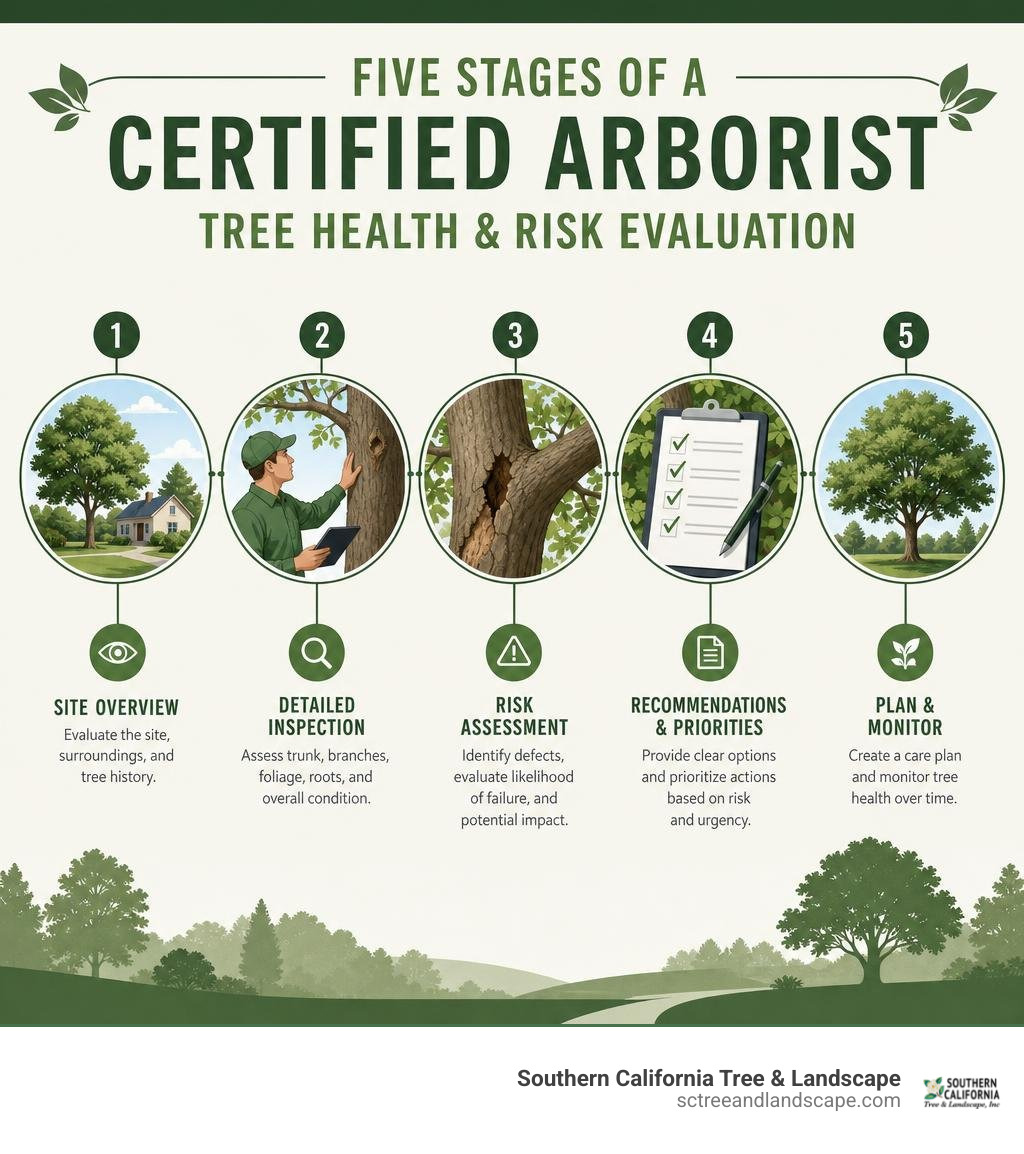
Arborist tree inspection certified terminology:
- The Secret to a Successful Arborist Report Insurance Claim
- The Homeowner Guide to Local Tree Service Companies and Arborists
- Tree Service Essential Care for Your Propertys Green Giants
What Is a Certified Arborist and What Credentials Matter Most?
Trees are long-term assets that require specialized biological knowledge. A certified arborist is a trained tree care specialist whose competence has been rigorously vetted by industry governing organizations. Rather than relying on guesswork, certified professionals base their assessments on peer-reviewed arboricultural science, tree biology, and soil dynamics.
The premier benchmark in modern tree care is credentialing provided by the International Society of Arboriculture (ISA). The ISA Certified Arborist program is accredited by the ANSI National Accreditation Board (ANAB) for meeting or exceeding strict ISO 17024 standards for certification bodies. This accreditation ensures the examination process is completely impartial, reliable, and grounded in up-to-date scientific practice.
Furthermore, every certified specialist is bound by a formal, enforceable Code of Ethics. This commitment guarantees that recommendations prioritize tree health, property safety, and honest diagnostic findings over unnecessary cutting or sales quotas.
ISA Certified Arborist vs. Board Certified Master Arborist (BCMA)
While an ISA Certified Arborist credential represents a solid, comprehensive baseline of tree knowledge, the ISA Board Certified Master Arborist (BCMA) credential stands at the absolute pinnacle of the profession.
Becoming a BCMA is an intensive journey. Candidates must be an ISA Certified Arborist in good standing and accumulate at least eight prerequisite points through formal academic degrees, extensive career experience, and related industry credentials.
The BCMA examination tests 17 comprehensive knowledge domains categorized into:
- Science (37%): Tree biology (9%), soils (7%), tree identification and selection (7%), abiotic disorders (7%), and biotic disorders (7%).
- Practice (37%): Tree risk (7%), pruning (7%), plant health care (6%), climbing/rigging/removal (5%), installation (4%), soil treatment and irrigation (4%), supplemental support (2%), and plant appraisal (2%).
- Management (26%): Safety (9%), trees and construction (7%), inventory and management plans (5%), and business relations (5%).
Candidates must navigate 165 multiple-choice questions within a strict 4-hour window, achieving a minimum passing score of 70%. To maintain this elite status, a master arborist must earn 60 Continuing Education Units (CEUs) every three years, with at least 10 CEUs dedicated to each of the three foundational areas: science, practice, and management.
The Importance of Tree Risk Assessment Qualification (TRAQ)
Physical health and structural safety do not always mean the same thing. A tree can have lush, vibrant green leaves while hiding severe internal decay or root rot that makes it susceptible to sudden collapse. This is where the ISA Tree Risk Assessment Qualification (TRAQ) becomes critical.
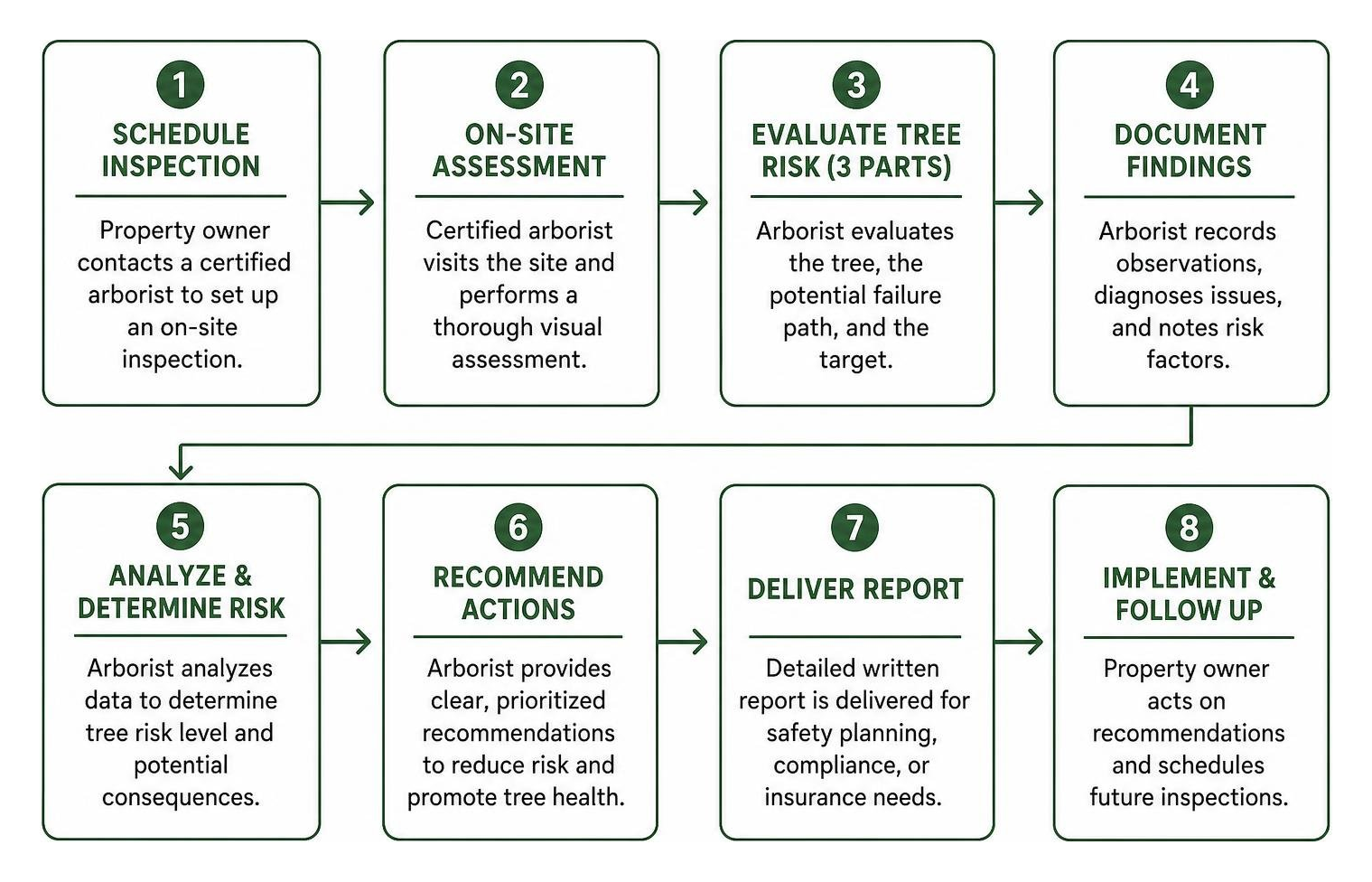
TRAQ-qualified arborists, such as industry leader Seth Pair and other top specialists, are trained in a standardized assessment methodology. Instead of viewing a tree in isolation, a TRAQ assessment systematically evaluates three critical factors:
- The Structural Defect: Identifying internal hollows, fungal fruiting bodies, co-dominant stems, or severed anchor roots.
- The Likelihood of Failure: Determining whether structural failure is improbable, possible, probable, or imminent within a specified timeframe.
- The Target: Assessing the people, structures, vehicles, or hardscapes that could be injured or damaged if failure occurs.
This structured approach removes personal bias from risk reporting, giving property owners defensible data for safety planning, municipal compliance, and insurance reviews.
Why an Arborist Tree Inspection Certified by the ISA Protects Your Property
Trees are often the most valuable living assets on a landscape. A mature shade tree can add thousands of dollars to property value, lower ambient temperatures, and reduce cooling costs. However, an uninspected, structurally compromised tree is a major liability.
When internal fungal decay hollows out a trunk flare or root-rot weakens the root plate, strong gusts or saturated soils can trigger catastrophic tree failure. Conducting a regular arborist tree inspection certified by the ISA allows us to identify hidden structural weaknesses before a failure occurs. This proactive approach protects buildings and pedestrian walkways while shielding property owners from costly liability claims.
| Evaluation Factor | Certified Arborist Tree Inspection | Standard Tree Trimmer Estimate |
|---|---|---|
| Primary Objective | Tree health, preservation, and risk mitigation | Securing tree cutting, trimming, or removal work |
| Diagnostic Method | Biological analysis, root collar probing, structural testing | Quick visual look from the ground |
| Soil & Root Evaluation | Assesses compaction, grade changes, and root rot | Often ignored entirely |
| Pruning Standards | Adheres to ANSI A300 pruning and safety standards | May use damaging practices like tree topping or climbing spikes |
| Documentation | Written, defensible reports for HOAs, cities, or insurers | Basic line-item invoice or verbal price quote |
| Ethics Framework | Bound by the strict, enforceable ISA Code of Ethics | No formal industry regulatory oversight |
When to Schedule a Professional Tree Assessment
We advise property owners to follow the three-year checkup rule: mature landscape trees should undergo a thorough checkup at least once every three years. However, certain clear warning signs demand immediate attention:
- Mushroom conks or brackets growing at the trunk base or on main root flares (a classic sign of internal heartwood decay).
- Sudden canopy thinning, yellowing foliage, or branch dieback starting from the top down.
- Deep trunk fissures, bark peeling away in large sheets, or oozing cankers.
- Soil upheaval, cracked soil mounds on the windward side of the tree, or exposed broken roots following grade changes.
Catching biological stress early makes all the difference. Learning the secret to curing common tree diseases fast starts with timely intervention before vascular systems suffer irreparable damage.
Post-Storm Hazards and Insurance Documentation
High winds and heavy winter rains put immense mechanical stress on urban trees. Saturated soils loosen the root plate, and strong gusts can crack heavy lateral limbs or compromise weak branch unions.
Following severe weather, inspecting for cracked branch collars, hanging limbs, and subtle trunk leans is essential. If a tree does fail or suffers severe damage, insurance adjusters require detailed documentation. Having a certified evaluation on hand makes the claims process smoother. Discovering the secret to a successful arborist report insurance claim helps ensure claims are properly supported by objective, certified evidence.
For emergency cleanup or hazard stabilization across the South Bay, homeowners can explore our dedicated guide to the homeowners guide to storm damage tree service in Torrance to see how our teams safely stabilize and restore damaged landscapes.
Certified Arborist Inspection Services vs. Standard Tree Trimmers
There is a fundamental difference between a tree care company built around certified arborists and a generic tree cutting crew. Uncertified trimmers often focus solely on the canopy, viewing tree care as a cutting task. In contrast, certified arborists operate with a tree preservation philosophy rooted in biological science.
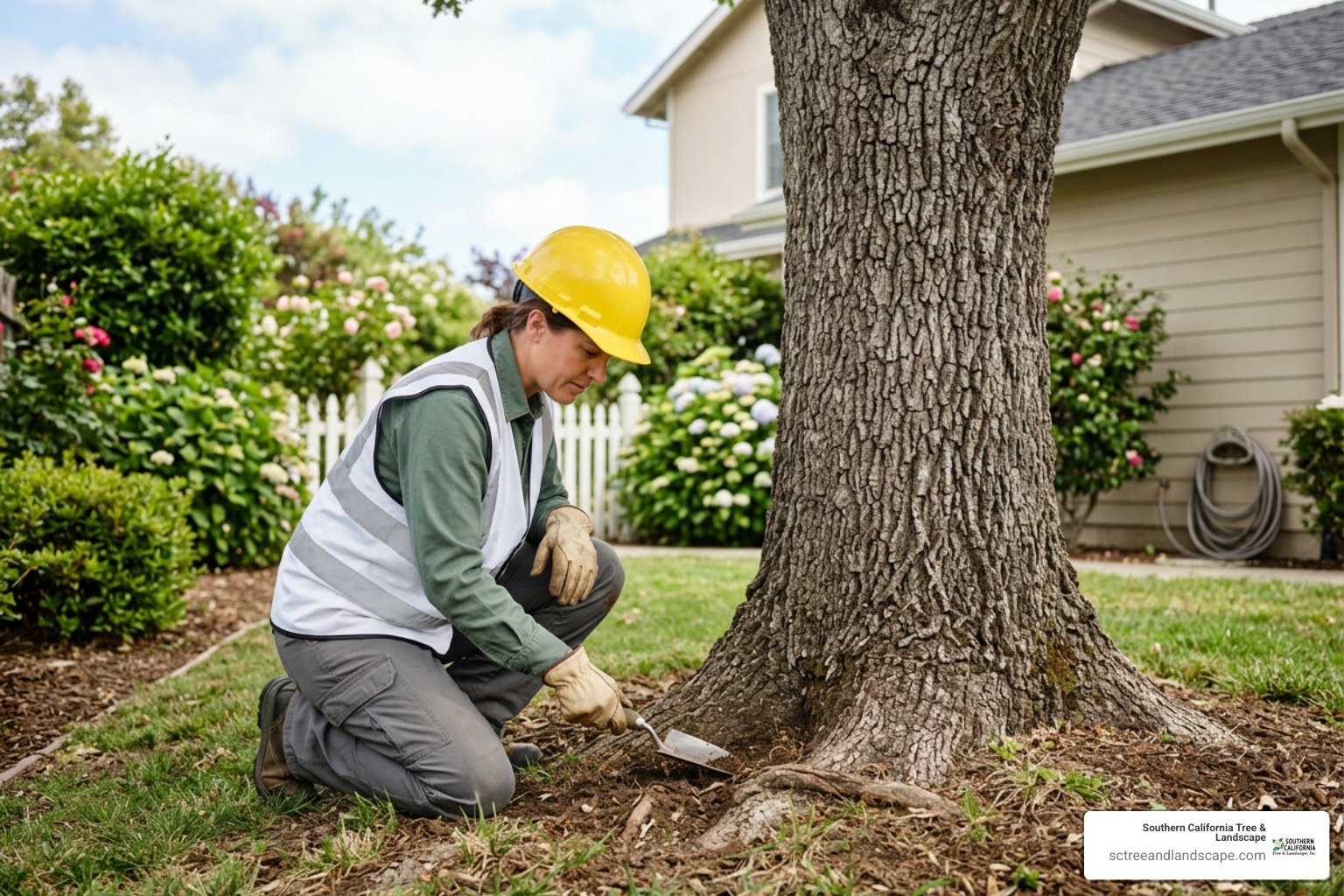
Certified arborists look at the entire tree system—from the microscopic ecology of the soil to the structural integrity of the upper canopy. Where an uncertified worker might recommend cutting down a declining tree to clear the job, an arborist investigates whether soil compaction, micronutrient deficiency, or localized fungal pathogens are the true root causes.
Arborists also refrain from using harmful practices like tree topping (which creates weak, decay-prone epicormic growth) and avoid using climbing spikes on living trees, which creates open wounds that invite boring insects and fungal spores.
What Happens During an Arborist Tree Inspection Certified Evaluation
During a comprehensive property assessment, our ISA-certified professionals perform a methodical visual and physical evaluation:
- Root Flare and Soil Zone Examination: We check for soil compaction, buried root collars, root-bound girdling roots, and symptoms of root decay.
- Trunk and Structural Assessment: We sound the trunk with specialized mallets to detect internal hollows, inspect branch attachments for included bark, and examine old pruning wounds for proper compartmentalization.
- Canopy and Foliage Scouting: We inspect leaves for insect feeding, fungal spotting, and premature drop. As a rule of thumb, healthy mature trees can tolerate up to roughly 30% defoliation before overall health and energy storage decline significantly.
- Diagnostic Sampling: When pest or disease symptoms appear complex, we take leaf, wood, or soil samples for laboratory analysis rather than guessing at chemical treatments.
For a deeper look into selecting the right provider for your property, read our the homeowner guide to local tree service companies and arborists.
Tree Health Care and Targeted Treatment Plans
Once the inspection is complete, we build a tailored Plant Health Care (PHC) plan based on Integrated Pest Management (IPM) principles. We avoid blanket chemical spraying, which can eliminate beneficial predatory insects and harm soil biology.
Instead, an effective treatment plan combines biological and cultural care:
- Deep Root Watering: Delivering moisture past turf roots directly into the absorbing root zone.
- Root Collar Excavation & Aeration: Using compressed air to uncover buried root flares and alleviate tight, compacted soils.
- Canopy Thinning & Deadwooding: Following beginners guide to tree trimming best practices to remove dead, diseased, or crossing limbs without stripping the tree’s photosynthetic capacity.
- Targeted Systemic Injections: Applying precise micro-injections directly into the tree’s vascular system to control specific pests while keeping chemicals safely contained.
How to Choose, Vet, and Contract with Qualified Tree Specialists
Hiring the right tree specialist requires careful vetting. Tree care can be dangerous work, and choosing an unqualified contractor exposes property owners to unnecessary liability, property damage, and poor workmanship.
Always verify both insurance coverage and individual credentials before allowing work to begin on your property.
How to Verify an Arborist Tree Inspection Certified Professional
Do not just take a contractor’s word for their qualifications. Follow these clear steps to verify credentials directly:
- Use the ISA Credential Directory: Visit the official ISA directory (treesaregood.org) to search by arborist name, certification number, or location. Confirm their status is active and in good standing.
- Check Digital Badges: Many certified professionals share verifiable digital badges linking straight to their ISA profile.
- Confirm Applicator Licensing: If chemical or organic pesticide treatments are proposed, verify that the business and technicians hold an active commercial pesticide applicator license.
- Look for Industry Standing: Companies with dedicated South Bays Best Tree Doctors Certified Arborists in Torrance and Beyond have established reputations backed by years of continuous, verified service across local communities.
Essential Questions to Ask Before Signing a Tree Service Contract
Before approving an estimate or signing a contract, ask these critical questions:
- Are the arborists on-site ISA Certified, and will a certified professional oversee the crew?
- Can you provide an active certificate of insurance sent directly from your insurance carrier showing workers’ compensation and commercial general liability coverage?
- Do your crews adhere strictly to ANSI A300 pruning standards and ANSI Z133 safety requirements?
- Will your climbers refrain from using climbing spikes when pruning living, healthy trees?
- Does the written estimate clearly define the scope of work, debris chipping, stump grinding depth, and cleanup responsibilities?
- Are permits required by the local municipality for this work, and will you handle or assist with the permitting process?
- What are the hourly rates for unexpected work if structural defects or underground obstacles are found midway through the project?
Frequently Asked Questions About Certified Tree Inspections
What is the difference between a free tree estimate and a certified inspection?
A standard free tree estimate is typically a sales appointment where a contractor reviews a property to price out basic services like trimming, pruning, or tree removal.
In contrast, a certified arborist inspection is a formal diagnostic consultation. The arborist thoroughly assesses tree biology, tests for structural decay, evaluates root-zone health, calculates target risk zones, and produces an actionable, written health assessment or risk report.
How often should mature landscape trees be inspected by an arborist?
As a baseline standard, mature landscape trees should undergo a certified inspection at least once every three years. Fast-growing, elderly, or disease-prone species should be evaluated annually, ideally during spring or fall. In addition, an inspection should be scheduled immediately following extreme storm events, significant droughts, or nearby ground construction.
Can a certified arborist help save a diseased or dying tree?
Yes. When caught early, many declining trees can be stabilized and saved. By identifying fungal pathogens, insect boring, soil compaction, or nutrient deficiencies early on, a certified arborist can implement targeted therapeutic measures. These include systemic micro-injections, root collar excavation, deep watering schedules, and corrective canopy pruning to restore tree health and structural stability.
Protect Your Canopy with a Certified Tree Inspection
Your trees are long-term investments that bring beauty, shade, and value to your property. Ensuring their safety and longevity requires skilled, science-backed care. Regular evaluations by ISA-certified arborists give you the insights needed to catch hidden decay early, avoid unnecessary tree removals, and keep your property safe year-round.
At Southern California Tree & Landscape, we have proudly served homeowners, HOAs, commercial estates, and municipalities across Southern California, Torrance, South Bay, Covina, and Harbor City since 1991. Our experienced crews, rapid emergency response, and ISA-certified arborists are ready to help you preserve and protect your landscape.
Ready to assess the health, structure, and safety of your trees? Connect with our certified team today to our services tree service and schedule a comprehensive property consultation.