
What Does a Sprinkler System Cost in 2026?
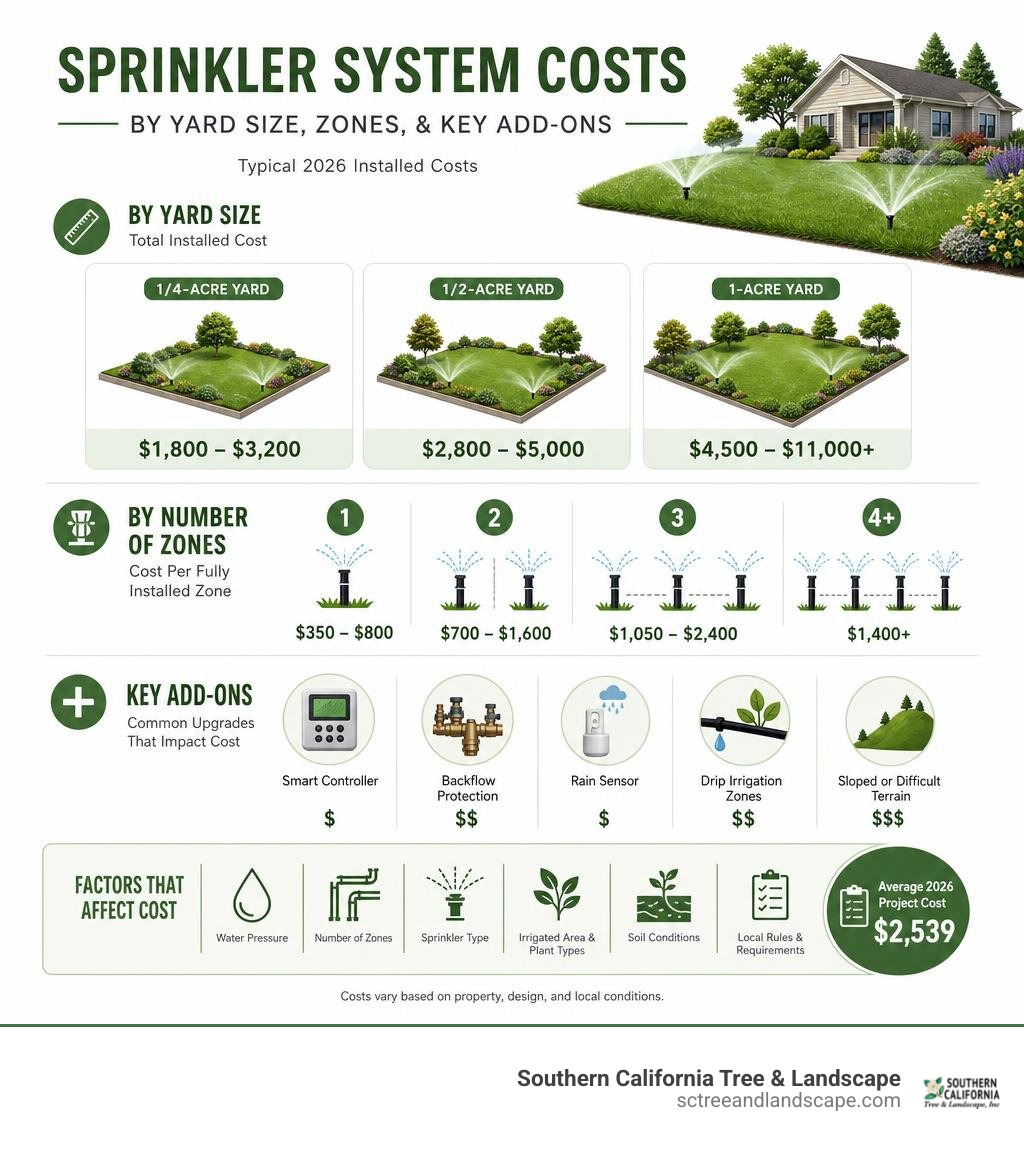
The sprinkler system cost for a typical home in 2026 is usually $1,800 to $5,000 installed, though small, simple projects can cost less and large or complex properties can exceed $10,000.
| Quick cost estimate | Typical 2026 price |
|---|---|
| Average baseline project | $2,539 |
| Cost per square foot of coverage | $0.20 to $1.00 |
| Cost per fully installed zone | $350 to $800 |
| Typical 1/4-acre yard | $1,800 to $3,200 |
| Typical 1/2-acre yard | $2,800 to $5,000 |
| Typical 1-acre yard | $4,500 to $11,000+ |
The real price depends less on lot size alone and more on the irrigated area, water pressure, number of zones, soil conditions, sprinkler types, controller choice, and required backflow protection. For Southern California properties, water rules, planting types, slopes, and efficient drip zones can have a major effect on both the upfront budget and long-term water use.
A well-designed system can reduce wasted water compared with hand watering, protect valuable landscaping, and make property maintenance more predictable. But the lowest quote is not always the lowest lifetime cost, especially when poor coverage, leaks, or code issues lead to repairs later.
I’m Troy Basmajian, President of Southern California Tree & Landscape, and I have spent more than a decade helping property owners manage landscaping and irrigation needs across Southern California. In this guide, I will break down sprinkler system cost so you can plan a reliable system without unpleasant surprises.
Average Sprinkler System Cost Breakdown for 2026
When evaluating sprinkler system cost, national baseline data shows that most homeowners spend between $1,800 and $5,000 for a standard residential installation. Across the country, the average overall project expense sits right around $2,539. Calculated on a surface area basis, installation pricing typically ranges from $0.20 to $1.00 per square foot of irrigated space, with standard suburban lawn projects averaging $0.40 to $0.80 per square foot depending on site layout and component quality.
In Southern California communities like Torrance, Covina, and the South Bay, local pricing often trends toward the middle to higher end of these national spectrums. Labor rates, regional backflow requirements, and stringent water efficiency ordinances mean that investing in precision design upfront pays off directly in utility bill savings down the road.
To help you conceptualize where your property falls, here is a general breakdown of how total project cost scales across common lot sizes and zone counts:
| Lot Size | Irrigated Area (Sq. Ft.) | Typical Zone Count | Average Cost Range |
|---|---|---|---|
| Small Yard (1/8 Acre) | 1,500 – 3,000 sq. ft. | 3 – 4 Zones | $1,500 – $2,400 |
| Quarter-Acre Yard (1/4 Acre) | 4,000 – 6,000 sq. ft. | 4 – 6 Zones | $1,800 – $3,200 |
| Half-Acre Yard (1/2 Acre) | 8,000 – 12,000 sq. ft. | 7 – 10 Zones | $2,800 – $5,000 |
| Full Acre Yard (1 Acre) | 15,000 – 25,000+ sq. ft. | 11 – 16+ Zones | $4,500 – $11,000+ |
Estimating Sprinkler System Cost by Lawn Size and Zones
Understanding how lawn size connects to total pricing requires looking at your actual turf and garden footprint rather than your total boundary property size. For instance, a homeowner on a 1/4-acre property may only be watering 5,000 square feet of actual vegetation after accounting for the home, driveway, patio, and hardscapes.
For a 1/4-acre yard with roughly 4,000 to 6,000 square feet of irrigated turf and garden beds, expect professional installation prices between $1,800 and $3,200. Scaling up to a 1/2-acre yard increases the target irrigated footprint, taking typical costs to $2,800–$5,000 for a 6 to 8 zone system. Larger estates spanning 1 full acre will see installation totals between $4,500 and $11,000, as they demand significantly more piping, commercial-grade valves, and high-output rotor heads.
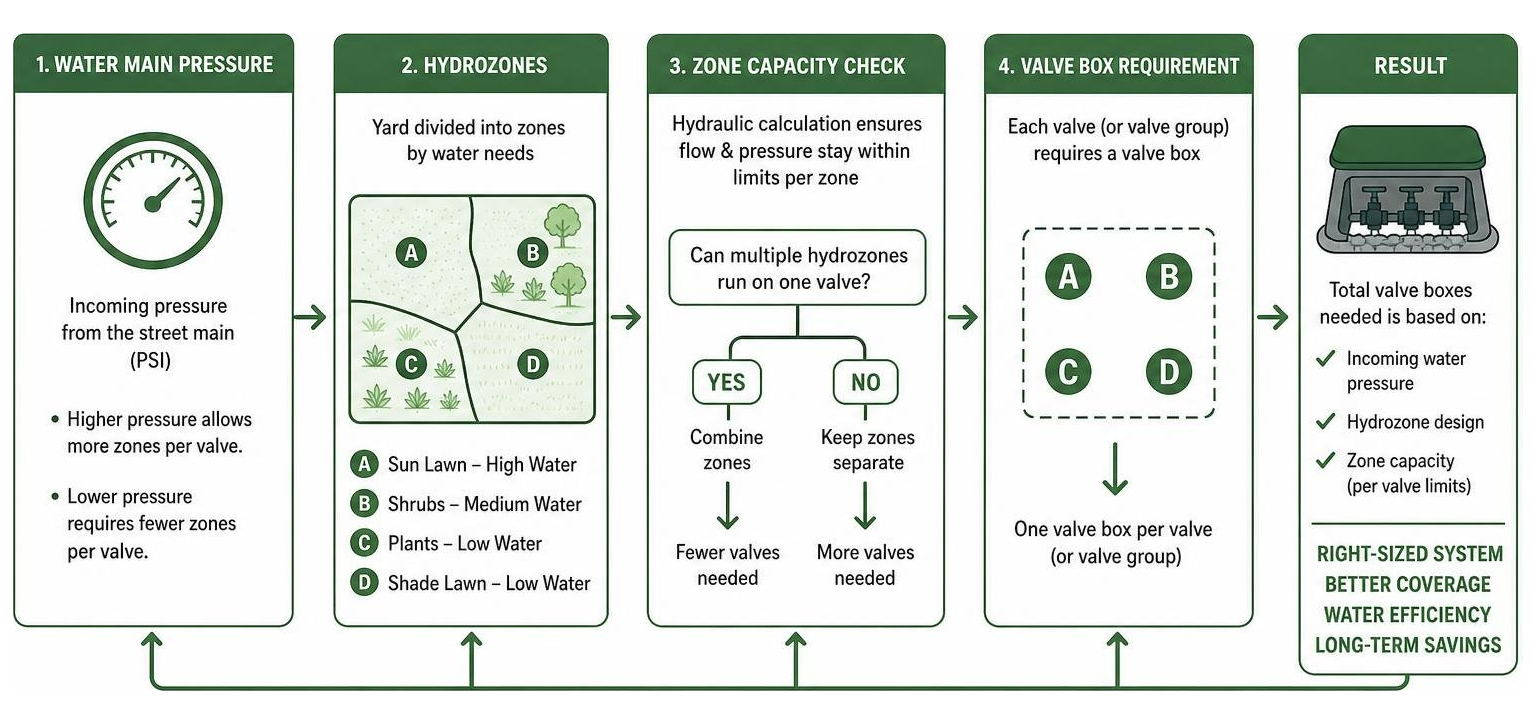
A primary cost metric contractors use is the price per zone. Fully installed, an irrigation zone costs between $350 and $800, with $500 to $650 per zone representing the standard residential benchmark. A “zone” is simply a individual hydraulic circuit governed by a single control valve. Rather than running every head simultaneously—which would collapse home water pressure—the system waters one designated sector at a time.
Designing effective zones relies on a strategy called hydrozoning. This process separates your yard into distinct watering groups based on plant species, shade exposure, soil absorption rates, and slope. Sun-baked front lawns need rotary nozzles, while shaded backyard garden beds require targeted drip lines. Grouping these areas into independent zones ensures plants receive precise hydration while eliminating water waste. To learn more about navigating line items and preventing unexpected project charges, check out our guide on The Ballpark Cost of a New Sprinkler System Don’t Get Soaked by Hidden Fees.
Key Factors Influencing Your Total Sprinkler System Cost
While square footage sets the stage, several critical physical and operational variables influence the final quote on your proposal:
- Water Pressure (PSI) and Flow Rate (GPM): Your home’s baseline water supply sets strict limits on system design. Standard residential utility connections deliver 50 to 60 pounds per square inch (PSI) of pressure and a flow rate of 8 to 14 gallons per minute (GPM). If your water flow rate is lower, your installer must split the landscape into a higher number of smaller zones to maintain adequate head performance. Because each extra zone requires another valve, manifold fitting, and controller terminal, low water flow directly increases equipment and installation expenses.
- Soil Conditions and Excavation: Digging conditions dramatically impact labor hours. Trenching through soft, friable loam costs an average of $4 to $12 per linear foot. However, difficult subsurface conditions drive those labor costs upward. In hard-packed clay, rocky ground, or sites with heavy root systems, labor charges can rise by $0.40 per linear foot or more due to manual pick-axe work or specialized machinery.
- Backflow Assembly Requirements: Connecting an automatic irrigation system to a potable domestic water supply requires a code-compliant backflow preventer. This vital device stops stagnant irrigation water, fertilizer, and soil bacteria from siphoning back into your drinking water. Installing a new backflow assembly adds roughly $350 to $600 to the project.
- Permit Fees and Municipal Codes: Local building and plumbing departments enforce rules regarding irrigation tie-ins. Standard municipal permit fees typically range from $35 to $200 depending on your city.
If you are evaluating modifying or extending an existing setup rather than building from scratch, read our detailed article on In the Zone How Much Does Adding an Irrigation Zone Really Cost for specific line-item guidance.
Irrigation System Component Pricing: Spray, Rotor, and Drip
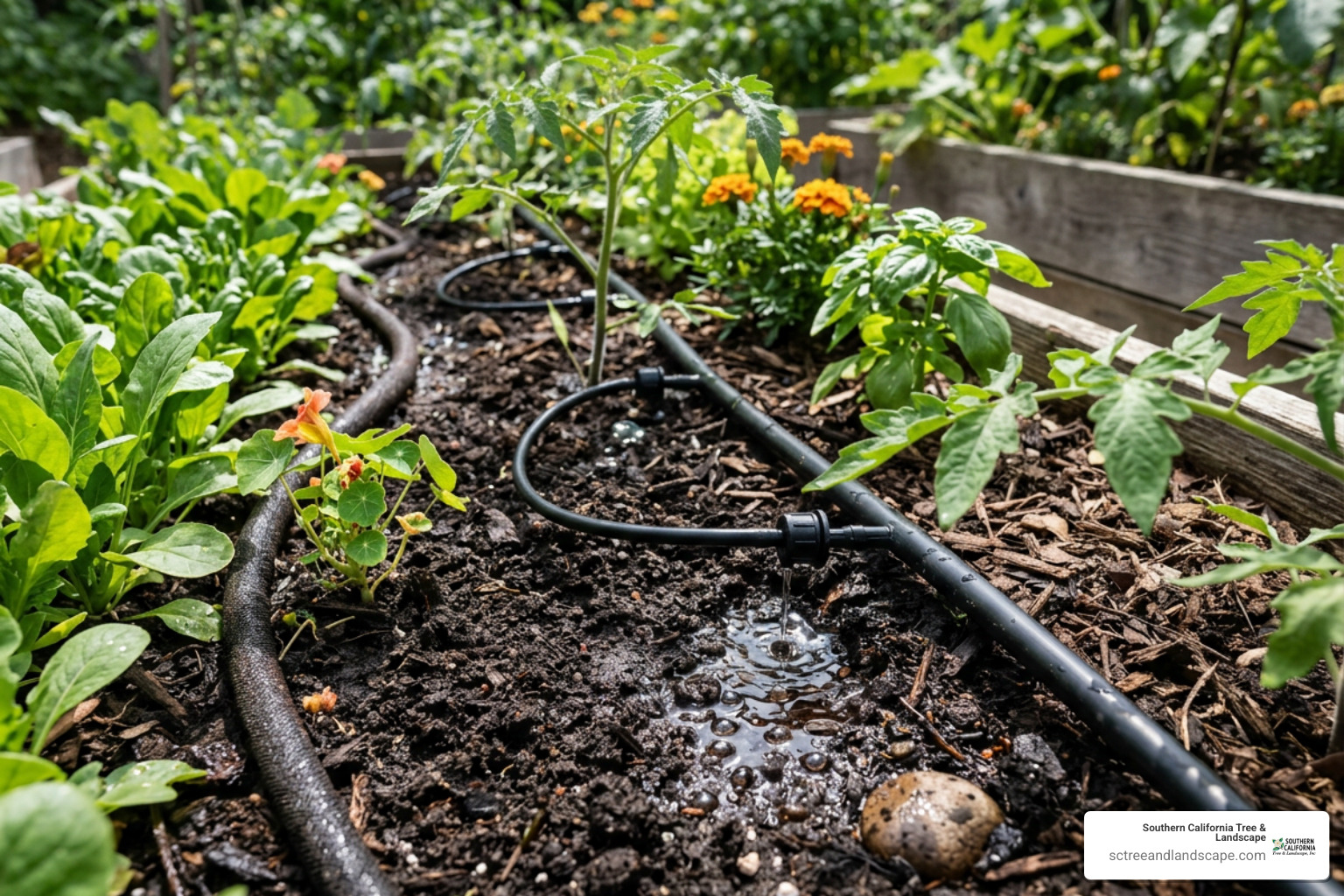
Every landscape features unique topographical and vegetative conditions, which means an effective irrigation layout rarely relies on a single emitter style. Achieving efficient coverage requires implementing the head-to-head coverage principle. This industry standard requires that the spray throw from one sprinkler head reaches completely to the base of the adjacent head. Proper spacing eliminates dry spots, prevents overwatering, and ensures uniform precipitation across every square foot of turf.
Selecting the right head technology directly impacts both material pricing and long-term water conservation performance. For detailed breakdown on component selection, review How Much Does It Cost to Install an In-Ground Sprinkler System?.
Spray Heads, Rotor Heads, and Drip Line Costs
Different parts of your yard require distinct watering methods. Here is how material pricing breaks down across the three main irrigation delivery types:
- Gear-Driven Rotor Heads: Gear-driven rotors shoot a rotating stream of water across distances of 15 to 50 feet, making them ideal for large, open lawn areas. Because individual rotor heads cover two to three times the area of a traditional spray nozzle, fewer heads and valve connections are needed per square foot. Material costs for rotor systems average approximately $0.45 per square foot.
- Fixed Spray and Rotary Heads: Fixed pop-up spray heads mist water over a 6 to 15-foot radius, making them suited for smaller, narrow turf zones and complex landscape geometry. Pop-up designs remain flush with the soil when inactive, protecting heads from lawnmower blades and reducing tripping hazards for children and pets. Material costs for spray head zones average around $0.55 per square foot.
- Drip Irrigation Lines: Micro-drip tubing delivers water directly to plant root zones through targeted pressure-compensating emitters. Drip zones eliminate wind drift, overspray onto hardscapes, and surface evaporation, delivering up to 70% higher water efficiency than overhead sprayers. Material costs for drip zones average roughly $0.65 per square foot, but the reduction in long-term water use frequently offsets the initial investment.
If your property features mixed shrub beds, hedge lines, or potted plants, integrating drip lines is essential. If you encounter issues with existing emitter lines, explore our guide on Don’t Drown in Options When Searching for Local Drip Repair.
Smart Controllers, Valves, and Backflow Assemblies
The operational engine of your sprinkler system lies in its control manifold and automatic timer:
- Basic Timer Controllers ($50 – $100): Entry-level digital timers run simple, clock-based schedules. While inexpensive, basic timers operate regardless of rainfall or ambient moisture, which can lead to overwatering unless manually adjusted.
- Smart Wi-Fi Controllers ($150 – $300): Upgrading to a Wi-Fi smart controller allows your system to connect to local weather stations and automatically adjust watering times based on temperature, humidity, and rainfall forecasts. WaterSense-labeled smart controllers cut annual water consumption by 20% to 40%, paying for themselves within one to two seasons.
- Weather and Soil Moisture Sensors ($25 – $50 each): On-site rain shut-off switches and soil moisture sensors override scheduled watering cycles when natural rainfall occurs or when soil root zones remain wet.
- Automatic Control Valves ($20 – $45 each): Low-voltage solenoid valves open and close water flow to individual hydrozones upon receiving electrical signals from the main controller.
- Backflow Preventers ($350 – $600): Assemblies such as Pressure Vacuum Breakers (PVB) or Reduced Pressure Zone (RPZ) devices safeguard public and home water supplies from cross-contamination.
For South Bay and Torrance homeowners managing local utility rate structures, smart controllers offer significant utility savings. Read our local guide on Don’t Let Your Money Evaporate With These Torrance Smart Controllers to learn how automated controls optimize watering performance.
Professional Installation vs. DIY: Costs, Labor, and Permits
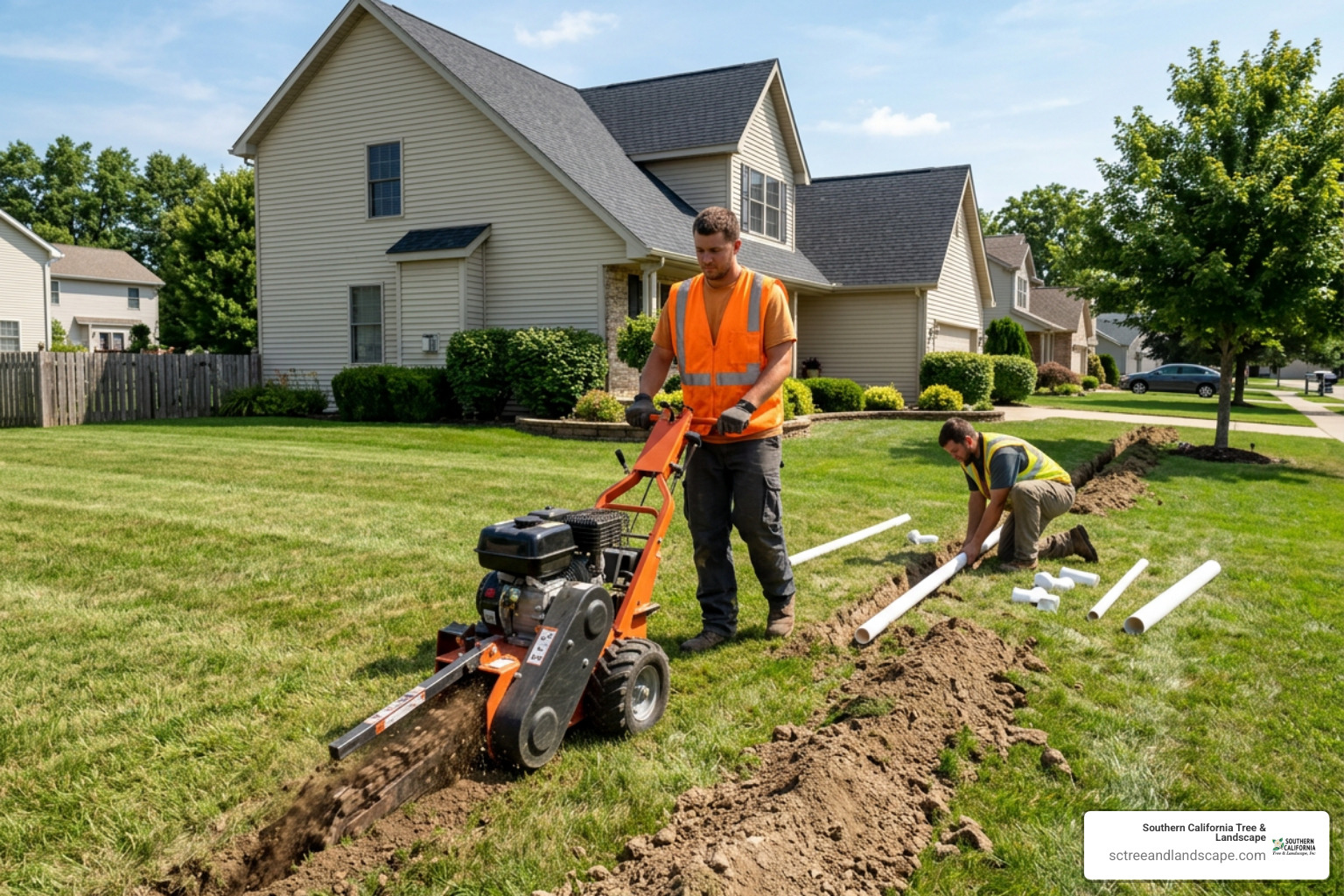
One of the first choices homeowners face is deciding between tackling a DIY installation or hiring a licensed professional irrigation contractor. While doing the work yourself saves on upfront labor charges, professional installation offers design expertise, proper equipment, and long-term reliability.
Professional installation labor typically accounts for 40% to 55% of the total project invoice. Billing rates for specialized irrigation crews generally run between $50 and $100 per hour per worker. On a standard 1/4-acre yard, an experienced installation crew completes the job in 1 to 2 days, whereas a self-installed project often stretches across multiple weekends.
DIY Installation Costs and Risks
Choosing the DIY path eliminates contractor labor fees, leaving you responsible only for component purchases and equipment rentals:
- Material Kits & Parts: Pre-packaged retail sprinkler kits and separate commercial piping generally cost between $500 and $1,800 for a standard 4-zone setup.
- Equipment Rentals: Renting a walk-behind power trencher costs approximately $150 to $300 per day.
- Time Commitment: DIY builds require roughly 20 to 40 hours of intensive physical labor spanning 2 to 4 days or multiple weekends.
While saving $1,500 or more on labor costs sounds appealing, DIY projects carry notable risks. Improper pipe sizing can lead to hydraulic pressure drops, while incorrect head spacing creates permanent dry spots across your lawn. Furthermore, misjudging trench depths can leave main lines vulnerable to damage, and improper main line connections risk joint leaks beneath finished hardscapes.
If you decide to handle minor system repairs or basic maintenance on your own, review our helpful guide on Sprinkler Repair Quick and Easy a DIY Guide. For insights into regional installation pricing and component cost structures, see Sprinkler System Cost 2026 – Installation Prices.
Hiring Professional Installers and Local Permits
Hiring a qualified irrigation contractor ensures your project complies with plumbing codes, backflow rules, and local landscape water management standards.
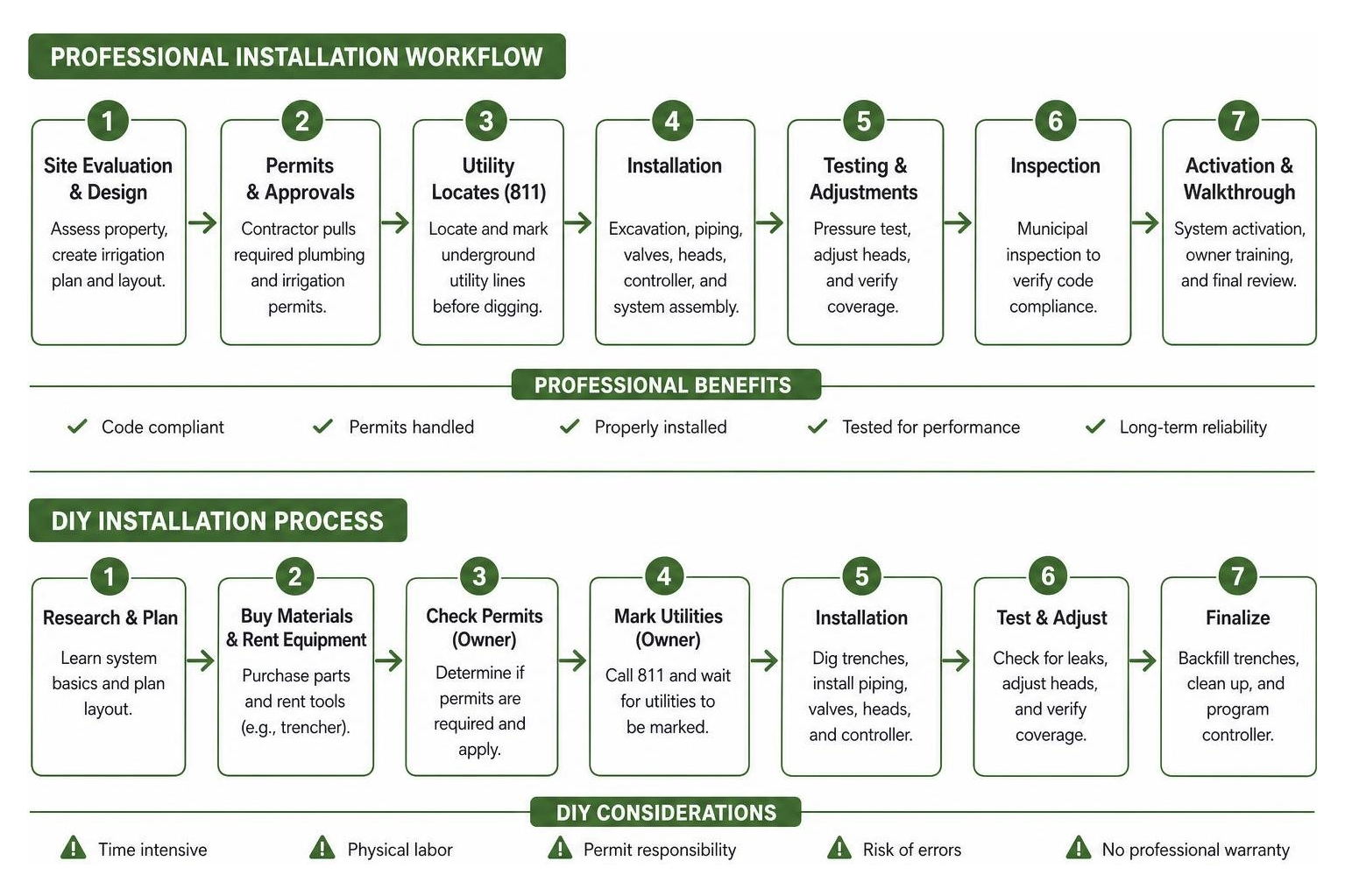
When hiring an installer, consider these standard industry practices:
- Licensing & Industry Certification: Professional contractors carry state licensing, general liability insurance, and worker’s compensation. Many hold professional credentials through the Irrigation Association (IA).
- Municipal Permits: Licensed contractors pull required plumbing and irrigation permits ($35 to $200) prior to starting excavation.
- Utility Line Identification: Contractors contact local utility location services (calling 811) at least three business days before digging to locate and protect buried gas, electric, telecommunication, and cable lines.
- California MWELO Compliance: For Southern California properties, projects exceeding specific square-footage thresholds must comply with Model Water Efficient Landscape Ordinance (MWELO) guidelines. Professional installers handle mandatory documentation, flow-sensor requirements, and maximum applied water allowance calculations.
- Comprehensive Warranties: Professional installations include multi-year warranties covering both component defects and labor.
To evaluate potential contractors and understand what should be included in a formal quote, consult our Buyers Guide Best Irrigation Installers for 2026.
Long-Term Maintenance, Water Expenses, and Home Value ROI
An automated sprinkler system should be evaluated as a long-term investment in your property’s health and resale appeal. Well-maintained underground piping and valve systems last 20 to 25 years. Individual pop-up spray heads typically feature a service life of 10 to 15 years, while digital controllers run reliably for 10 to 20 years before requiring component replacement.
From an equity perspective, real estate professionals report that a working underground irrigation system yields a 50% to 90% return on investment (ROI) at home resale, particularly in dry regions like Southern California where lawn health impacts curb appeal. Furthermore, healthy, mature landscaping protected by reliable irrigation can enhance total residential property valuation by up to 20%.
To understand how proper automation safeguards your lawn and plant investments, read Stop Hosing Around and Start Automatic Sprinkler System Installation.
Annual Water Costs and System Maintenance
Operating an irrigation system incurs ongoing utility and seasonal maintenance expenses:
- Seasonal Water Costs: A typical 1/2-acre property receiving the recommended 1 inch of weekly precipitation consumes roughly 13,500 gallons of water per week during peak summer. Over a 15-week summer watering season, usage totals approximately 200,000 gallons. At standard municipal utility rates ($3.50 to $5.50 per 1,000 gallons), seasonal irrigation water expenses generally range from $700 to $1,100.
- System Activation & Inspection: An annual spring tune-up—including checking valve operation, cleaning filter screens, and adjusting spray arcs—typically costs $100 to $250.
- Backflow Testing: Municipal water purveyors require mandatory annual backflow testing, which ranges from $75 to $150.
- Winterization (Where Applicable): In regions subject to freezing temperatures, autumn compressed-air blowouts cost $50 to $230 per year to prevent frozen lines and cracked valve bodies.
For a broader look at routine maintenance strategies that protect your landscape investment, see our resource on Irrigation Services a Smart Solution for Your Landscape.
Strategies to Save Money on Installation
If you want to manage upfront installation costs without compromising long-term reliability, consider these practical strategies:
- Schedule During Off-Peak Seasons: Landscaping contractors experience their highest demand during peak spring and early summer months. Scheduling your project in late fall or winter can unlock off-peak scheduling availability and more competitive labor rates.
- Perform Initial Site Prep Work: You can reduce professional labor hours by clearing brush, removing decorative turf, or marking plant beds before installation crews arrive.
- Apply for Utility Rebates: Local water agencies, including Metropolitan Water District of Southern California, frequently offer cash rebates ($80 to $250+) for installing WaterSense-certified smart Wi-Fi controllers and high-efficiency rotary nozzles.
- Adopt a Phased Installation Plan: If budgeting for a full property install is challenging, have your contractor install a main supply line and controller capable of expanding. You can install turf zones first and add landscape bed drip zones in a later phase.
- Incorporate Targeted Micro-Drip Zones: Replacing overhead sprayers with drip tubing in non-turf beds lowers component costs, reduces total zone count, and slashes long-term water bills.
Frequently Asked Questions About Irrigation Costs
How long does a sprinkler system last and what is its ROI?
With routine maintenance, a high-quality residential sprinkler system features a lifespan of 20 to 25 years. Underground PVC or poly distribution pipes last up to 30 years, solenoid valves operate reliably for 15 to 20 years, pop-up heads last 10 to 15 years, and smart controllers run 10 to 20 years.
Regarding financial payback, an automated smart irrigation system can pay for itself within 3 to 5 years by reducing water consumption by 30% to 50% compared to manual hose watering. In competitive real estate markets, a working irrigation system recoups 50% to 90% of its installation cost in direct home resale equity by preserving curb appeal and mature plant growth.
Do I need a permit and backflow preventer for installation?
Yes. Connecting an irrigation system directly to a domestic potable water main requires compliance with state and municipal plumbing codes. Local jurisdictions require an irrigation or plumbing permit (costing $35 to $200) to ensure connections meet safety standards.
A code-compliant backflow preventer (such as a Pressure Vacuum Breaker or Reduced Pressure Zone assembly) is required by law. This device prevents contaminated groundwater, soil microbes, and lawn chemicals from back-siphoning into your household drinking supply. Licensed contractors include mandatory backflow assemblies and permit applications as standard items in their proposals.
How much does it cost to add a new zone to an existing system?
Adding an individual zone to an existing operating system costs $400 to $700 on average. The total price depends on distance from the current valve manifold, soil conditions, and controller capacity.
The job requires cutting into the existing main supply line, installing a new low-voltage solenoid valve inside a protective valve box, laying underground lateral pipe, placing matching sprinkler heads, and running control wires back to the timer. If your current timer lacks unused terminals, you may also need a controller expansion module ($50 to $100) or an upgraded controller.
Conclusion
Investing in an automatic sprinkler system is one of the most effective ways to preserve landscape health, reduce manual labor, and maintain consistent property curb appeal. While the initial sprinkler system cost ranges from $1,800 to $5,000 for standard suburban properties, selecting modern Wi-Fi controllers, efficient head layouts, and targeted drip zones keeps long-term operating costs manageable while protecting your home’s equity.
Partnering with an experienced, licensed irrigation team ensures your system delivers uniform water coverage without wasteful runoff or code violations. At Southern California Tree & Landscape, our family-owned team has served homeowners across Torrance, Covina, Harbor City, and the South Bay since 1991. Led by an ISA-certified arborist, our crew delivers comprehensive landscape design, precision irrigation installations, smart system upgrades, and long-term water management solutions.
If you are ready to explore options for your home, visit our Professional Irrigation Services page to request a detailed, on-site project estimate tailored specifically to your landscape.