
What Does a New Sprinkler System Actually Cost in 2026?
Understanding the cost of a new sprinkler system before you commit to installation can save you hundreds — sometimes thousands — of dollars in surprise charges.
Here’s a quick snapshot of what most homeowners pay in 2026:
| Scenario | Typical Cost |
|---|---|
| National average (installed) | ~$2,539 |
| Typical range (most homes) | $1,637 – $3,583 |
| Per square foot (in-ground) | $0.88 – $1.70 |
| 5,000 sq ft yard | $4,500 – $8,500 |
| 1 acre property | $6,000 – $12,000 |
| Single watering zone | $585 – $2,000 |
These numbers are a solid starting point. But here’s the reality: labor, permits, trenching, soil conditions, and smart add-ons can all push your final bill well above those averages — especially in Southern California, where established landscaping, clay soils, and local code requirements add complexity.
This guide breaks down every cost factor so you know exactly what you’re paying for, what questions to ask, and where you can trim costs without sacrificing quality.
Average Cost of a New Sprinkler System in 2026
When calculating the cost of a new sprinkler system, the national average sits right around $2,539, with most homeowners spending between $1,637 and $3,583. On a square-foot basis, you can expect to pay between $0.88 and $1.65 for a standard automatic system, or $0.90 to $1.70 per square foot for a fully in-ground network. If you are managing a larger property, installing a system on a full acre can range from $6,000 to $12,000.
In Southern California—including our service areas in Torrance, Covina, and Harbor City—pricing typically leans toward the higher end of these ranges. This is due to local labor rates, permitting fees, and the necessity of specialized water-conserving technologies designed to comply with strict state water regulations.
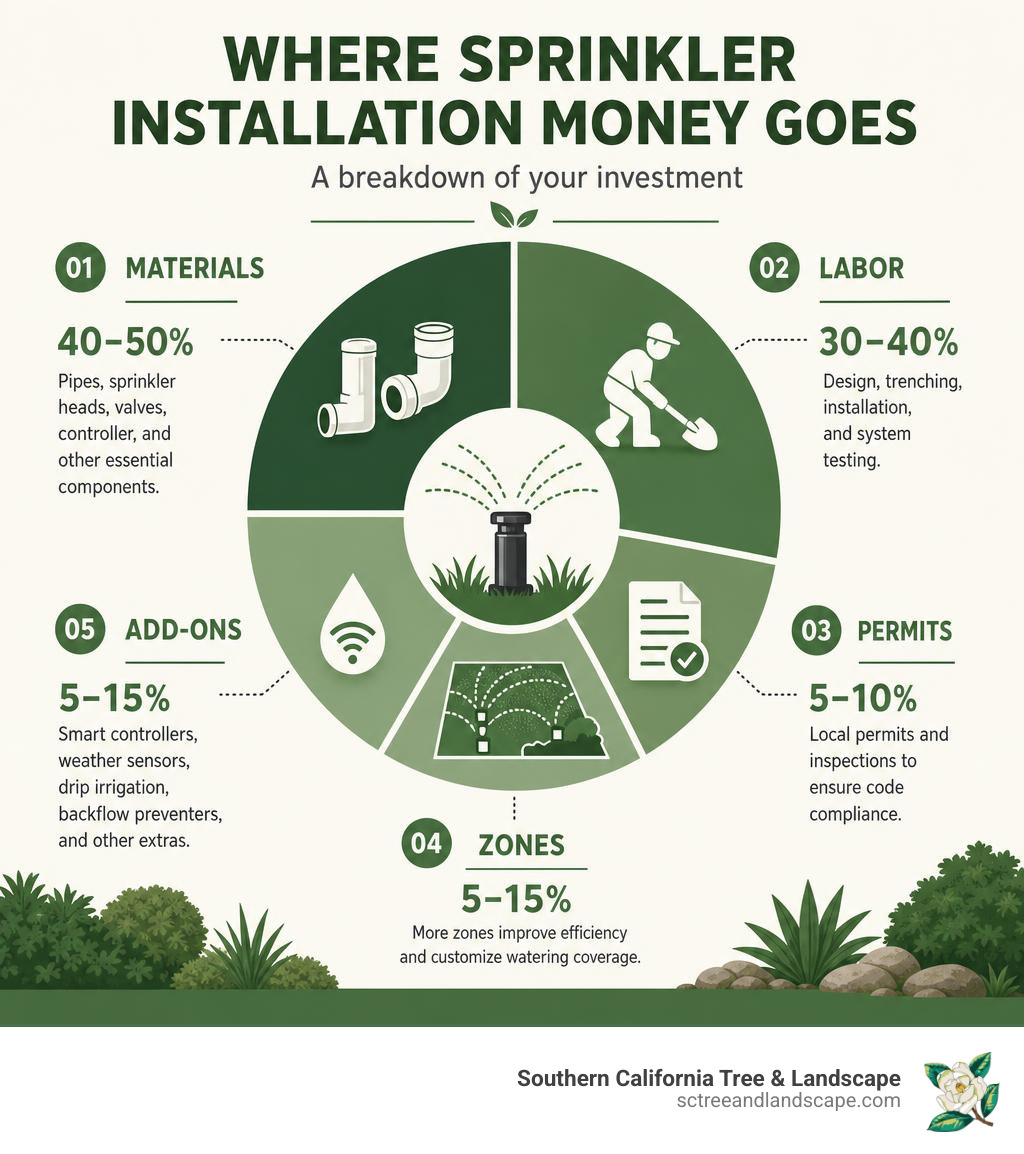
Generally, the cost of a professional installation is split evenly: 45% goes toward professional-grade materials, 45% covers labor, and the remaining 10% is allocated to controllers, valves, and city permits. To get a highly localized estimate tailored to your specific zip code and yard dimensions, you can use the 2026 sprinkler installation cost calculator.
Cost of a New Sprinkler System by Yard Size
Lawn size is the single most significant physical factor determining your overall installation bill. The larger the coverage area, the more piping, trenching, and sprinkler heads are required.
- Small Yards (1,000 sq. ft.): These compact spaces are highly manageable and usually cost between $900 and $1,800.
- Medium Yards (5,000 sq. ft.): This is the typical size for suburban homes in the South Bay. An in-ground system for a yard this size averages between $4,500 and $8,500.
- Quarter-Acre Yards (~10,890 sq. ft.): Systems for quarter-acre properties generally range from $1,740 to $3,400 for basic setups, but can scale higher if the landscape design features complex curves or separate turf and planting beds.
- Half-Acre Yards (~21,780 sq. ft.): These mid-sized properties usually cost between $3,500 and $6,000 to irrigate.
- Large Properties (1 Acre or More): Acreage installations benefit from economies of scale regarding materials, but the sheer volume of trenching and zoning requirements pushes the total cost to $6,000–$12,000.
Cost of a New Sprinkler System by Watering Zone
Instead of watering your entire yard at once—which would require massive water pressure—irrigation systems are divided into “zones.” Each zone is controlled by its own valve and waters a specific section of your property.
The average quarter-acre yard requires 4 to 7 watering zones, with each zone typically supporting 5 to 9 sprinkler heads. If you have low water pressure, you will need more zones with fewer heads per zone to ensure proper coverage.
A single-zone system costs between $500 and $1,000. Each additional zone adds approximately $585 to $1,340 (and up to $2,000 for complex layouts). This cost covers the extra valves, manifold expansion, piping, and the higher-capacity controller needed to manage more complex watering schedules. Dividing your yard into distinct zones also allows for “hydrozoning”—grouping plants with similar water needs together to prevent overwatering and reduce utility bills.
Hidden Fees and Cost Factors That Change Your Estimate
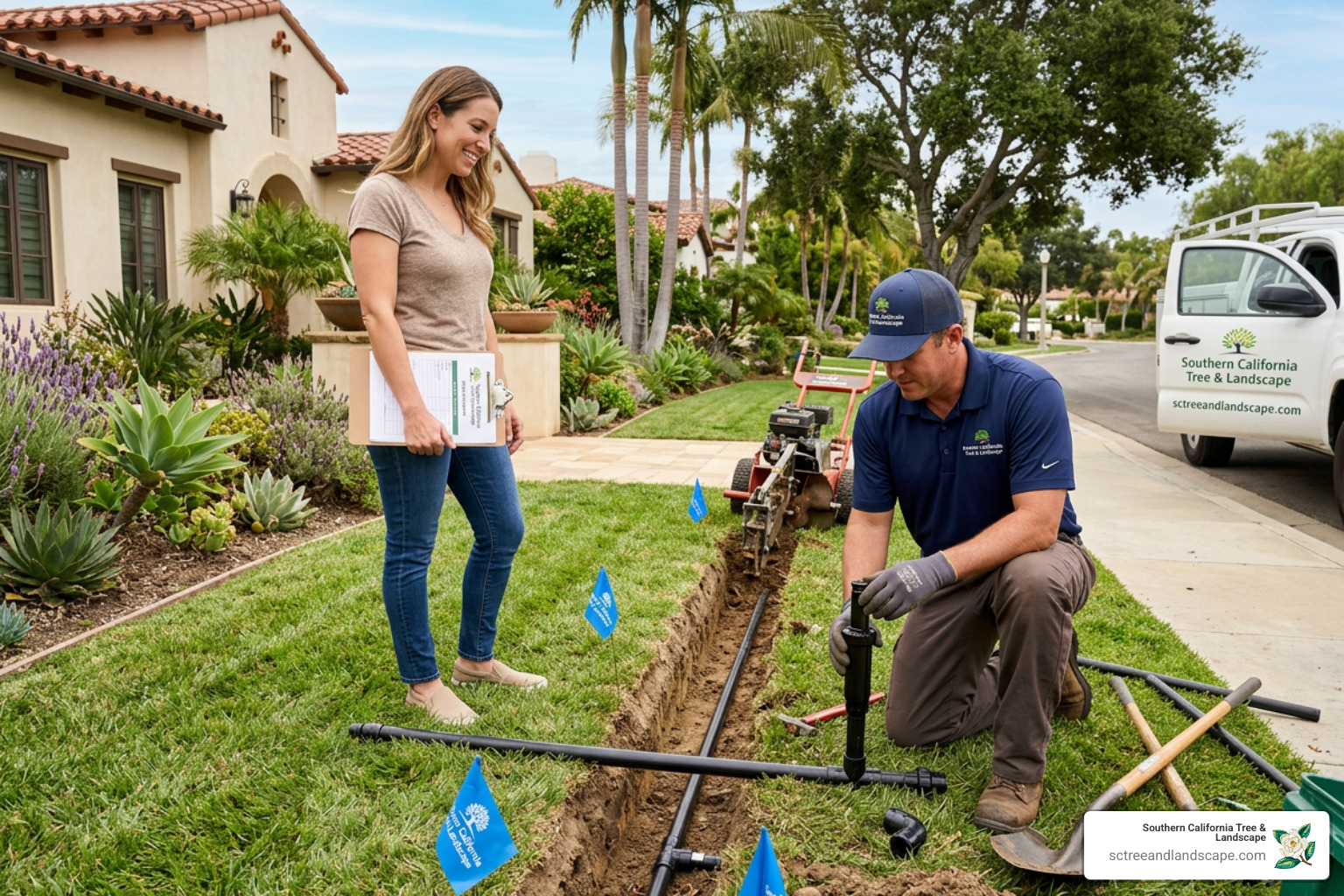
The initial quote you receive from a contractor is rarely the final price unless they have performed a thorough physical inspection of your property. Several hidden variables can quickly escalate the cost of a new sprinkler system.
Labor, Trenching, Permits, and Backflow Prevention
Labor accounts for roughly 50% to 60% of professional installation costs. Standard professional labor rates range from $50 to $100 per hour, but can rise to $100 to $150 per hour if crews encounter difficult soil or extensive tree root systems. For a standard quarter-acre yard, expect 8 to 16 labor hours, with the entire project taking 1 to 3 days to complete.
Trenching costs between $4 and $12 per linear foot. If your city requires a permit for irrigation installation, expect to pay an additional $35 to $200 (and up to $550 or more in highly regulated municipal zones).
Additionally, almost all Southern California municipalities require the installation of a backflow prevention valve. This safety device prevents irrigation water—which may contain fertilizers, pesticides, or pet waste—from siphoning back into your home’s clean drinking water supply. Installing a backflow preventer and getting it certified by a local inspector adds another $150 to $600 to your budget.
Soil, Slope, Water Pressure, and Existing Landscape Conditions
Your yard’s physical geography plays a major role in pricing:
- Soil Type: Digging in soft, sandy soil is fast and inexpensive. However, if your yard contains heavy clay or rocky soil, trenching costs can increase by up to $0.40 per linear foot due to the need for heavy-duty trenching machinery.
- Slopes: Sloped lawns require specialized high-efficiency sprinkler heads with built-in check valves to prevent water from pooling at the bottom of the hill.
- Existing Landscaping: Installing a system in a newly built home is straightforward. Retrofitting an older, established landscape requires navigating mature tree root systems, boring under concrete driveways or walkways, and carefully cutting and replacing existing sod.
- Water Pressure: Low water pressure forces installers to design more zones with fewer heads per zone, which increases the total cost of valves, piping, and controllers.
Smart Controllers, Sensors, and Water-Saving Add-Ons
In Southern California, water conservation is both an environmental necessity and a financial priority. Upgrading from a basic manual timer to a smart Wi-Fi controller costs between $200 and $400 (or a $50 to $300 add-on fee). These smart systems connect to local weather stations to automatically skip watering cycles when rain is forecast.
Additionally, installing rain and soil moisture sensors (ranging from $17 to $75 each) prevents overwatering by measuring actual soil moisture levels. In several states, including California, these water-saving sensors are mandatory for new residential installations.
To learn more about how to select the right smart irrigation system for your property, read our smart controller guidance.
Sprinkler System Types and What Each One Costs
Different areas of your landscape require different watering methods. Choosing the right system type ensures your plants receive the correct amount of water without wasting a drop.
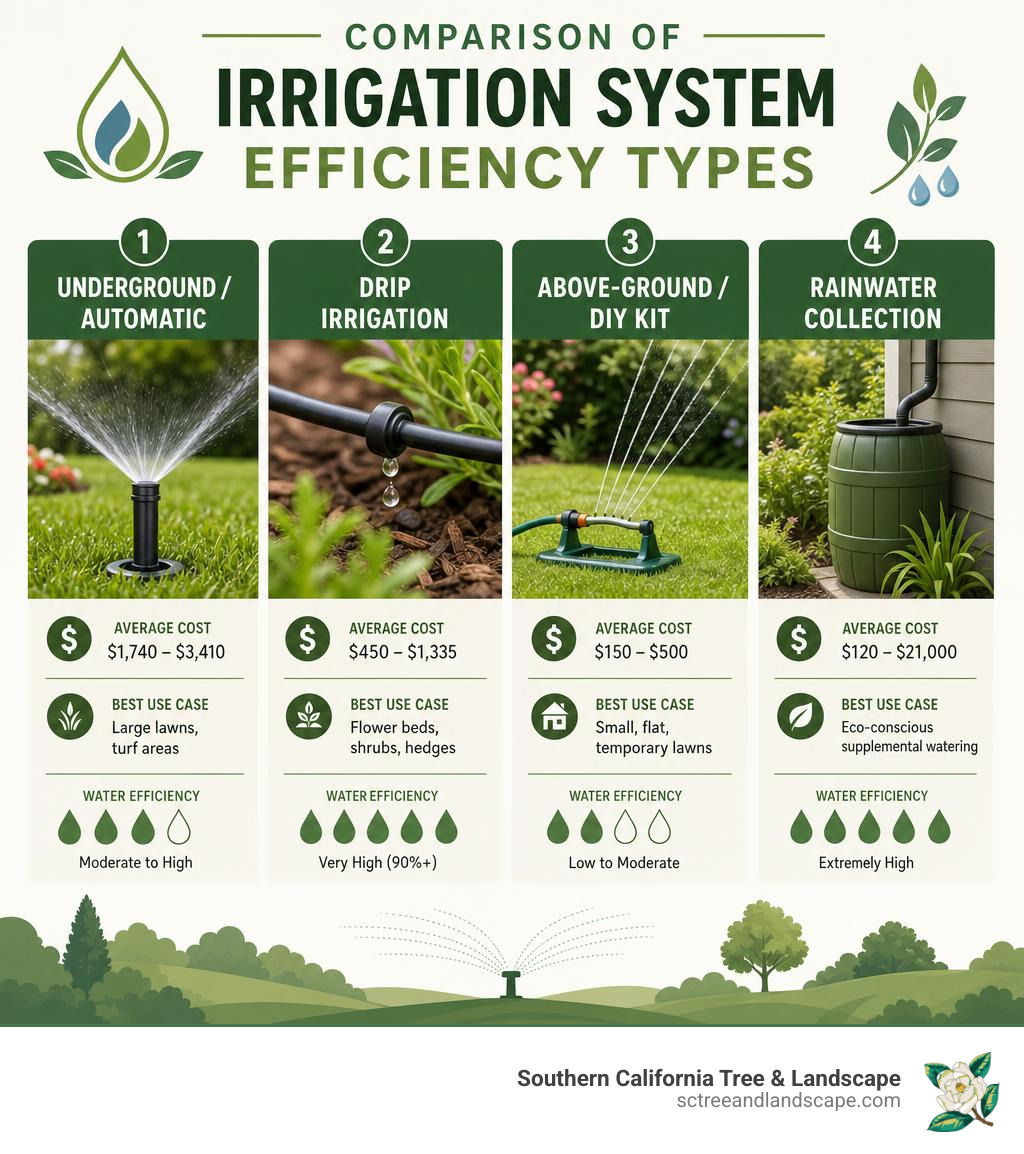
| System Type | Average Cost | Best Use Case | Water Efficiency |
|---|---|---|---|
| Underground / Automatic | $1,740 – $3,410 | Large lawns, turf areas | Moderate to High |
| Drip Irrigation | $450 – $1,335 | Flower beds, shrubs, hedges | Very High (90%+) |
| Above-Ground / DIY Kit | $150 – $500 | Small, flat, temporary lawns | Low to Moderate |
| Rainwater Collection | $120 – $21,000 | Eco-conscious supplemental watering | Extremely High |
Automatic and Underground Sprinkler Systems
An automatic, in-ground sprinkler system is the standard choice for residential lawns. These systems utilize underground PVC or polyethylene pipes connected to pop-up, rotary, or fixed spray heads. When the controller signals a valve to open, water pressure pushes the sprinkler heads up out of the grass to distribute water. When the cycle finishes, they retract flush with the lawn, allowing you to mow without obstruction.
These systems cost between $0.88 and $1.70 per square foot. They provide seamless, full-lawn coverage and can last over 20 years with proper maintenance. For a detailed breakdown of how these systems operate, check out our guide on automatic sprinkler installation benefits.
Drip Irrigation, Bubblers, and Rainwater Collection
For garden beds, shrubs, trees, and dense planting areas, drip irrigation is the most efficient option. Rather than spraying water into the air—where much of it evaporates in the Southern California heat—drip irrigation delivers water directly to the plant roots through low-volume emitter tubes.
A professional drip irrigation system costs between $450 and $1,335 per zone (or $340 to $960 per 200 square feet). For heavy-watering plants like young trees, bubblers can be installed to flood the root zone directly.
If you want to maximize sustainability, a rainwater collection system can be integrated to store runoff in rain barrels or large underground cisterns. These systems range from $120 for a basic barrel to $21,000 for massive commercial-grade storage tanks. To see how these options can be integrated into your yard, explore our irrigation service options.
Lawn Sprinklers vs Residential Fire Sprinklers
It is important to note that outdoor lawn irrigation systems and indoor residential fire sprinkler systems are completely separate installations. They operate under different building codes, utilize different piping materials (such as CPVC or copper for indoor fire safety), and cannot be integrated or interchanged.
Indoor fire sprinkler systems cost between $1.50 and $3.00 per square foot for new home builds, and $2.00 to $7.00 per square foot for retrofitting older homes. While indoor fire sprinklers are a significant investment, they can reduce home fire damage by up to 90% and qualify homeowners for a 5% to 15% discount on their property insurance. For a comprehensive look at indoor fire safety systems, you can read this residential fire sprinkler cost breakdown.
DIY vs Professional Installation, Ongoing Costs, and ROI

Deciding whether to install a sprinkler system yourself or hire a professional comes down to a trade-off between upfront savings and long-term reliability.
When DIY Sprinkler Installation Makes Sense
If you have a small, flat, uncomplicated yard, a DIY installation can save you roughly 50% on labor costs. High-quality DIY sprinkler kits cost between $500 and $2,000, while basic raw materials cost just $0.05 to $0.14 per square foot.
These systems often connect directly to an outdoor faucet, eliminating the need to tie into your main water line. However, you will still be responsible for performing flow-rate (GPM) tests, digging trenches by hand, obtaining city permits, and ensuring your design provides head-to-head coverage to avoid dry spots.
Why Professional Installation Often Pays Off
For larger yards, sloped properties, or complex landscapes, hiring a professional is highly recommended. Professional installers handle all the complex hydraulic calculations, backflow prevention compliance, and deep trenching required for a durable system. They also hold the necessary licenses and liability insurance, protecting you from costly mistakes like accidentally cutting underground utility lines.
To ensure your system is designed for maximum efficiency and longevity, it is best to rely on professional irrigation services.
Maintenance, Repairs, Water Bills, and Winterizing
Once your system is installed, you should budget for ongoing maintenance and operational costs:
- Water Bills: Your water bill will increase, but you can minimize this by scheduling watering cycles for the early morning (before 6:00 AM) to reduce evaporation.
- System Maintenance: Plan for an annual sprinkler audit to check for underground leaks, clean clogged nozzles, adjust misaligned heads, and replace broken components.
- Winterization: In colder climates, winterizing a system costs $50 to $230 annually to blow out the pipes and prevent freeze damage. In coastal Southern California areas like the South Bay, deep freezes are rare, but a seasonal system checkup is still recommended to adjust your controller for cooler winter weather.
Home Value, ROI, and Pros and Cons
Is a new sprinkler system worth the investment? According to the National Association of Realtors, a professionally installed sprinkler system recoups approximately 83% to 86% of its cost at home resale.
Pros:
- Automated, hands-free watering saves hours of manual labor.
- Highly consistent moisture levels lead to a healthier, greener lawn.
- Smart systems reduce overall water waste by up to 30% to 50% compared to hand watering.
- Enhanced curb appeal can make your home much more marketable.
Cons:
- Significant upfront installation costs.
- Requires ongoing maintenance and occasional repairs.
- Risk of high water bills if underground leaks go unnoticed.
How to Reduce the Cost of a New Sprinkler System Without Cutting Corners
If you want to keep your installation costs manageable, consider these strategies:
- Get Multiple Quotes: Always ask for itemized estimates from at least three licensed contractors.
- Schedule Off-Season: Contractors are often less busy during late autumn or winter, making them more likely to offer competitive pricing.
- Do the Prep Work Yourself: You can save on labor by clearing brush, removing old sod, or even digging the trenches yourself before the installation crew arrives.
- Choose Simple Sprinkler Heads: Start with standard, reliable pop-up heads and upgrade to high-end rotary or smart heads later.
- Phase the Installation: If you are on a tight budget, have the main supply line and valves installed first, then add watering zones over time.
Conclusion: Questions to Ask Before You Hire and Get a Clear Estimate
At Southern California Tree & Landscape, we have been family-owned and operated since 1991. With our experienced crews and deep knowledge of local soil and climate conditions, we can help you design a water-efficient irrigation system tailored to your property. If you are ready to upgrade your yard, you can get an irrigation estimate from our team today.
Contractor Questions That Prevent Surprise Charges
Before signing a contract, ask your installer these essential questions:
- Are you licensed, bonded, and insured to perform irrigation work in California?
- Does your quote include the cost of city permits, inspections, and the backflow preventer?
- Will you call 811 to mark underground utility lines before digging?
- What type of warranty do you offer on parts and labor?
- Does the price include restoring my lawn and repairing any damaged hardscape after trenching?
- What is your policy for handling unexpected obstacles, like hidden concrete or large tree roots?
Quick Answers Before You Commit
- How much does a sprinkler system cost for 1 acre? A typical one-acre system costs between $6,000 and $12,000, depending on the number of zones and landscape complexity.
- How long does installation take? Most residential installations take 1 to 3 days. Large or highly complex yards may require 3 to 5 days.
- How long do sprinkler systems last? A well-maintained system will last 20 to 25 years. Expect sprinkler heads to last 10 to 15 years, controllers 10 to 20 years, and underground pipes 20 to 30 years.
- Will a sprinkler system increase my water bill? Yes, but using smart controllers and soil sensors can help keep your water usage highly efficient, often paying for the system upgrade within 3 to 5 years.