
What Does It Really Cost to Add a Zone to Your Sprinkler System?
The cost to add a zone to a sprinkler system typically runs between $650 and $4,200, with most homeowners paying around $1,900 in 2026.
Here’s a quick breakdown of what to expect:
| Project Type | Typical Cost Range |
|---|---|
| Basic zone addition (short run, standard valve) | $650 – $860 |
| Mid-range zone addition (longer run, minor obstacles) | $1,320 – $1,900 |
| Premium zone addition (complex trenching, backflow, controller upgrade) | $2,800 – $4,200 |
| Average across all projects | ~$1,900 |
What drives that wide range? Mainly three things: how far the new pipe needs to run, whether your controller has room for another zone, and what your local municipality requires for permits and backflow prevention.
For HOA managers and property owners in Southern California, the stakes are even higher. A poorly planned zone addition can mean dry spots on a commercial property, code violations, or expensive repairs down the road.
I’m Troy Basmajian, President of Southern California Tree and Landscape, Inc., and over the past decade leading a team of more than 100 landscape and irrigation professionals across Southern California, I’ve seen how widely the cost to add a zone to a sprinkler system can vary depending on site conditions, local water district requirements, and system age. In this guide, I’ll walk you through everything you need to budget accurately and avoid the surprises.
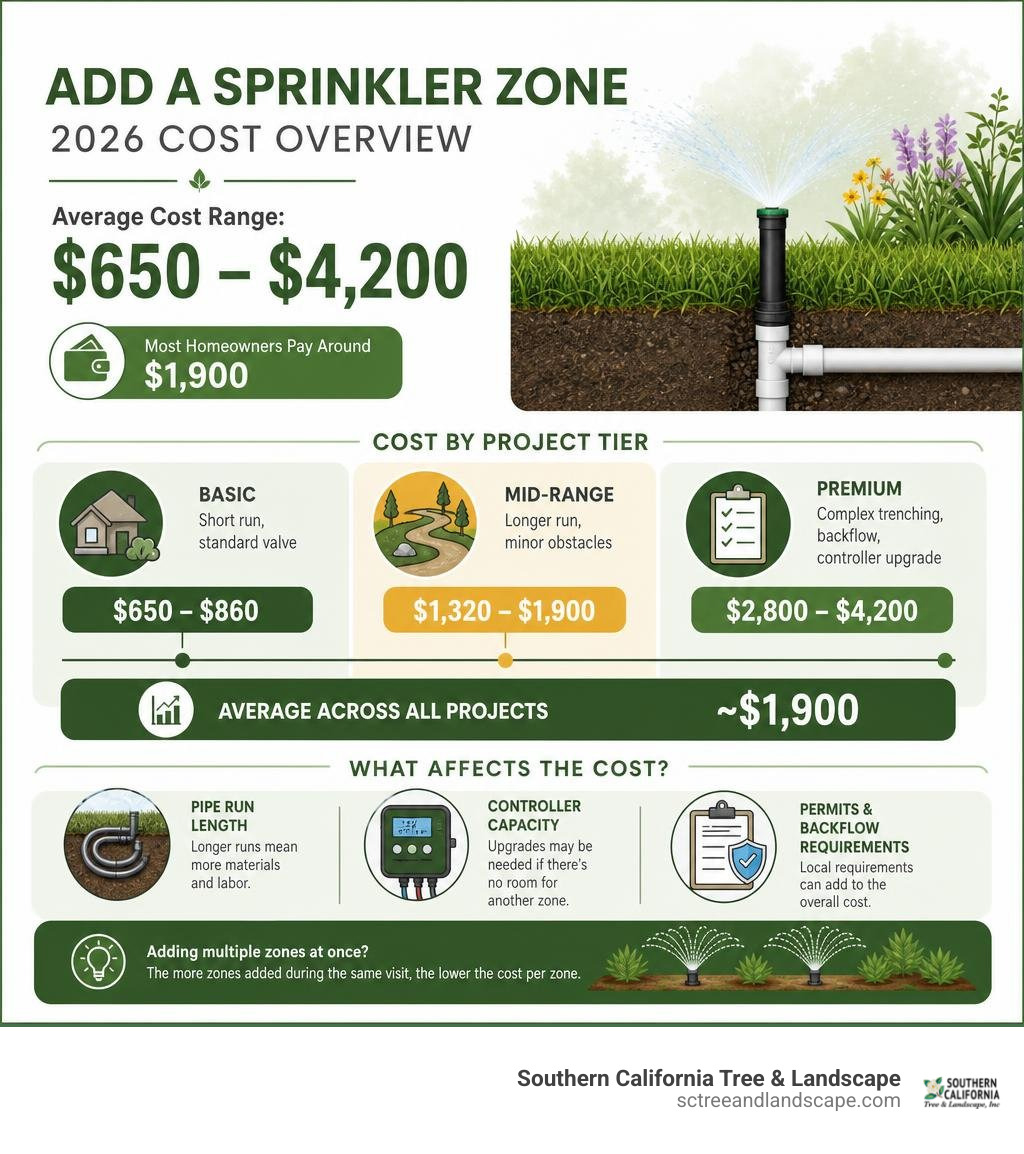
Cost to Add a Zone to Sprinkler System: 2026 Cost Overview
When expanding your lawn or converting flower beds in cities across the South Bay like Torrance, Covina, or Harbor City, adding an extra zone is often the smartest choice. While a full system installation costs anywhere from $2,500 to $5,500 on a standard quarter-acre lot, adding a single zone to an existing setup usually costs $650 to $4,200. On average, homeowners pay $1,900 for a single zone addition, while adding extra zones during the same visit can drop the per-zone rate significantly to between $370 and $600 per zone.
The wide range comes down to how much work is required behind the scenes. Tie-ins, trenching under established lawns or hardscapes, and controller capacity all influence your bottom line.
| Project Scope | Average Total Cost | Cost Per Zone | What Is Included? |
|---|---|---|---|
| Single Zone Expansion | $650 – $4,200 | $650 – $1,900+ | Trenching, piping, 1 valve, 5-10 heads, system tie-in, testing |
| Multi-Zone Expansion (3+ Zones) | $1,200 – $3,200 | $370 – $600 | Shared mobilization, expanded valve manifold, main line extension |
| New System Installation (Full Lawn) | $2,500 – $5,500 | $350 – $600 | Brand-new backflow, main line, smart controller, complete excavation |
Understanding whether you need a quick line extension or a major system retrofit helps establish realistic expectations before hiring a professional crew.
Material vs. Labor Breakdown of the Cost to Add a Zone to Sprinkler System
In any professional irrigation installation, labor makes up the lion’s share of your total invoice. On average, labor accounts for $400 to $2,200 of the overall project, while materials account for $150 to $900.
Why is labor so dominant? Because digging trenches by hand around tree roots, installing valve manifolds, running control wires, and fine-tuning individual spray nozzles takes time and physical effort. A standard single-zone addition requires roughly 4 to 8 hours of labor for a two-person crew, billed at standard rates between $55 and $110 per crew-hour (or up to $100–$200 per hour for licensed plumbing connections).
Material costs, on the other hand, cover specific physical components:
- Zone Valve (Solenoid Valve): $44 to $75 each
- PVC or Poly Pipe: $0.75 to $2.00 per linear foot
- Sprinkler Heads: $5 to $8 for spray heads; $12 to $20 for rotor heads
- Control Wire (18-gauge multi-strand): $0.30 to $0.60 per foot
- Valve Box: $25 to $60
Reviewing detailed guides on the Cost to Add a Zone to a Sprinkler System 2026 confirms that while physical parts are relatively affordable, proper excavation and expert hydraulic calibration make up most of the investment.
How Zone Retrofits Compare to New System Installations
It might seem counterintuitive, but retrofitting a single zone to an existing system can actually cost more per zone ($400 to $700) than installing a brand-new multi-zone system from scratch ($350 to $600 per zone).
When we build a brand-new system, our crews dig open trenches across an unlandscaped yard with machinery. We pull hundreds of feet of pipe at once, mount a new backflow preventer, and install a custom valve manifold in one unified operation.
In contrast, retrofitting requires extreme care. We must manually cut and preserve established turf, avoid buried utility lines, locate the existing main supply line, tie into current wiring, and splice into an existing valve manifold. Restoring disturbed sod and hardscape adds labor time, which increases the per-zone expense compared to the estimated costs of new systems.

Major Cost Factors When Adding an Irrigation Zone

No two yards in Southern California are identical, and several key variables directly shift the final cost of your project.
Using tools like a Sprinkler System Cost Calculator can help project initial estimates, but physical field conditions ultimately dictate total pricing:
- Distance and Line Length: A new zone positioned 20 feet from the valve box costs significantly less than running lines 120 feet into a back garden.
- Soil Composition: Digging through loose sandy loam is fast and easy. Digging through heavily compacted clay, rock-laden soil, or near thick tree roots requires hand excavation and increases labor hours.
- Hardscape Crossings: If a supply line must cross under a paved walkway or concrete driveway, hydraulic boring adds $200 to $500 per crossing.
- Restoration Needs: Re-laying sod, repairing mulch beds, or resetting decorative pavers adds both material and labor costs.
Trenching, Wiring, and Controller Capacity
Trenching costs typically range from $3 to $5 per linear foot ($50 to $350 total per zone under standard residential conditions). A typical zone run requires roughly 80 linear feet of trenching, dug 8 to 12 inches deep to protect the lateral lines from aerators and foot traffic.
Beyond trenching, low-voltage electrical wiring presents another critical bottleneck. Every automated irrigation zone valve must connect to your central timer using a dedicated signal wire plus a common wire. If your existing wire bundle lacks a spare conductor, we have two primary options:
- Trenching New Field Wire: Pulling fresh multi-conductor wire from the house or garage timer out to the valve box. This adds $150 to $400 depending on distance.
- Installing a Single-Wire Adapter: Devices like the R Co. Add-A-Zone adapter cost around $148.45 for hardware. They allow two independent irrigation valves to run on a single existing station wire, eliminating the need to tear up turf or hardscapes just to run new wiring.
If your current irrigation controller is completely full—say, an 8-zone timer running 8 active zones—you will need an upgrade. Replacing a basic timer or adding an expansion module costs between $150 and $500. Upgrading to modern smart controllers with weather-based ET (evapotranspiration) adjustment saves substantial water over time. Explore your options for upgrading smart controllers to keep monthly utility charges in check.
Water Pressure, GPM, and Head Count Restrictions
You cannot simply slap ten pop-up heads onto a new zone and call it a day. Every residential water meter supplies a fixed volume of water, measured in Gallons Per Minute (GPM), at a specific Pounds Per Square Inch (PSI) pressure. A typical residential connection in Torrance or Covina delivers 10 to 15 GPM at 50 to 60 PSI.
To prevent severe pressure drops that keep sprinkler heads from popping up or covering their intended radius, we match the head count to your available flow rate:
- Standard Fixed-Spray Heads: Consume roughly 1.5 to 3.0 GPM each. A typical 12 GPM zone can support 5 to 8 spray heads.
- Rotor Heads: Consume 1.0 to 4.0 GPM each while covering larger distances (25 to 50 feet). A 12 GPM zone can support 3 to 5 rotor heads.
- Rotary Nozzles (MP Rotators): High-efficiency heads that use only 0.5 to 1.2 GPM, allowing you to run 10 to 15 heads on a single zone without sacrificing coverage.
If you exceed your home’s GPM capacity, water pressure plunges, leaving dry brown spots on your lawn. Proper dynamic flow testing is a key part of professional automatic sprinkler system installation.
Backflow Prevention and Permitting Requirements
Protecting municipal drinking water supplies from lawn fertilizers, animal waste, and stagnant lawn water is mandatory. In Southern California, local plumbing codes strictly require a code-compliant backflow preventer assembly on all automated irrigation systems.
If your existing system already features a operational Reduced Pressure Zone (RPZ) or Pressure Vacuum Breaker (PVB) assembly, tying a new zone into the existing downstream main line requires no additional backflow hardware. However, if your existing unit is damaged, undersized, or outdated, installing a new backflow preventer costs $350 to $900 installed ($450 to $1,700 if a licensed plumber must execute a fresh main service tap).
Local municipal permits for irrigation system modifications range from $0 to $500 ($42 to $200 on average in South Bay communities), depending on local municipal building departments and inspection fees.
Hidden Expenses and Regional Pricing Differences
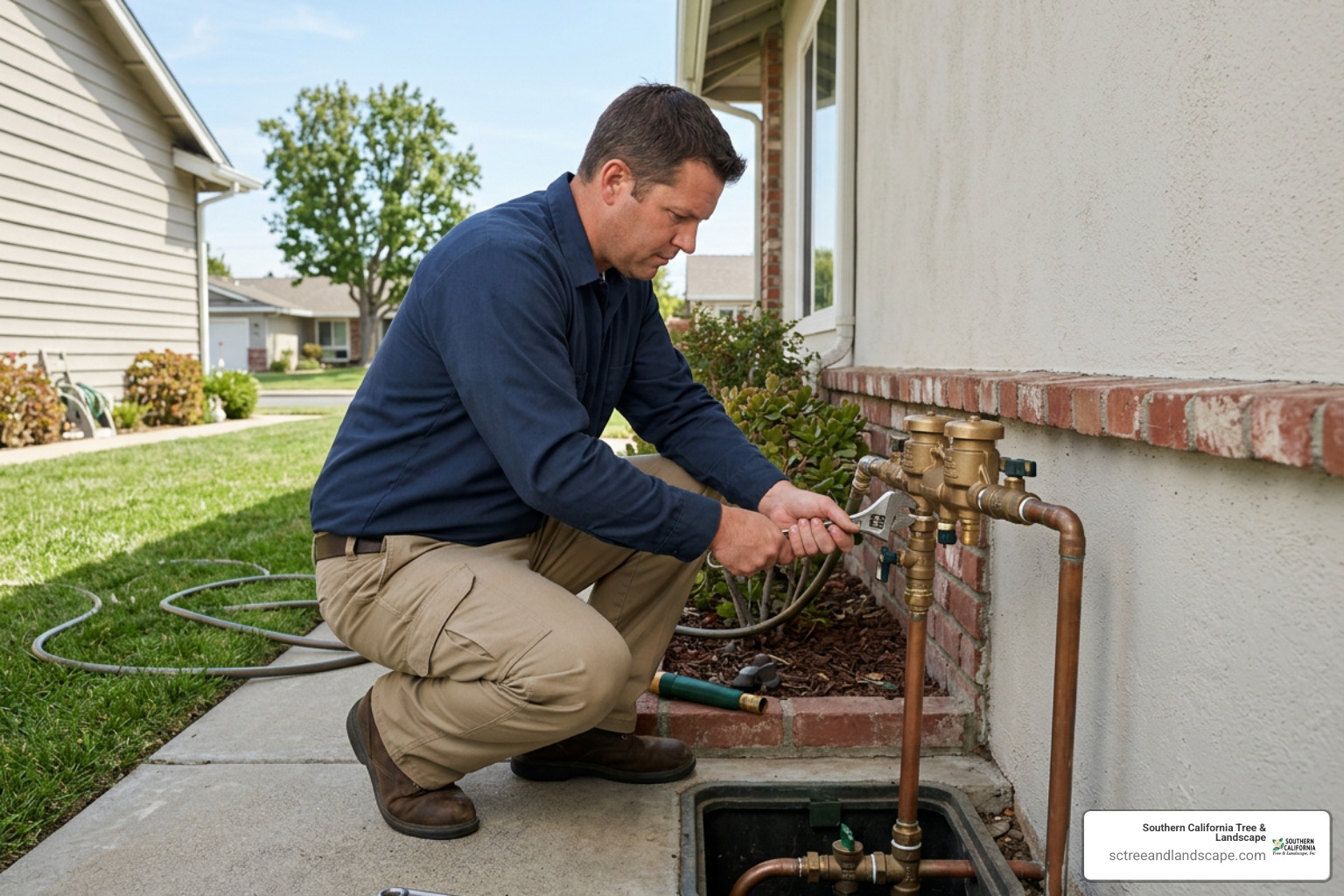
When calculating the total budget to add a sprinkler zone, minor hidden fees can pop up if you haven’t planned ahead:
- Backflow Testing Fees: Many Southern California water purveyors require an annual certified backflow test ($50 to $100).
- Turf and Bed Restoration: Replacing damaged sod, sod backing, or decorative rock ranges from $100 to $400.
- Driveway Boring: Crossing under concrete or hardscape runs $200 to $500.
- MWELO Compliance: In California, major landscape additions exceeding specific square footage thresholds must comply with the Model Water Efficient Landscape Ordinance (MWELO). Compliance documentation and soil checks can add $150 to $350 in project management fees.
Regional climate factors also impact long-term pricing. While northern homeowners face annual winterization blowouts ($50 to $150), Southern California property owners focus on year-round water efficiency, pressure-regulating stems, and drought-tolerant zoning to keep monthly water costs manageable.
DIY vs. Professional: Evaluating the Total Cost to Add a Zone to Sprinkler System
Can you add a sprinkler zone yourself to save money? Absolutely. A handy homeowner willing to dedicate a couple of weekends can cut labor expenses, paying roughly $200 to $500 in materials plus equipment rentals.
However, DIY expansion carries real trade-offs:
- Equipment Rental: Renting a walk-behind trencher costs roughly $150 to $250 per day.
- Utility Hazards: Striking buried electrical lines, gas mains, or fiber optic cables can cause costly repairs and safety hazards. Always call 811 at least three business days before digging!
- Hydraulic Errors: Miscalculating line friction loss or combining spray heads with rotors on the same zone results in poor coverage and wasted water.
- Backflow Splicing: Improperly tapping into main lines before the backflow preventer violates municipal code.
If you enjoy doing basic maintenance yourself, review our handy DIY repair guide. But when it comes to expanding manifolds and calculating hydraulic flow, working with certified pros guarantees lasting results. Consider finding certified repair experts to verify your system design before excavating.
Additional Add-Ons: Drip Irrigation and Rain Sensors
When adding a zone, consider incorporating modern water-saving add-ons:
- Drip Irrigation Conversion: Converting flower beds or shrub borders from overhead spray to low-volume drip tubing costs $300 to $1,200 per zone ($1.50 to $4.50 per square foot). Drip systems deliver water directly to plant roots, boosting efficiency up to 70% while suppressing weed growth. If your drip lines clog or leak down the road, fast drip repair services keep plants thriving.
- Rain Shut-Off Sensors: Wireless rain sensors ($50 to $150 installed) automatically pause irrigation timers during rainfall, preventing unnecessary watering and cutting utility costs.
- Soil Moisture Sensors: Advanced sensors ($100 to $300) monitor root-zone moisture to prevent overwatering.
Frequently Asked Questions
How many sprinkler heads can I add per zone?
The number of sprinkler heads you can safely run on a single zone depends directly on your home’s water pressure (PSI) and flow rate (GPM), not a rigid rule.
On a standard residential supply delivering 12 GPM at 50 PSI, a single zone can typically support:
- 5 to 8 standard spray heads (1.5 to 2.0 GPM each)
- 3 to 5 rotor heads (2.5 to 3.5 GPM each)
- 10 to 15 high-efficiency rotary nozzles (0.5 to 1.0 GPM each)
To maintain even coverage, never mix different head types (such as rotors and sprays) on the same zone valve, as their precipitation rates differ significantly.
Do I need a permit or backflow preventer to add a zone?
Yes, in almost all Southern California municipalities, backflow prevention is strictly required by plumbing codes to prevent contaminated landscape water from backing into your drinking water supply.
If you are tying your new zone line into an existing, code-compliant valve manifold located downstream of an approved backflow preventer, a new backflow device is usually unnecessary. However, if you are tapping directly into the main water service line ahead of the existing assembly, you must install an approved RPZ or PVB device and obtain local plumbing permits ($42 to $200).
How long does labor take to install a new zone?
Installing a standard residential irrigation zone typically takes a professional two-person crew 4 to 8 hours.
Simple installations—such as adding a drip zone 30 feet from an accessible valve box in sandy soil—can be completed in about 4 hours. Complex installations involving heavy clay soil, long trench lines (100+ feet), hardscape boring, controller replacements, or valve box relocations can take 8 to 12 labor hours over 1 to 2 days.
Conclusion
Expanding your landscape doesn’t have to mean guessing at costs or chancing dry lawn patches. While the cost to add a zone to a sprinkler system ranges from $650 to $4,200 (averaging $1,900), investing in professional hydraulic design, code-compliant backflow protection, and efficient trenching protects your property value and long-term water budget.
Since 1991, our team at Southern California Tree & Landscape has helped property owners across Torrance, Covina, Harbor City, and the South Bay design and maintain efficient irrigation systems. Whether you are expanding turf, establishing garden beds, or upgrading to smart Wi-Fi controls, our ISA-certified arborists and experienced irrigation specialists ensure your project is completed cleanly and correctly.
Ready to optimize your watering system? Reach out to us today to explore our expert irrigation services and schedule a comprehensive site evaluation!