
What Does Irrigation Installation Cost in 2026?
Most homeowners pay $2,000 to $6,500 for a professionally installed in-ground irrigation system in 2026. A small, simple yard may cost less; a large property with many watering zones, difficult soil, or smart controls can cost more. For an early budget, allow $450 to $900 per sprinkler zone, then ask an installer to price the full design, water connection, and site restoration.
The biggest cost drivers are yard size, the number of zones, trenching conditions, and local labor rates. In Southern California, a site visit matters more than a national average: water pressure, existing landscaping, and the mix of lawn and planting beds can all change the plan.
I’m Troy Basmajian, president of Southern California Tree & Landscape. Our work includes irrigation management across Southern California properties, where understanding irrigation installation cost starts with a clear scope and a careful look at the site.
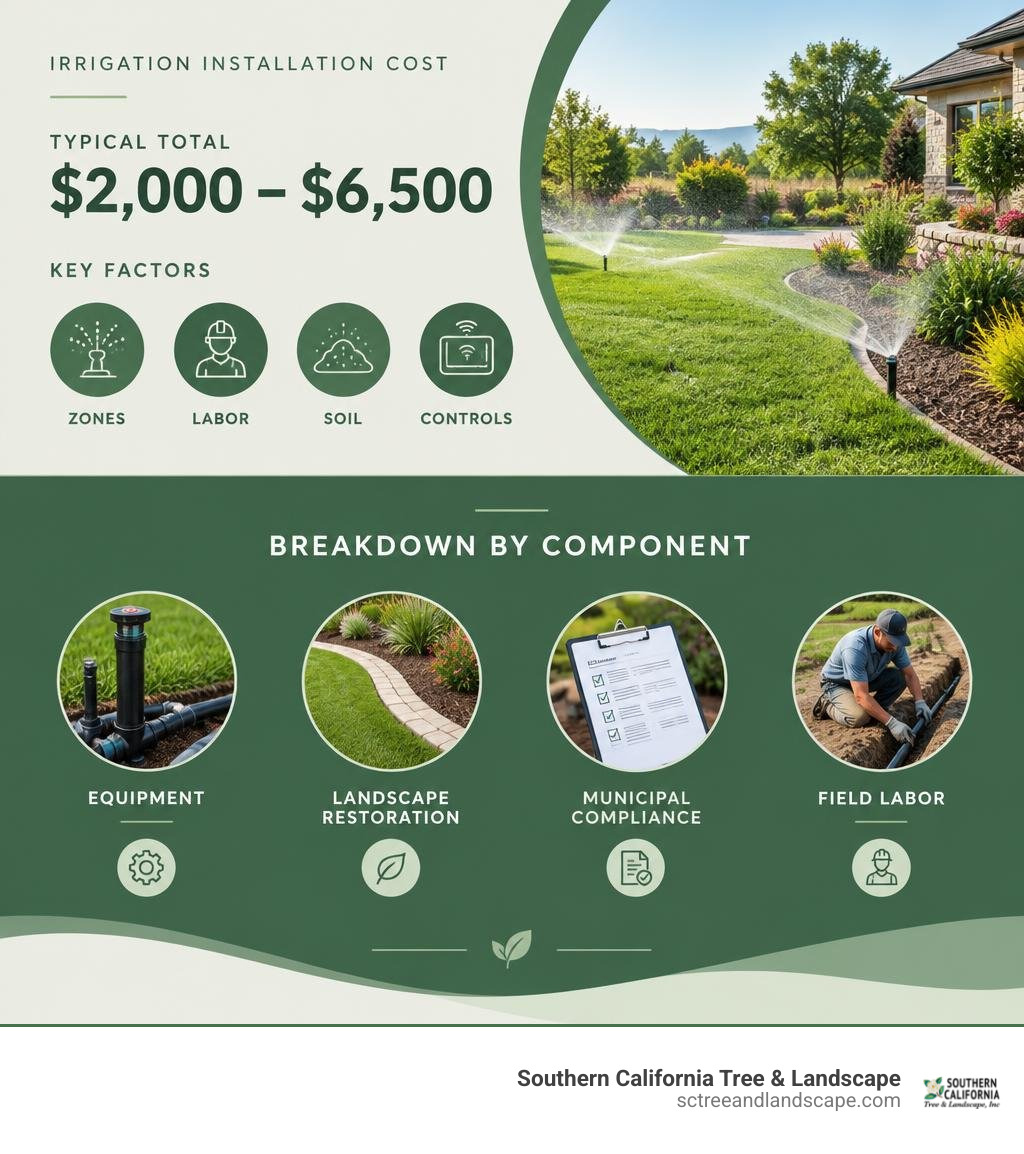
Breakdown of Irrigation Installation Cost by Component
When planning your landscape budget, looking at a single lump-sum bid rarely tells the whole story. A professional quote breaks down into specialized equipment, hardscape/landscape restoration, municipal compliance, and field labor.
Understanding sprinkler system installation costs means examining how each piece of hardware and labor category contributes to the total price:
| Component | Cost Range (Mid-Sized Yard) | Share of Total Budget | Notes & Considerations |
|---|---|---|---|
| Labor & Trenching | $1,000 – $3,500 | 40% – 60% | Excavation, assembly, pipe laying, and backfilling |
| Piping & Fittings (PVC / Poly) | $300 – $900 | 10% – 15% | Schedule 40 PVC or flexible poly lines |
| Sprinkler Heads & Rotors | $250 – $750 | 8% – 12% | Pop-up sprays, rotators, and spray nozzles |
| Zone Control Valves & Manifolds | $200 – $600 | 6% – 10% | Solenoid valves, manifold fittings, and valve boxes |
| Backflow Preventer Device | $300 – $900 | 8% – 14% | Code-mandated unit protecting clean potable water |
| Irrigation Controller / Timer | $150 – $500 | 5% – 10% | Standard digital or Wi-Fi smart weather timers |
| Permits & Municipal Inspections | $50 – $400 | 2% – 6% | Local city permits and backflow certification |
| Site Restoration & Turf Repair | $150 – $600 | 4% – 8% | Re-sodding trenches, mulch replacement, clean up |
Plumbing codes require a certified cross-connection setup. Getting a proper sprinkler backflow device setup ensures contaminated irrigation water never siphons back into your home’s drinking supply, keeping your household safe and code-compliant.
Labor Rates and Crew Hours
Labor typically accounts for 40% to 60% of your total project quote. Across Southern California—from Torrance and the South Bay up to Covina and Harbor City—professional landscape irrigation technicians bill between $50 and $120 per hour depending on trade certification and crew depth.
A typical 4- to 6-zone residential installation requires 20 to 45 total crew hours, often completed over 2 to 3 days by a team of two to three specialists:
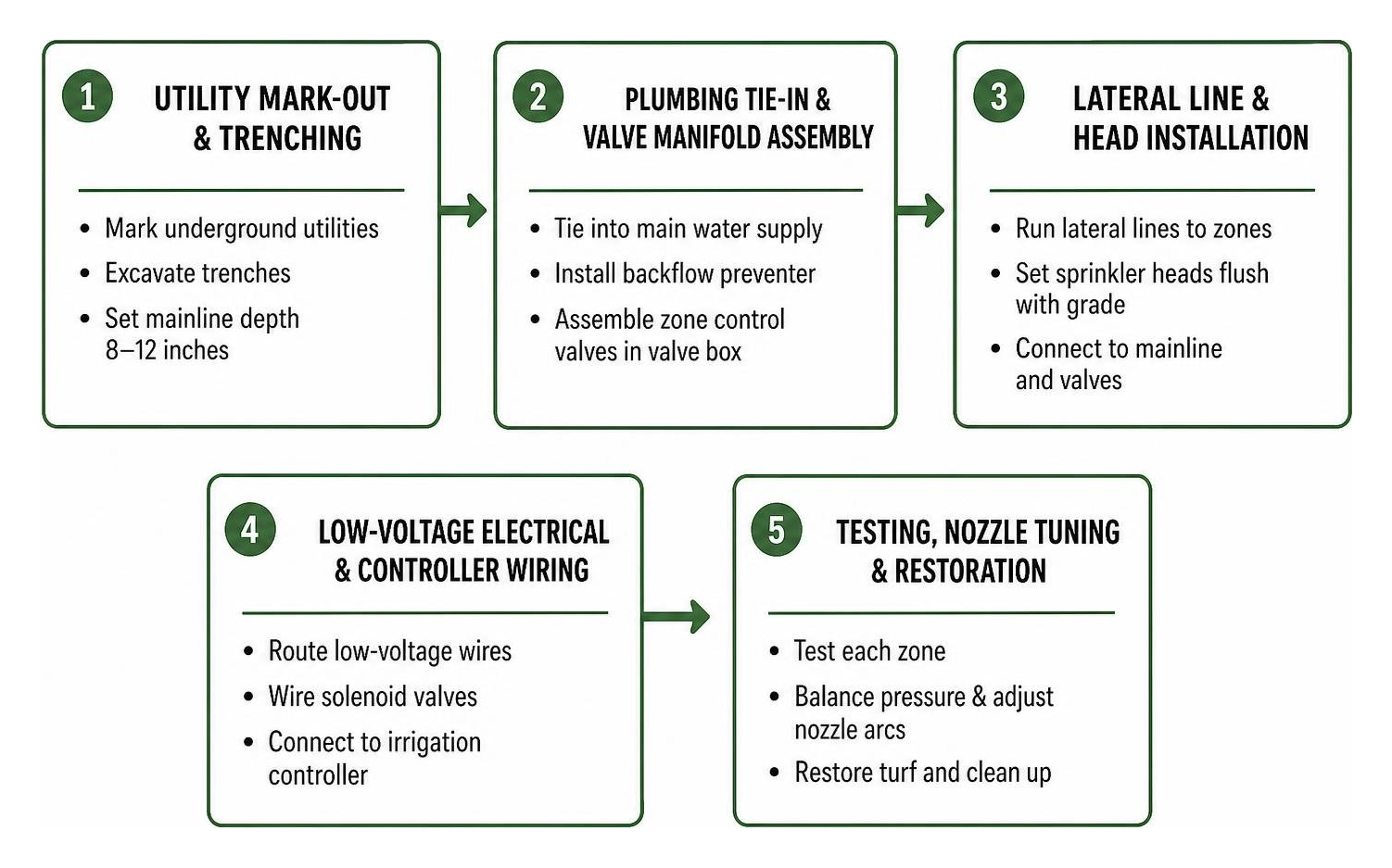
- Excavation & Trenching (8–18 hours): Digging supply lines down 8 to 12 inches across turf and planting beds.
- Plumbing Tie-in & Valve Manifold Assembly (4–8 hours): Connecting the main water line, mounting backflow units, and assembling control valves.
- Lateral Line & Head Installation (6–12 hours): Running lateral piping and setting sprinkler heads flush with grade.
- Low-Voltage Electrical & Controller Wiring (2–4 hours): Correctly wiring your lawn sprinkler system to ensure the controller communicates reliably with every solenoid valve.
- Testing, Nozzle Tuning & Restoration (3–5 hours): Balancing hydraulic pressure, adjusting spray arcs to avoid hardscape overspray, and restoring turf.
Controllers and Efficiency Add-Ons
Your controller acts as the central brain of your landscape. While basic digital timers remain functional, upgrading to weather-based smart controllers adds $150 to $400 upfront but reduces outdoor water waste by 20% to 40%.
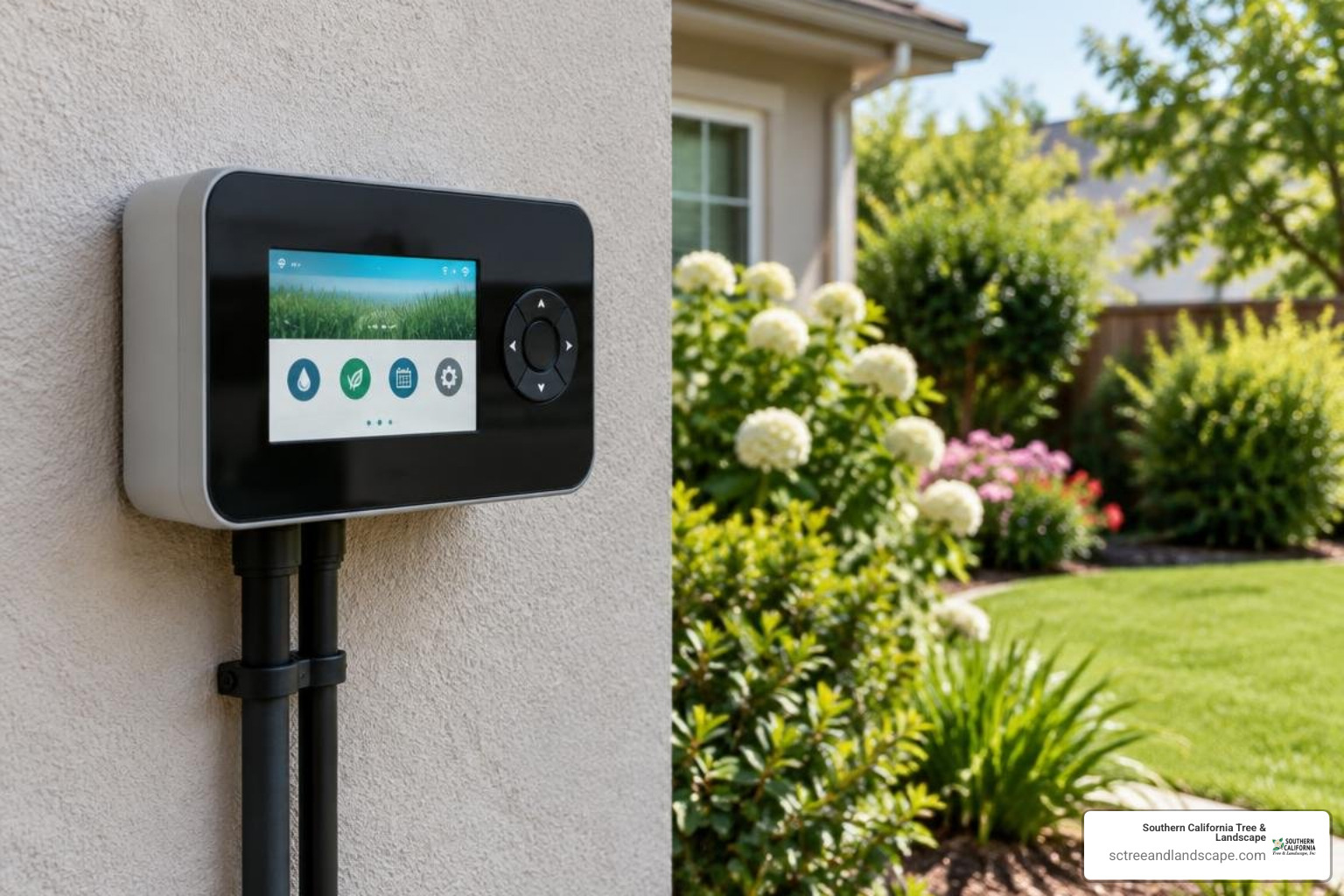
Smart controllers integrate local weather data, soil moisture probes, and rain shutoff sensors to automatically adjust runtime schedules. Over-watering is the leading cause of plant disease and water waste in California; modern smart controllers pay for themselves over 12 to 24 months through measurable utility bill reductions. Reference this detailed cost and savings breakdown for broader comparisons on component pricing.
Key Factors That Influence System Pricing
Every property presents unique site conditions that sway contractor bids. Beyond basic square footage, these structural variables define project complexity:
- Water Pressure & Flow Rate (GPM): Low municipal static pressure (under 40–50 PSI) limits how many sprinkler heads can run simultaneously, requiring more zones and extra valves.
- Soil Conditions: Heavy clay or rocky terrain slows trenching significantly, adding manual labor hours.
- Property Topography & Slopes: Hillside landscapes require pressure-compensating heads and check valves to stop low-head drainage.
- Utility Obstacles: Root systems from mature trees, gas lines, and existing paved walkways require specialized tunneling or hand-digging.
Reviewing typical hidden fees and unexpected expenses can help you spot missing scope items—such as concrete boring or backflow certification fees—before work begins.
Estimating Irrigation Installation Cost by Yard Size
Overall coverage area sets the baseline for pipe volume, trench linear footage, and head count. Residential in-ground spray systems generally range from $0.50 to $1.50 per square foot of coverage.
- Small Yards (Up to 2,500 sq. ft.): $1,800 to $3,200. Typically covered by 2 to 4 zones.
- Medium Yards (2,500 to 6,000 sq. ft.): $3,200 to $5,500. Typically requiring 4 to 6 zones.
- Large Yards (6,000 to 12,000+ sq. ft.): $5,500 to $9,000+. Often spanning 7 to 10+ distinct zones with dedicated mainlines.
Number of Zones and Layout Complexity
A zone is a dedicated plumbing loop operated by an individual control valve. Dividing your property into distinct zones ensures each area receives adequate pressure and matched precipitation.
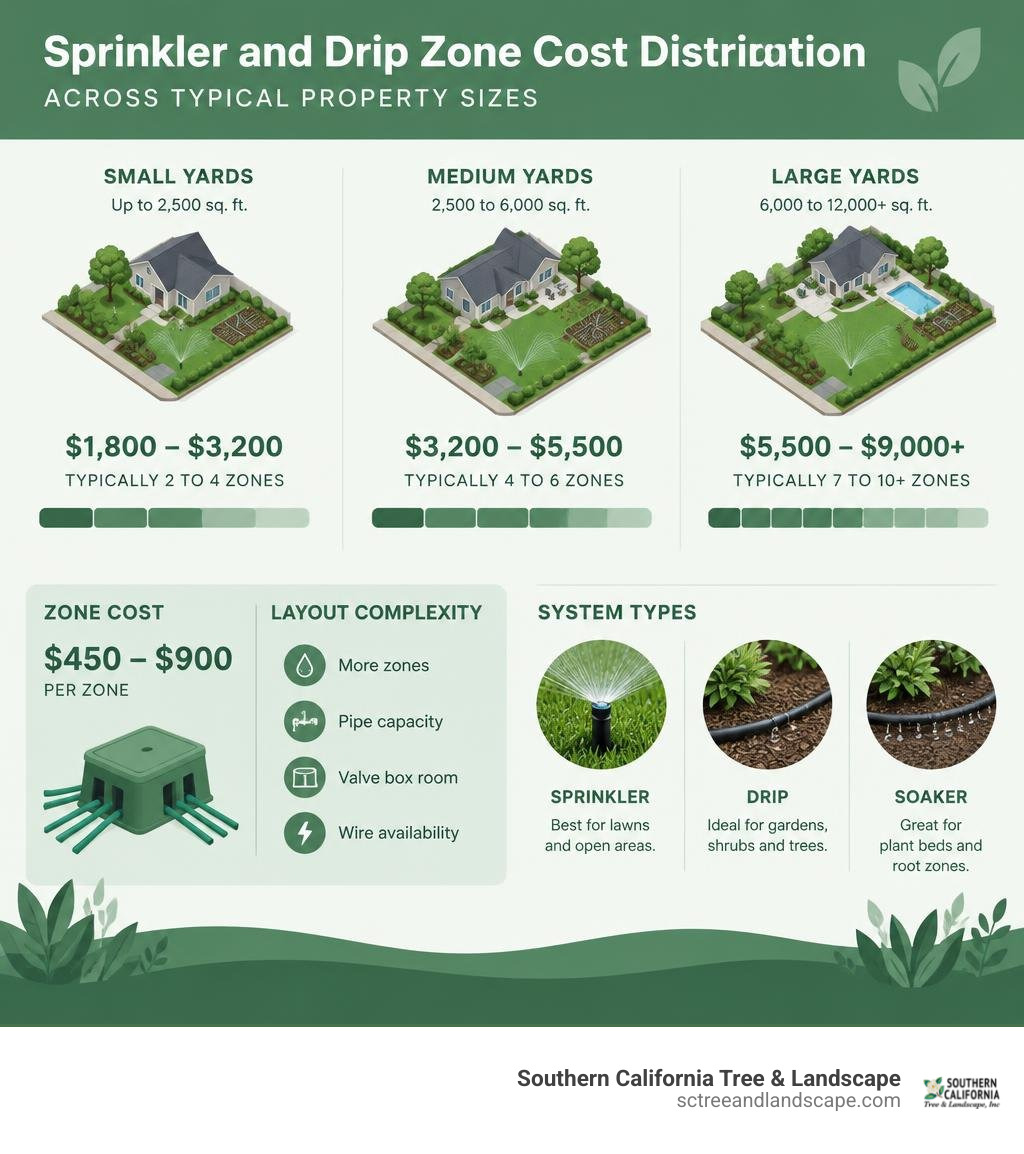
Standard in-ground sprinkler zones run $450 to $900 per zone. When expanding an existing layout or running dedicated lines to remote flowerbeds, adding an irrigation zone requires factoring in pipe capacity, valve box room, and wire availability.
System Types: Sprinkler vs. Drip vs. Soaker Systems
Different landscape elements require tailored watering methods. Selecting the right distribution hardware keeps your lawn vibrant while preventing fungal issues in planter beds.
| System Type | Average Cost (Installed) | Water Efficiency | Best Landscape Applications |
|---|---|---|---|
| In-Ground Sprinkler (Rotors/Sprays) | $2,000 – $6,500 ($0.50–$1.50/sq. ft.) | 65% – 75% | Turf areas, expansive open lawns, groundcover |
| Drip Irrigation (Point-Source/Line) | $500 – $3,500 ($1.00–$2.50/sq. ft.) | 90% – 95% | Shrub borders, flower beds, trees, vegetable gardens |
| Soaker Hose (Porous Line Kit) | $100 – $500 ($0.20–$0.60/sq. ft.) | 70% – 80% | Temporary plantings, small foundation beds, garden rows |
How System Type Affects Irrigation Installation Cost
Turf areas benefit from automatic sprinkler system installation using pop-up spray bodies or gear-driven rotors. These systems require extensive trenching across open turf, which raises excavation labor.

Conversely, drip irrigation uses micro-tubing to apply water directly at root depth. While drip fittings can involve slightly higher material handling costs per square foot, installation avoids deep trenching in turf, making it faster to install in planted beds. For an in-depth breakdown of system mechanisms, consult this guide to irrigation systems by type and zone.
Regional Price Differences Across the United States
Regional labor markets and seasonal soil depths create pricing variations nationwide:
- California & Coastal Metros: Typically 10% to 20% higher than national medians due to rigorous water conservation standards, backflow testing requirements, and regional cost of living.
- Northeast: Higher installation costs due to the need for deep trenching beneath deep winter frost lines.
- Midwest: Aligning closely with national median averages ($2,500 to $5,000).
- South & Southwest: Often lower pipe burial depths, though rocky ground conditions can elevate labor.
Practical Strategies to Save on Irrigation Projects
Upgrading your yard’s watering system doesn’t require overspending. Smart planning helps control upfront costs while preserving system durability:
- Phase Your Installation: Lay the primary mainline, controller, and high-priority lawn zones first. Add garden drip zones in a later phase.
- Streamline Trench Routes: Grouping lines into shared trenches cuts excavation time and yard disturbance.
- Schedule in the Off-Season: Booking work during late fall or winter can unlock contractor scheduling flexibility.
- Check Local Water Rebates: Municipal water districts frequently offer cash rebates for installing EPA WaterSense controllers, high-efficiency rotating nozzles, and drip conversions.
- Choose a Qualified Contractor: Use a proven guide for vetting irrigation installers to avoid low-bid contractors who omit backflow devices, create hydraulic imbalance, or skip permits.
Frequently Asked Questions About Irrigation Costs
How much does a professional irrigation system cost per zone?
Most residential systems cost $450 to $900 per zone. This price includes the electric solenoid valve, lateral PVC or poly distribution pipe, fittings, spray heads or emitters, trenching labor, and backfilling.
Is drip irrigation cheaper to install than a lawn sprinkler system?
For garden beds and shrub areas, drip irrigation is generally more cost-effective because it does not require deep, extensive trenching through established lawn turf. It also delivers 90%+ water efficiency, lowering ongoing utility bills.
Do smart sprinkler controllers really pay for themselves?
Yes. Smart controllers monitor real-time weather, solar radiation, and rainfall, reducing outdoor water usage by 20% to 40%. In Southern California, these water savings combined with local utility rebates allow smart timers to pay for themselves within one to two watering seasons.
Conclusion
A well-engineered irrigation system protects your landscape investment, reduces daily water waste, and keeps your property healthy throughout the year. Quality components, balanced water hydraulics, and code-compliant backflow protection ensure reliable performance for decades.
Since 1991, our family-owned team at Southern California Tree & Landscape has delivered tailored landscape design, tree care, and water-efficient irrigation across Torrance, the South Bay, Covina, and Harbor City. Backed by ISA-certified arborists and experienced crews, we design custom systems that keep your landscape thriving.
Contact our team today to schedule an on-site property evaluation for professional irrigation services.