
Stop Water Before It Reaches Your Foundation
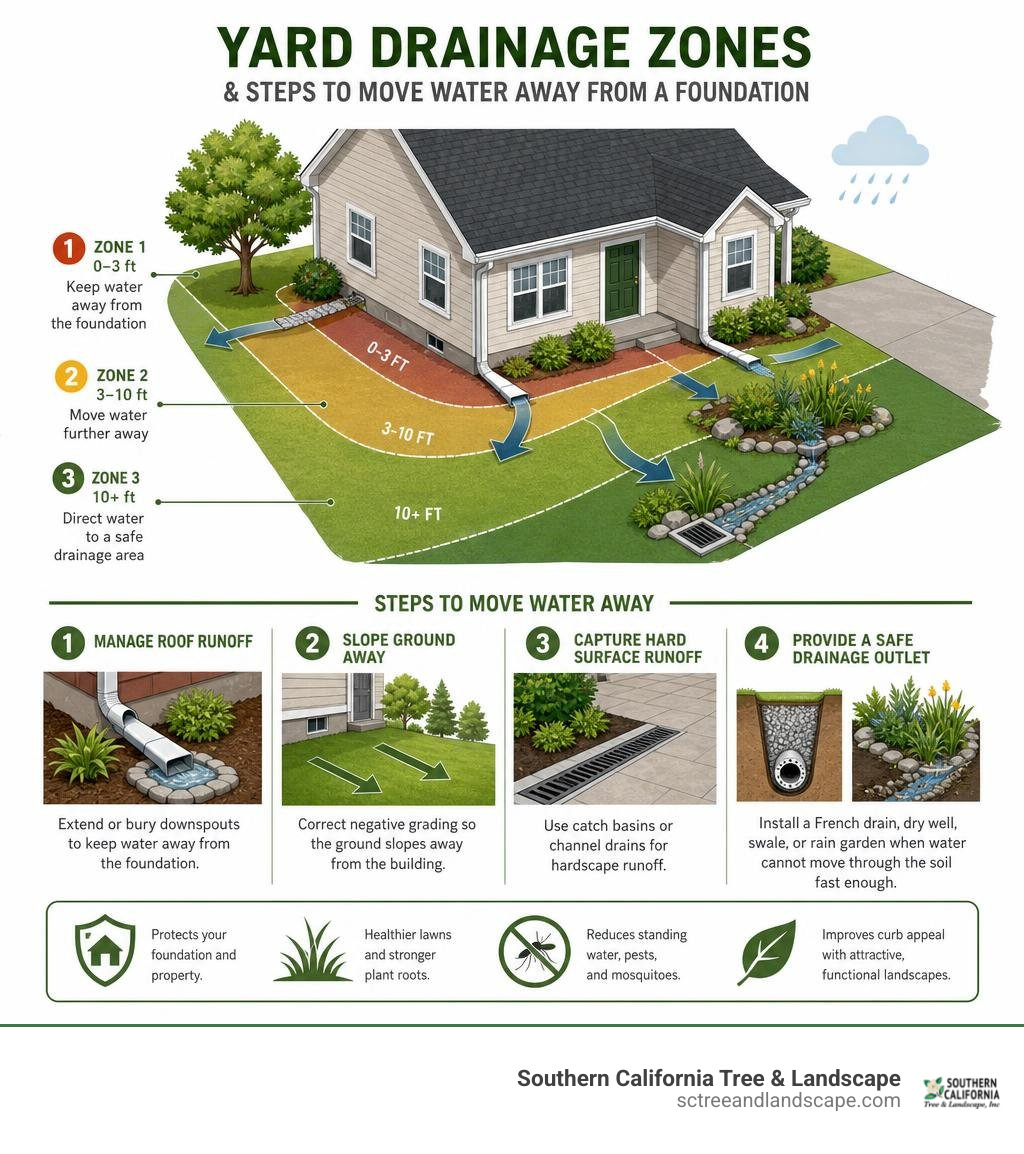
The fastest way to fix yard drainage is to find where water starts, redirect it away from the building, and give it a safe place to drain or soak in. Start by checking downspouts, low lawn areas, driveway edges, and soil next to the foundation after rain. If water remains for more than a day, flows toward the structure, or washes away soil, the property may need landscape drainage repair.
Common first steps include:
- Extend or bury downspouts so roof runoff does not saturate foundation soil.
- Correct negative grading so the ground slopes away from the building.
- Use catch basins or channel drains for hardscape runoff.
- Install a French drain, dry well, swale, or rain garden when water cannot move through the soil fast enough.
Poor drainage is more than an appearance issue. Persistent moisture can erode soil, damage turf and plant roots, attract mosquitoes and pests, and add pressure against foundation or basement walls. A well-designed solution can also improve curb appeal with permeable surfaces, planted rain gardens, or decorative dry creek beds.
I am Troy Basmajian, President of Southern California Tree & Landscape, where I help lead teams serving residential, commercial, HOA, municipal, and institutional properties throughout Southern California. Our experience with landscape drainage repair, irrigation, and long-term landscape care helps property owners address water problems while protecting the health and appearance of their grounds.
Handy landscape drainage repair terms:
Critical Signs That Demand Landscape Drainage Repair
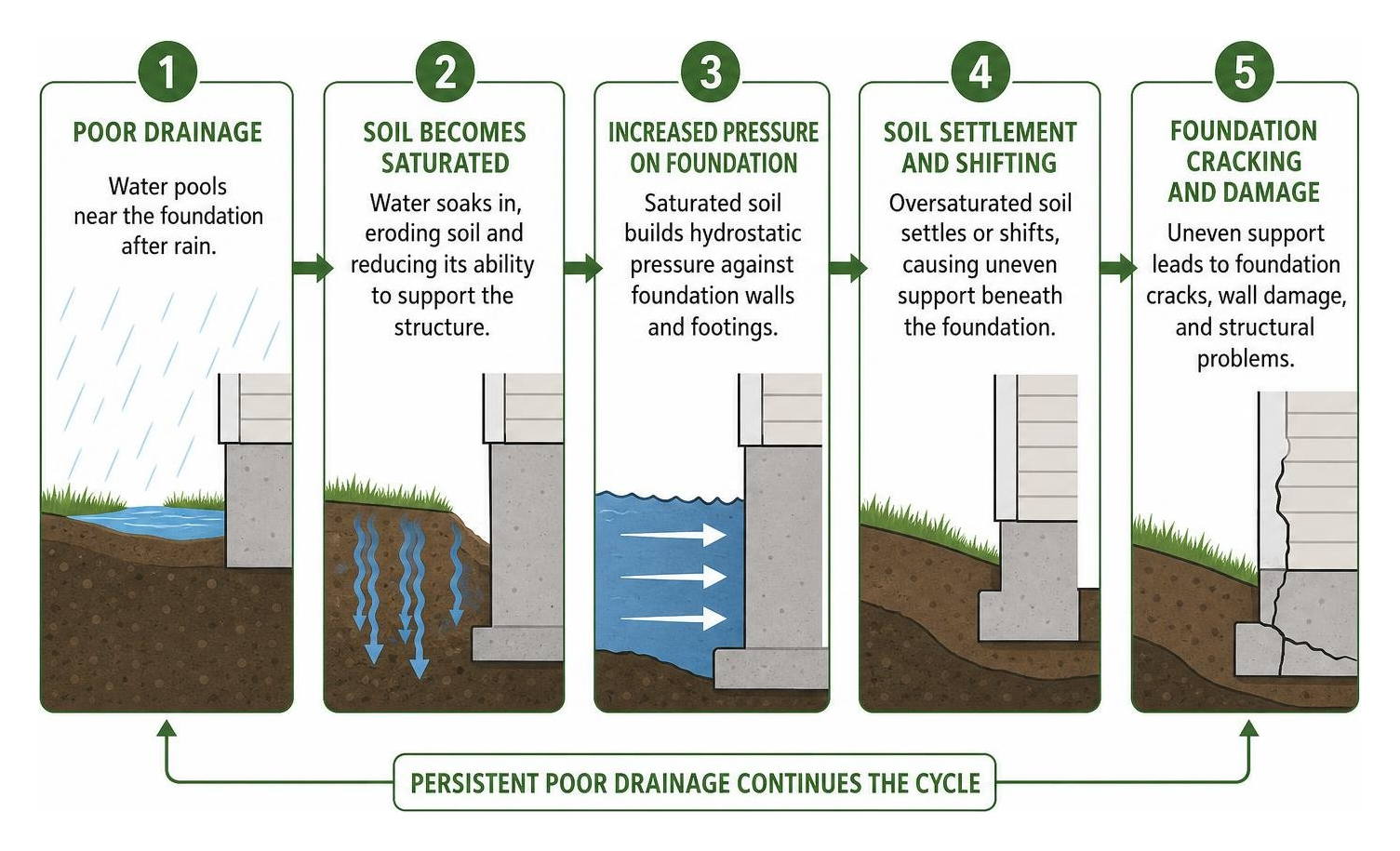
Excess water on your property does not just vanish into thin air. When surface runoff has nowhere to go, it accumulates, building hydrostatic pressure against subterranean walls and footings while stripping your landscape of vital nutrients. Recognizing the early symptoms of drainage distress allows you to intervene before costly structural damage sets in.
Standing Water, Soil Erosion, and Turf Dieback
Standing water that lingers a day or more after rain is a clear warning sign of underlying drainage failure. When water stagnates over turf, it cuts off oxygen to the root zone, creating anaerobic soil conditions that foster root rot, fungal outbreaks, and unsightly bare patches. Over time, recurring puddles transform lush lawns into spongy, muddy bogs.
Unchecked surface runoff also strips away delicate topsoil and mulch beds, carving ruts across garden slopes and exposing root flares. If you notice sediment washing onto walkways or low-lying sections of your property remaining soggy well into dry weather, reviewing The Ultimate Guide to Covina Landscape Drainage Repair can help clarify how topography and seasonal storms interact across regional properties.
Foundation Settling, Musty Basements, and Pest Threats
Water that pools adjacent to exterior walls eventually finds a way inward. As soil becomes oversaturated, the resulting hydrostatic pressure forces moisture through porous concrete and hairline fissures, resulting in damp crawl spaces, efflorescence on stem walls, and musty basement odors.
In severe cases, uneven soil expansion and saturation cause differential foundation settling, leading to sticking doors, uneven floors, and exterior masonry cracking. Beyond structural integrity, persistent moisture creates an ideal habitat for pests. Standing water acts as an open invitation for mosquito breeding cycles, while damp foundation planter beds create prime moisture conditions that attract subterranean termites directly toward the wooden framing of your home.
Root Causes of Yard Drainage and Runoff Problems
Solving a water accumulation issue requires pinpointing its origin. Most property drainage failures stem from a combination of challenging regional soil profiles, unnatural grading, and unmanaged roof runoff.
Heavy Expansive Clay and Soil Compaction
Throughout Southern California communities like Torrance, Covina, and Harbor City, heavy clay soils are exceptionally common. Clay particles are microscopic and tightly packed, resulting in exceptionally slow percolation rates. When dry, clay soil shrinks and forms hard surface crusts; when wet, it absorbs water sluggishly, expands significantly, and holds moisture for prolonged periods.
Urban foot traffic, heavy equipment, and improper soil management further compress these soils, eliminating air pockets and preventing natural downward percolation. When combined with excessive irrigation schedules, compacted clay keeps the ground perpetually waterlogged. Incorporating routine care through Landscape Care and Maintenance Services Why Your Yard Is Crying for Help ensures that soil aeration and irrigation management work hand-in-hand to prevent unnecessary water stagnation.
Improper Grading and Concentrated Downspout Discharge
Grading problems are among the most frequent culprits behind foundation moisture. If the soil around your property features a “reverse slope” or flat grade, surface runoff naturally flows toward your building rather than away from it.
This issue is amplified by roof runoff. An unmanaged gutter downspout concentrates hundreds of gallons of rainwater collected across the entire roof surface directly at the corners of your foundation. Furthermore, non-porous hardscape surfaces—including concrete patios, walkways, and wide driveways—prevent ground absorption, accelerating the speed and volume of surface water cascading toward low lawn depressions or garage entries.
Effective Drainage Solutions: From French Drains to Permeable Hardscapes
Effective water management blends subterranean civil engineering with creative surface landscape design. The right choice depends on whether you are intercepting deep groundwater, channeling rapid surface runoff, or increasing overall property infiltration.
| Drainage Solution | Primary Function | Best Application | Typical Cost Range |
|---|---|---|---|
| French Drain | Intercepts & redirects groundwater | Waterlogged lawns, foundation footings | $3,000 – $8,000 |
| Catch Basin / Channel Drain | Captures fast-moving surface runoff | Driveways, patios, low lawn points | $1,500 – $4,500 |
| Dry Well / Detention Cell | Stores & infiltrates surge stormwater | Flat properties, downspout buffering | $2,500 – $6,000 |
| Downspout Burial & Piping | Relocates roof runoff away from walls | Concentrated roof gutter discharge | $800 – $2,500 |
| Surface Regrading & Swales | Shapes soil for gravity-fed runoff | Negative slopes toward foundations | $1,000 – $3,500 |
| Dry Creek Bed / Rain Garden | Bio-infiltrates runoff aesthetically | Natural slope channels, soggy zones | $2,000 – $7,000 |
Subsurface Systems: French Drains, Catch Basins, and Dry Wells
Subsurface drainage systems capture excess water beneath the surface and pipe it safely to designated discharge locations:
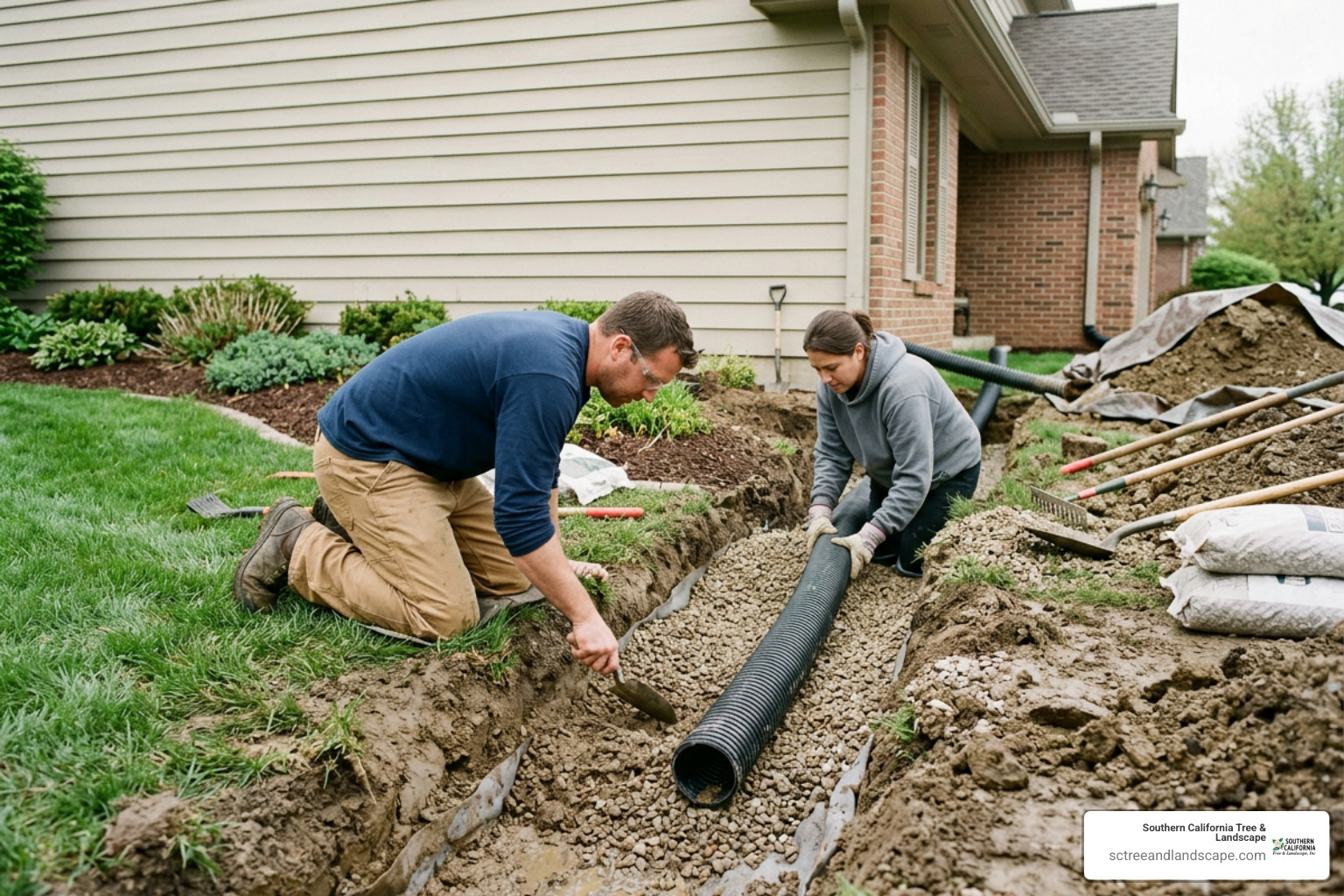
- French Drains: Built using a sloped trench containing perforated pipe encased in clean washed gravel and wrapped with commercial geotextile filter fabric. They intercept shallow groundwater and relieve soil saturation along foundations or soggy turf perimeters.
- Catch Basins & Channel Drains: Positioned flush with the ground to capture high-velocity surface water before it floods patios, walkways, or garage entries. Integrated grates catch leaves and debris before water enters smooth-wall transition pipes.
- Dry Wells & Modular Detention: Modern modular systems, such as the NDS S5 system, offer up to 250% more detention volume than traditional gravel-filled trenches, temporarily holding surge stormwater underground while it slowly dissipates into the lower soil profile.
For integrated planning on larger grounds, pairing subsurface piping with structural upgrades outlined in A Comprehensive Guide to Landscape Installation ensures all below-ground infrastructure is correctly positioned before planting or hardscaping begins.
Surface Solutions: Swales, Dry Creek Beds, and Rain Gardens
Drainage features can serve as stunning focal points within your outdoor living space rather than purely utilitarian hardware:
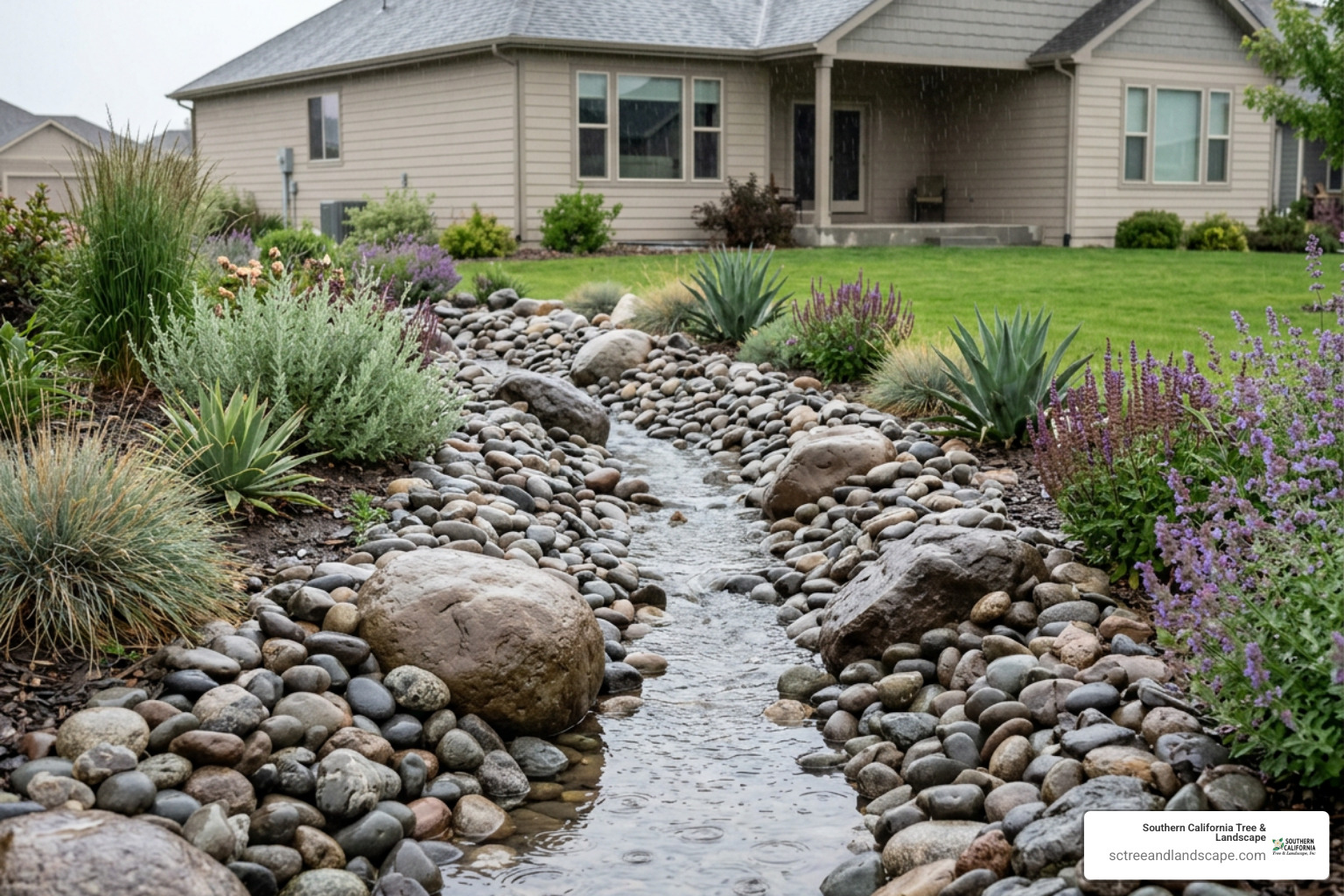
- Dry Creek Beds: Carefully sculpted channels lined with multi-textured river rock, boulders, and gravel. They mimic natural mountain arroyos, slowing rapid runoff across sloped yards while preventing soil erosion during heavy downpours.
- Rain Gardens & Bioretention Cells: Shallow, planted depressions engineered with sandy, permeable soil mixes and water-tolerant California native plants. Rain gardens capture surface runoff, allowing it to naturally filter through plant roots and recharge groundwater while providing habitat for local pollinators.
- Vegetated Swales: Gently contoured grass or rock-lined valleys that subtly guide water across property contours toward safe collection areas without creating deep, hazardous ditches.
Permeable Hardscapes and Grading Adjustments
One of the most effective ways to reduce runoff volume is by replacing solid concrete with permeable hardscape materials. Porous pavers, gravel grids, and permeable interlocking stone allow rainwater to pass directly through surface joints into an aggregate reservoir beneath, completely eliminating standing surface water on patios and driveways.
Alongside permeable surfaces, correcting site grading remains essential. A standard engineering rule of thumb is establishing a positive grade with approximately 6 inches of fall over the first 10 feet away from the foundation. Exploring structural options in Custom Landscape Design Is Your Yard Ready for a Makeover can help you blend these essential grading adjustments seamlessly with refreshed hardscape aesthetics.
Step-by-Step Professional Assessment and System Installation
Executing a reliable drainage repair requires methodical planning, precise elevation measurements, and thorough site testing.
Assessing Foundation Risks Before Landscape Drainage Repair
Every successful remediation begins with a comprehensive site evaluation. Our teams survey the property’s natural contours, measure elevation differentials, and identify where water gathers during peak precipitation events. We conduct soil percolation tests to determine soil absorption speeds and inspect downspout termination points relative to foundation footings. Engaging our specialists through Landscape Consultants Expert Advice for Your Outdoor Space allows us to formulate a complete diagnostic plan tailored specifically to the unique microclimate and topography of your lot.
Engineering, Excavation, and Compliance Testing
Once the system layout is designed, physical installation proceeds through strict quality-control phases:
- Trench Excavation & Pitching: Crews excavate designated paths, maintaining a consistent downward slope (minimum 1% to 2% grade) to ensure gravity carries water freely without mechanical pumping whenever possible.
- Lining & Aggregate Bedding: Heavy-duty, non-woven geotextile fabric lines the trench to prevent surrounding silt and clay from contaminating the gravel bed. A base layer of clean angular gravel is laid.
- Pipe Placement & Connection: Smooth interior PVC or heavy-duty perforated pipes are laid, connected to catch basins, downspout adapters, and cleanout ports.
- Backfill & Flow Testing: The trench is filled with aggregate, encapsulated in filter fabric, and subjected to hydraulic flow testing to ensure water moves rapidly to the designated discharge point.
- Restoration & Local Compliance: The site is backfilled with topsoil, graded, and replanted with sod or groundcover, ensuring all work complies strictly with local municipal stormwater management guidelines and clean-water discharge standards.
Project Budgeting and Selecting Local Drainage Contractors
Understanding project costs and selecting experienced professionals ensures your investment delivers lasting protection for your home.
Estimating Costs for Landscape Drainage Repair Projects
Landscape drainage repair costs typically range from $500 to $3,000 for localized fixes, while comprehensive whole-yard systems range from $3,000 to $10,000 or more depending on site accessibility, soil conditions, and the engineering required:
- Minor Repairs & Downspout Redirection: $800 – $2,500 (covers burying downspouts, clearing lines, or simple regrading adjustments).
- Standard French Drain & Catch Basin Installations: $3,000 – $8,000 (includes excavation, gravel, pipe, filter fabric, and connection to outlets).
- Extensive Multi-Part Drainage Systems on Heavy Clay: $10,000+ (combining subsurface storage detention, extensive regrading, dry creek beds, and retaining wall drainage).
- Material Expenses: Typically $200 – $1,200 for basic pipes, basins, fittings, and aggregates.
- Labor Charges: Generally fall between $50 and $150 per hour for specialized excavation, grading, and drainage installation crews.
Choosing Certified Specialists with Regional Soil Expertise
When hiring a contractor for drainage remediation, prioritize teams with extensive regional experience:
- Regional Soil Knowledge: Contractors familiar with South Bay, Torrance, Covina, and broader Southern California soil conditions understand how expansive clays behave under seasonal deluge cycles.
- Comprehensive Licensure & Insurance: Always verify valid contractor licensing, worker’s compensation, and general liability coverage.
- ISA-Certified Arborists on Staff: Underground trenching can inadvertently sever critical tree roots; having certified arborists ensures valuable trees and root zones remain protected during excavation.
- Clear Workmanship Warranties: Reputable contractors provide transparent, written estimates detailing pipe dimensions, fall percentages, and post-installation warranties.
Frequently Asked Questions about Yard Drainage
How much slope is needed to direct water away from a home?
A standard residential positive grade requires a minimum drop of 6 inches over the first 10 feet moving away from the foundation (roughly a 5% slope). For underground drainage pipes, a minimum continuous slope of 1 inch of fall for every 10 to 12 feet of run (a 1% gradient) is required to maintain gravity flow and prevent sediment from settling inside the lines.
Will repairing my yard drainage damage my existing lawn?
Trenching does require digging through existing turf, but professional installation teams take deliberate steps to minimize disruption. Sod is carefully cut and set aside prior to excavation, drop cloths are used to protect surrounding grass from excavated dirt, and the disturbed areas are properly regraded, compacted, and restored with matching seed or sod upon project completion.
What is the difference between a French drain and a catch basin?
A catch basin is an active surface-water collector consisting of an underground box topped with a visible grate designed to capture fast-moving rainwater runoff from driveways, patios, or low lawn points. A French drain is a subsurface system using a perforated pipe buried inside a gravel-filled trench to intercept, collect, and redirect slow-percolating groundwater saturating the soil below the surface.
Conclusion
Uncontrolled yard water is an ongoing threat to your home’s foundation, basement dryness, and landscape health. Whether dealing with standing water on heavy clay soil, gutter overflow, or negative grading, proactive drainage repairs protect your property value while creating a cleaner, more usable outdoor space.
Since 1991, Southern California Tree & Landscape has delivered family-owned, expert landscape care, drainage installations, and tree services across Torrance, Covina, Harbor City, and throughout Southern California. If you are ready to protect your foundation and elevate your property with functional, beautiful solutions—from underground piping to complete backyard oasis design in Torrance—our experienced teams are here to help you build an outdoor environment that thrives in every season.