
Drought Tolerant Landscaping Starts With a Smarter Plan
Drought tolerant landscaping uses plants suited to local conditions, less turf, healthy soil, mulch, and efficient irrigation to keep a yard attractive with less water. Start by noting where the sun hits, grouping plants with similar water needs, and checking for irrigation leaks. Keep lawn only where people use it, then water new plants while their roots establish.
In Southern California, that plan can help lower outdoor water use and water bills without giving up curb appeal. The EPA estimates that outdoor use accounts for about 30% of household water use nationwide, making the yard a practical place to look for savings.
I’m Troy Basmajian, president of Southern California Tree & Landscape. Over the past decade, I’ve helped guide landscape, irrigation, and tree care teams serving Southern California properties, where drought tolerant landscaping is part of keeping outdoor spaces healthy and manageable.
Glossary for drought tolerant landscaping:
Core Principles of Drought Tolerant Landscaping and Xeriscape Design
Traditional urban landscaping often relies on thirsty turfgrass, excessive synthetic fertilizers, and overhead spray heads that lose half their output to wind and evaporation. In Southern California’s Mediterranean climate—characterized by warm, dry summers and mild, sporadic winter rains—this approach wastes valuable water and leads to urban runoff that washes pollutants straight into storm drains.
Drought-tolerant design shifts the focus from fighting local climate conditions to working with them. By embracing native plants, living soils, and modern water distribution, we build sustainable landscapes that thrive naturally. According to official Water-Efficient Landscaping research, adopting resource-efficient techniques drastically reduces environmental strain while preserving landscape beauty.
| Feature | Traditional Turf Landscape | Drought-Tolerant / Xeriscape Garden |
|---|---|---|
| Weekly Water Need | 1.0 to 2.0 inches per week | 0.2 to 0.5 inches (or natural rainfall once established) |
| Peak Summer Consumption | Up to 80% of total residential water use | Up to 50% to 75% less outdoor water consumption |
| Maintenance Demands | Weekly mowing, edging, heavy fertilizing | Pruning 2–4 times per year, periodic weeding |
| Runoff Potential | High (compacted soil and shallow root systems) | Low (permeable mulches and deep-rooted species) |
| Wildlife Support | Minimal (biological “green desert”) | Rich habitat for bees, butterflies, and native birds |
Understanding Water Conservation and Xeriscape Principles
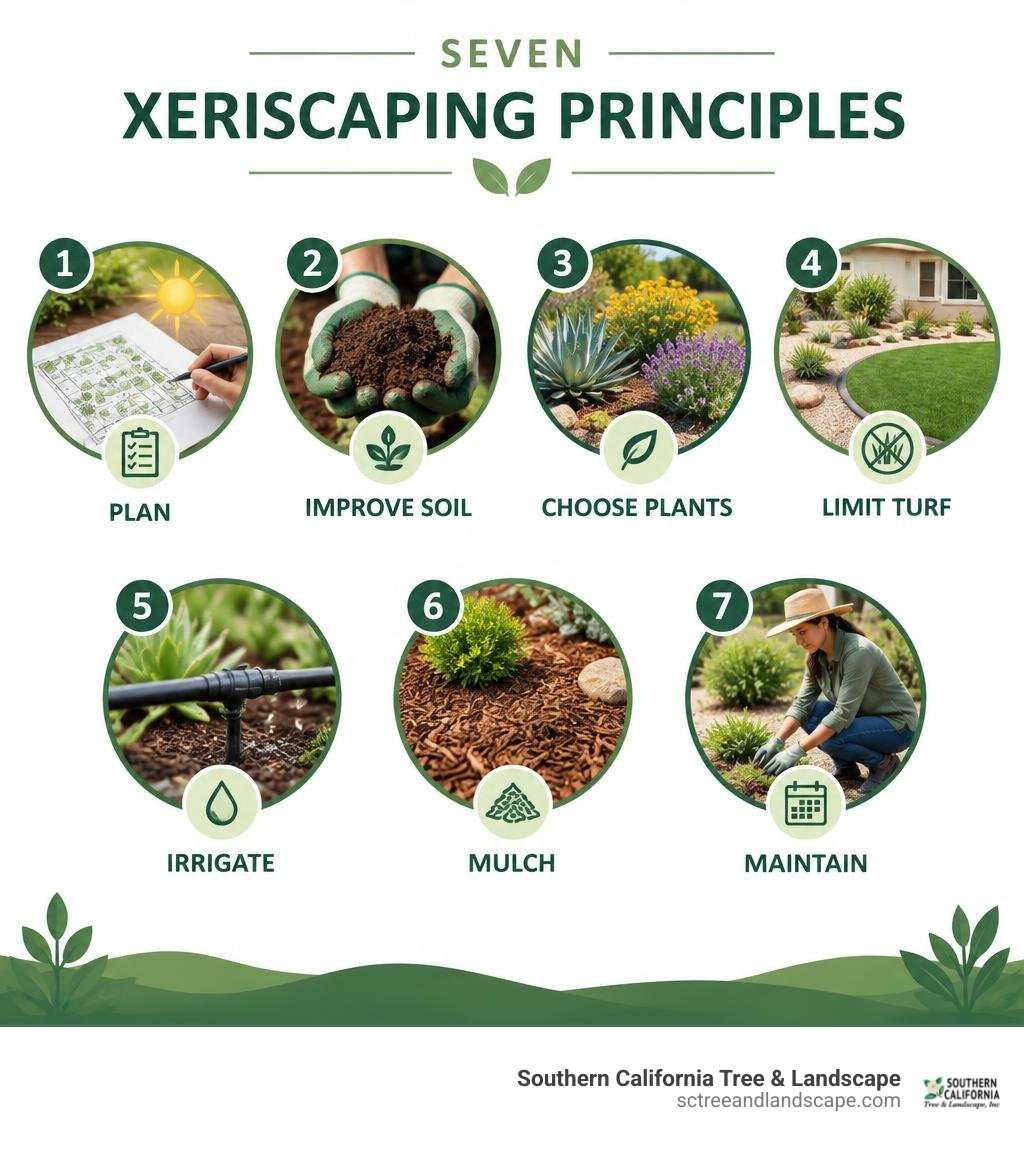
The term “xeriscape” was coined in 1981 by Denver Water by combining the Greek word xeros (meaning dry) with “landscape.” A common myth is that xeriscaping is identical to “zeroscaping”—a stark expanse of gravel and a lone cactus. In reality, a well-planned xeriscape is vibrant, lush, and full of life. It relies on seven foundational tenets: comprehensive planning, soil improvement, practical turf areas, appropriate plant selection, efficient irrigation, organic mulching, and routine maintenance. If you are eager to get started, review our step-by-step guide to install a drought-tolerant yard to walk through the transformation step by step.
Hydrozoning: Mapping Your Yard into Water-Use Zones
A key strategy in water conservation is hydrozoning: grouping plants with identical water, sunlight, and soil needs onto dedicated irrigation valves. When low-water succulents share an irrigation line with thirsty hydrangeas, one will either rot or the other will desiccate.
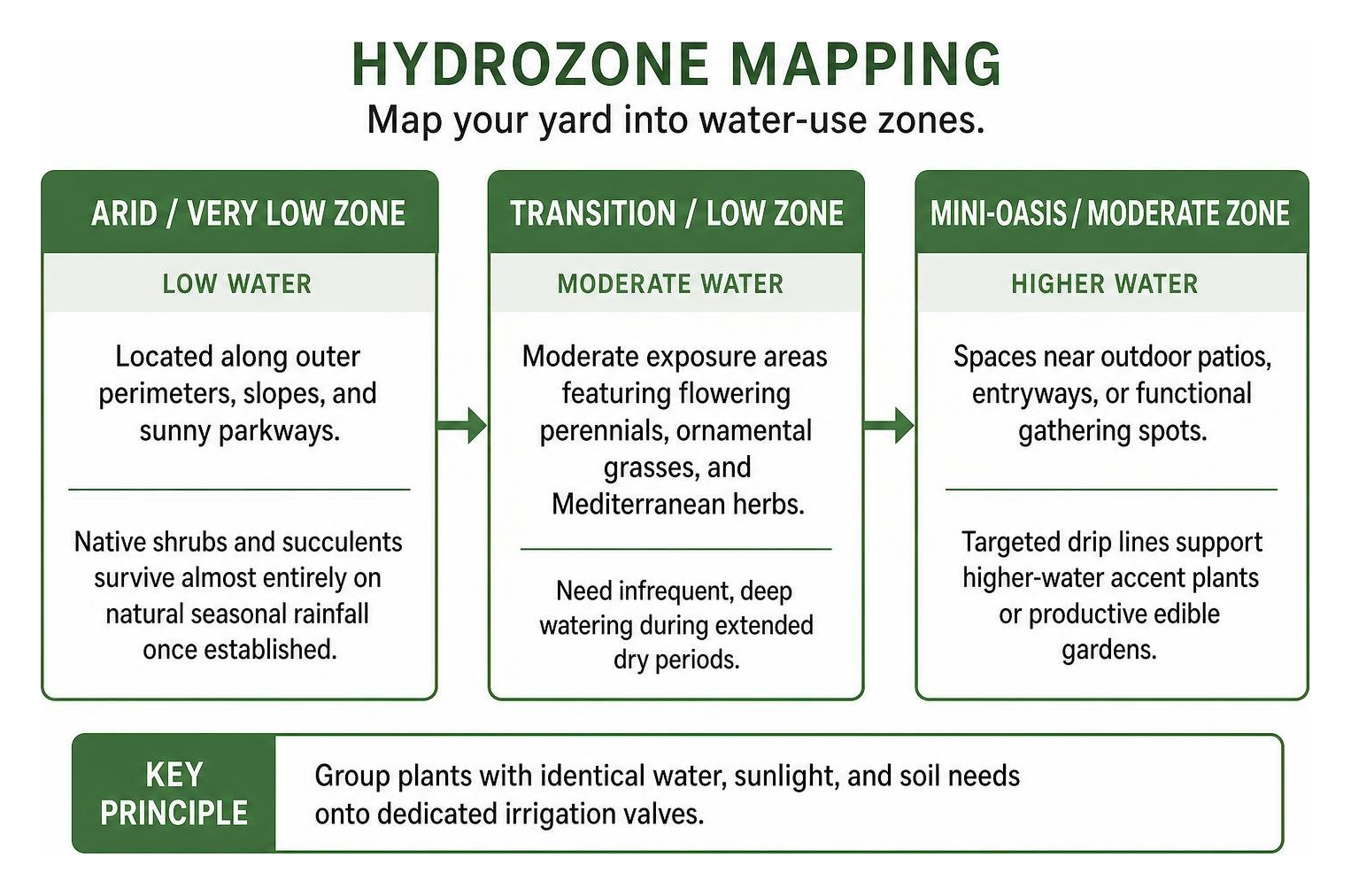
Regional frameworks such as the Sustainable Landscape Guidelines outline three primary hydrozones:
- Arid / Very Low Zone: Located along outer perimeters, slopes, and sunny parkways. These native shrubs and succulents survive almost entirely on natural seasonal rainfall once established.
- Transition / Low Zone: Moderate exposure areas featuring flowering perennials, ornamental grasses, and Mediterranean herbs that need infrequent, deep watering during extended dry periods.
- Mini-Oasis / Moderate Zone: Spaces near outdoor patios, entryways, or functional gathering spots where targeted drip lines support higher-water accent plants or productive edible gardens.
Designing and Planning a Water-Efficient Outdoor Space
A successful outdoor conversion begins with an honest site assessment. We map sun exposure patterns, analyze prevailing breezes, and evaluate soil drainage before setting a single shovel into the dirt.
In many Southern California neighborhoods, local municipal design standards enforce an 80/20 plant-to-hardscape guideline for front yards, ensuring that at least 80% of visible surfaces remain covered in living vegetation rather than solid concrete. When balancing architectural elements with living foliage, turning to custom landscape design solutions helps blend functional patios, rain catchment swales, and colorful garden borders seamlessly.
Best Plants for Drought Tolerant Landscaping

Selecting climate-appropriate species ensures your garden remains colorful across all four seasons. Many drought-adapted plants feature specialized leaf adaptations—such as waxy coatings, silver reflective surfaces, or fine hairs—that minimize transpiration loss. Discover resilient varieties in our guide to smart plant selections that stay green in dry spells, and consult The Drought Tolerant Garden – Los Angeles for local recommendations.
- California Buckwheat (Eriogonum fasciculatum): A native powerhouse providing pinkish-white blooms that age into rust-red seed heads, offering critical pollinator support.
- Salvia and Sage Varieties (Salvia leucantha, Salvia apiana): Fragrant, velvet-textured foliage topped with purple, blue, or white floral spikes loved by hummingbirds.
- French and Spanish Lavender (Lavandula spp.): Highly drought-resilient Mediterranean staples that bring soothing aroma, silver-green stems, and long-lasting summer blooms.
- Blue Fescue (Festuca glauca): A compact ornamental grass growing 10 to 12 inches tall, forming dense silvery-blue mounds that add fine texture and structural contrast.
- Yarrow (Achillea millefolium): A resilient perennial bearing flat-topped clusters of yellow, white, or terracotta flowers that thrive in lean soils with minimal moisture.
- Russian Sage (Perovskia atriplicifolia): An airy, heat-loving shrub with fragrant grayish leaves and clouds of lavender-blue flowers from late spring through autumn.
- Succulents (Sedum, Agave, Sempervivum): Architectural focal points storing water within fleshy leaves to bridge prolonged dry spells effortlessly.
Soil Preparation, Compost Amendments, and Drainage
Healthy, living soil acts like a sponge. In sandy soils common near coastal regions, water drains too fast for roots to absorb it. In heavy clay soils further inland, water pools on the surface, causing fungal root rot and runoff.
Adding organic compost builds a loose soil structure that holds moisture while allowing excess water to drain freely. Incorporating 2 to 3 inches of compost into the top 6 to 8 inches of planting beds increases the soil’s water-holding capacity significantly. Avoid excessive tilling, which disrupts beneficial mycorrhizal fungal networks that help plant root systems access deep moisture reserves.
Mulching Strategies to Lock in Soil Moisture
Mulch is the protective blanket every water-wise garden needs. Research shows that maintaining a proper layer of mulch can reduce evaporative soil moisture loss by as much as 75%, while simultaneously moderating root temperatures and suppressing water-stealing weeds.
- Organic Mulches (Coarse Wood Chips and Shredded Bark): Apply a consistent layer 3 to 4 inches deep across planting beds. As organic mulches slowly break down, they feed beneficial soil microbes and improve earth structure. Keep mulch 3 to 6 inches away from the root crowns of woody shrubs and tree trunks to prevent fungal decay.
- Inorganic Mulches (Gravel, River Rock, and Decomposed Granite): Ideal around desert succulents, agaves, and Mediterranean plantings that demand dry crowns. Mineral mulches absorb daytime heat and allow quick drainage during winter rains.
Smart Irrigation and Turf Reduction Strategies
Even the toughest drought-tolerant plants need regular water while developing strong root systems during their first year. The key is applying water slowly, deeply, and directly to the root zone rather than spraying broad areas with overhead heads. Investing in professional irrigation services guarantees that every valve and emitter operates at peak efficiency.
Drip Systems and Smart Weather-Based Controllers

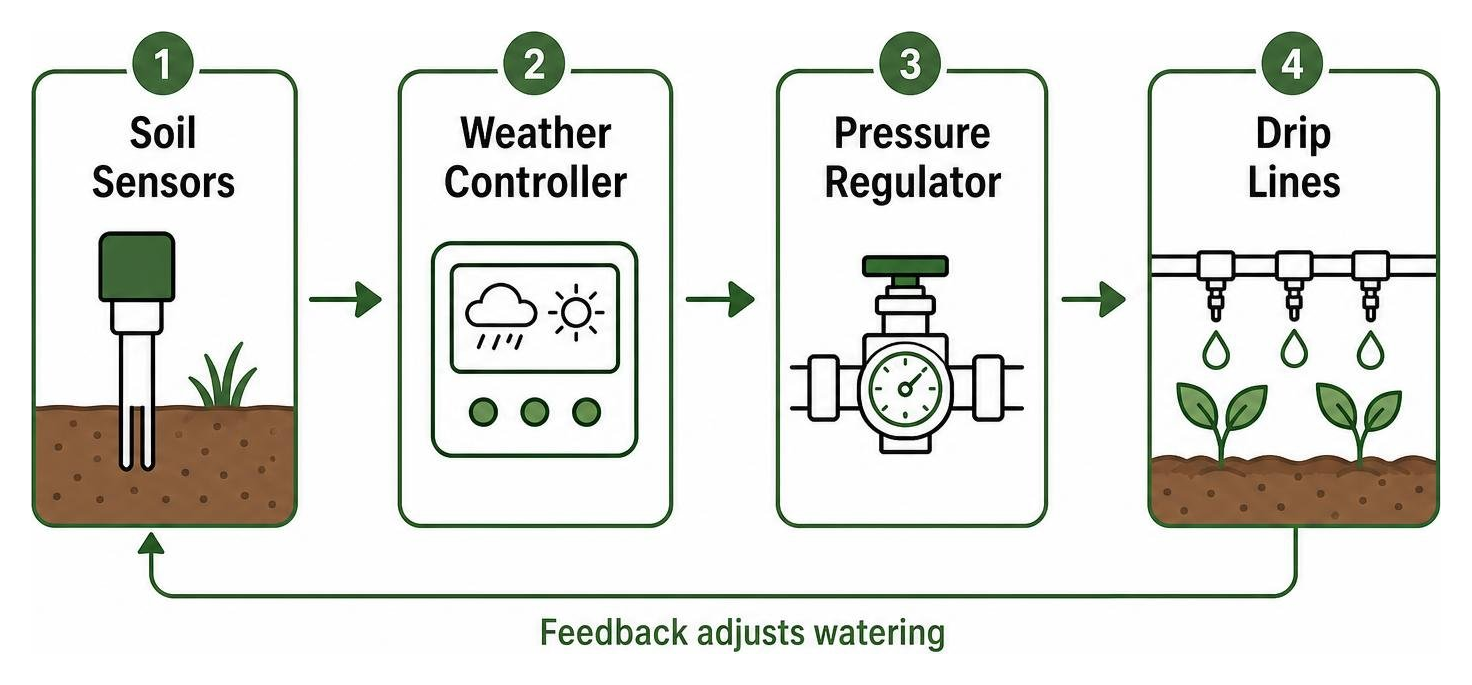
Standard in-ground sprayers lose water to wind drift, misting, and surface evaporation. Replacing spray zones with point-source drip emitters or in-line sub-surface drip tubing delivers water directly where roots need it.
- Pressure Regulators & Filters: Drip hardware runs on low pressure (15 to 30 PSI). Installing pressure regulators protects emitters from blowing out under high municipal water pressure.
- Smart Weather-Based Timers: Upgrade outdated mechanical clock timers with EPA WaterSense-labeled controllers. Learn how you can save water and cut costs with smart controllers that adjust watering runs automatically based on local weather data.
- Automatic Upgrades: Explore how our automatic sprinkler system installation brings water efficiency directly to older Southern California yards.
Replacing Traditional Lawns with Low-Water Groundcovers
Turfgrass is the single largest consumer of residential outdoor water. Removing non-functional turf—lawns kept only for appearance rather than recreation—is the fastest way to shrink your water bill.
Instead of renting costly sod cutters or using chemical sprays, try sheet mulching. Lay thick, non-printed corrugated cardboard directly over mowed grass, water it thoroughly, and cover it with 4 inches of compost and wood mulch. Within a few months, the turf decomposes, enriching the underlying topsoil naturally. Explore lawn alternatives in our guide to front yard lawn design alternatives.
- Dymondia (Dymondia margaretae): A dense groundcover with silver-green leaves that tolerates foot traffic and chokes out weeds.
- Creeping Thyme (Thymus serpyllum): A fragrant, walkable groundcover covered in tiny purple-pink flowers throughout late spring.
- Kurapia (Lippia nodiflora hybrid): A vigorous turf alternative that stays green on up to 60% less water than traditional tall fescue.
- Buffalograss (Bouteloua dactyloides): A warm-season native sod alternative requiring little mowing and very little supplemental summer water once established.
Integrating Hardscaping and Long-Term Maintenance
Functional hardscaping provides structure, usable living areas, and striking textural contrasts that balance out soft garden beds.
Balancing Rocks, Permeable Pavers, and Plant Life
A balanced landscape balances architectural hardscapes with living foliage. Interlocking permeable pavers, flagstone walkways set on sand, and decomposed granite paths let rainwater seep back into the groundwater basin rather than flowing into storm drains.
Incorporate dry creek beds lined with smooth river stones and accent boulders to channel heavy rains naturally across your yard. Find practical design tips on why your yard needs a balanced diet of rocks and plants to build an inviting outdoor environment.
Seasonal Maintenance for Drought Tolerant Landscaping
While xeriscapes cut maintenance needs by up to 50%, they are not completely maintenance-free. Use these straightforward low-maintenance garden tips to keep your yard looking its best through every season:
- Spring: Prune back overgrown native shrubs and ornamental grasses before new growth surges. Check drip filters, flush lateral lines, and inspect emitters for mineral clogging.
- Summer: Water deeply but infrequently during the early morning hours (between 4:00 AM and 8:00 AM) to minimize evaporation. Pull emergent weeds before they set seeds and compete for moisture.
- Autumn: Replenish organic mulch layers back to a depth of 3 to 4 inches. Plant new shrubs and perennials so their root systems establish during cooler fall and winter rains.
- Winter: Adjust smart controllers to turn off irrigation runs during rainy periods. Prune deciduous shade trees to balance canopy weight and remove deadwood safely.
Frequently Asked Questions About Water-Wise Gardening
How much water can drought-tolerant landscaping save compared to a grass lawn?
Converting an irrigated turf lawn to a drought-tolerant xeriscape can reduce total outdoor water use by 50% to 75%. Because outdoor watering represents roughly 30% to 80% of summer residential consumption, many homeowners see substantial drops in their monthly utility bills, recovering their conversion costs over time.
Do drought-tolerant yards consist only of rocks and cacti?
No. Modern water-wise landscaping incorporates a wide variety of flowering perennials, aromatic herbs, native shrubs, dynamic ornamental grasses, and broadleaf evergreen shade trees. The result is a vibrant, multi-layered garden that offers rich textures, fragrances, and seasonal blooms year-round.
What are the best low-water grass alternatives for high-traffic areas?
For active yards with children and pets, Kurapia and Buffalograss provide durable, soft surfaces that withstand heavy foot traffic while using a fraction of the water required by traditional cool-season grasses. For low-traffic pathways, Dymondia and creeping thyme offer practical, walkable green carpets.
Conclusion
Creating a water-wise yard protects our region’s shared water resources while adding long-term beauty and value to your home. Research shows that a well-designed, thoughtfully maintained landscape can boost overall property value by 5% to 15%, while mature shade trees provide natural cooling that lowers household energy bills.
Southern California Tree & Landscape has helped homeowners transform outdoor spaces across Torrance, the South Bay, Covina, and Harbor City since 1991. Our family-owned company brings ISA-certified arborist expertise, experienced crews, and full-service landscape design, precision irrigation installation, and tree preservation to every project.
Ready to transform your yard into a sustainable, water-saving paradise? Read the essential guide to backyard oasis design in Torrance and reach out to our team today to schedule your design consultation!