
Fast, Targeted Treatment for Elm Leaf Beetle
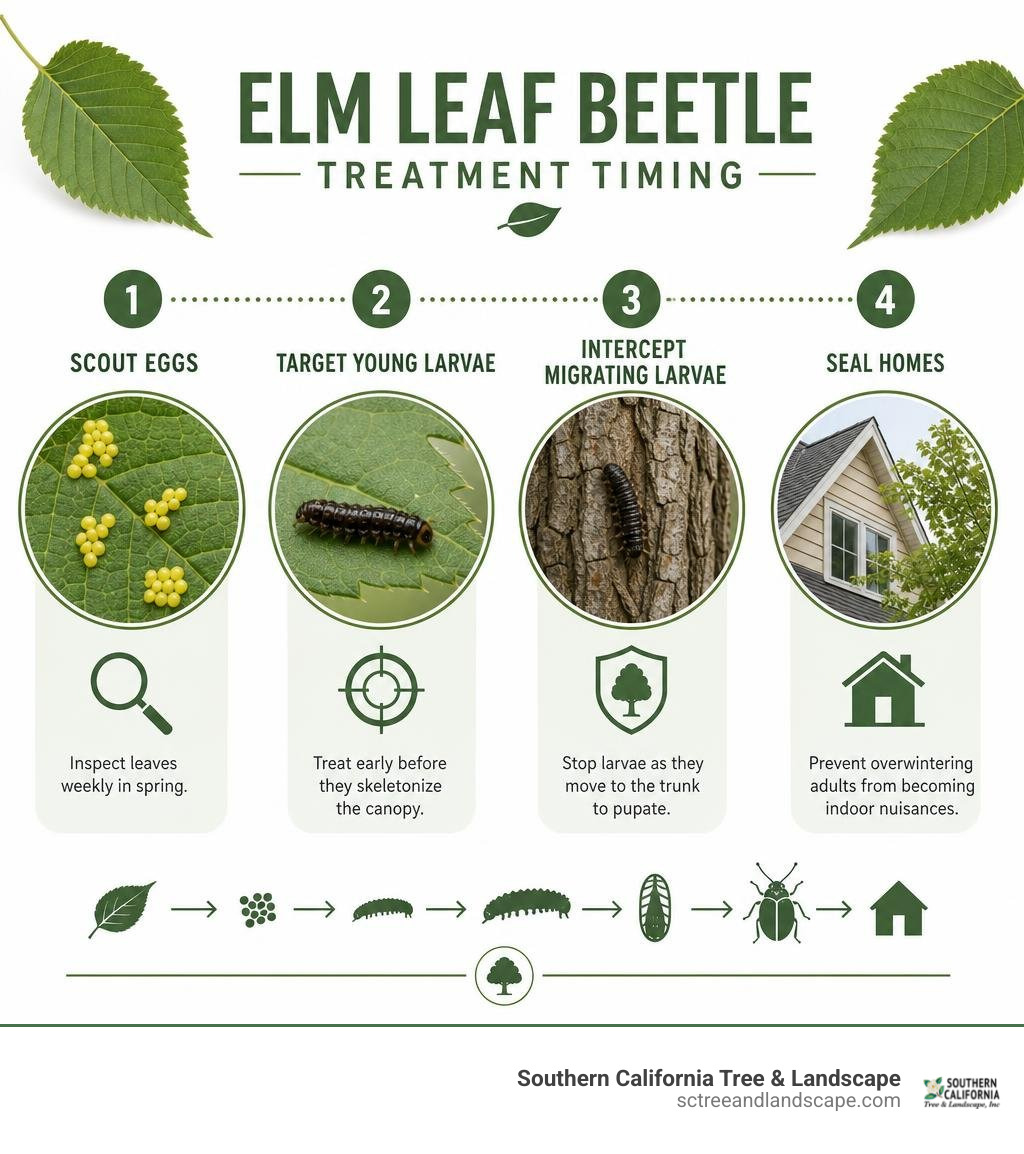
The best treatment for elm leaf beetle starts with early scouting, then targets young larvae before they skeletonize the canopy. Inspect leaves weekly in spring for yellow egg clusters and tiny dark larvae, protect tree health with proper watering, and use a targeted biological, barrier, or professional systemic treatment when early damage is building.
For Southern California properties, timing matters because elm leaf beetles can produce multiple generations each year. A healthy elm can often handle some late-season feeding, but act sooner when damage appears early or approaches 20% of the canopy. Waiting until leaves are brown and dropping makes control harder and reduces the shade your property depends on.
This guide explains how to identify the pest, choose a low-impact control method, stop larvae during their trunk migration, and prevent overwintering adults from becoming indoor nuisances.
I am Troy Basmajian, President of Southern California Tree & Landscape. Our team helps commercial properties, HOAs, and homeowners build practical treatment for elm leaf beetle plans that protect valuable shade trees while supporting long-term landscape health.
Identifying Elm Leaf Beetle Damage and Life Cycle Stages
Understanding what the elm leaf beetle (Xanthogaleruca luteola) looks like at every life stage is the cornerstone of effective management. When these pests invade, both the adults and the larvae feed voraciously on elm foliage, but they leave distinctly different signatures.
Adult beetles are roughly 1/4-inch long, spindle-shaped, and olive-green with dark longitudinal stripes running down the sides of their wing covers. As they feed, adults chew small, irregular circular openings directly through the leaf blade—often referred to as “shothole” damage. While unsightly, adult feeding rarely causes total tree collapse on its own.
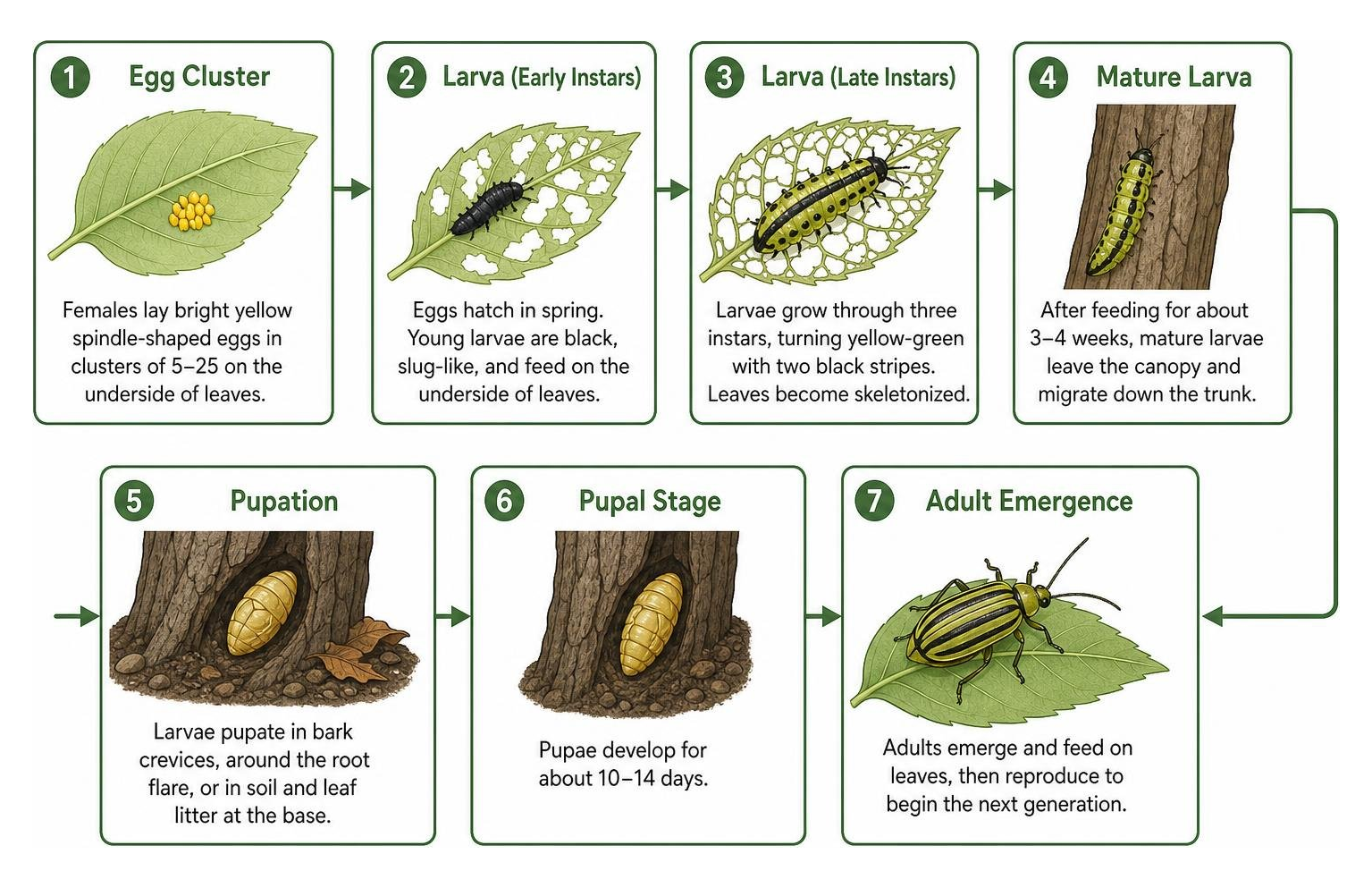
The real destruction comes from the larvae. After emerging in early spring from protected overwintering sites (such as thick bark crevices, woodpiles, or structural eaves), females lay spindle-shaped, bright yellow-to-orange eggs in clusters of 5 to 25 on the undersides of leaves. Over her lifetime, a single female can lay 600 to 800 eggs.
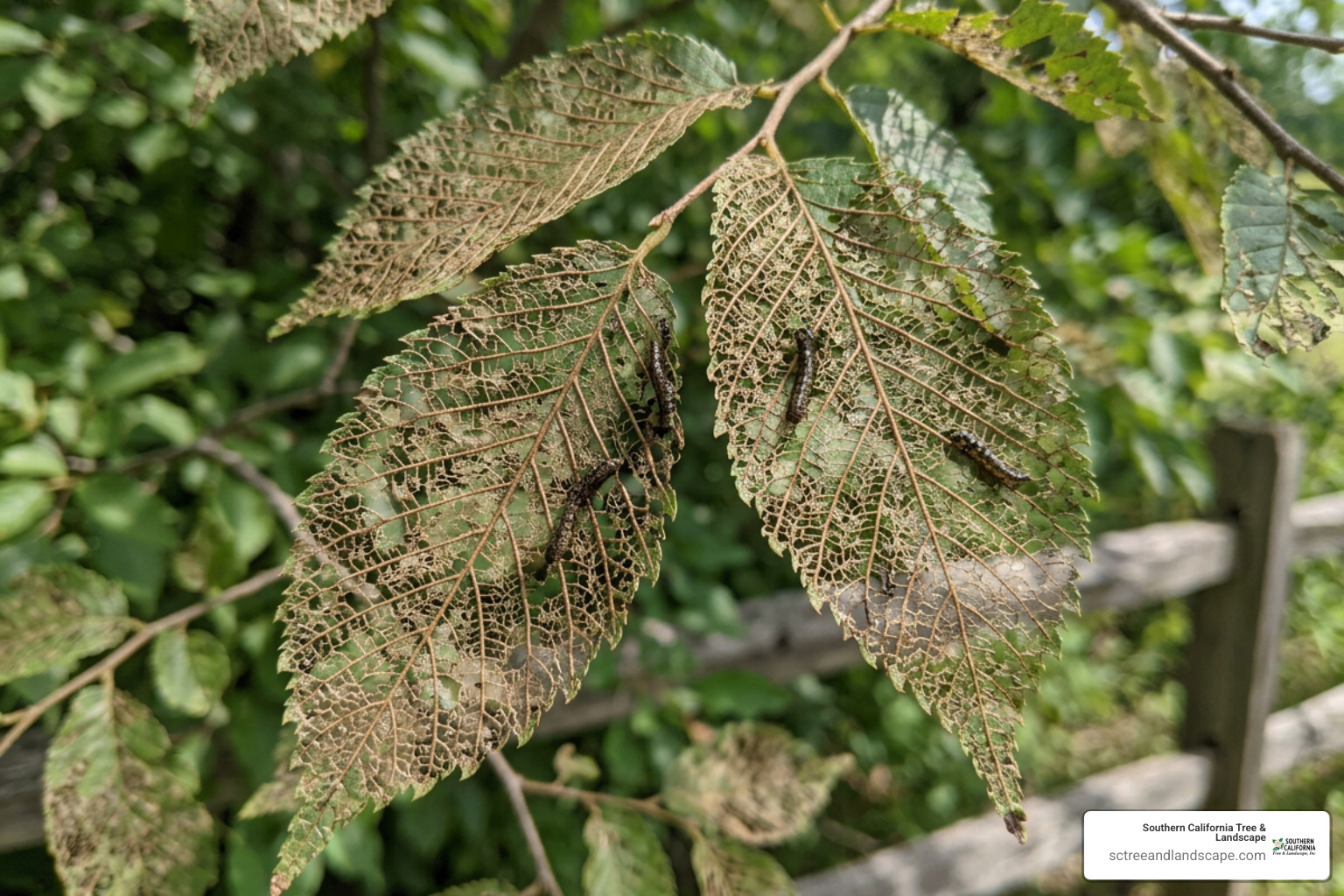
When the eggs hatch, the young larvae appear almost black and slug-like. As they progress through three distinct larval instars over a three-to-four-week period, they grow up to 1/2-inch long, turning a dull yellow-green with two prominent black lateral stripes and dark tubercles.
Larvae feed exclusively on the spongy underside of the foliage, avoiding the fibrous leaf veins. This results in classic “windowpane” skeletonization. Without photosynthetic tissue, the remaining translucent membrane dries out, turns crisp and brown, and creates a scorched appearance across the entire canopy. Heavily damaged leaves curl and drop prematurely.
When left unaddressed, chronic defoliation drains energy reserves, stressing the tree and increasing its vulnerability to environmental shock and other pathogens. Implementing timely interventions alongside strategies for managing secondary Dutch elm disease spread ensures the tree maintains its natural vascular defenses. Detailed identification guides, such as the UC IPM guide on elm leaf beetle identification, provide great visual references for distinguishing these foliar pests from other wood-infesting insects.
Once larvae finish feeding in the canopy, their unique behavior creates an ideal management opportunity: they migrate down the trunk in massive numbers to pupate in bark crevices, around the root flare, or in soil and leaf litter at the base of the tree. After roughly 10 to 14 days in the pupal stage, a fresh generation of adults emerges to repeat the cycle.
Monitoring Degree-Days and Defoliation Thresholds
In warmer climates throughout Southern California, including Torrance, Harbor City, and Covina, elm leaf beetles are not limited to a single annual life cycle. While northern areas may see one generation, our local climate frequently experiences two to three generations per year, and up to four or five generations have been recorded in long, warm growing seasons. This means populations can build rapidly between late spring and early autumn.
To time applications accurately rather than relying on guesswork, arborists use degree-day calculations. Degree-days track accumulated heat units over time, reflecting insect development rates:
- Base Temperature Threshold: Development begins accumulating above a base temperature of 52°F, starting March 1.
- First Peak Timing: First- and second-instar larvae typically peak in abundance when approximately 700 degree-days above 52°F have accumulated.
- Action Window: Intervening at or near this 700 degree-day mark catches vulnerable, young larvae before significant canopy skeletonization occurs.
When inspecting your trees, use clear defoliation action thresholds:
- Early Season (Spring / First Generation): Apply control measures if monitoring indicates visible egg clusters across multiple leaf samples or if early canopy defoliation approaches 20%. Because the tree still has months of summer heat ahead, conserving early foliage is critical for photosynthetic carbohydrate production.
- Late Season (Mid-to-Late Summer): Mature, vigorous elms can naturally tolerate higher defoliation levels late in the season. A treatment threshold of 40% defoliation is standard before intervention is deemed necessary, provided the tree is receiving adequate deep watering.
Comprehensive Treatment for Elm Leaf Beetle Infestations
Managing elm leaf beetles requires an Integrated Pest Management (IPM) strategy that pairs chemical precision with physical and biological barriers. Relying solely on broad-spectrum foliar insecticides can eliminate beneficial predators, triggering secondary pest outbreaks like spider mites. Instead, tailoring treatments to specific life stages and tree sizes delivers sustainable, long-term canopy protection.
Chemical Foliar Sprays and Systemic Treatment for Elm Leaf Beetle
When pest pressure surpasses acceptable thresholds, modern arboriculture offers targeted chemical applications that protect foliage while minimizing environmental drift.
Systemic insecticides—most commonly neonicotinoids like imidacloprid or translaminar compounds like abamectin—are absorbed through the tree’s vascular system and translocated into the leaves. When adult beetles or larvae ingest the treated foliage, feeding stops promptly.
- Trunk Micro-Injections: Directly delivering the formulation into the active xylem tissue around the root flare bypasses the surrounding soil entirely. This method is preferred on commercial properties, parking medians, or sites near waterways. Trunk injections translocate rapidly into the canopy, often within several days to two weeks, and provide season-long foliage protection.
- Soil Drenches & Soil Injections: Applied around the drip line or root zone, soil drenches require adequate soil moisture for uptake and take approximately 2 to 4 weeks to reach active leaf tissue. Applying soil treatments in late winter or early spring ensures adequate chemical concentration by the time the first larval generation begins feeding.
- Targeted Foliar Contact Sprays: When immediate larval knockdown is necessary on smaller ornamental elms, contact materials (such as short-residual spinosad or horticultural oils) can be sprayed directly on leaf undersides. To align your chemical choices with broader pest protocols, review wood-boring beetle insecticide protocols for best practices regarding application safety, chemical rotation, and drift prevention.
Bark Banding and Barrier Treatment for Elm Leaf Beetle
Because elm leaf beetle larvae must crawl down the tree trunk to find pupation shelters near the ground, the trunk acts as a natural mechanical bottleneck. Bark banding takes advantage of this behavioral habit, eliminating massive numbers of mature larvae without requiring high-pressure canopy spraying.
- Chemical Bark Bands: Applying a low-pressure, targeted band of a persistent residual insecticide (such as a registered pyrethroid or carbaryl formulation) in a 1-to-2-foot swath around the circumference of the trunk below the lowest limbs creates a lethal barrier. As third-instar larvae crawl down the bark, they contact the treated band and perish before pupating. A single well-timed band in late spring can suppress the emergence of subsequent generations throughout the summer.
- Sticky Mechanical Barriers: Wrapping the trunk in heavy cardboard, landscape plastic, or duct tape (sticky side facing out or coated with adhesive barrier compounds) traps migrating larvae physically.
| Method | Best Application Timing | Mechanism of Action | Maintenance Level | Environmental Footprint |
|---|---|---|---|---|
| Systemic Trunk Injection | Early spring at bud break | Ingested via leaf vascular tissue | Low (Single annual service) | Lowest; zero drift or run-off |
| Soil Drench (Systemic) | Late winter / early spring | Root absorption into xylem | Low; requires post-treatment water | Low; contained within drip line |
| Chemical Bark Band | Mid-spring (before larval drop) | Contact toxin during migration | Low to Moderate | Targeted; localized to trunk |
| Mechanical Sticky Band | Late spring through summer | Physical entrapment on tape | High; traps fill and need renewal | Completely non-toxic |
| Foliar Contact Spray | Post-egg hatch (at ~700 DD) | Contact and ingestion on foliage | Moderate; may require repeat sprays | Moderate; potential spray drift |
Biological and Cultural Elm Tree Management
A resilient landscape incorporates nature’s own checks and balances. Conserving natural enemies and utilizing organic treatments can keep beetle populations below damaging thresholds without relying heavily on synthetic chemistries.
- Bacterial Foliar Sprays (Bacillus thuringiensis): Formulations containing Bacillus thuringiensis subsp. tenebrionis (Btt) are specifically toxic to chrysomelid beetle larvae while remaining non-toxic to honeybees, mammals, and beneficial predatory insects. In municipal and field trials, untreated trees lost up to 40% of their total foliage, whereas Btt-treated trees suffered only about 10% defoliation over identical observation windows. Applying Btt during the first-instar larval stage yields the highest control efficacy.
- Botanical Azadirachtin (Neem-Derived): As highlighted in research on neem-derived azadirachtin efficacy, natural neem extracts act as both powerful antifeedants and insect growth regulators. Azadirachtin disrupts larval molting and provides notable ovicidal activity, significantly reducing egg viability. In laboratory and field evaluations, dilute azadirachtin sprays achieved up to 95–100% larval mortality across all instars and protected foliage for nearly 30 days.
- Entomopathogenic Nematodes: The beneficial microscopic nematode Steinernema carpocapsae can be incorporated into moist trunk bands made of cellulose fiber or shredded mulch. As demonstrated in ISA study on biological elm beetle controls, these nematodes seek out and parasitize migrating beetle larvae as they crawl down the trunk to pupate, offering a sustainable, non-chemical trunk barrier.
- Natural Predators and Parasitoids: Healthy urban landscapes host an array of beneficial organisms that prey on elm leaf beetles. Generalist predators like green lacewing larvae, predatory earwigs, and ground beetles consume hundreds of eggs and soft-bodied larvae. Specialized parasitic wasps, such as Oomyzus gallerucae (which attacks egg masses) and Baryscapus brevistigma (which parasitizes pupae), provide essential biological population suppression when protected from broad-spectrum insecticides.
Sanitation, Indoor Prevention, and Resistant Cultivars
Cultural practices play an equally important role in preventing pest buildups and maintaining overall tree vigor:
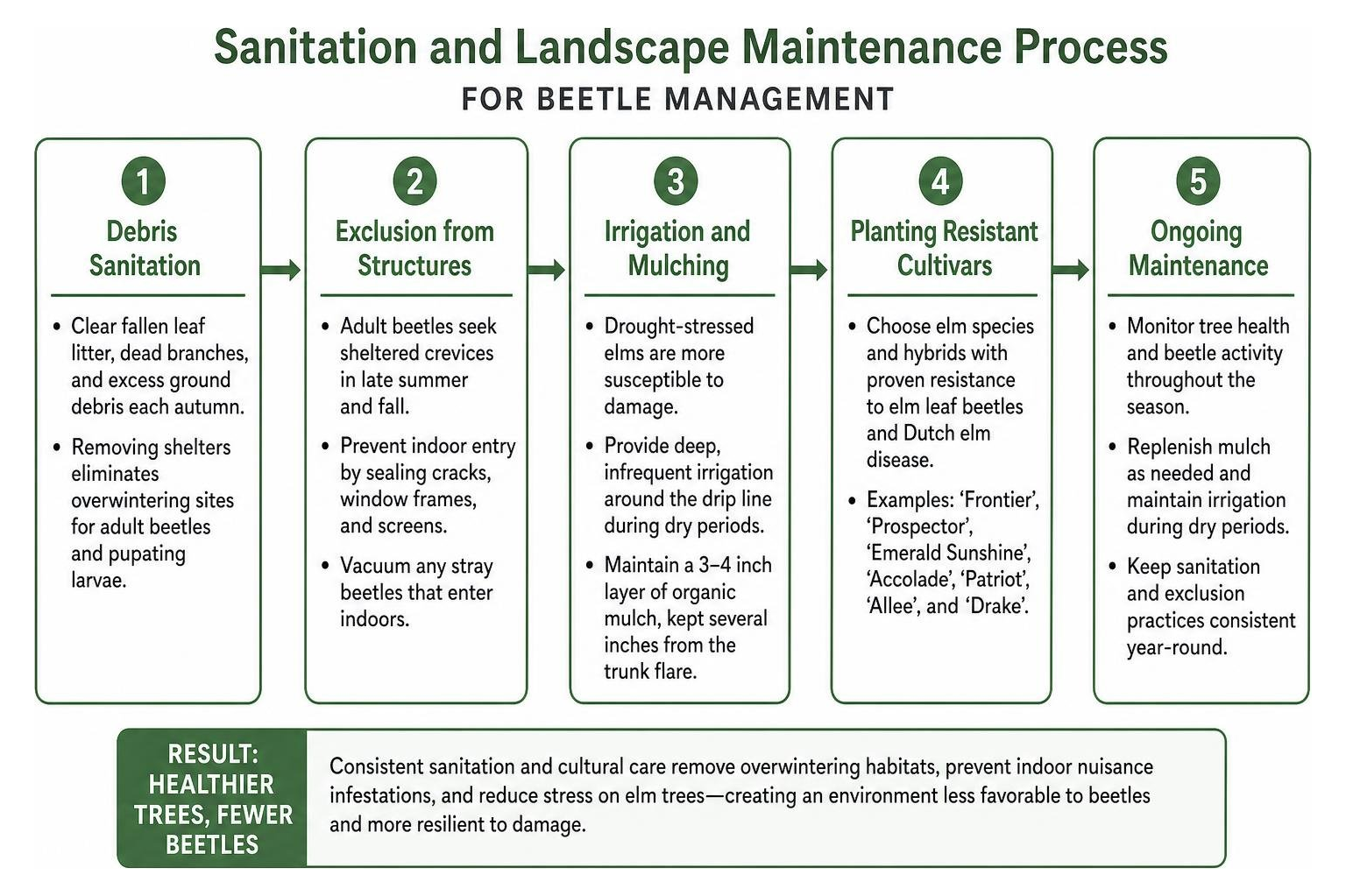
- Debris Sanitation: Clear away fallen leaf litter, dead branches, and excess ground debris from around the root flare each autumn. Removing these shelters eliminates prime overwintering habitats for adult beetles and pupating larvae.
- Exclusion from Structures: In late summer and fall, adult beetles often seek sheltered crevices around nearby homes, entering attics, window frames, and wall voids. Once inside, they emit a mild musty odor and become a nuisance. Prevent indoor entry by caulking exterior structural cracks, sealing window framing, maintaining tight-fitting window screens, and vacuuming any stray beetles that make their way inside.
- Irrigation and Mulching: Drought-stressed elms are far more susceptible to severe insect damage and secondary canopy decline. Provide deep, infrequent irrigation around the drip line during dry summer months and maintain a 3-to-4-inch layer of organic wood mulch (kept several inches away from the trunk flare) to conserve soil moisture. For broader guidance on maintaining resilient trees, explore proven cures for common tree ailments.
- Planting Resistant Cultivars: When designing new landscapes or replacing diseased trees, select elm species and hybrids with proven genetic resistance to both elm leaf beetles and Dutch elm disease. Cultivars such as ‘Frontier’, ‘Prospector’, ‘Emerald Sunshine’, ‘Accolade’, and ‘Patriot’—as well as select Chinese elm selections like ‘Allee’ and ‘Drake’—show substantially reduced feeding injury compared to highly susceptible European and American elm varieties.
Frequently Asked Questions About Elm Leaf Beetles
How can I distinguish elm leaf beetle damage from other pests?
Elm leaf beetle damage is identifiable by its distinct two-phase feeding pattern. Adult beetles chew distinct, irregular “shotholes” completely through the leaves, while larvae feed along the underside, leaving the upper cuticle and leaf veins intact to create a papery, lacy skeleton.
In contrast, vascular diseases cause entire branch tips to wilt, flag, and turn yellow-brown without leaf tissue being chewed away. Wood-boring insects produce branch dieback and exit holes on limbs rather than surface windowpaning on the foliage.
When is the best time of year to treat elm leaf beetles?
The ideal timing depends on the specific treatment method:
- Soil Systemics: Apply in late winter or early spring before bud break so active ingredients reach the leaves before eggs hatch.
- Biological Sprays (Btt/Neem) and Contact Sprays: Time applications for late spring when monitoring indicates eggs have hatched and young first- or second-instar larvae are active (accumulating roughly 700 degree-days above 52°F).
- Trunk Bands: Install barriers in late spring just before mature larvae begin their migration down the trunk toward the soil.
Can healthy elm trees recover from complete defoliation?
Yes. Mature, healthy elm trees possess substantial starch reserves within their root systems and can survive a single season of heavy defoliation, particularly if the leaf loss occurs in mid-to-late summer.
To help a defoliated tree recover, maintain proper deep watering throughout the dry season and apply a balanced, slow-release fertilizer the following spring to stimulate healthy canopy regrowth. However, repeated defoliation across multiple consecutive seasons will deplete energy reserves and warrants proactive management.
Conclusion
Elm leaf beetles can turn a lush, cooling shade canopy into a brown, skeletonized nuisance in just a few short weeks. However, by establishing a routine monitoring schedule, taking advantage of degree-day thresholds, and pairing targeted trunk barriers with modern systemic treatments, you can protect your valuable trees while preserving the local ecosystem.
At Southern California Tree & Landscape, our family-owned team has spent over three decades helping property owners across Torrance, Harbor City, Covina, and the greater South Bay maintain vibrant, healthy landscapes. Whether you need a comprehensive canopy assessment from an ISA-certified arborist or rapid emergency care, explore our effective treatments for bark and leaf beetles to schedule a consultation and keep your shade trees thriving all season long.