
Comprehensive Breakdown of Backflow Preventer Installation Cost
Understanding how the total price breaks down helps you evaluate contractor estimates effectively. While the average residential project totals roughly $350 for parts and labor, quotes fluctuate depending on the hardware chosen, pipe diameter, site access, and municipal testing requirements.
For high-hazard applications or complex retrofits, costs climb quickly. As detailed in the Current Cost Backflow Valve Installation Guide, project pricing shifts considerably across different valve categories, pipe materials, and regional labor markets.
| Device Type | Average Hardware Cost | Labor & Installation | Typical Permit & Initial Test | Total Average Installed Cost |
|---|---|---|---|---|
| Atmospheric Vacuum Breaker (AVB) | $35 – $90 | $100 – $250 | $0 – $75 | $135 – $415 |
| Pressure Vacuum Breaker (PVB) | $80 – $300 | $150 – $400 | $50 – $150 | $280 – $850 |
| Double Check Valve Assembly (DCVA) | $150 – $550 | $250 – $600 | $75 – $200 | $475 – $1,350 |
| Reduced Pressure Zone (RPZ) | $300 – $1,200+ | $400 – $1,500+ | $100 – $300 | $800 – $3,000+ |
Residential vs Commercial Backflow Preventer Installation Cost
Residential installations usually center on 3/4-inch to 1-inch lines serving landscape systems, outdoor hose bibs, or swimming pools. Because these lines are smaller and operate at standard residential municipal pressure, hardware remains relatively compact and simple to mount. Typical residential outlays hover around $300 to $800 in straightforward settings. You can review how these assemblies integrate into wider landscaping budgets through our guide to sprinkler system installation costs.
Commercial properties, business parks, and multi-family HOAs operate under distinct hydraulic demands. Commercial lines typically range from 1.5 inches up to 4 inches or more, demanding heavy-duty cast bronze or stainless-steel units. Commercial installations commonly fall between $1,000 and $5,000+. Commercial systems often require OS&Y (Outside Screw and Yoke) gate valves, dedicated concrete pads, tamper switches connected to fire panels, and enhanced clearance for utility testing.
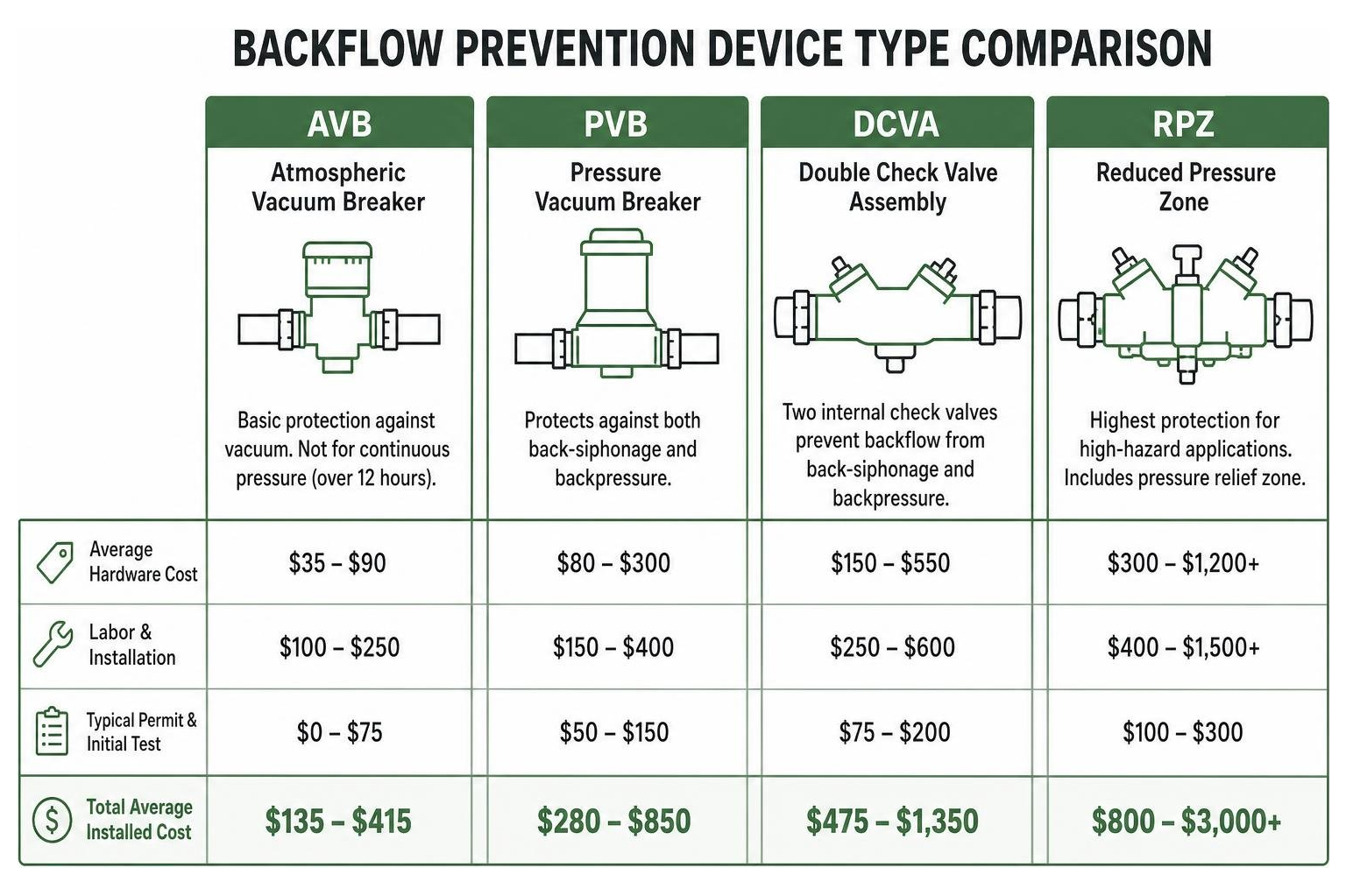
Costs by Device Type: AVB, PVB, DCVA, and RPZ
The specific hazard level of your water application determines the mechanical device your municipal purveyor requires:
- Atmospheric Vacuum Breaker (AVB): The most basic mechanical preventer ($135 to $415 total installed). AVBs use a simple poppet valve to break vacuum siphonage. They cannot be installed under continuous water pressure (no more than 12 hours at a time) and must sit at least 6 inches above the highest sprinkler head or downstream outlet.
- Pressure Vacuum Breaker (PVB): Common for residential lawn sprinklers ($280 to $850 installed). PVBs handle continuous supply pressure and include spring-loaded check valves with an air-inlet valve. They must be installed at least 12 inches above all downstream piping and sprinkler heads.
- Double Check Valve Assembly (DCVA): Often installed in below-ground vaults ($475 to $1,350 installed). DCVAs feature two spring-loaded check valves in series with test cocks. They protect against low-to-moderate hazards (backpressure and backsiphonage) but are restricted in areas where toxic chemicals, fertilizers, or sewage cross-connections are present.
- Reduced Pressure Zone (RPZ) Assembly: The gold standard in backflow security ($800 to $3,000+ installed). RPZs use two independent check valves separated by a hydraulically operated differential relief valve. If a check valve fails, the central chamber dumps water onto the ground rather than allowing non-potable water into the clean main. RPZs are mandated for high-hazard connections such as dedicated fertilizer injectors, commercial boilers, and large irrigation loops.
Key Variables and Hidden Expenses That Alter Quotes
Project estimates reflect real site conditions. When calculating total expenses, using a Backflow Preventer Cost Calculator (2026) highlights how site accessibility, excavation requirements, and line adjustments alter total labor hours.
Key Factors That Drive Your Backflow Preventer Installation Cost
- Pipe Age and Condition: Corroded galvanized steel or brittle older PVC lines require transition couplings, new master isolation valves, or manifold replacements before a backflow device can be safely added.
- Plumbing Layout and Depth: Installing an above-ground PVB unit on an accessible riser is considerably cheaper than excavating a deep mainline vault to insert a subterranean double-check valve.
- Labor Rates: Certified technicians and plumbers charge between $75 and $150 per hour. In dense coastal and urban centers, higher overhead can push labor costs 15% to 20% higher.
- Irrigation Complexity: If you are retrofitting hardware while adding an irrigation zone, plumbing labor can often be shared, reducing total project costs per component.
Permits, Inspections, and Mandatory Annual Testing Fees
Municipalities require plumbing permits for cross-connection safety devices. Permit fees start at $50 and can exceed $200 for larger commercial or multi-zone setups.
Once installed, the device must undergo certified performance testing before water districts sign off. Annual backflow testing costs $30 to $300 per device, with standard residential tests typically running between $70 and $90. Testers connect calibrated differential pressure gauges to the unit’s test cocks to confirm internal springs, check valves, and relief ports operate within strict tolerances.
Optional Upgrades: Freeze Protection and Anti-Theft Enclosures
Outdoor brass assemblies can attract unwanted attention or suffer weather damage if left exposed:
- Anti-Theft Enclosures ($200 to $300): Heavy-gauge expanded metal cages bolted into concrete footings prevent theft of valuable bronze valve bodies while maintaining proper drainage and tester access.
- Thermostatic Freeze Relief Valves (~$100): In microclimates prone to occasional overnight dips, these mechanical valves automatically crack open to release near-freezing water, allowing warmer supply water to circulate and preventing cracked bodies.
- Insulated Marine-Grade Jackets ($50 to $120): Weather-resistant insulated covers shield above-ground vacuum breakers from UV degradation and minor frost events.
Repair vs Replacement: Making the Most Cost-Effective Choice
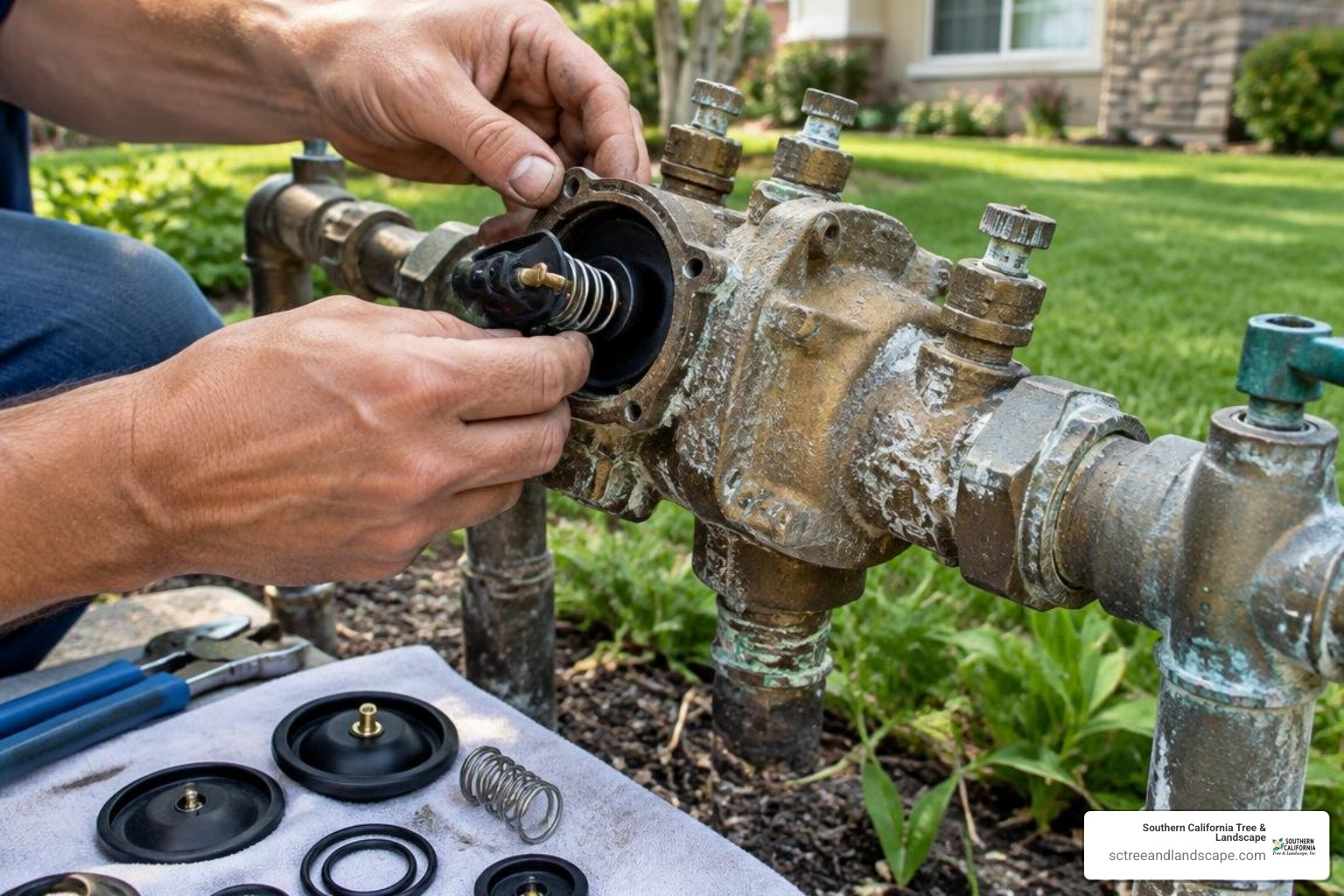
If your existing unit fails its annual checkup, you might wonder whether a complete overhaul is necessary. In many cases, targeted repairs restore the device to service at a fraction of full replacement pricing.
When to Rebuild vs When to Fully Replace
Internal check assemblies, rubber discs, O-rings, and diaphragm springs degrade over time due to mineral scale, debris, and continuous line pressure. Minor repairs to an existing backflow preventer can cost anywhere from $50 to $100 in hardware kits, plus an hour of labor.
If the outer brass casting remains free of hairline fractures, water utility certified rebuild kits allow certified repair experts to replace worn internals without cutting existing mainline copper or PVC pipes.
Full replacement becomes unavoidable when:
- The valve body has cracked from freeze damage or physical impact.
- Internal valve seats have eroded, preventing replacement discs from sealing cleanly.
- The manufacturer has discontinued parts for an obsolete model.
- Local plumbing codes now require higher-hazard hardware (such as transitioning from an outdated AVB to a modern RPZ).
DIY Installation Risks vs Professional Hiring
While installing a simple garden hose vacuum breaker is straightforward for homeowners, main-line backflow installations require professional technical knowledge.
Attempting a DIY installation on a pressurized irrigation supply introduces significant risks:
- Code Non-Compliance: Unpermitted installations will fail utility cross-connection audits, risking immediate water shutoffs and administrative penalties.
- Contamination Risks: An improperly configured device can siphon lawn fertilizers, pet waste, or stagnant puddle water directly into your home’s drinking lines during a municipal pressure drop.
- Financial Surprises: Incorrect pipe sizing, missing isolation shutoffs, or improper vertical clearance often force contractors to rebuild the entire connection from scratch. Reviewing how professionals manage supply lines helps homeowners avoid hidden sprinkler fees on unforeseen site work.
How to Save Money on Your Backflow Setup
Keeping installation expenses under control does not require cutting corners on clean drinking water protection. Practical ways to save include:
- Request Multiple Detailed Estimates: Obtain itemized bids separating device models, rough-in plumbing labor, permits, and testing fees to compare quotes accurately.
- Bundle Service Visits: Combine your backflow installation with scheduled landscape renovations, mainline upgrades, or irrigation controller improvements to reduce single-trip service fees.
- Select Standard Lead-Free Bronze Hardware: Stick with widely supported product lines (such as Wilkins, Febco, Apollo, or Watts). Readily available replacement components reduce future repair costs.
- Schedule Work During Off-Peak Windows: Booking installations in late autumn or mid-winter allows you to avoid peak spring irrigation labor rates and contractor backlogs.
- Prep the Work Site in Advance: Clear brush, roots, and obstructions from the pipe connection zone before the technician arrives to minimize billable manual labor hours.
Frequently Asked Questions About Backflow Preventers
How much does annual backflow testing cost?
Annual backflow testing generally costs $30 to $300 per device, with most standard residential tests falling in the $70 to $90 range. The technician evaluates differential pressure drops across internal checks, verifies relief valve discharge points, and submits official compliance reports to your municipal water district.
Can a homeowner legally install their own backflow preventer?
In most jurisdictions, homeowners can install simple, unpressurized hose-bib vacuum breakers on outdoor taps. However, permanent mainline assemblies (PVBs, DCVAs, and RPZs) must be installed according to strict plumbing codes and tested by a certified cross-connection specialist before water districts approve operation.
What happens if I fail to install or test my backflow device?
Failing to install a mandated device or ignoring annual compliance notices leads to municipal warning letters, escalating penalty fees, and eventual suspension of your potable water service. Properties without operational devices also risk severe liability if non-potable water siphons into the public distribution grid.
Conclusion
A properly installed backflow prevention assembly safeguards your household’s drinking water and keeps your property fully compliant with municipal plumbing regulations. Whether you need a standard residential pressure vacuum breaker or a heavy-duty commercial RPZ setup, understanding what drives hardware, labor, permitting, and maintenance costs ensures you get fair value on your quote.
At Southern California Tree & Landscape, our family-owned team has helped property owners across Torrance, the South Bay, Covina, and Harbor City maintain safe, reliable outdoor water infrastructure since 1991. If you are updating an irrigation system or need to replace a failing valve assembly, explore our professional irrigation services to schedule a site evaluation and keep your clean water supply secure.