
How to Identify and Treat Tree Pests Before Damage Spreads
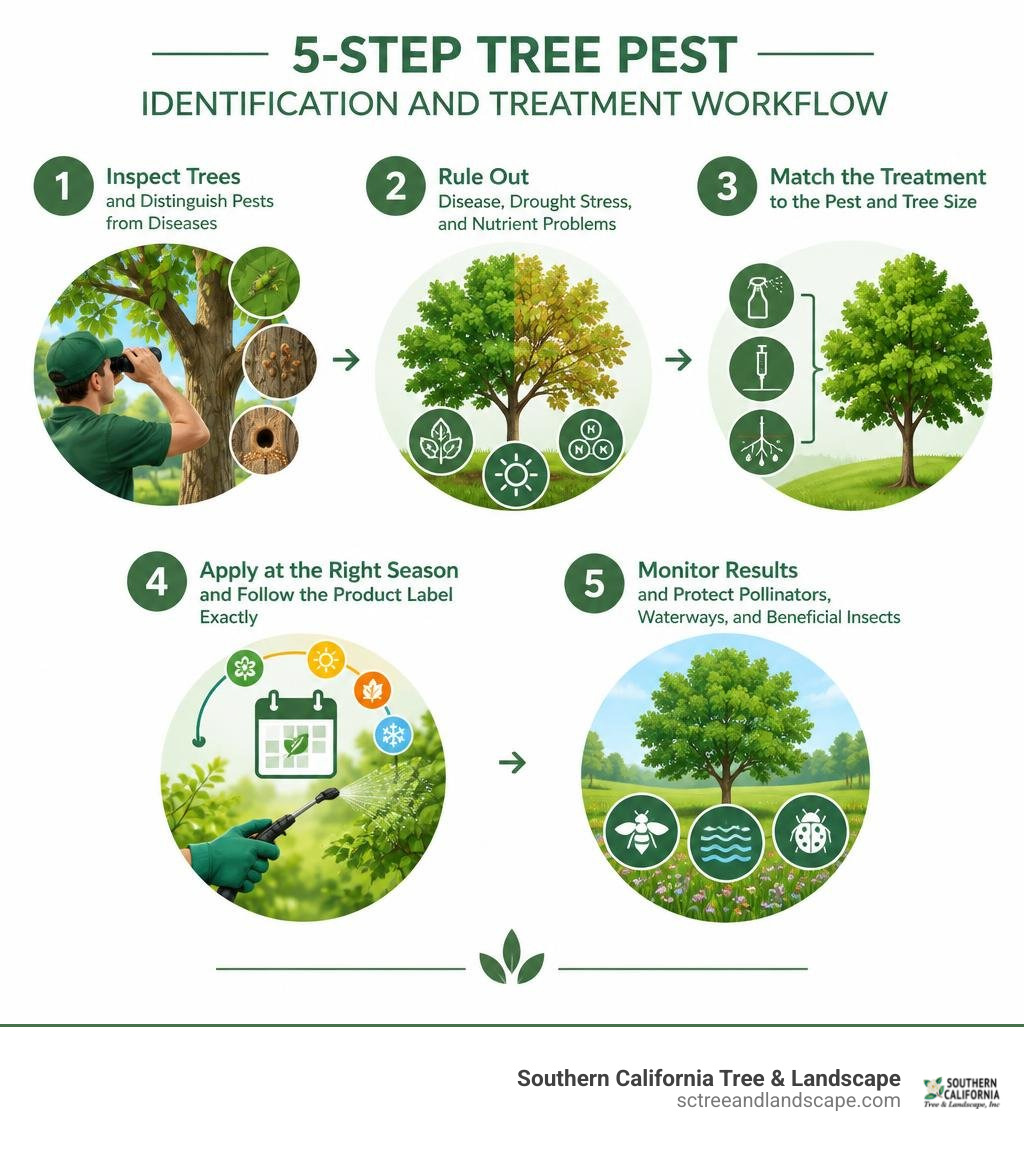
Effective tree insect treatment starts with identifying the pest, checking how much damage it has caused, and choosing a method that fits the tree and site. For most properties, the five essential steps are:
- Inspect leaves, bark, branches, and the soil line for pest clues.
- Rule out disease, drought stress, and nutrient problems.
- Match the treatment method to the pest and tree size.
- Apply at the right season and follow the product label exactly.
- Monitor results and protect pollinators, waterways, and beneficial insects.
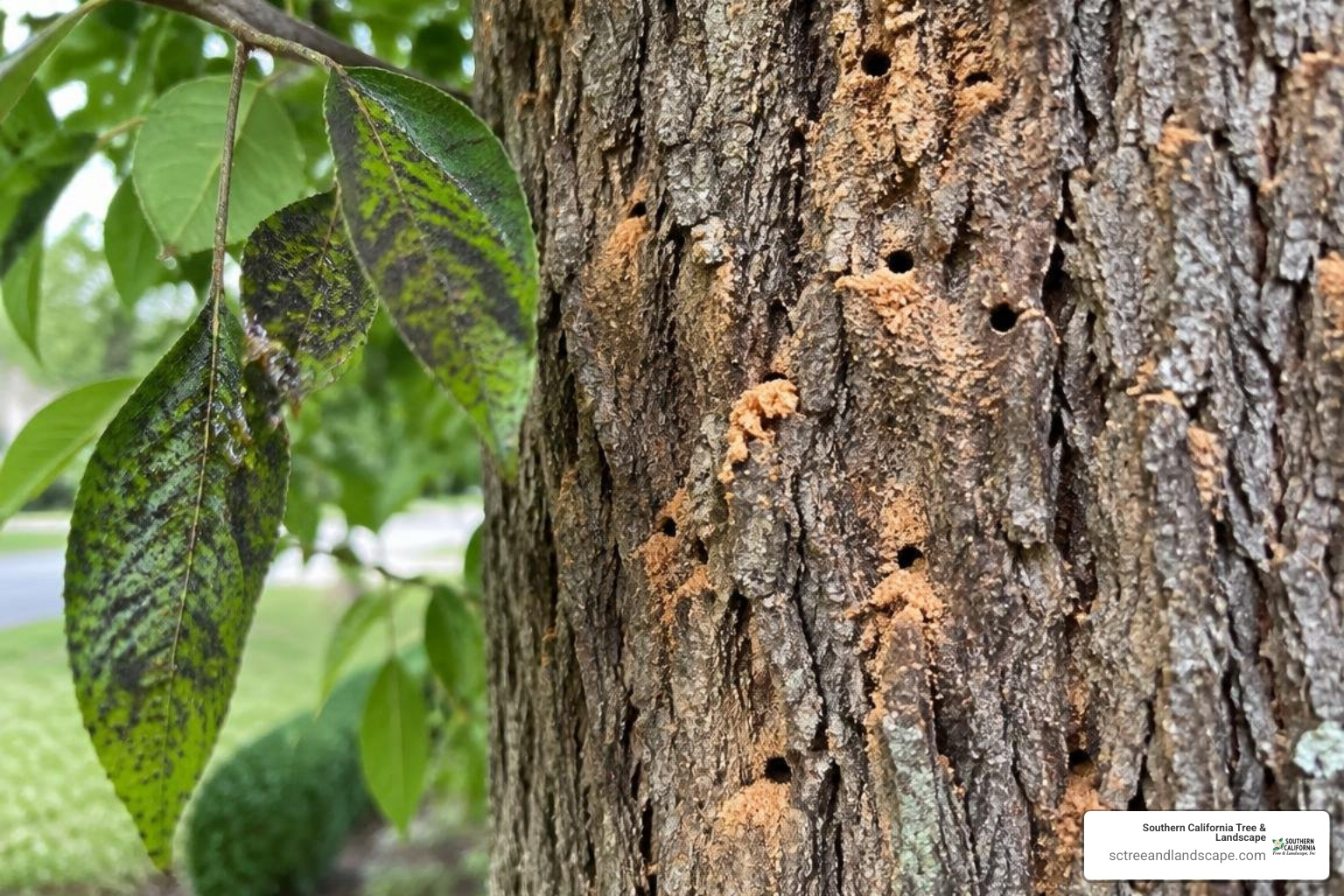
Aphids often leave sticky honeydew and black sooty mold. Scale can look like small bumps on stems or leaves. Borers may leave exit holes, sawdust-like frass, and thinning foliage. Catching these signs early matters because hidden pests can disrupt the tree’s water-moving tissues long before major canopy dieback is visible.
I am Troy Basmajian, President of Southern California Tree & Landscape, and I have spent more than a decade helping property owners, HOAs, and commercial sites protect valuable landscapes through practical tree insect treatment and long-term tree care. The next five steps will help you make a safer, more informed response before a small pest issue becomes an expensive tree loss.
Step 1: Inspect Trees and Distinguish Pests from Diseases
A successful tree insect treatment begins with close observation. Walk around the tree and examine the entire structure from the root flare to the upper canopy. Look for physical insects, branch dieback, early leaf drop, and subtle changes in foliage color.
Pests leave distinctive physical signatures:
- Honeydew and Sooty Mold: Piercing-sucking pests like aphids, soft scales, and whiteflies excrete sugary waste called honeydew. This sticky substance coats leaves, walkways, and patio furniture, quickly becoming colonized by a dark fungus known as sooty mold. Honeydew also attracts nuisance insects like ants and wasps.
- Exit Holes and Frass: Wood-boring insects chew through the outer bark and feed on internal vascular layers. When adult beetles emerge, they leave distinct D-shaped, round, or oval exit holes accompanied by fine, sawdust-like frass.
- Canopy Thinning: As pests consume foliage or disrupt the flow of water and nutrients, the crown begins to thin from the top down or from the inside out.
It is equally important to distinguish insect activity from pathogens. While insects cause physical chewing, stippling, or structural tunneling, fungal and bacterial issues often present as leaf spots, cankers, or systematic wilting. If you notice unusual foliage spotting or branch blights, diagnosing common tree diseases early helps avoid treating a fungal infection with an insecticide, which will not resolve the underlying issue.
Common Pest Symptoms vs. Nutrient Deficiencies
Homeowners often mistake pest damage for nutrient chlorosis or watering problems. Leaf yellowing caused by iron or nitrogen deficiency typically presents as uniform yellowing across the leaf blade or interveinal chlorosis (yellow tissue between green veins) across an entire branch system.
In contrast, sap-feeding insects create irregular, localized discoloration:
- Leaf Stippling: Tiny, pale yellow or white speckles on foliage caused by pests puncturing individual plant cells. When dealing with dense evergreens, managing spider mites on arborvitae requires checking the undersides of needles for fine webbing and stippling rather than assuming the tree lacks fertilizer.
- Mechanical Leaf Chewing: Irregular margins, skeletonized leaf tissue, or rolled leaves point directly to caterpillars, beetles, or sawfly larvae rather than root issues.
- Root Rot vs. Root Feeders: Root rot caused by poor drainage results in soft, decayed root tissue and general decline. Subterranean root feeders, such as root weevil larvae, leave distinct notches and stripped root bark.
High-Risk Urban Pests: Borers, Scale, and Aphids
Certain insect species pose immediate threats to urban and suburban canopies across Southern California landscapes, from Torrance and Harbor City to Covina:
- Wood Borers (e.g., Emerald Ash Borer, Flatheaded Borers): Larvae tunnel directly beneath the bark into the cambium and phloem, cutting off water and nutrient transport. Without intervention, an infestation can kill mature trees within a few seasons.
- Scale Insects (Armored and Soft Scales): Soft scales produce large quantities of honeydew and weaken twigs. Armored scales do not secrete honeydew; instead, they inject toxic saliva while feeding directly on plant cells, leading to branch dieback.
- Aphids, Adelgids, and Whiteflies: These soft-bodied pests multiply rapidly in warm weather, congregating on tender new shoots and the undersides of leaves, stunting growth and causing leaf curl.
- Bark Beetles on Conifers: Conifers under environmental stress become prime targets. When managing evergreen species, identifying pine tree pests such as bark beetles and tip moths is critical before vascular galleries girdle the trunk.
Step 2: Assess Infestation Severity and Environmental Factors
Once you spot pest activity, determine whether the tree can still recover. Insect management should be guided by damage thresholds—treating every single harmless bug in the yard is unnecessary, but waiting too long against aggressive borers can result in tree loss.
When structural integrity or advanced decline is a concern, scheduling a certified arborist tree inspection provides an objective assessment of whether systemic therapy, structural pruning, or removal is the safest path forward.

Evaluating Canopy Dieback and Tree Health
The rule of thumb in arboriculture is the 50% canopy dieback threshold. A tree relies on its sapwood (xylem) and inner bark (phloem) to move water, nutrients, and systemic insecticides:
- If a tree displays less than 30% to 50% canopy loss, its vascular pathways are generally intact enough to absorb and distribute systemic insect treatments throughout the crown.
- If dieback exceeds 50%, the vascular network is often too damaged to transport systemic chemistries effectively. At this stage, structural failure risks increase, and removal is often the most practical, safe option.
This dynamic mirrors vascular wilt diseases; for instance, stopping the spread of Dutch elm disease requires recognizing when a tree’s vascular vessels are plugged beyond the point of chemical translocation.
Soil Moisture, Weather, and Uptake Conditions
Environmental conditions directly dictate how well a tree absorbs soil-applied systemic products:
- Soil Saturation: Waterlogged soils lack oxygen, causing roots to shut down. Applying a soil drench to flooded soil leads to chemical runoff and poor root uptake.
- Drought Stress: Severely drought-stressed trees close their leaf stomata to conserve moisture, halting transpiration. Because systemic products move through transpirational pull, a parched tree will not transport the active ingredient into the canopy. Always irrigate dry soil thoroughly 24 hours before applying root treatments.
- Temperature Thresholds: Ideal root absorption occurs during active growing periods when soil temperatures remain between 50°F and 80°F. Extreme summer heat or cold dormancy slows chemical translocation.
Step 3: Select the Best Tree Insect Treatment Method
Selecting the right application method depends on the target pest’s feeding habits, tree size, surrounding site conditions, and proximity to sensitive areas like water bodies or vegetable gardens. Knowing the pest type helps pinpoint effective treatments for bark and leaf beetles versus surface-feeding foliar pests.
| Treatment Method | Application Technique | Speed of Action | Longevity / Residual | Best Suited For | Key Considerations |
|---|---|---|---|---|---|
| Soil Drench (Liquid) | Diluted concentrate poured evenly around root flare / drip line | 2 to 4 weeks | Up to 12 months | Aphids, scales, adelgids, flatheaded borers on small to large trees | Requires moist soil; must avoid application near open waterways |
| Granular Broadcast | Ready-to-use granules spread at base and watered in | 3 to 6 weeks | Up to 12 months | Shrubs, ornamental beds, small landscape trees | Slower uptake than liquid drench; convenient for small yards |
| Trunk Microinjection | Direct injection of liquid chemical into active sapwood drill holes | 48 hours to 7 days | 1 to 2 growing seasons | Aggressive borers (EAB), tall urban trees, sites near water | Requires specialized tools; bypasses soil and eliminates spray drift |
| Foliar Spray | Canopy spray applied to leaves and stems until wet | Immediate contact (hours) | 7 to 21 days | Caterpillars, exposed beetle feeding, heavy active mite blooms | Potential chemical drift; non-target risks; requires full coverage |
Soil Drenches, Granules, and Root Uptake
Soil drenches and granular formulations are popular choices for residential properties because they require no specialized injection equipment or high-pressure spray rigs.
To apply a liquid soil drench:
- Measure the trunk circumference in inches at chest height (roughly 4.5 feet from the ground).
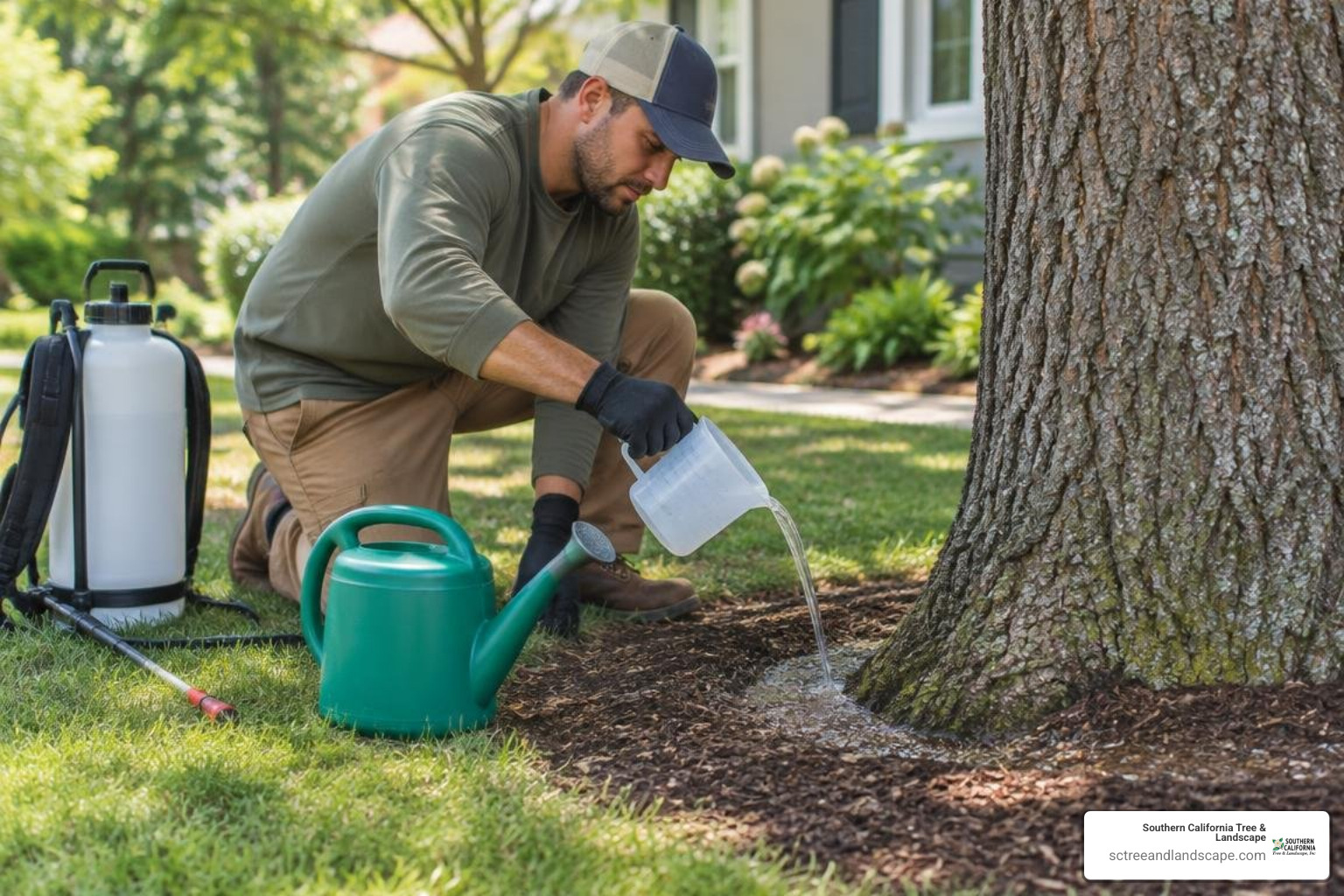
- For single-trunk trees, standard professional rates typically call for 1 fluid ounce of concentrate per inch of trunk circumference, diluted in 1 to 2 gallons of water.
- For multi-trunk trees (such as multi-stem crepe myrtles), measure each trunk’s circumference, add them together, and multiply the total by 0.75 to determine the required ounces.
- For shrubs, calculate dosage based on height (typically 3 fluid ounces of concentrate per foot of shrub height).
- Pour the solution directly onto the soil within 12 to 18 inches of the trunk base, allowing the tree’s dense feeder roots to take it up.
For technical mixing ratios, environmental cautions, and detailed dilution rates, consult the official systemic insect drench specifications.
Trunk Microinjections and Foliar Sprays
For mature urban trees where root uptake is compromised or where spray drift is unacceptable (such as along busy streets or parking lots), trunk microinjection is the preferred professional approach. Small, shallow holes (1/2-inch deep) are drilled into the root flare’s active sapwood, and pressurized ampules or micro-ports deliver the concentrated active ingredient directly into the tree’s xylem.
Foliar sprays remain useful for immediate, localized knockdown of surface-feeding caterpillars, sawfly larvae, or active crawler stages of scale insects. However, foliar sprays break down quickly under sunlight and provide limited protection against wood-boring larvae feeding deep beneath the bark.
Step 4: Choose the Best Chemical or Natural Active Ingredients
Matching the right active ingredient to the specific pest ensures effective control while minimizing resistance risks. For hidden wood-boring pests, understanding how different wood boring beetle insecticides function inside plant tissue is essential for long-term canopy survival.
Systemic Insecticides: Imidacloprid and Dinotefuran
Synthetic systemic chemistries represent the frontline defense against destructive landscape pests:
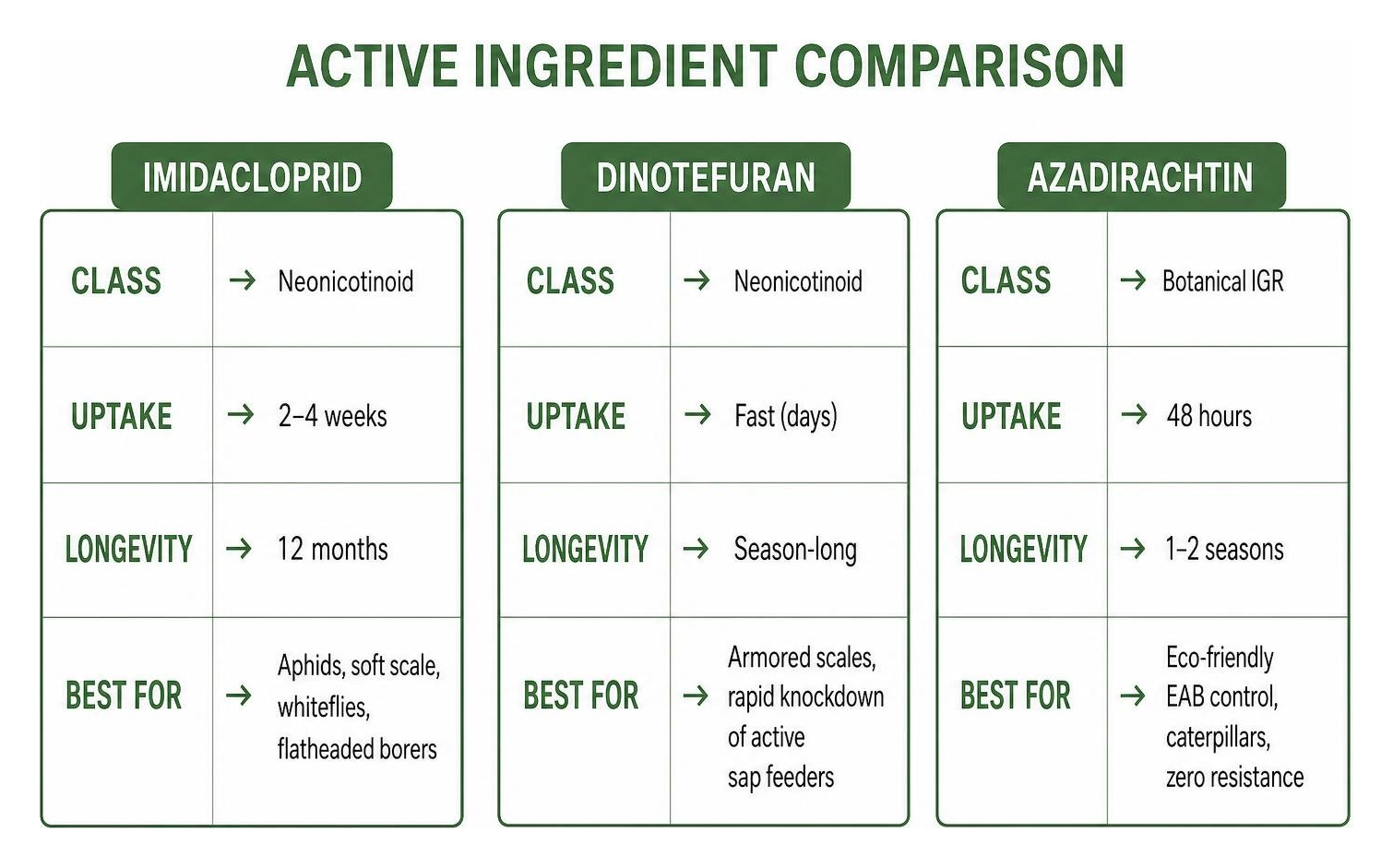
- Imidacloprid: A widely used neonicotinoid that binds to insect nerve receptors. It moves upward through xylem tissue, offering up to 12 months of residual protection from a single soil drench or injection. It is effective against aphids, adelgids, soft scales, and beetles.
- Dinotefuran: Another neonicotinoid characterized by higher water solubility. It translocates through the tree much faster than imidacloprid and is especially potent against armored scale species, which are often less responsive to other systemic ingredients.
In high-risk forest and landscape situations, choosing systemic chemistries with targeted mobility is essential—as shown when controlling Douglas fir beetle outbreaks through preventive bark sprays and systemic injections before beetle flight seasons begin.
Chemical vs. Botanical Tree Insect Treatment Options
For environmentally sensitive landscapes, organic properties, or sites near pollinator gardens, botanical and biological alternatives provide viable options:
- Azadirachtin (Botanical): Extracted from neem tree seeds (such as formulations used in microinjection systems like TreeAzin), azadirachtin functions as an insect growth regulator (IGR) and antifeedant. It prevents insect larvae from molting and reduces adult egg viability. Independent studies detailed in Urban forest botanical research demonstrate up to an 80% reduction in emerald ash borer larvae and a 98.9% reduction in elm scale crawlers without posing risks to foraging bees or aquatic ecosystems.
- Horticultural Oils and Insecticidal Soaps: Applied as dormant or summer contact sprays, these products smother soft-bodied insects, overwintering scale covers, and mite eggs on contact without leaving persistent chemical residues.
- Microbial Controls (Bt – Bacillus thuringiensis): Highly targeted biological sprays that kill foliage-eating caterpillars without harming beneficial predatory beetles, lacewings, or honeybees.
Step 5: Execute Application and Implement Long-Term Monitoring
Proper application requires careful measurement, safety discipline, and follow-up monitoring. Applying too little chemical results in treatment failure, while applying too much wastes resources and risks chemical runoff.
Optimal Timing for Tree Insect Treatment Applications
Timing determines treatment success:
- Spring Applications (Sap Rise): Early to mid-spring is the prime window for systemic soil drenches and trunk injections. As trees break dormancy and push new growth, active transpiration pulls systemic active ingredients from the root flare to the canopy before pest populations peak.
- Fall Applications (Root Feeding): Mid-fall applications allow the tree’s active root system to absorb persistent chemistries like imidacloprid before winter dormancy, providing pest defense the moment buds open the following spring.
- Targeting Crawler Windows: For contact sprays and horticultural oils targeting scale insects, apply treatments during the short spring crawler window when newly hatched nymphs leave their protective parent shells and move along bark.
Safety Precautions, Pollinator Protection, and Re-Entry Intervals
Pesticide safety protects applicators, families, pets, and the local ecosystem:
- Personal Protective Equipment (PPE): Always wear chemical-resistant gloves, protective eyewear, long sleeves, long pants, and closed-toe footwear when measuring, mixing, or applying insecticides.
- Pollinator Protection: Never apply systemic insecticides (especially neonicotinoids) to trees or shrubs currently in bloom or when bees are actively foraging. If treating flowering trees like linden or fruit trees, wait until petal fall is complete.
- Aquatic and Groundwater Buffers: Systemic insecticides are toxic to aquatic invertebrates. Maintain a strict buffer zone of at least 15 to 25 feet from lakes, streams, ponds, storm drains, and drainage channels. Never apply soil drenches when heavy rainfall is expected within 24 hours.
- Re-Entry Intervals (REI): Keep children and pets away from treated soil and sprayed canopies until liquid applications have dried completely (typically 2 to 4 hours).
Frequently Asked Questions About Tree Insect Control
How long does a systemic tree insect treatment take to work?
Translocation speed depends on the application method and the product chemistry. Direct sapwood microinjections of botanical azadirachtin or water-soluble dinotefuran translocate through the canopy within 48 hours to 7 days.
Liquid soil drenches containing imidacloprid require 2 to 4 weeks for root absorption and upward movement in small to medium trees, and up to 6 to 8 weeks in mature trees with wide canopies.
Can I use systemic tree treatments near edible fruit trees or waterways?
Check the product label carefully. Standard landscape systemic products are not labeled for commercial fruit orchards, though some formulations permit soil drenches on specific backyard fruit trees (such as apples, pears, and pecans) with strict pre-harvest intervals.
Never apply systemic drenches adjacent to open waterways or high-water-table zones. Use trunk microinjections or organic foliar soaps when managing pests on trees near sensitive water bodies.
Is it possible to treat mature tree borers without spraying the canopy?
Yes. Spraying mature, 60-foot canopies is often impractical, costly, and prone to wind drift. Systemic trunk microinjections and root flare soil drenches deliver insecticides internally directly into the cambium and xylem layers where boring larvae feed, eliminating the need for overhead spraying.
Conclusion
Protecting landscape trees from damaging insect infestations requires a balanced, structured approach: identifying the pest early, assessing tree vitality, selecting the right chemical or botanical treatment, and applying it at the right seasonal window. Combining proper cultural practices—such as proper irrigation and mulch management—with targeted treatments preserves canopy shade, beauty, and property value.
Our team at Southern California Tree & Landscape has cared for residential and commercial landscapes across Torrance, the South Bay, Harbor City, and Covina since 1991. If your trees are showing signs of canopy decline, pest activity, or leaf discoloration, schedule our professional tree service to receive an on-site assessment and targeted care plan from an ISA-certified arborist.