
Why Starting a Commercial Power Washing Business Outearns Residential Cleaning
A profitable commercial power washing business is built on three core foundations: industrial hot-water equipment with proper water recovery, high-ticket B2B recurring contracts with property managers, and strict environmental compliance. These elements allow commercial operators to earn predictable multi-year revenue instead of chasing one-off residential jobs.
Residential pressure washing often feels like a never-ending sprint on a customer acquisition treadmill. You spend hard-earned marketing dollars to land a homeowner who needs their driveway blasted, you finish the job in two hours, collect your check, and then you might not hear from that customer again for three years.
By contrast, the commercial exterior maintenance model is built entirely on predictability, higher contract values, and long-term partnerships.
Commercial real estate assets must stay clean to protect tenant retention, attract retail foot traffic, and eliminate hazardous slip-and-fall liabilities. Grease accumulation outside a restaurant kitchen or heavy black tire marks across a busy logistics apron are not just aesthetic headaches; they are urgent safety and health code violations. When a facility director or asset manager finds a reliable team, they rarely switch vendors over a few dollars.
| Operational Metric | Residential Power Washing | Commercial Power Washing |
|---|---|---|
| Typical Deal Size | $200 – $600 per dispatch | $1,500 – $15,000+ per property / project |
| Revenue Model | Transactional (one-off projects) | Contractual (weekly, monthly, quarterly) |
| Gross Profit Margins | 45% – 55% (high travel/intake drag) | 50% – 65% (route density & sustained output) |
| Decision Maker | Individual homeowner | Property manager, asset director, HOA board |
| Operating Hours | Daylight hours (8 AM – 5 PM) | Off-hours (8 PM – 5 AM or pre-dawn) |
| Barrier to Entry | Low (DIY consumer gear) | High (hot-water rigs, water recovery, EPA rules) |
| Customer Retention | 12 to 36-month cycles | Multi-year recurring maintenance agreements |
For property management firms handling massive multi-tenant spaces, power washing is rarely a standalone chore. Exterior surfaces sit right alongside hardscaping and turf areas, which is why integrated commercial landscape maintenance creates such a seamless, high-value presentation for corporate plazas and retail centers. When you deliver consistent commercial surface care, your customer lifetime value (LTV) jumps from a few hundred dollars to tens of thousands of dollars per facility over several years.
High-Ticket Pricing Models for Commercial Power Washing Business Contracts
Pricing commercial projects accurately requires factoring in surface degradation, water access, foot-traffic timing, grease concentration, and environmental containment needs.
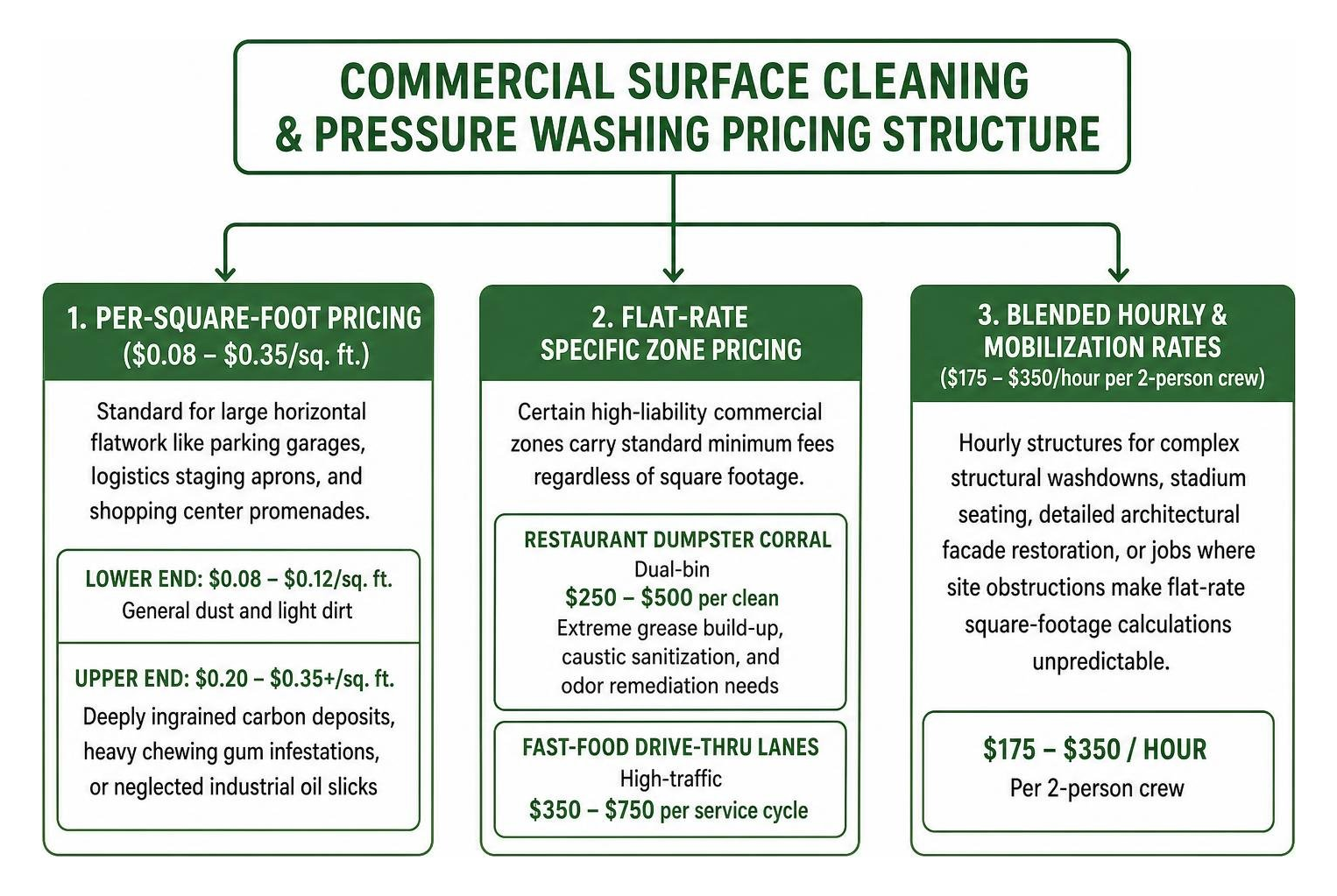
Commercial operators structure their billing using three primary pricing models:
- Per-Square-Foot Pricing ($0.08 – $0.35/sq. ft.): This is standard for large horizontal flatwork like parking garages, logistics staging aprons, and expansive shopping center promenades. General dust and light dirt sit on the lower end ($0.08–$0.12), while deeply ingrained carbon deposits, heavy chewing gum infestations, or neglected industrial oil slicks push the price toward the upper tier ($0.20–$0.35+).
- Flat-Rate Specific Zone Pricing: Certain high-liability commercial zones carry standard minimum fees regardless of square footage. A dual-bin restaurant dumpster corral typically commands $250 to $500 per clean due to the extreme grease build-up, caustic sanitization requirements, and odor remediation needs. High-traffic fast-food drive-thru lanes frequently run between $350 and $750 per service cycle.
- Blended Hourly & Mobilization Rates ($175 – $350/hour per 2-person crew): Hourly structures are reserved for complex structural washdowns, stadium seating, detailed architectural facade restoration, or jobs where site obstructions make flat-rate square-footage calculations unpredictable.
Commercial asset managers appreciate clear scopes that protect their underlying concrete investment without endless change orders. Providing transparent options helps clients secure spotless concrete flags without blowing away your budget, creating a foundation of trust that leads directly into year-round service agreements.
Recurring Service Agreements and Predictable Retainer Revenue
The real enterprise value of a commercial maintenance business lies in recurring contractual cash flow. When you convert one-time deep cleans into monthly or quarterly preventative service agreements, you eliminate seasonal revenue drops and stabilize your monthly cash flow.
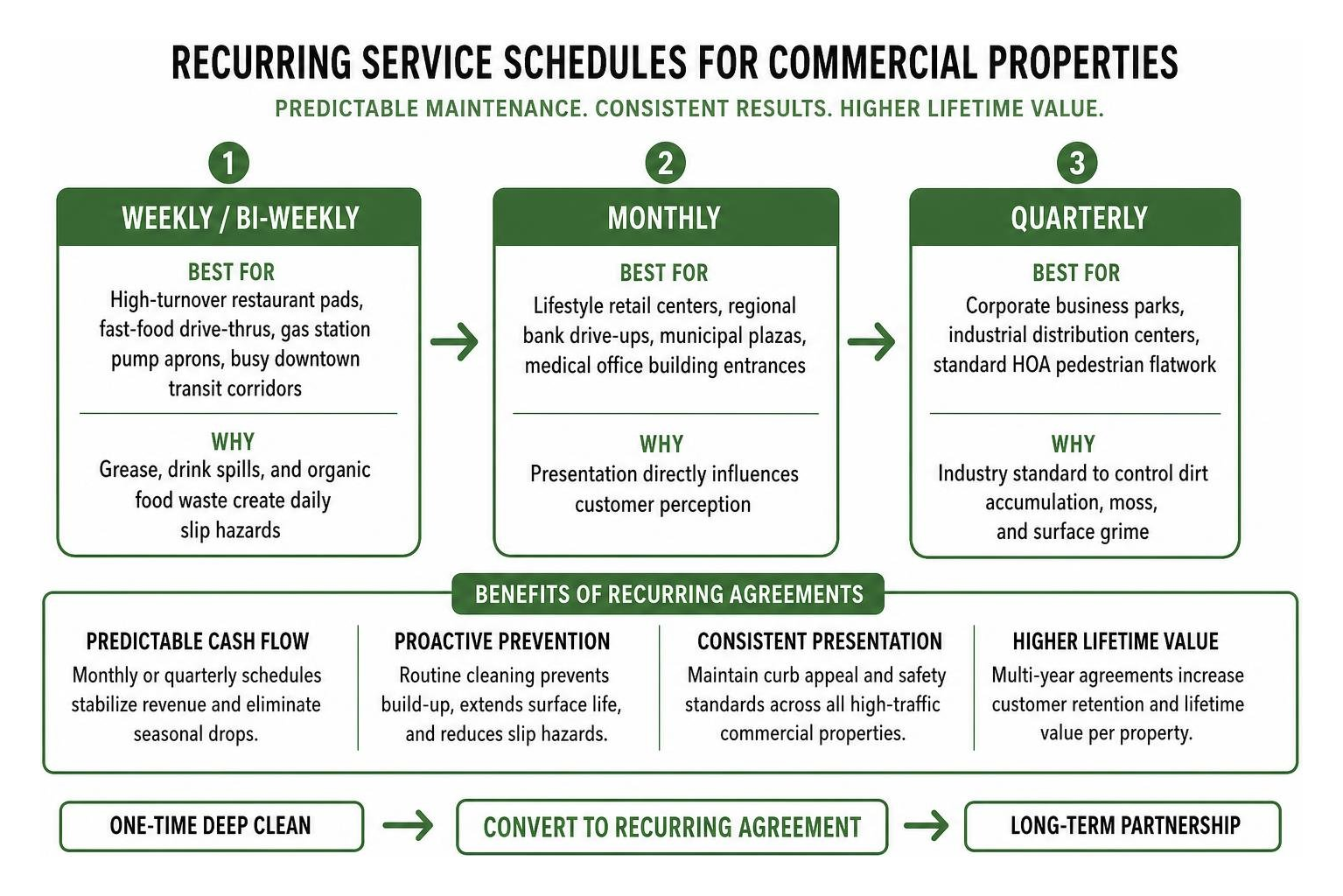
Commercial cleaning frequencies generally break down into four operational tiers:
- Weekly / Bi-Weekly Services: Ideal for high-turnover restaurant pads, fast-food drive-thrus, gas station pump aprons, and busy downtown transit corridors where grease, drink spills, and organic food waste present daily slip hazards.
- Monthly Maintenance: Tailored for lifestyle retail centers, regional bank drive-ups, municipal plazas, and medical office building entrances where presentation directly influences customer perception.
- Quarterly Service Cycles: The industry standard for corporate business parks, industrial distribution centers, and standard HOA pedestrian flatwork to keep dirt accumulation, moss, and surface grime in check.
- Semi-Annual & Annual Deep Cleans: Multi-level parking decks, structural concrete walls, stadium concourses, and storm-season drain clearances.
These agreements run on night shifts (typically 9 PM to 5 AM) or early pre-dawn hours. Cleaning off-hours guarantees zero pedestrian interference, protects parked customer vehicles from overspray, and allows your operators to run commercial surface spinners at full production speed. Property teams never have to wonder if the work was completed; automated before-and-after digital photo reports are uploaded straight to the facility manager’s portal before their morning coffee. For straightforward entryways or perimeter pads, property teams can even learn how to clean a concrete slab in 5 easy steps between deeper professional visits.
Essential Commercial Equipment, Environmental Compliance, and Startup Costs
Entering the commercial market requires far more than a hardware-store pressure washer thrown into the trunk of a car. Commercial contracts demand industrial-grade flow rates, high heat, and comprehensive wastewater management.
A professional commercial rig is built around continuous-duty performance:
- Hot-Water Burner Units: Cold water moves surface dirt, but heat breaks down petroleum hydrocarbons, animal fats, and chewing gum. Commercial rigs feature diesel-fired burner coils that elevate water temperatures up to 200°F–210°F, turning stubborn grease into water-soluble liquid within seconds.
- High Gallons Per Minute (GPM): In the commercial cleaning world, GPM equals washing speed, while PSI provides the cutting force. While standard homeowner units run 2.5 GPM at 3,000 PSI, commercial rigs run 5.5 to 8.0+ GPM at 3,500 to 4,000 PSI. High volume allows operators to run 24- to 30-inch rotary surface cleaners continuously without leaving swirl marks or zebra striping.
- Auxiliary Water Tanks (200 – 500 Gallons): Commercial properties may have restricted water spigots or low-flow municipal supplies. Onboard buffer tanks prevent commercial pumps from running dry and cavitation damage.
Starting a professional operation requires an initial capital investment ranging between $35,000 and $75,000, which covers a heavy-duty custom trailer or box truck build-out, commercial rotary cleaners, industrial hose reels, chemical metering systems, safety gear, and initial operational reserves.
Water Recovery Systems and EPA Environmental Regulations as Your Moat
The biggest operational divide between amateur washers and legitimate commercial contractors is wastewater management. Under the federal EPA Clean Water Act and local municipal stormwater ordinances, it is strictly illegal to allow wash water containing oils, detergents, heavy metals, or chemical residues to enter public storm drains, which flow directly into local waterways and the Pacific Ocean.
To remain fully compliant:
- Isolate the Runoff: Crews place containment berms, sand dikes, and magnetic drain covers over all adjacent storm drain inlets before turning on a single machine.
- Vacuum Recovery: High-powered vacuum systems with surface scuppers pull the standing wastewater instantly off the asphalt or concrete.
- Filtration and Discharge: The recovered water passes through multi-stage sediment filters and oil-water separators. It is then legally routed to an on-site sanitary sewer cleanout (with local wastewater permits) or hauled off-site for licensed disposal.
While these environmental systems add to your startup overhead, they create an invaluable competitive moat. Major property management conglomerates, city governments, and national retail chains will not risk five-figure EPA fines by hiring uninsured operators who wash toxic grease straight into the storm gutters. Demonstrating certified water recovery protocols wins institutional contracts.
Commercial Power Washing Business Licensing, Insurance, and Safety Certifications
Commercial facility directors require comprehensive liability coverage before your rig ever sets foot on their pavement. A complete corporate protection package includes:
- Commercial General Liability ($2,000,000 to $5,000,000 Aggregate): Must include specific endorsements for Care, Custody, and Control, along with complete pollution liability coverage.
- Workers’ Compensation Insurance: Crucial for protecting crew members working around hot-water boilers, pressurized equipment, and nighttime traffic hazards.
- Commercial Auto & Inland Marine Coverage: Protects customized rigs, high-pressure equipment, and utility trailers during transit and on-site operations.
Furthermore, commercial operators must understand delicate surface chemistry. High pressure applied to soft exterior substrates like EIFS, architectural stucco, or painted commercial siding will destroy finishes instantly. Professional crews balance high-pressure flatwork cleaning with gentle, low-pressure soft-wash chemical techniques, much like our proven methods for pressure washing vinyl siding like a pro without causing thermal seal ruptures or structural substrate erosion.
Scaling Operations: From Solo Rig to Multi-Crew Fleet
Scaling a commercial exterior maintenance operation requires moving from an owner-operator mindset to an operational management focus.
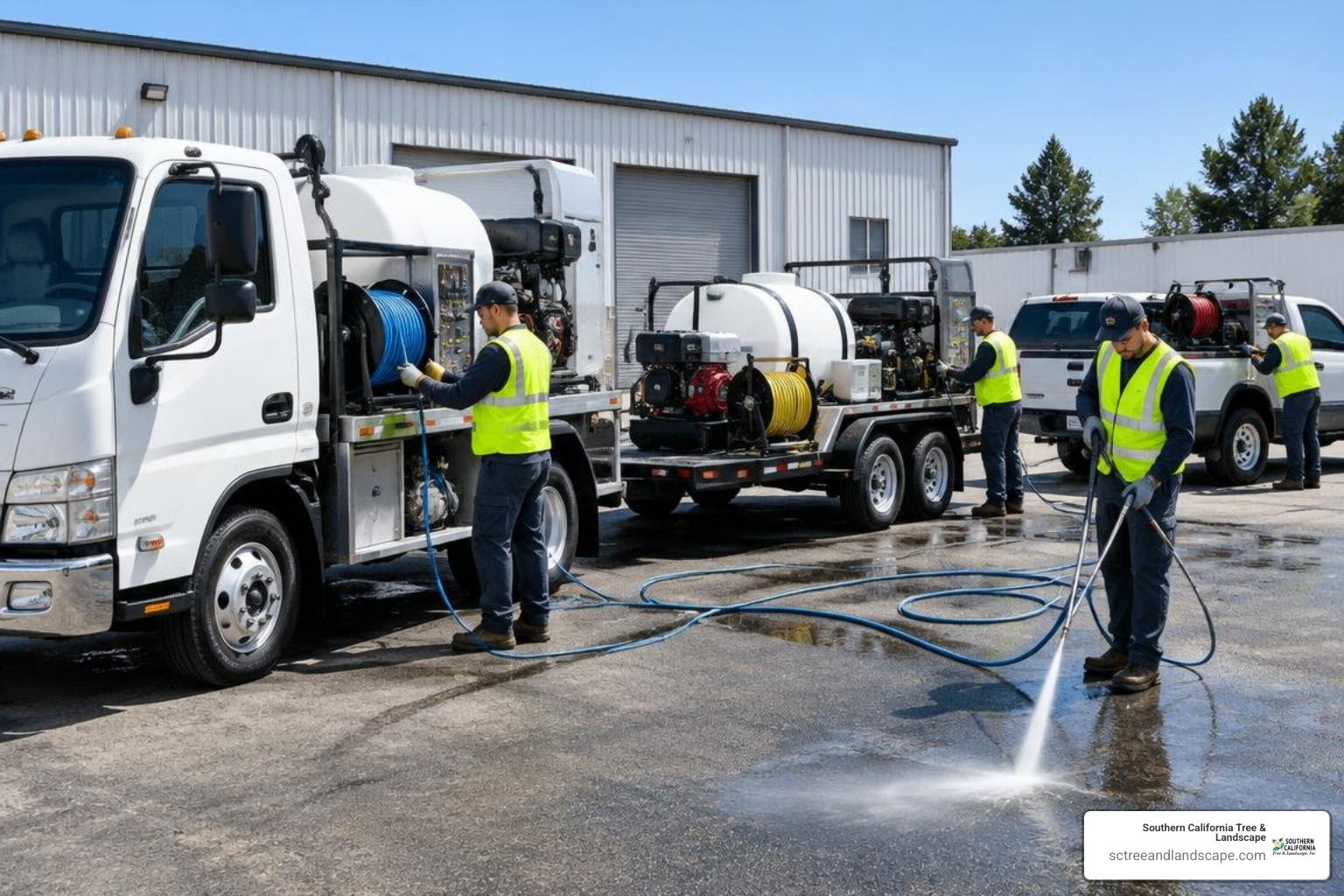
When you run a solo rig, your revenue is directly tied to the hours you personally spend behind a spray wand. Expanding into a multi-crew operation requires building repeatable systems across three core areas:
- Standardized Rig Layouts: Every truck or trailer rig in your fleet should feature identical plumbing, valve configurations, and tool layouts. A lead technician transferred to a backup rig should instantly know every switch, bypass line, and unloader valve without hesitation.
- Route Density and Dispatching: Commercial jobs should be clustered geographically to minimize transit time during overnight operating windows. Servicing three corporate plazas situated along the same commercial corridor maximizes active cleaning hours and lowers fuel overhead.
- Integrated Hardscape Prep: Maximizing washing speed means prepping surfaces properly before laying down water. Removing loose debris, sand, and leaves prevents surface mud buildup, which is why training teams on how to sweep effectively before pressure washing speeds up total job completion times by over 25%.
Target Customer Acquisition: B2B Prospects with Maximum Lifetime Value
Securing commercial accounts requires building direct business-to-business relationships rather than relying on consumer mass-market advertising.
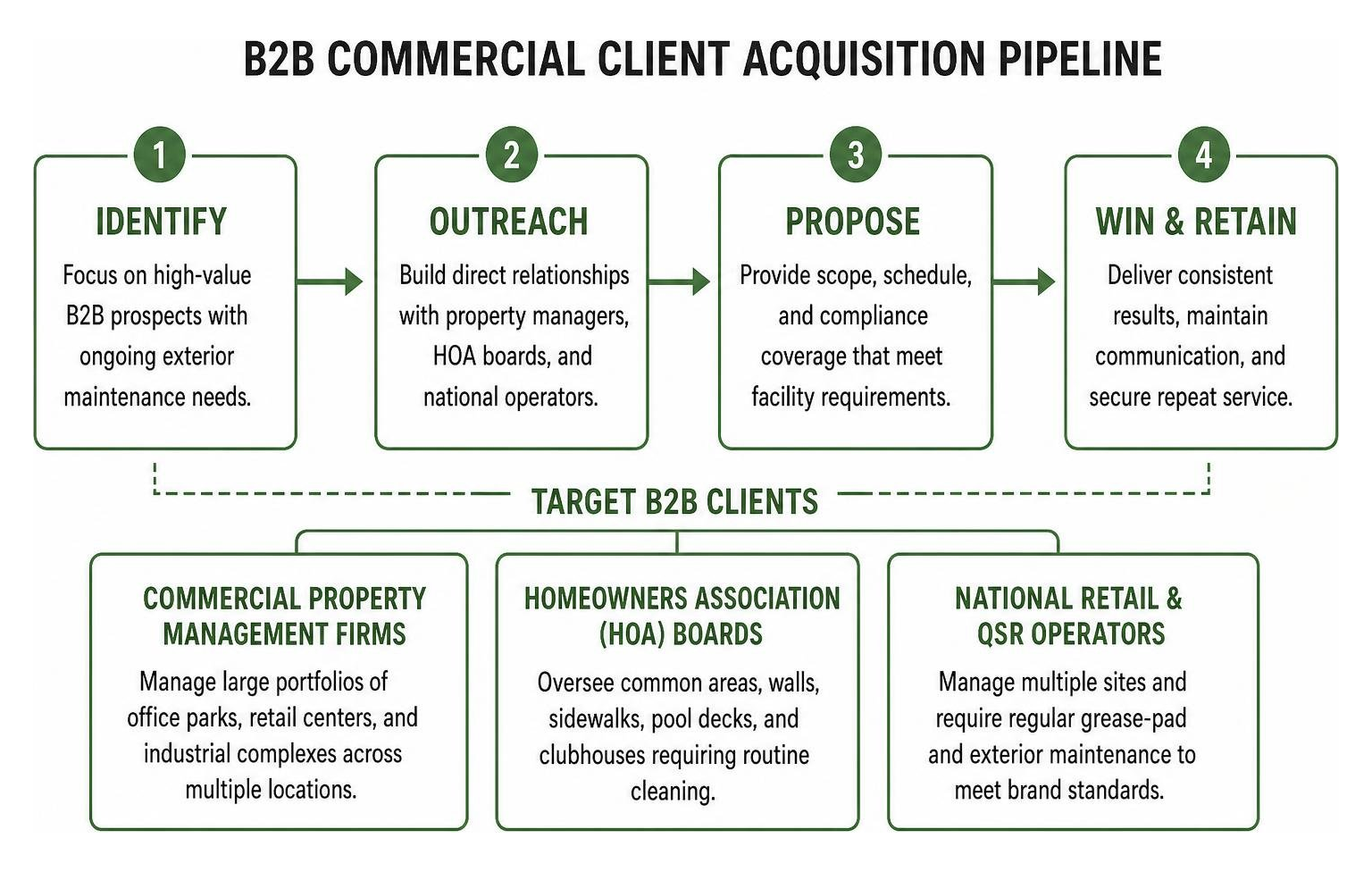
Focus your direct outreach on high-value B2B property managers:
- Commercial Property Management Firms (CBRE, JLL, Colliers, Cushman & Wakefield): These firms manage extensive portfolios of commercial office parks, retail power centers, and industrial warehouse complexes. Landing a single portfolio manager can instantly fill your maintenance calendar across multiple regional centers.
- Homeowners Association (HOA) Boards & Community Managers: HOAs oversee miles of common-area sidewalks, perimeter masonry walls, pool decks, and clubhouse facilities that require mandatory annual or quarterly cleanings.
- National Retail & Quick-Service Restaurant (QSR) Operators: Franchisees managing multiple drive-thru locations prioritize weekly grease-pad maintenance to maintain corporate brand standards and pass safety audits.
- Municipalities & Institutional Facilities: City public works departments, school districts, and regional transportation facilities regularly put out multi-year exterior surface maintenance contracts for bid.
In addition to cold outreach and facility networking, commercial buyers search for established, highly rated regional operators through established local business directories to verify business licenses, customer feedback, and service legitimacy before issuing complex Requests for Proposals (RFPs).
Business Valuation and SDE Multiples for Long-Term Exit
A commercial washing operation structured around long-term service agreements commands significantly higher valuation multiples upon exit than a transactional residential outfit.
Business valuations in the commercial facility services sector are driven by Seller’s Discretionary Earnings (SDE) for owner-led operations, or EBITDA (Earnings Before Interest, Taxes, Depreciation, and Amortization) for managed fleets:
- Transactional Residential Washers: Typically trade at 1.5x to 2.2x SDE. Valuation is weighed down by customer churn, lack of forward revenue visibility, and heavy dependence on the owner’s personal sales efforts.
- Commercial Contractual Operations: Trade at 3.0x to 4.5x+ EBITDA. Private equity groups, regional facilities consolidators, and larger commercial maintenance enterprises pay top dollar for businesses featuring transferable, multi-year property service agreements, documented EPA compliance procedures, and dedicated middle management.
When your commercial business delivers predictable, recurring cash flow through documented systems and recurring service contracts, you are no longer just selling clean concrete—you own a valuable, tradeable service asset.
Frequently Asked Questions About Commercial Power Washing
How much can a commercial power washing business make in its first year?
A focused commercial operator with a single industrial hot-water rig generally generates between $90,000 and $180,000 in gross revenue during their first full year. Net profit margins typically average 45% to 55% after accounting for fuel, insurance, maintenance, and chemical inputs. Revenue scales significantly as monthly and quarterly retainer contracts accumulate, allowing operators to add a second shift or second rig to pass the $300,000 mark in year two.
What is the most profitable commercial power washing service?
Multi-level parking structures and commercial dumpster corrals deliver some of the highest profit margins in the industry. Parking decks represent massive, unobstructed square footage that crews can clean rapidly overnight using dual commercial surface spinners, often yielding $250 to $400+ in revenue per operating hour. Dumpster corrals carry premium flat rates ($250–$500 per unit) due to specialized grease remediation and water recovery requirements, despite taking under an hour to complete with high-heat steam.
Why is water recovery required for commercial pressure washing?
Under Title IV of the EPA Clean Water Act, discharging untreated industrial wastewater, chemical detergents, motor oil, or heavy grease into municipal storm sewer systems is a direct federal and municipal violation. Unlike sanitary indoor sewers, outdoor storm drains empty directly into local creeks, rivers, and coastal waterways without municipal treatment. Commercial power washing businesses must use wastewater dams, vacuum recovery systems, and proper filtration to capture and safely discharge all runoff into permitted sanitary access points.
Conclusion
Building a successful commercial pressure washing operation requires more than just high-pressure water. It comes down to running dependable equipment, maintaining strict environmental compliance, and building lasting relationships with commercial property managers. By moving away from one-off residential driveways and focusing on recurring commercial maintenance contracts, you build an enterprise that produces dependable, predictable cash flow year-round.
At Southern California Tree & Landscape, we have spent decades protecting and enhancing commercial property values across Southern California, from Torrance and the South Bay up through Covina and Harbor City. We know that maintaining pristine exterior grounds requires consistent care, from our specialized tree care and landscape architecture to comprehensive hardscape management. When you are ready to elevate your property’s exterior curb appeal, consider moving beyond scrubbing your concrete floors and scheduling professional exterior care with a trusted commercial partner. Explore our full suite of commercial exterior maintenance services or contact our management team today to design a dedicated maintenance plan that keeps your facility safe, compliant, and pristine.