
Why Sweeping Is the Foundation of Every Clean Floor and Property
Sweeping is one of the simplest — and most overlooked — maintenance habits that protects your floors, your property, and your curb appeal. Here’s a quick overview of what you need to know:
- Indoors: Sweep high-traffic floors daily, especially kitchens, to stop grit from scratching surfaces.
- Before mopping: Always sweep first. Skipping this step turns loose dirt into muddy residue.
- Outdoors: Street sweeping schedules vary by zone — residential areas are typically swept less often than commercial streets.
- Protect your floors: Fine grit acts like sandpaper underfoot, accelerating wear on hardwood, tile, and laminate.
- Commercial properties: Professional power sweeping services help meet EPA stormwater and clean air compliance standards.
Most people think of sweeping as a chore. But done right and done consistently, it’s the single step that makes every other cleaning task easier — and extends the life of nearly every surface on your property.
Whether you manage an HOA, oversee a commercial property, or simply want to keep your home in top shape, understanding how and when to sweep makes a real difference.
I’m Troy Basmajian, President of Southern California Tree & Landscape, and after more than a decade managing large-scale commercial and residential properties across Southern California, I’ve seen how neglecting routine sweeping — both indoors and outdoors — leads to costly surface damage and maintenance headaches. In this guide, I’ll walk you through the right sweeping practices for every surface and situation.
The Science and Frequency of Sweeping Hard Floors
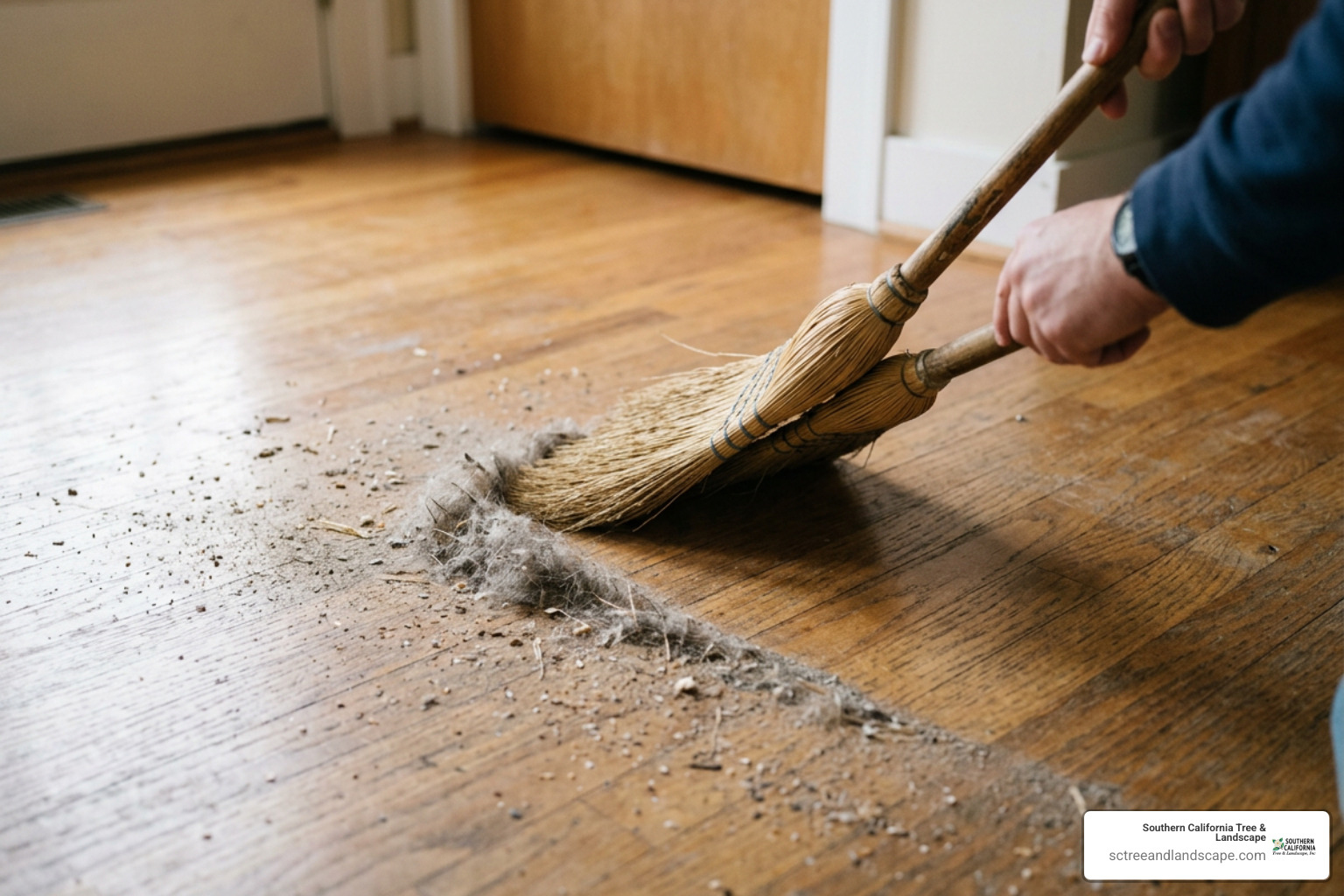
When we talk about floor care, sweeping often gets brushed off as a basic chore that anyone can do without much thought. However, from a floor maintenance standpoint, daily maintenance is the primary defense against long-term surface wear. Establishing a regular routine keeps dirt from accumulating, making all subsequent cleaning steps faster and far more effective.
How often should you actually pick up a broom? High-traffic zones — particularly kitchen floors, entryways, and hallway corridors — should be swept daily. Kitchens gather food crumbs, moisture, and tracked-in grit every single day. Establishing a nightly routine of sweeping high-traffic areas after dinner keeps debris from being tracked into bedrooms and living spaces. For low-traffic rooms, such as guest bedrooms or formal dining areas, sweeping once or twice a week is usually sufficient.
For optimal home floor maintenance, experts like Martha Stewart emphasize that routine floor care should always start with a dry pass before any liquid cleaner touches the floor. To dive deeper into household cleaning schedules, you can read How Often You Should Sweep Your Floors, According to Martha.
What Does Sweeping Mean: Definitions and Linguistic Contexts
Beyond the household task of sweeping up dirt, the term sweeping has rich linguistic origins and versatile meanings in English. According to the Oxford Advanced Learner’s Dictionary entry on sweep verb, the word traces back to Old English swāpan and German schweifen, which literally means to move in a curve.
In general conversation and written English, “sweeping” functions as a verb, a noun, and an adjective:
- As a Verb: The physical act of clearing a surface using a broom, brush, or hand movement.
- As a Noun: The act of cleaning or the debris collected during the cleaning process. As noted in the Collins English Dictionary definition of sweeping, the plural form “sweepings” specifically refers to the litter, refuse, or loose particles swept up from a floor or ground.
- As an Adjective: Describing broad range, wide coverage, or dramatic motion. For example, a “sweeping reform” denotes comprehensive policy changes, a “sweeping gesture” implies a wide motion of the arm, and a “sweeping curve” describes a expansive geographical feature like a coastline.
To explore formal lexicographical definitions, consult the Merriam-Webster definition of sweeping, check the Cambridge English Dictionary entry for sweeping, or view the Oxford Advanced Learner’s Dictionary guide on sweeping adjective.
How Regular Sweeping Protects Hardwood, Tile, and Laminate
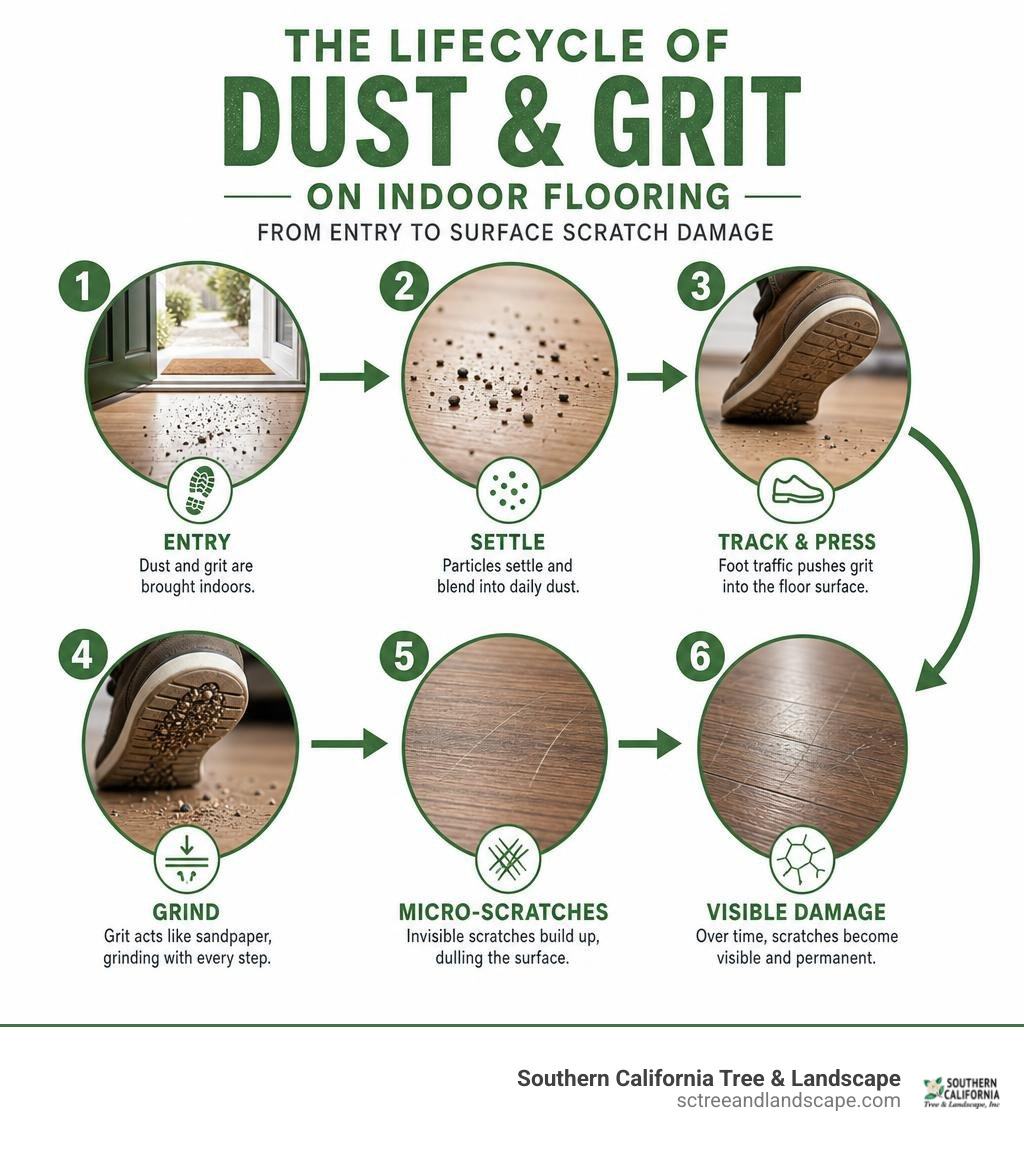
Why does daily sweeping matter so much for floor longevity? The answer comes down to friction.
Every time people walk across your floors, footwear tracks in tiny particles of sand, silica, outdoor soil, and fine gravel. When left on hard surfaces like hardwood, luxury vinyl plank (LVP), glazed ceramic tile, or laminate, these microscopic particles act exactly like fine-grit sandpaper under shoes.
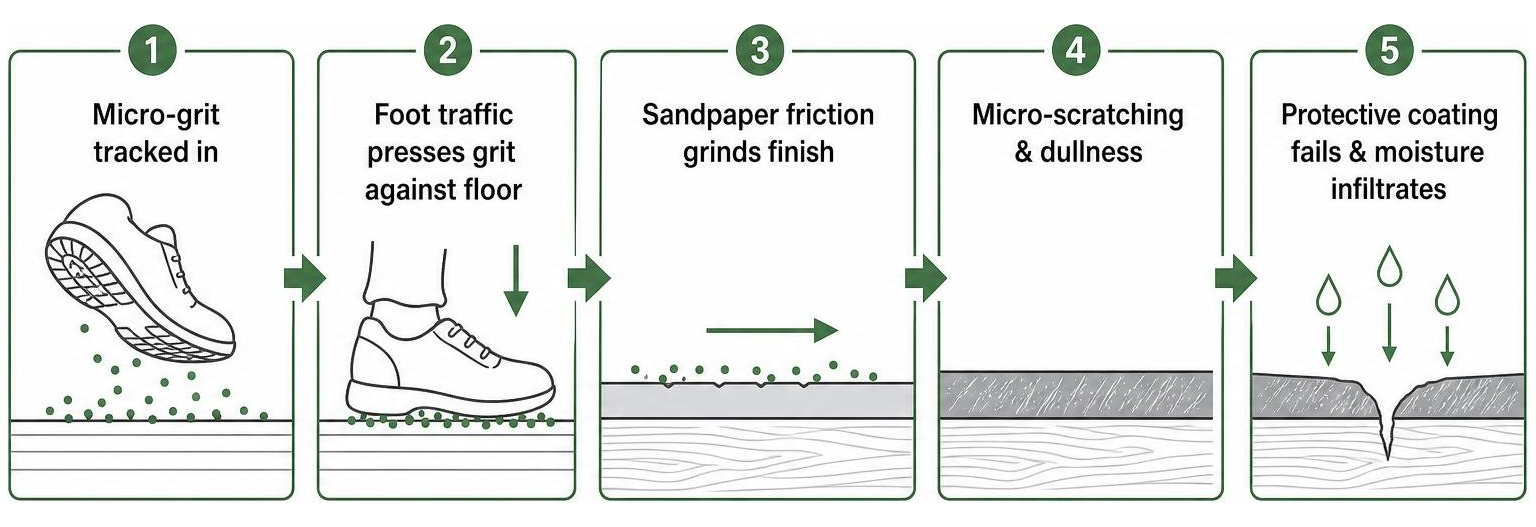
Over time, this “sandpaper effect” creates microscopic scratches in protective clear coats, polyurethane, and ceramic glazes. As the protective coat wears down, flooring loses its original sheen, absorbs spilled liquids more easily, and suffers permanent surface discoloration. Daily sweeping removes these abrasive particles before they can grind into your floor’s finish, saving you thousands of dollars in refinishing or floor replacement costs down the road.
Step-by-Step Order of Operations for Floor Cleaning
To get a truly spotless surface without wasting time, you need the right order of operations. Cleaning out of sequence often doubles your effort and leaves behind unwanted streaks and grime.
Here is the ideal floor maintenance sequence:
- Clear space: Move light furniture, dining chairs, and floor rugs out of the main path.
- Dry sweep or dry dust mop: Start at the perimeter of the room and work inward toward the doorway or center, using smooth, overlapping strokes.
- Collect and dispose: Sweep debris into a central pile and use a angled dustpan with a rubber lip to collect all fine dust.
- Vacuum rug edges and crevices (optional): Vacuum area rugs or floor seams where bristles cannot reach.
- Wet mop: Apply a damp mop using a dedicated floor cleaner matching your flooring type.
Skipping the initial dry sweep before mopping is one of the most common cleaning mistakes. Introducing liquid to loose dirt and pet hair instantly creates a muddy slurry that gets pushed into grout lines and wood grain.
| Cleaning Method | Loose Grit & Sand Removal | Micro-Dust Removal | Stains & Liquid Spills | Risk of Floor Scratching |
|---|---|---|---|---|
| Sweeping (Broom) | Excellent | Moderate | None | Very Low (when clean bristles used) |
| Vacuuming | Good | Excellent | None | Moderate (if hard-beater bar is used) |
| Wet Mopping | Poor (creates mud) | Low | Excellent | High (if grit is present) |
Proper Techniques and Broom Selection
Using the correct tools ensures you don’t scatter dust while cleaning. Different floors and areas require specific broom designs:
- Soft Synthetic Bristle Brooms: Ideal for smooth indoor surfaces like polished hardwood, laminate, and tile. Soft angled tips pull fine dust particles without scratching sensitive coatings.
- Stiff Push Brooms: Perfect for coarse outdoor spaces like concrete driveways, brick patios, and garage floors where heavy soil, gravel, and wet leaf debris accumulate.
- Microfiber Sweepers & Dust Mops: Excellent for catching fine pet hair and allergen particles off hard surface flooring.
When sweeping, keep the broom head low and pull long, smooth strokes toward your body rather than flicking the broom outward, which throws fine dust back into the air. In tight corners, angle the bristles directly into the seam to pull out hidden dirt.
Indoor maintenance isn’t limited to living room and kitchen floors; specialized sweeping is critical for home heating features as well. Chimneys and wood-burning fireplaces build up hazardous soot that requires dedicated clearing. To learn more about maintaining clean and safe hearths, read our guide Sooty and Sweep Chimney Sweep: The Ultimate Guide to Dust-Free Fires.
Commercial Power Sweeping and Outdoor Maintenance
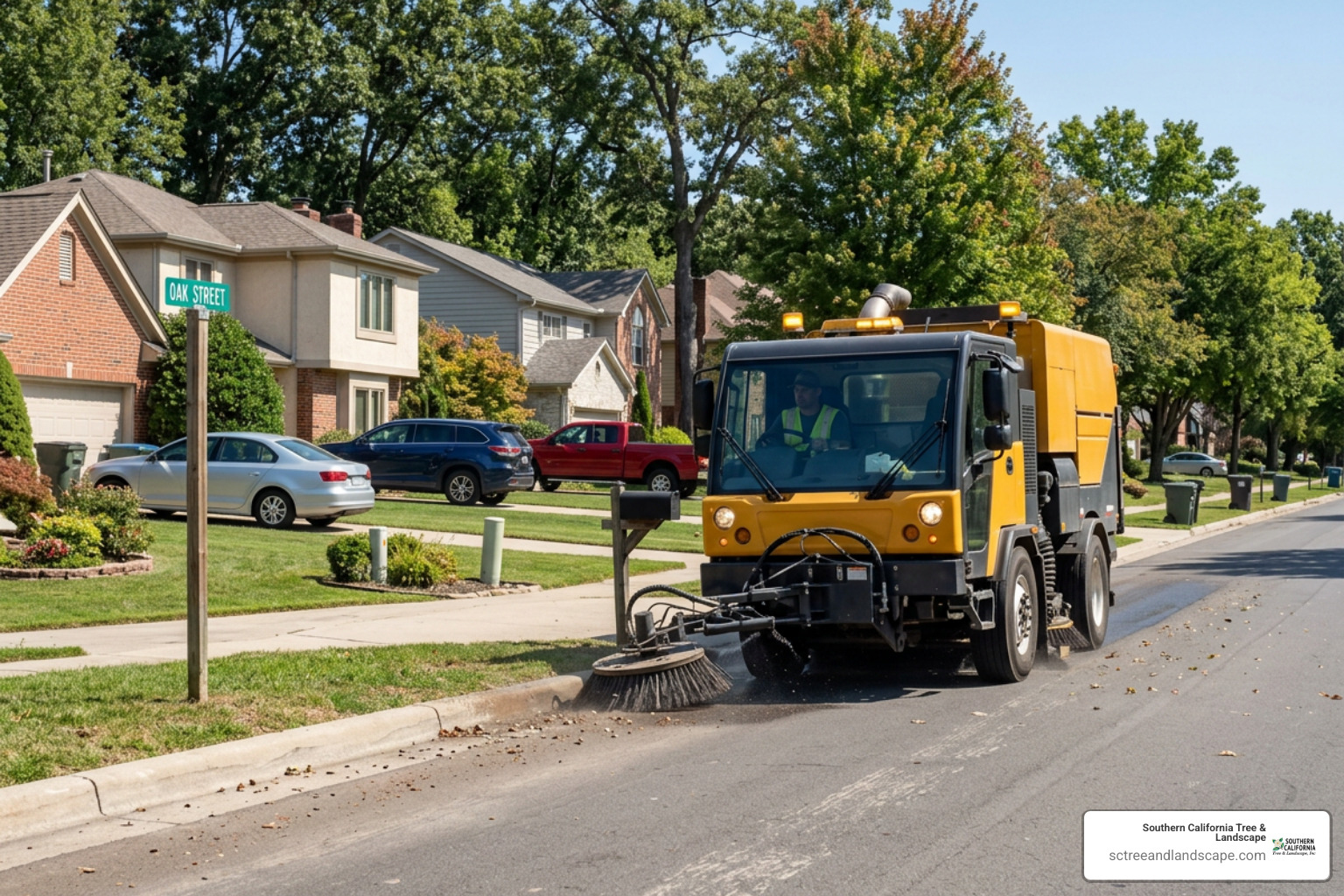
While indoor sweeping keeps home interiors pristine, outdoor power sweeping protects entire communities and commercial properties. Commercial power sweeping uses specialized mechanical vehicles fitted with heavy-duty rotating brooms, vacuum collection systems, and high-pressure water suppression to clean streets, parking structures, and industrial facilities.
Power sweeping plays an vital role in environmental protection. Uncollected street debris carries heavy metals, brake dust, oil residue, plastic litter, and landscape waste into local storm drains during rainstorms. In coastal areas like South Bay CA, Torrance CA, and Harbor City CA, stormwater flows directly into the ocean. Routine street sweeping prevents toxic runoff from polluting local marine ecosystems and keeps municipal catch basins from clogging during rain events.
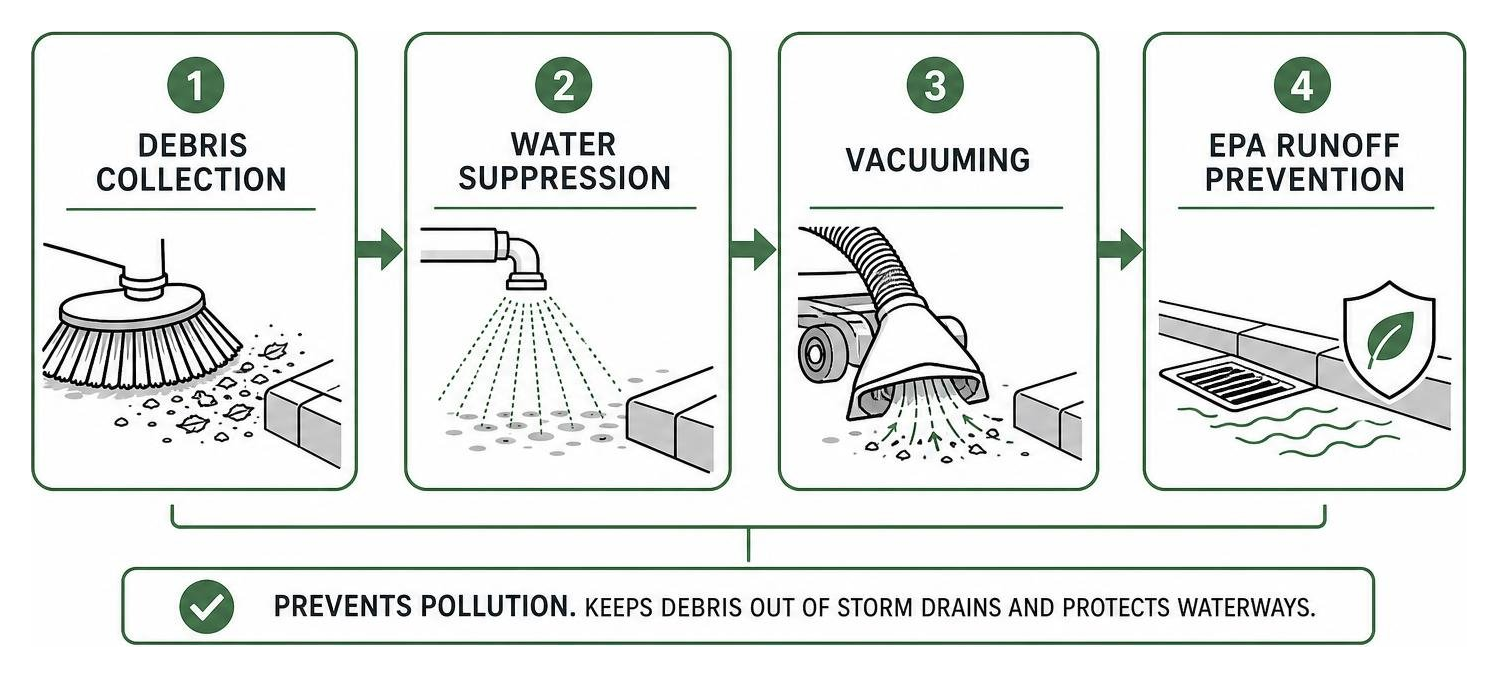
Commercial street sweeping operations perform at massive scale:
- Sweeping Corporation of America operates a fleet of 1,750 vehicles, servicing over 6,000,000 miles annually across 600 municipalities.
- Modern fleet tracking systems log exact broom engagement and water engagement metrics, giving property managers and city planners verifiable proof of clean passes.
Street Sweeping Best Practices and Resident Responsibilities
Municipalities across Southern California set strict schedules to balance traffic patterns, refuse collection, and seasonal debris loads.
For instance, in Thousand Oaks, CA, public residential streets are swept once per month during dry summer months (May through September) and twice per month during wet winter months (October through April). Commercially zoned streets are swept weekly throughout the year to manage high foot traffic and vehicular debris.
For residents in local South Bay municipalities, keeping roadways clear on designated sweep days is essential. In Torrance CA, parking restrictions are enforced on street sweeping days to ensure sweepers reach the curb line where over 90% of street debris accumulates. You can review local parking policies and guidelines directly on the Street Sweeping FAQ’S – City of Torrance resource page.
To help municipal sweepers keep your street clean:
- Move parked vehicles: Park cars in driveways or garages during posted sweeping hours (typically 7:00 a.m. to 7:00 p.m.).
- Clear obstacles: Remove portable basketball hoops, waste containers, yard toys, and trailers from the curb.
- Dispose of yard waste properly: Put green waste, grass clippings, and leaves into green waste bins. Never sweep or blow yard waste into the street, as heavy piles can jam mechanical broom sweeper intakes.
- Trim low branches: Ensure tree branches along the curb line are trimmed above sweeper height clearance.
- Mind holiday schedules: When scheduled sweep days fall on major holidays, service usually shifts to the following business day.
To explore regional regulations and contract solutions for property managers, see California Street Sweeping Solutions.
Outdoor Surface Cleaning and Hardscape Care
Property maintenance doesn’t end at the street curb. Driveways, stone walkways, brick patios, and exterior building walls constantly collect airborne dirt, landscape trimmings, and organic stains.
At Southern California Tree & Landscape, we recommend establishing a regular outdoor maintenance routine. Sweeping concrete driveways and stone pavers weekly prevents organic leaf litter from decomposing and causing stubborn tannic acid stains.
When outdoor surfaces build up embedded grime, dirt, or mildew, dry sweeping should be paired with wet pressure washing. If you are preparing exterior surfaces or siding for a deep clean, check out our companion article The Ultimate Guide to Pressure Washing Vinyl Siding Like a Pro.
Frequently Asked Questions About Floor and Street Maintenance
Why was street sweeping missed in front of my house?
The most common reason street sweepers bypass a section of curb is an obstruction. If a parked car, trash container, or portable basketball hoop blocks the curb, the driver must swerve around the object, missing several feet of curb line.
Overhanging tree branches below clearance height or large piles of uncollected yard debris placed illegally in the roadway will also force sweepers to bypass the area to prevent equipment damage.
Why should you always sweep before mopping floors?
Sweeping removes loose dirt, sand, food crumbs, and hair from the floor surface. If you skip sweeping and mop immediately, water mixes with the loose debris to create a slurry of wet grime.
This muddy mixture gets spread across the floor, settling into grout lines, tile seams, and wood grain. Additionally, dragging loose grit beneath a damp mop cloth can scratch soft floor finishes.
What benefits do commercial power sweeping services offer?
Commercial power sweeping keeps retail parking lots, industrial parks, and HOA communities clean, attractive, and safe. Key benefits include:
- Environmental Compliance: Captures pollutants before they enter storm drains, helping commercial properties meet EPA Clean Water Act standards.
- Property Preservation: Removes sharp grit and metal debris that degrades asphalt pavement, sealcoating, and concrete surfaces.
- Safety & Appeal: Reduces slip-and-fall hazards from loose gravel, wet leaves, and glass while maintaining property value and professional appearance.
Conclusion
Whether you are sweeping fine dust off your kitchen floor or managing property hardscapes across Southern California, routine sweeping is the foundation of effective maintenance. By removing loose dirt and abrasive grit early, you protect floor coatings, prevent permanent scratches, maintain clean stormwater systems, and preserve your property’s value.
For comprehensive landscape care, tree management, hardscape maintenance, and property upkeep in Torrance CA, Covina CA, South Bay CA, and Harbor City CA, trust our experienced team at Southern California Tree & Landscape. Family-owned since 1991, we deliver expert property care tailored to Southern California’s unique environment.
Explore our expert property maintenance services today to keep your residential or commercial grounds looking pristine year-round!