
Why Commercial Pressure Washing Matters for Your Property
Commercial pressure washing is a professional cleaning service for business and shared-property exteriors, including sidewalks, parking areas, building facades, loading docks, and dumpster pads. It uses the right mix of water pressure, flow, heat, and cleaning solutions to remove algae, grease, tire marks, gum, mildew, and other buildup without harming the surface.
For HOA managers and property owners, the goal is bigger than making concrete look clean. Regular service can help reduce slippery walkways, support sanitation standards, protect exterior materials, and keep the property looking cared for between larger maintenance projects.
The best provider will match the method to the surface. Durable concrete may need higher pressure or hot water for grease, while stucco, signage, and other sensitive materials often need a low-pressure soft wash. They should also plan for runoff, protect nearby landscaping, carry proper insurance, and schedule work around residents, tenants, and customers.
I’m Troy Basmajian, President of Southern California Tree & Landscape. Through our work supporting commercial properties, HOAs, municipalities, and residential estates, I have seen how commercial pressure washing fits into a practical long-term plan for safer, healthier, and more attractive grounds.
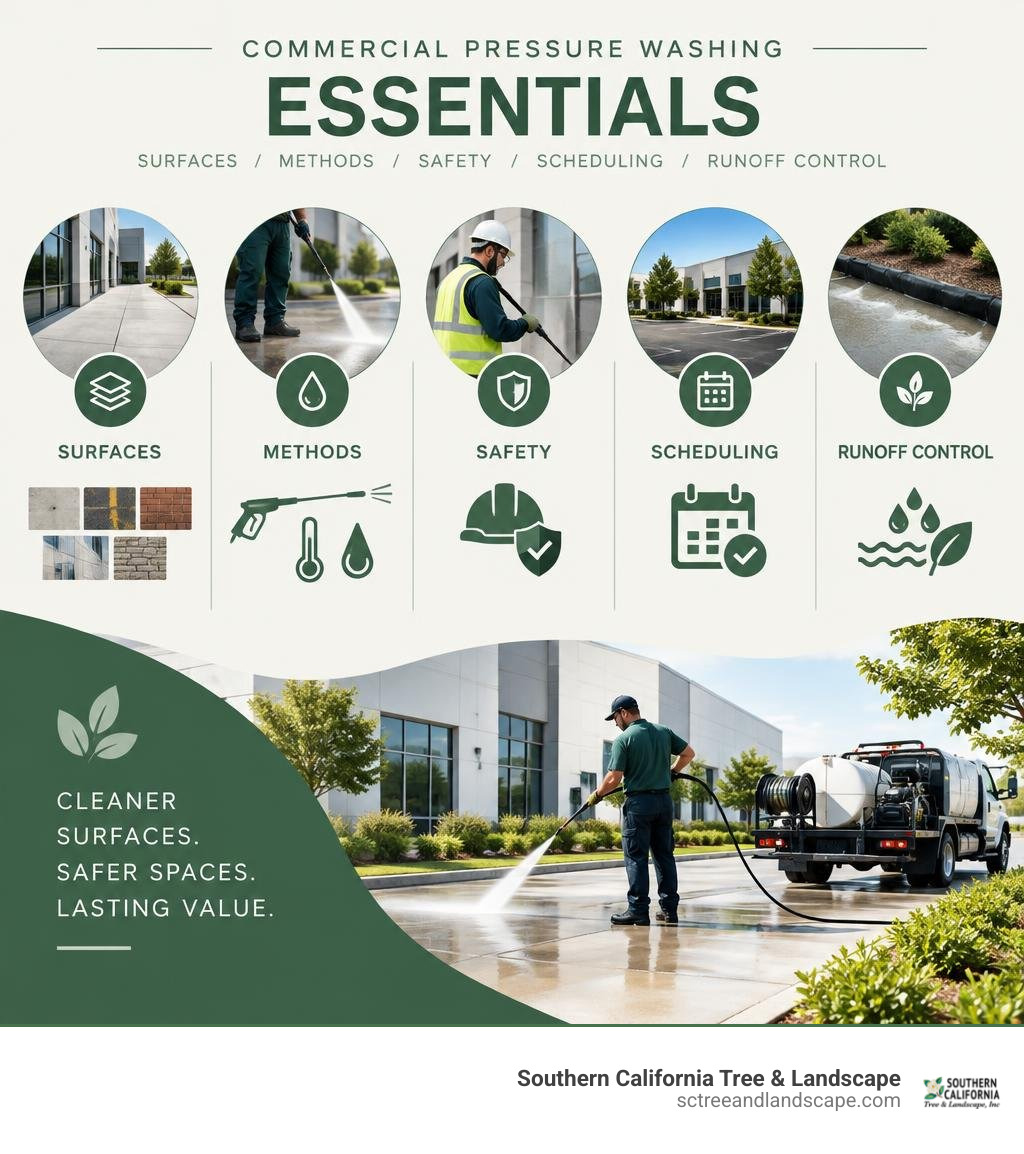
Understanding Commercial Pressure Washing: How It Differs from Residential Service
Commercial properties experience heavy daily wear that consumer-grade tools simply cannot handle. While a homeowner might pull a portable electric unit out of the garage to rinse a small patio once a year, industrial and commercial operations demand heavy-duty machinery mounted to dedicated truck beds or custom trailer rigs.
Commercial systems run continuous duty cycles for 8 to 12 hours without overheating. They utilize high-volume water flow, industrial belt-driven pumps, and onboard diesel or gas burners to eliminate stubborn substances like hydraulic fluid, heavy carbon deposits, and baked-on chewing gum. Commercial work also requires stringent risk management, wastewater containment protocols, and surface-specific techniques to safeguard structural integrity.
| Specification Feature | Residential Pressure Washing | Commercial Pressure Washing |
|---|---|---|
| Typical Pressure (PSI) | 1,500 – 3,000 PSI | 3,000 – 4,000+ PSI (up to 20,000+ for industrial water jetting) |
| Water Flow Rate (GPM) | 1.2 – 2.5 GPM | 4.0 – 8.0+ GPM (high volume) |
| Cleaning Units (CU) | 1,800 – 7,500 CU | 16,000 – 32,000+ CU |
| Water Temperature | Cold water only | Hot water (up to 200°F+) and cold water options |
| Pump Mechanism | Direct-drive (shorter lifespan) | Belt-driven or gear-reduction (extended heavy-duty cycles) |
| Operational Scope | Small driveways, fences, personal decks | Retail plazas, parking garages, loading docks, multi-story facades |
Evaluating Commercial Pressure Washing Equipment: PSI vs. GPM
When evaluating cleaning power, many people focus solely on PSI (pounds per square inch). PSI measures the concentrated mechanical force applied to break the physical bond between dirt and a substrate. While PSI is critical for dislodging tough stains, GPM (gallons per minute) dictates actual flushing speed and overall production rates.
GPM measures the volume of water moving across the surface. Once high pressure strips the grime, higher water flow washes that debris away so crews do not waste time spraying the same spot repeatedly. Commercial operators calculate total output using Cleaning Units:
$$\text{Cleaning Units (CU)} = \text{PSI} \times \text{GPM}$$
A consumer model purchased from retail outlets for pressure washers might deliver 3,000 PSI at 2.5 GPM (7,500 CU). In comparison, an industrial trailer system running 4,000 PSI at 6.5 GPM yields 26,000 CU. This higher flow rate allows commercial crews to clean expansive parking structures and retail walkways in a fraction of the time.
Hot Water vs. Cold Water Capabilities
Cold water machines work well for clearing general surface dirt, fresh mud, and loose sand. However, when dealing with stubborn petroleum residues, industrial lubricants, and kitchen grease, cold water merely moves the oil around without lifting it from porous surfaces.
Commercial hot water washers feature specialized burner systems that heat incoming water up to 200°F or more. Much like washing greasy dishes in a sink, high heat liquefies animal fats, breaks petroleum surface tension, and dissolves gum instantly. Hot water systems clean greasy substrates two to three times faster than cold water systems at identical pressure levels. Using hot water allows technicians to safely clean a concrete slab in high-traffic commercial environments without relying on overly harsh chemical agents.
Soft Washing vs. High-Pressure Washing for Delicate Facades
Not every exterior building material can withstand 4,000 PSI of mechanical impact. Blasting high-pressure water against exterior insulation finishing systems (EIFS), aged masonry, glass, or vinyl can cause irreversible etching, strip protective coatings, and drive moisture deep into wall cavities.
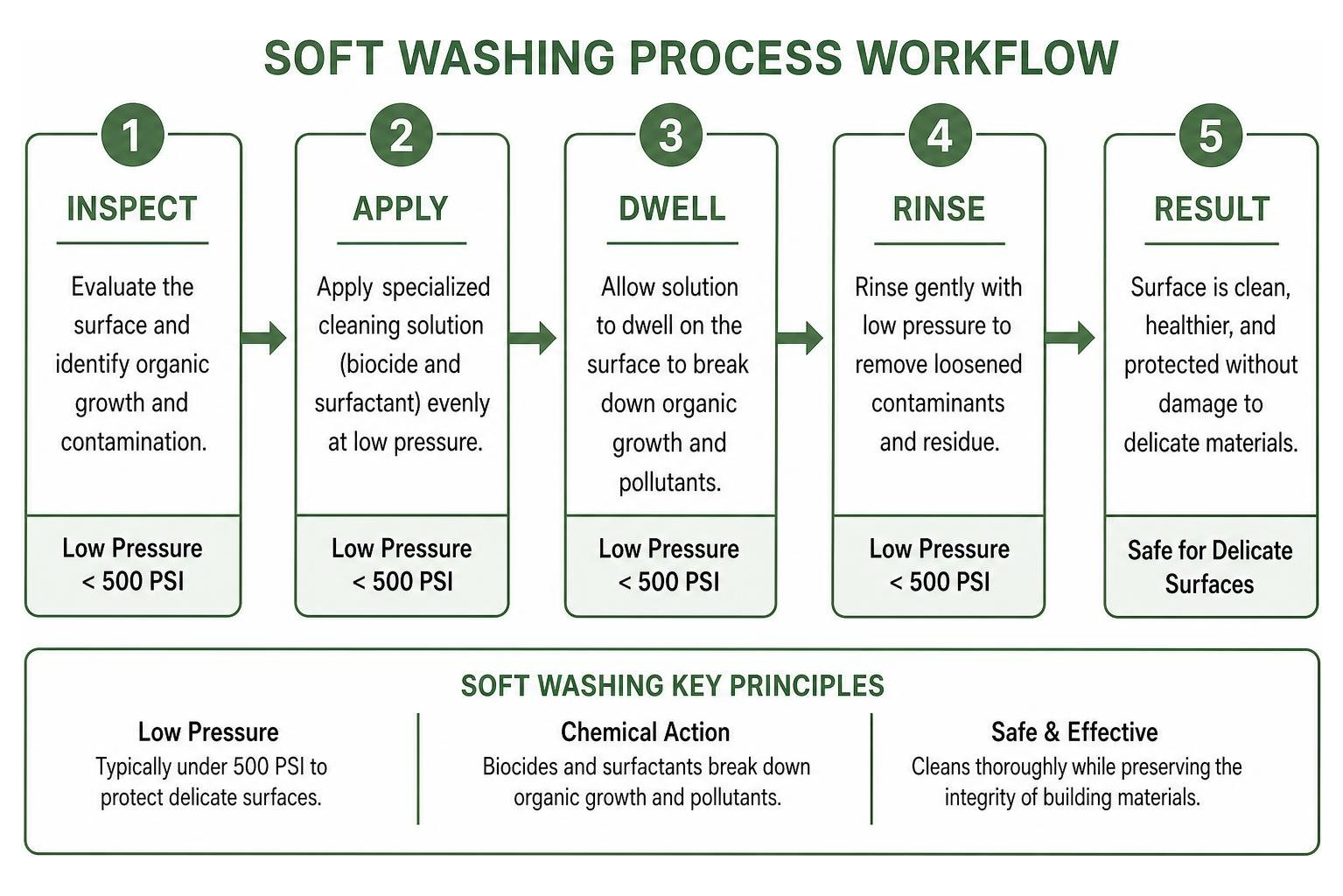
Soft washing replaces destructive mechanical force with low-pressure application systems (typically under 500 PSI) combined with specialized biocide and surfactant treatments. The chemical solution dwells on the surface to break down organic growth, kill algae spores at the root, and dissolve airborne pollutants before being rinsed away gently. This technique is essential when pressure washing vinyl siding and delicate architectural facades, ensuring buildings stay clean longer without substrate damage.
Core Commercial Surfaces, Property Types, and Environmental Safety
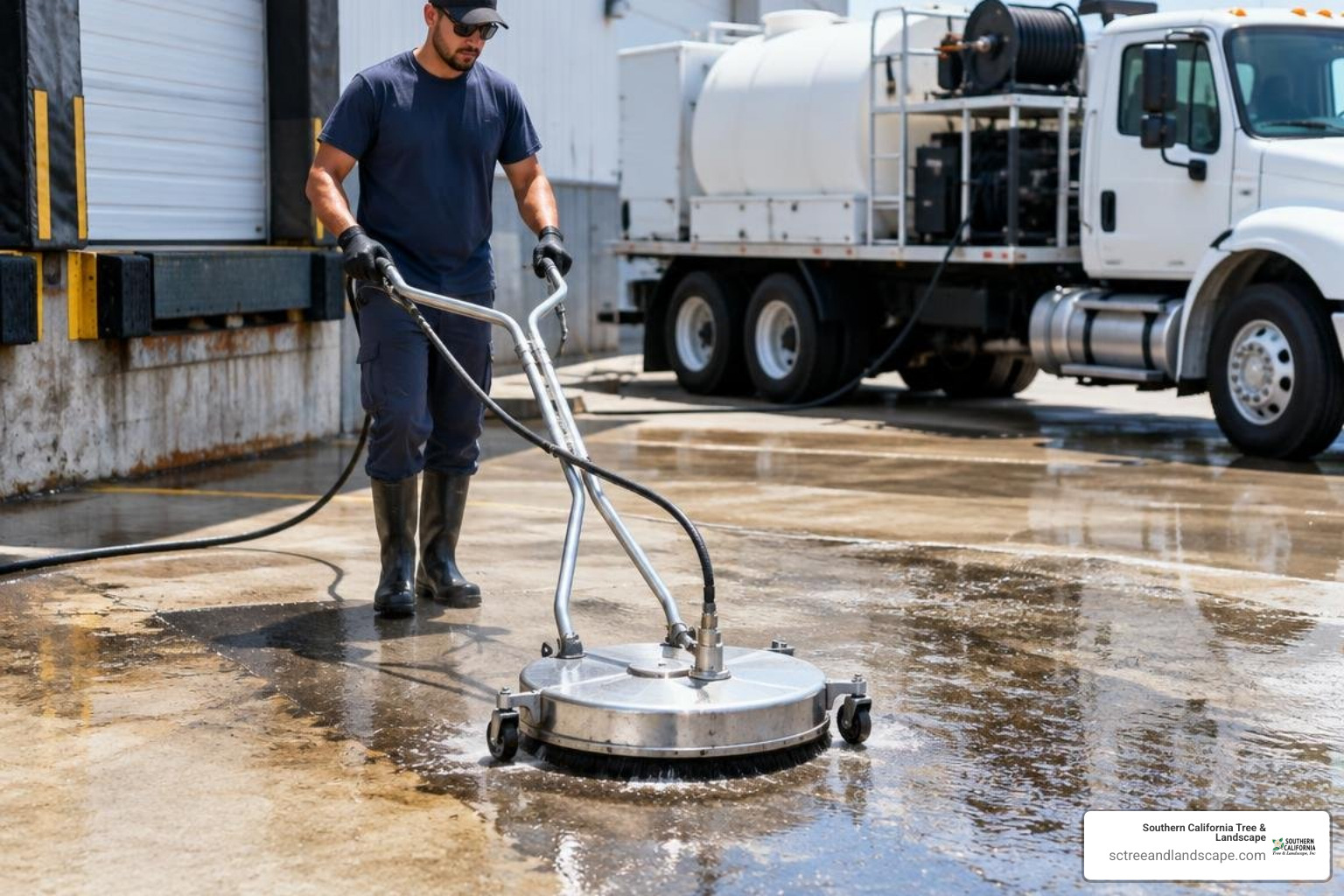
Different facilities face distinct maintenance challenges. A medical clinic requires sanitary walkways free of biological slip risks, while a distribution center requires heavy degreasing around its shipping bays. Professional exterior cleaning targets a wide variety of commercial property types across Torrance, the South Bay, Covina, and Harbor City:
- Retail and Shopping Plazas: Sidewalks, storefront entryways, curb lines, and outdoor dining patios.
- Industrial Warehouses and Logistics Hubs: Heavy equipment yards, loading dock aprons, service bays, and distribution lanes.
- Multi-Family and HOA Communities: Common walkways, perimeter walls, pool deck concrete, and shared carports.
- Healthcare Facilities and Office Parks: Main entrances, parking garages, ADA access ramps, and architectural facades.
High-Impact Commercial Surfaces: From Dumpster Pads to Building Facades
Dumpster enclosures, grease trap pads, and loading docks endure severe punishment. Spilled organic matter, leaking trash bins, and stagnant grease attract rodents, generate offensive odors, and pose major safety liabilities for staff.
High-temperature surface washing emulsifies embedded grease and eliminates foul odors on contact. Applying targeted surface restoration also removes embedded dirt and gum from public walkways, helping property managers maintain spotless concrete flags and create welcoming entrances for visitors and patrons.
Eco-Friendly Detergents and Landscaping Protection
Commercial cleaning chemicals must be managed carefully to protect surrounding plant life and local waterways. Professional teams use biodegradable surfactants that break down organic stains without leaving persistent toxic residues.
Technicians protect nearby ornamental beds by pre-saturating foliage with fresh water, shielding delicate root zones, and utilizing water recovery systems or berms to prevent contaminated wash water from entering local storm drains. Integrating surface washing with a routine commercial landscape maintenance plan ensures hardscapes and landscaped areas remain healthy and pristine.
Assessing Your Facility: Frequency, Maintenance Costs, and Action Triggers

Allowing grime and biological growth to sit on concrete or brickwork does more than damage visual curb appeal; it accelerates surface degradation. Dirt, road salts, and automotive fluids are naturally abrasive and mildly acidic, slowly breaking down concrete sealants and causing premature spalling.
Proactive washing prevents expensive surface replacements and protects businesses against costly slip-and-fall liability claims.
Signs Your Facility Needs Commercial Pressure Washing
- Slick Walkways During Rain: Algae, moss, and fungal layers create invisible slip hazards when wet.
- Spreading Dark Patches and Tire Marks: Oil, transmission fluids, and tire friction marks indicate dangerous petroleum buildup.
- Foul Odors Near Service Entrances: Decomposing organic matter around service pads requires prompt sanitation.
- Visible Algae and Mildew Streaks: Green or black spore trails expanding across exterior stucco and shaded walls.
- Embedded Chewing Gum: Dark spots littering high-traffic retail thresholds.
Implementing proven power washing secrets that turn dirty concrete into serious cash helps facilities retain high tenant occupancy and avoid costly structural repairs.
Establishing Routine Maintenance Schedules for Maximum ROI
The ideal cleaning frequency depends on pedestrian footfall, environmental exposure, and the nature of your business:
- Monthly to Bi-Monthly: High-turnover restaurant drive-thrus, dumpster enclosures, and service lane pads.
- Quarterly: High-traffic retail plazas, main building entries, and parking garage transit lanes.
- Semi-Annually: Corporate office sidewalks, HOA common walkways, and loading dock aprons.
- Annually: Full building exterior facade washes, warehouse vertical walls, and perimeter fences.
How to Evaluate and Choose the Best Service Provider
Hiring the wrong contractor can lead to etched concrete, dead landscape plantings, and serious safety liabilities. Choosing an experienced, properly credentialed commercial vendor ensures your project is completed safely and efficiently.
Vendor Qualifications: Insurance, Safety Compliance, and PWNA Standards
When vetting an exterior maintenance partner, verify that they carry the proper credentials for commercial sites:
- Adequate Insurance Coverage: Look for comprehensive commercial general liability coverage (at least $1M to $2M) and active workers’ compensation policies.
- Safety Standard Compliance: Crews should adhere to OSHA safety regulations, personal protective equipment (PPE) requirements, and proper surface-pressure matching.
- PWNA Standards: Adherence to Power Washers of North America (PWNA) best practices confirms proper technical handling of varied building substrates.
- Environmental Care: Providers must follow local runoff regulations, utilize wastewater management techniques, and use biodegradable detergents.
Operational Logistics: After-Hours Scheduling and Service Bundling
A reliable commercial cleaning company should never disrupt your daily business operations or create hazards for patrons. Professional crews perform major cleanings overnight, during early morning hours, or on weekends to ensure work zones dry completely before peak operating hours.
Property managers can also save time and administrative overhead by partnering with providers who offer bundled site services. Combining surface washing with seasonal tree care, window cleaning, and groundskeeping through a full suite of services ensures seamless, single-source property care.
Cost Drivers and Transparent Commercial Estimates
Commercial washing costs depend on several clear project parameters:
- Square Footage: Total surface area to be treated.
- Substrate Porosity and Condition: Heavily textured or degraded surfaces require extra care and dwell time.
- Stain Severity: Removing heavy oil and baked-on grease requires heated water and targeted degreasers.
- Site Water Access and Drainage: Onsite hydrants or reclaimed water needs affect equipment deployment.
For an accurate assessment tailored to your property, contact our team for a detailed site walkthrough and clear proposal.
Frequently Asked Questions About Commercial Exterior Cleaning
How often should high-traffic commercial walkways be washed?
Most commercial building entries and storefront sidewalks benefit from professional cleaning every three to six months. Facilities with high daily foot traffic—such as shopping centers, medical centers, and restaurants—often require monthly cleanings to prevent slip hazards and maintain a fresh appearance.
Will high-pressure washing damage commercial building materials like stucco or signage?
High pressure can damage soft materials if applied improperly. Professional technicians protect sensitive substrates like stucco, EIFS, aged brick, and vinyl by utilizing soft wash techniques. Soft washing uses low pressure combined with specialized, eco-friendly cleaning agents to lift dirt and organic buildup safely.
Can commercial exterior washing be scheduled after business hours?
Yes. Professional exterior maintenance teams regularly schedule work during overnight hours, early mornings, or weekends. After-hours service ensures zero disruption to your daily operations, eliminates customer inconvenience, and allows treated walkways to dry thoroughly before doors open.
Conclusion
Keeping your commercial property clean protects its visual appeal, lowers slip-and-fall risks, and extends the lifespan of expensive hardscapes. Partnering with a skilled exterior maintenance team ensures every surface—from delicate stucco facades to grease-stained loading docks—receives the exact pressure, temperature, and cleaning chemistry it needs.
At Southern California Tree & Landscape, we have proudly served Torrance, the South Bay, Covina, Harbor City, and the wider Southern California region since 1991. Whether you need ongoing grounds care or want to stop moping and start scrubbing your concrete floors, our experienced crews are here to keep your property safe, clean, and welcoming all year round.