
Cleaning Concrete Flags Starts With a Gentle Approach
Cleaning concrete flags is usually simple: sweep away debris, pre-wet the surface, scrub with warm water and mild detergent, then rinse well with a garden hose. Start gently and only move to a stain-specific cleaner or low-pressure washing when basic scrubbing does not work.
| What you see | Likely issue | Best first response |
|---|---|---|
| Dust, mud, leaf marks, or dull grime | Cosmetic surface dirt | Sweep, pre-wet, and scrub with mild soapy water |
| Green, black, or slippery patches | Moss or algae | Brush away growth and use a paving-safe treatment |
| Dark spots near parking or grills | Oil or grease | Blot or absorb fresh oil, then use a concrete-safe degreaser |
| Flaking, deep pits, exposed aggregate, or wide cracks | Surface or structural damage | Avoid aggressive cleaning and assess the flags before proceeding |
Concrete flags are built for long service – well-designed flag paving commonly has a design life of at least 20 years – but harsh acids, wire brushes, and close-range pressure washing can shorten that life. For busy Southern California properties, regular light cleaning is often the lowest-cost way to keep paths, patios, and common areas clean, safe, and presentable.
I am Troy Basmajian, President of Southern California Tree & Landscape, and I have spent the past decade helping residential, commercial, HOA, and municipal clients protect the appearance and function of their outdoor spaces. Our experience with cleaning concrete flags and maintaining hardscape-adjacent landscapes informs the practical, budget-aware guidance that follows.
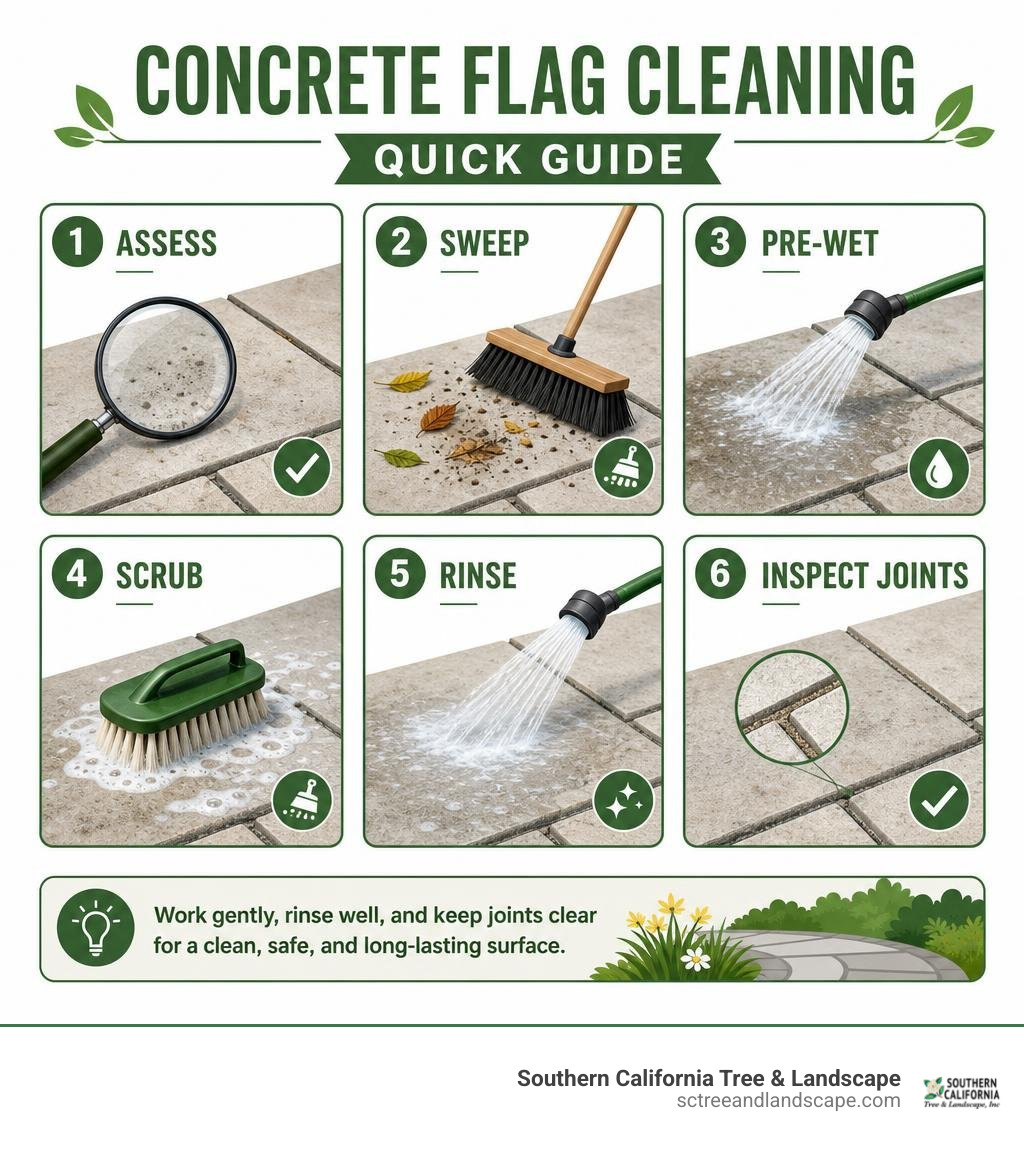
Diagnosing Concrete Flags: Cosmetic Dirt vs. Structural Damage
Before reaching for a bucket or a pressure washer wand, we always inspect the pavement surface closely. Treating physical deterioration as if it were mere cosmetic dirt is a classic recipe for costly hardscape damage. Knowing what you are looking at saves time, protects your budget, and prevents unneeded wear on your flags.
Cosmetic Soil vs. Surface Scaling
Cosmetic issues on concrete flags include surface mud, windblown dust, leaf tannic stains, pollen, and biological films like green algae. These blemishes sit on top of the concrete paste layer and can be cleaned away safely with basic non-abrasive methods.
Physical damage, on the other hand, compromises the integrity of the concrete itself:
- Exposed aggregate: When the smooth top layer (paste) has worn away, revealing the small stones and gravel beneath.
- Surface scaling and pitting: Flaking or peeling across the top surface, often caused by harsh chemical exposure or physical impacts.
- Structural cracking: Deep fracture lines running across a flag, often caused by sub-base failure or heavy vehicular overrun beyond the flag’s weight capacity.
Concrete flags typically range in size from 300 x 300 mm up to 900 x 600 mm, with thicknesses between 50 mm (for pedestrian walkways) and 70 mm (for vehicular driveway areas). A single 600 x 600 mm flag at 50 mm thickness weighs approximately 43 kg (95 lbs), while a 63 mm version weighs about 52 kg (114 lbs). Because these thick slabs have a minimum design life of 20 years, proper diagnosis keeps them functional for decades. You can review detailed structural parameters in these design standards and structural properties of flag paving.
When sweeping off loose surface soil prior to inspection, mastering basic sweeping form prevents fine dust from getting trapped in stone textures. Check out our guide on how to sweep effectively for clean pavement surfaces for pro sweeping tips.
Efflorescence and Salt Deposits
If you notice a chalky white powder haze coating your concrete flags, you are likely looking at efflorescence. This happens when water moves through the concrete, dissolves natural free lime (calcium hydroxide), and carries it to the surface. Once exposed to atmospheric carbon dioxide, it forms insoluble calcium carbonate.
It is critical not to panic and douse efflorescence with aggressive acid cleaners. Muriatic acid and harsh wire scrubbing can permanently dissolve the cement binder, etch the concrete finish, and shift the color. In most cases, efflorescence is a temporary, self-limiting process that naturally weathers away under foot traffic and rainfall. If necessary, gentle dry brushing with a stiff nylon broom is the safest way to manage it.
Essential Techniques for Cleaning Concrete Flags on a Budget
Restoring dirty patio slabs does not require hiring expensive rigs or buying high-priced specialized chemicals. Most residential driveways, walkways, and patios across Torrance, Covina, and the South Bay respond wonderfully to inexpensive household products.
| Cleaning Solution | Mixing Ratio | Recommended Soil Severity | Best Uses |
|---|---|---|---|
| Mild Dish Soap & Warm Water | 1/4 cup per 2 gallons warm water | Light daily dust, pollen, mud | Regular seasonal patio scrubbing |
| Diluted All-Purpose Cleaner / Degreaser | 1:32 (light) to 1:8 (moderate) | Everyday spills, moderate grime | Entryway paving, outdoor dining areas |
| Undiluted Cleaner / Degreaser | Full strength | Heavy grease, cooking oils | Barbecue spots, driveway oil drips |
| Oxygen Bleach Solution | 1 cup powder per 1 gallon warm water | Organic growth, moss, algae | Shaded patio slabs, garden paths |
| White Vinegar & Water | 50:50 dilution | Mild water mineral spots | Non-acid-sensitive spot cleaning (test first) |
Routine Cleaning Concrete Flags with Simple Household Solutions
For standard maintenance, mild liquid dish soap or an all-purpose cleaner is your best option. When cleaning concrete flags carrying moderate soil, a 1:8 dilution ratio (approximately 1 ounce of cleaner to 1 cup of water, or 1 pint per gallon) works wonders. For light dust, a lighter 1:32 ratio is plenty.
Always pre-wet your concrete flags with a garden hose before applying any soap mixture. Porous concrete acts like a dry sponge; if you pour cleaning chemicals onto dry paving, the slab absorbs dirty water deep into its pores, leading to stubborn cloudy films. Pre-wetting fills those micro-pores with clean water, forcing the soap and lifted grime to remain on the surface where they can be easily scrubbed and rinsed away.
Safe Pressure Washing Techniques when Cleaning Concrete Flags
Pressure washing can save time on large areas, but high pressure is a double-edged sword. Holding a narrow spray tip too close to concrete flags can permanently etch the surface aggregate, strip surface color, and blow out the jointing sand that locks the flags together.
If you choose to use a pressure washer, adhere strictly to these safety guidelines:
- Pressure limits: Keep pressure between 1,300 and 1,500 PSI maximum.
- Nozzle selection: Use a wide 40-degree fan nozzle or a rotating surface cleaner attachment. Never use a 0-degree red tip.
- Distance & angle: Hold the spray tip 12 to 18 inches away from the flags at a 45-degree angle.
- Motion: Keep the wand moving continuously in sweeping motions (1-2 feet per second) to avoid gouging lines into the surface.
- Joint care: Never point the high-pressure jet directly into sand joints.
For additional safety precautions when operating pressure equipment near home siding and landscaping, consult the ultimate guide to pressure washing outdoor surfaces safely. Professional hardscape cleaning services can also handle heavy industrial-scale washing when needed.
Step-by-Step Process for Restoring Dirty Flagstones
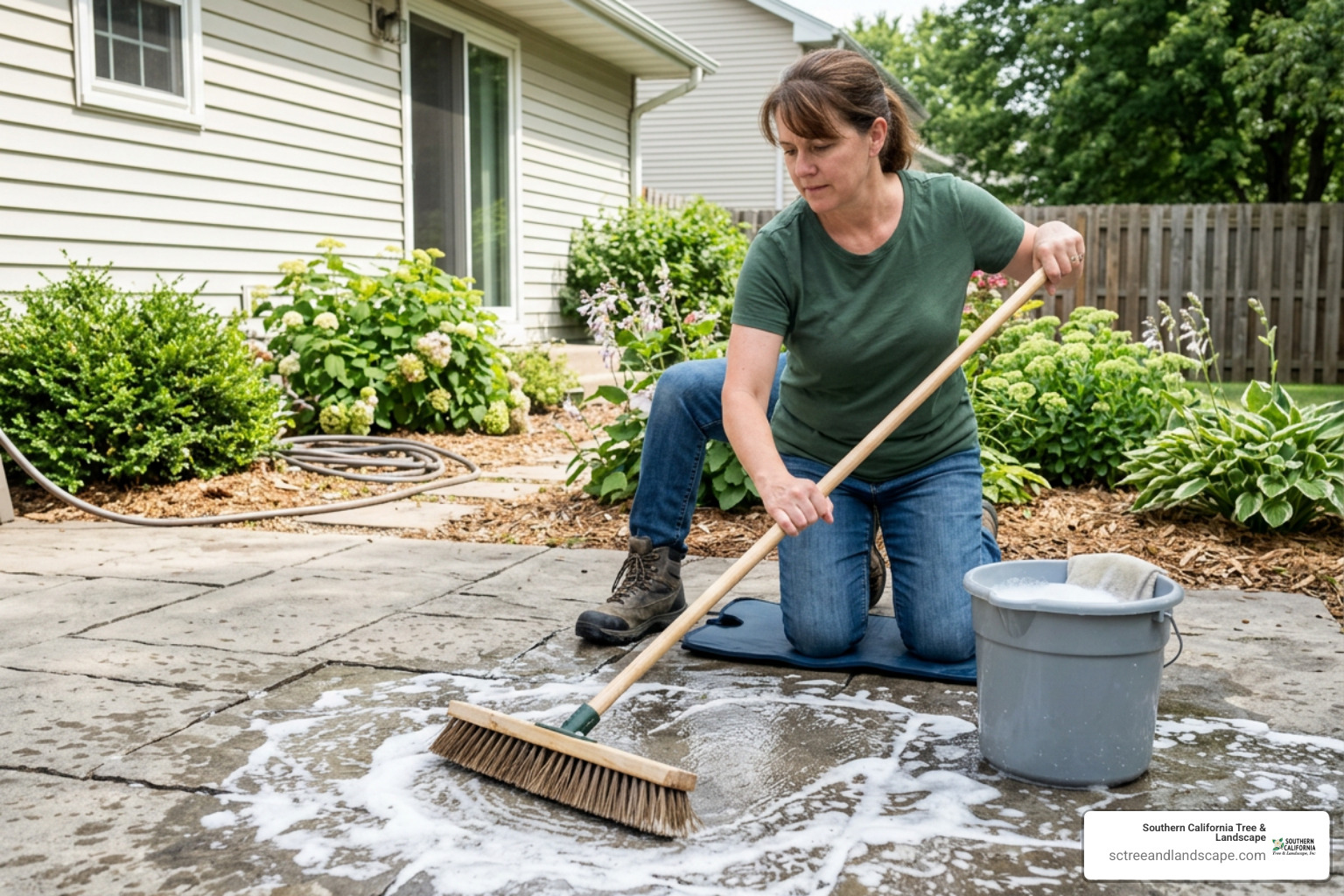
Ready to roll up your sleeves? Following a deliberate, step-by-step cleaning process ensures maximum soil removal with minimal physical strain.
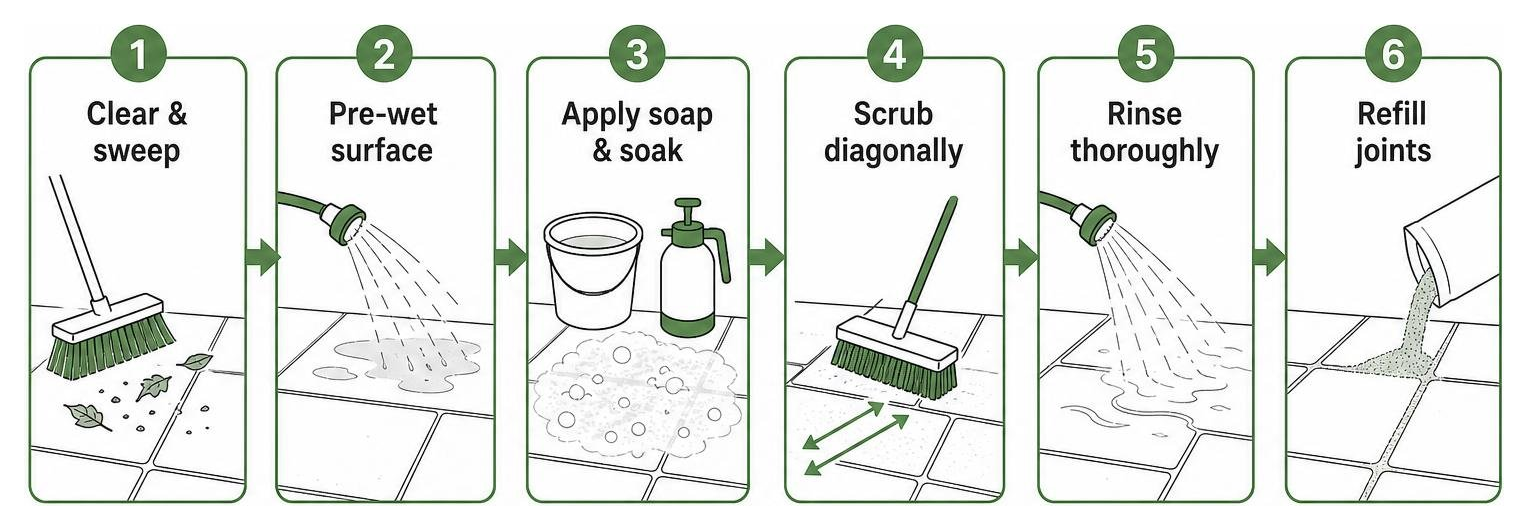
Step 1: Clearing Debris and Pre-Wetting
Clear the entire area before opening a bucket or turning on a hose.
- Move all patio furniture, grills, planters, and doormats out of the work zone.
- Sweep away loose leaves, twig detritus, and dirt clumps using a stiff push broom or leaf blower.
- Shield surrounding garden beds or sensitive plants with plastic sheeting or rinse adjacent foliage with clean water before and after cleaning.
- Thoroughly pre-wet the concrete flags using a garden hose fitted with a spray nozzle set to a gentle fan or sheet setting.
Step 2: Application, Agitation, and Rinsing
Work in small, manageable sections (roughly 4×4 feet or 5×5 feet) so the cleaning solution does not dry on the warm concrete.
- Apply: Spread your warm soap solution evenly across the pre-wetted section. Allow it to sit (dwell) for 2 to 5 minutes so the surfactants can loosen surface oils.
- Agitate: Scrub the flags vigorously using a stiff, non-metallic bristle brush or broom. Scrub diagonally across the joints in both directions to lift embedded grime from surface textures without gouging joint lines.
- Rinse: Flush the dirty lather away completely with clean water from your garden hose, working from the highest elevation toward low drainage points.
- Dry: Allow the flags to air-dry completely for 24 hours before putting heavy outdoor furniture back in place.
Targeted Stain Removal and Joint Maintenance
Every day wear and tear brings stubborn spot stains. Here is how we tackle specific problem spots while preserving your hardscape joints.
Removing Oil, Rust, and Mortar Stains
- Oil and grease: For fresh automotive leaks or cooking grease around outdoor kitchens, immediately blot (do not wipe!) excess oil with paper towels. Cover the spot with cat litter or baking soda for 15-30 minutes to draw out the liquid. Scrub the residual stain using a heavy-duty cleaner or degreaser at full strength, then rinse thoroughly.
- Rust marks: Rust caused by patio furniture feet or iron-rich fertilizer granules can be treated with a paste of lemon juice and baking soda left on the stain for 20-30 minutes, or a commercial non-acidic rust remover. Avoid full-strength muriatic acid, which dissolves the concrete binder.
- Cement mortar haze: Mortar smears left behind after installation or repointing can be cleaned using dedicated concrete haze removers applied with a stiff nylon brush, following manufacturer dwell times closely. For detailed technical protocols, refer to these industry guidelines for the maintenance of concrete flag paving.
Eliminating Moss, Algae, and Jointing Sand Refill
Biological growth thrives in shady, damp corners across Harbor City and South Bay properties.
- Mix 1 cup of oxygen bleach powder per gallon of warm water (or a 1:10 dilution of household liquid bleach in extreme cases).
- Apply to green moss or algae patches, let it sit for 10-15 minutes, scrub with a stiff broom, and rinse clean. Keep bleach runoff away from delicate garden roots!
Cleaning inevitably washes away a portion of the kiln-dried or polymeric sand sitting between flag joints. Once the paving is 100% dry:
- Sweep fresh jointing sand across the concrete flags.
- Use a broom to push sand into all open joints until filled to within 2-3 mm of the flag chamfer top.
- Compact or tap the flags gently and brush away all surface sand dust.
- If using polymeric sand, mist lightly with water per package instructions to activate the binding polymers.
Applying a breathable, water-based acrylic or penetrating sealer every 2 to 3 years can protect cleaned flags against future oil stains, weed growth, and UV fading. To review other DIY techniques, see guides like Effective Techniques For Cleaning And Maintaining Concrete Flags Easily | ShunTool, How Do You Clean Flagstone: Simple Steps for a Fresh Look – CleaningBro, How to clean & renovate York stone flags & pavers | york stone care, and How to Clean a Flagstone Patio | 7 Easy Steps (2026).
Frequently Asked Questions About Cleaning Concrete Flags
Can you use a pressure washer on concrete flags without causing damage?
Yes, provided you exercise caution. Keep water pressure under 1,500 PSI, use a 40-degree wide fan nozzle, hold the tip 12 to 18 inches away from the surface, and avoid spraying directly into sand joints. Never use narrow 0-degree pin-point nozzles or held-close lances, as high pressure permanently etches concrete surfaces and strips joint sand.
How do you treat white vinegar or acid damage on concrete flag pavers?
If an acidic cleaner or concentrated vinegar etched your concrete flags—causing chalking or dull discoloration—neutralize the acid immediately by rinsing thoroughly with a solution of water and baking soda or a pH-neutral cleaner. While severe acid etching that has eaten into the aggregate paste cannot be erased chemically, light surface dulling can often be visually blended using a quality penetrating concrete sealer.
How often should concrete flags be cleaned and resealed?
Concrete flags benefit from regular manual sweeping every 1-2 weeks and a thorough soap-and-water scrub twice a year (typically during spring and autumn maintenance). Sealing is generally recommended every 2 to 3 years depending on sun exposure, foot traffic, and rainfall.
Conclusion
Taking care of your concrete flags does not require expensive contractor equipment or harsh industrial chemicals. By diagnosing stains correctly, pre-wetting surfaces, scrubbing gently with warm soapy water, and keeping joint sand topped up, you can maintain pristine, safe hardscapes that boost your property’s curb appeal for decades.
At Southern California Tree & Landscape, we have provided comprehensive property care since 1991 across Torrance, Covina, Harbor City, and the wider South Bay area. Whether you need routine yard care or complete hardscape management, our experienced team is here to help. Discover how our landscape care and maintenance services can protect your investment, or explore our full suite of solutions by visiting our our services page and our dedicated property maintenance services portal today!