
What hardscape and softscape actually mean (and why your yard needs both)
Hardscape and softscape are the two building blocks of every outdoor space — and understanding the difference is the fastest way to fix a yard that looks “off” without knowing why.
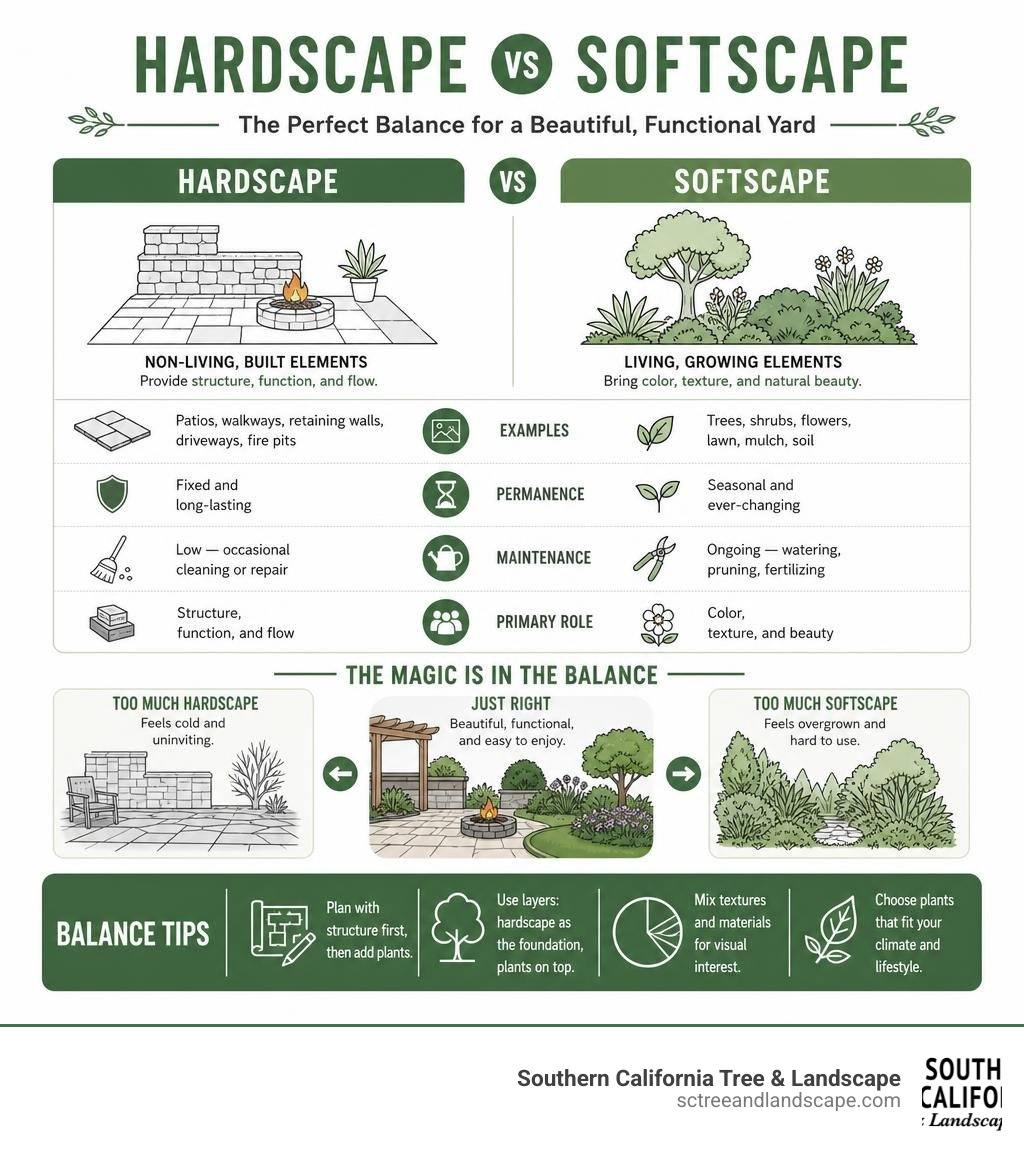
Here’s a quick breakdown:
| Hardscape | Softscape | |
|---|---|---|
| What it is | Non-living, built structures | Living, growing elements |
| Examples | Patios, walkways, retaining walls, driveways, fire pits | Trees, shrubs, flowers, lawn, mulch, soil |
| Permanence | Fixed and long-lasting | Seasonal and ever-changing |
| Maintenance | Low — occasional cleaning or repair | Ongoing — watering, pruning, fertilizing |
| Primary role | Structure, function, and flow | Color, texture, and natural beauty |
Think of it this way: hardscape is the skeleton of your yard. Softscape is everything that makes it feel alive.
Most yards that look flat, harsh, or overgrown have the same problem — too much of one and not enough of the other. A yard that’s all concrete feels cold and institutional. A yard that’s all plants can feel chaotic and hard to use. The magic happens in the balance.
This matters especially in Southern California, where drought conditions, HOA standards, and year-round outdoor living all put extra pressure on how your property is designed and maintained.
I’m Troy Basmajian, President of Southern California Tree & Landscape, and over the past decade leading a team of 100+ landscape professionals across Southern California, I’ve seen how the right mix of hardscape and softscape transforms a neglected property into one that’s both beautiful and easy to manage. In this guide, I’ll walk you through exactly how to get that balance right.
Hardscape and softscape terms at a glance:
Understanding the core differences between hardscape and softscape
To build a yard that works, we must look at how these two elements interact on a daily basis. Hardscape refers to the rigid, non-living, permanent, or semi-permanent structural elements of your outdoor space. These are the pieces made of stone, concrete, brick, wood, pavers, or metal. They do not grow, they do not require water, and once they are installed, they remain relatively unchanged for years.
On the other flip of the coin, softscape encompasses all the living, breathing, growing, and biological elements of your landscape. This includes your turf lawn, flower beds, shrubs, groundcovers, privacy hedges, and shade trees. Softscape is dynamic; it responds to the seasons, grows larger over time, and demands consistent biological support in the form of soil nutrients, water, and sunlight.
Understanding this distinction is critical because many homeowners confuse basic lawn care with comprehensive landscape design. If you are wondering where your current yard falls, it helps to understand Lawn Care vs Landscaping: What Your Yard Actually Needs to see how structural design differs from basic green upkeep.
While hardscape provides the flat surfaces, retaining barriers, and pathways that make a yard accessible, softscape wraps those structures in organic textures, shifting colors, and pleasant fragrances. Without hardscape, your softscape would eventually turn into an unnavigable jungle. Without softscape, your hardscape would feel like a sterile commercial parking lot.
The functional roles of hardscape and softscape
Beyond their visual differences, both elements perform vital environmental and structural jobs for your property:
- Erosion Control and Topography Management: Sloped properties in areas like the South Bay or the hills of Covina face serious challenges with soil movement during heavy winter rains. Hardscape features, particularly retaining walls, can prevent up to 90% of soil erosion on sloped properties. Softscape elements, like deep-rooting groundcovers and shrubs, work in tandem with these walls to bind the soil together naturally.
- Drainage and Runoff Direction: Concrete, stone, and pavers direct the flow of water across your property. When properly graded, hardscape prevents water from pooling near your home’s foundation. Meanwhile, softscape zones—specifically rain gardens, bioswales, and mulch beds—act as natural sponges, absorbing that redirected runoff and filtering it back into the local water table.
- Climate Control and Energy Savings: Did you know that a strategic landscape design can directly lower your utility bills? Planting deciduous shade trees on the south and west sides of your home provides natural cooling during our hot Southern California summers, while allowing sunlight through in the winter. In fact, landscaping with balanced hardscape and softscape can reduce home cooling costs by up to 20%.
- Property Value and Curb Appeal: Investing in a balanced yard yields tangible financial returns. Professionally installed hardscaping alone can increase property value by 5-15%. However, when you combine those structures with a thoughtfully designed plant palette, a fully balanced landscape can boost your property’s overall market value by 15-20%.
The structural bones: Elements of hardscaping
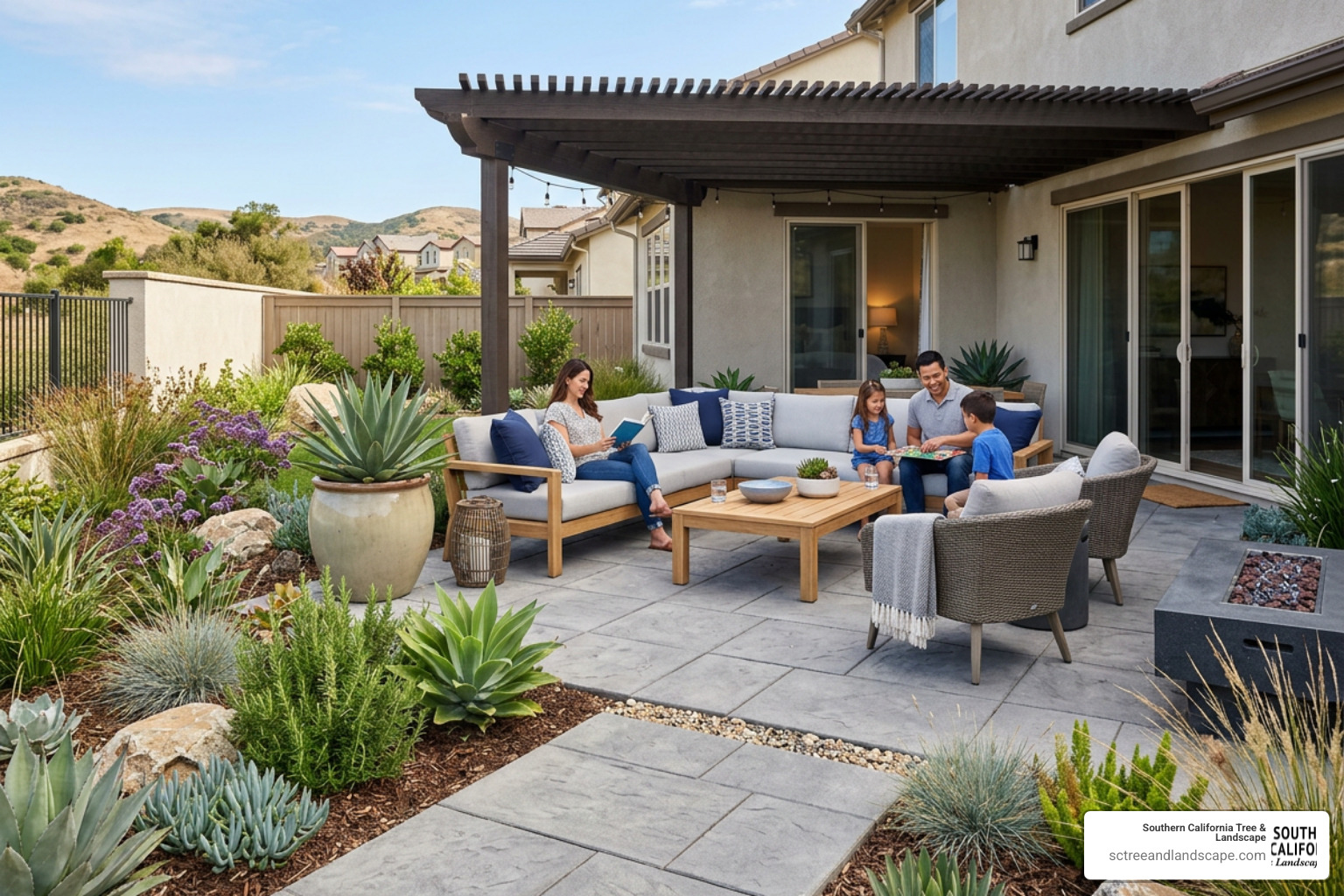
When we design a yard from scratch, we always start with the hardscape. It establishes the boundaries, pathways, and flat zones where human activity actually takes place. Think of it as laying out the floor plan of a house before you decide where to put the indoor plants.
If you are planning a complete overhaul, reviewing A Comprehensive Guide to Landscape Installation will give you a clear picture of how these structural elements are safely integrated into your soil.
Let’s break down the primary hardscape features we use to build the structural bones of Southern California homes:
- Patios and Decks: These serve as the central hubs for outdoor living, dining, and entertaining. Whether constructed from natural flagstone, concrete pavers, or durable wood, a well-designed patio or deck can increase home resale value by $10,000 to $15,000 on average.
- Retaining Walls: Essential for sloped yards in Torrance and the South Bay, retaining walls turn unusable, steep hillsides into beautiful, terraced garden beds. They manage soil pressure while creating flat, usable tiers for planting.
- Walkways and Steps: Walkways guide foot traffic safely through your garden, preventing guests from trampling your delicate plants or tracking mud onto your clean patio. Paver, brick, or stepping-stone paths create a clear sense of movement and discovery.
- Driveways: Often the first structural element people see, a clean paver or stamped concrete driveway dramatically elevates your home’s curb appeal while providing a highly durable surface for vehicles.
- Outdoor Kitchens and Fire Pits: These high-end amenities extend your living space directly into the fresh air. From built-in stone barbecues to cozy brick fire pits, these features turn your backyard into a year-round destination.
For homeowners in the coastal and suburban pockets of our region, finding local expertise is key to ensuring these heavy installations are built to withstand local soil conditions. Working with a professional team that understands regional styles, local building codes, and soil preparation is essential for a successful project.
Whether you are located in Torrance, Covina, Harbor City, or the wider South Bay area, having experienced local crews handle your landscape construction ensures that your hardscape elements are durable, safe, and beautifully integrated into your property.
The living personality: Elements of softscaping

If hardscape is the bones, softscape is the soul. It introduces movement, soft textures, seasonal shifts, and life to your property. A yard without softscaping feels rigid, hot, and uninviting. The right plants breathe life into stone and concrete, turning a simple backyard into a personal sanctuary.
To understand how to use plants to frame and beautify your hard structures, focusing on proper plant layering and selection is key to creating a cohesive, natural look.
The primary softscape elements we work with include:
- Trees: The ultimate anchors of any yard. From mature shade trees that block the harsh afternoon sun to ornamental options like olive or citrus trees, they establish the vertical scale of your landscape.
- Shrubs and Hedges: These act as natural walls and privacy screens. Evergreen hedges like podocarpus or wax myrtle keep your yard private from neighbors without the harsh look of a wooden fence.
- Perennial Flowers and Ornamental Grasses: These plants return year after year, providing reliable color and texture. Drought-tolerant options like lavender, sage, and kangaroo paw thrive in Southern California’s climate while attracting local pollinators.
- Annuals: These are your seasonal color bursts. While they need to be replaced every year, they allow you to change the color palette of your garden beds with the seasons.
- Lawns and Groundcovers: Turf grass provides a soft, open play area for kids and pets. However, to save water, many local homeowners are replacing high-maintenance lawns with water-wise groundcovers like kurapia or dymondia.
- Soil and Mulch: The unsung heroes of softscaping. Healthy organic soil feeds your plants, while a thick layer of mulch insulates plant roots, suppresses weeds, and reduces your watering needs by preventing evaporation.
How to achieve a balanced and functional outdoor space
Achieving a truly balanced yard is a delicate art. Go too heavy on the hardscape, and you end up with a hot, echoing “concrete jungle” that radiates heat long after the sun goes down. Go too heavy on the softscape, and you get a tangled, high-maintenance maze that lacks a clear place to sit, walk, or relax.
To find that perfect sweet spot, we recommend following several core design principles:
- The 60/40 Guideline: As a general rule of thumb, aim for a ratio of roughly 60% softscape to 40% hardscape. This ensures your yard feels lush and green while still providing plenty of flat, stable surfaces for seating, dining, and walking.
- Create Transition Zones: Avoid harsh, abrupt borders where stone meets dirt. Use intermediate zones to soften the contrast. For example, plant low-growing groundcovers or creeping thyme to grow between flagstone pavers, or line a concrete walkway with soft, airy ornamental grasses that spill slightly over the edges.
- Design with Scale and Proportion: A massive, towering concrete retaining wall can feel imposing and industrial. Soften its presence by planting cascading rosemary or trailing vines along the top edge to drape down over the stone, breaking up the flat surface.
- Integrate Smart Drainage and Irrigation: Never design hardscape without planning where the water will go. Direct patio runoff toward your softscape beds, and install efficient drip irrigation systems beneath your mulch to keep your plants healthy without wasting water.
If you feel your yard is currently out of balance, it might be time to reimagine the layout entirely. Take a look at Custom Landscape Design: Is Your Yard Ready for a Makeover? to explore how we can reshape your outdoor space to fit your lifestyle.
How to balance hardscape and softscape in your yard
When you are ready to bring these elements together, you must design with both visual harmony and daily functionality in mind. Start by mapping out your functional zones. Where do you want to cook? Where should the kids play? Where do you want to sit quietly with a cup of coffee?
Once you have established these zones, use hardscape to build the “floors” and “walls” of these outdoor rooms, and use softscape to fill them with color, shade, and privacy.
Another critical factor is planning for plant maturity. A common mistake is planting young shrubs right next to a stone walkway because they look perfect at the nursery. Five years later, those shrubs have tripled in size, completely blocking the path. Always research the mature height and width of your plants before putting them in the ground.
Finally, keep your material palette simple. Limit your hardscape to two or three primary materials that complement your home’s architecture, and choose a cohesive plant palette of 20 to 30 core plants. This prevents your yard from looking cluttered and chaotic.
For a deeper dive into designing a cohesive, beautiful front entrance that balances these elements perfectly, read through our comprehensive guide on Lawn Design: The Ultimate Guide to a Perfect Front Yard.
Frequently Asked Questions about landscaping elements
What is the ideal ratio between hardscape and softscape?
While the 60% softscape to 40% hardscape ratio is a fantastic starting guideline for typical suburban residential lots, the ideal balance ultimately depends on your property size, lifestyle, and maintenance preferences.
For example, a compact urban courtyard in Torrance might lean toward 60-70% hardscape to maximize usable seating space, using vertical gardens and planters to bring in the greenery. Conversely, a sprawling estate might feature 70-80% softscape to preserve open lawns and natural views.
That hardscape elements typically require 70-80% less daily maintenance than softscape features, so busy homeowners often prefer a slightly higher hardscape ratio to keep weekend chores to a minimum.
Which elements should be installed first during a landscape project?
Always install your hardscape elements first! This is a non-negotiable rule of professional landscaping. Hardscape construction involves heavy machinery, deep excavation, grading, trenching for drainage, and laying utility lines for gas, water, and electricity.
If you plant your trees, shrubs, and lawn first, they will inevitably be trampled, compacted, or dug up by the heavy equipment required to build your patio or retaining walls.
To see how this construction sequence works from start to finish, check out our guide on Landscape Design Installation: Transform Your Outdoor Space.
How do hardscape features prevent soil erosion?
Hardscape features like retaining walls, stone terraces, and concrete riprap physically hold soil in place against the pull of gravity and water flow. On sloped properties, heavy rains can quickly wash away loose topsoil, exposing plant roots and threatening the stability of your home’s foundation.
By terracing a slope with retaining walls, you break a single steep incline into several flat, manageable steps. This slows down the speed of rushing rainwater, allowing the water to gently soak into the soil rather than washing it away.
Conclusion
Creating a beautiful, functional, and sustainable yard is all about striking the right balance between the permanent structure of hardscape and the vibrant, changing beauty of softscape. When these two elements work in harmony, your yard becomes a seamless extension of your home—a place where you can relax, entertain, and connect with nature.
At Southern California Tree & Landscape, we have been helping homeowners across Torrance, Covina, Harbor City, and the South Bay find this perfect balance since 1991. As a family-owned business, we bring experienced crews, an ISA-certified arborist, and a deep love for Southern California’s unique environment to every project we touch. Whether you need custom landscape design, structural hardscape installation, water-wise softscaping, or ongoing care, we are here to bring your vision to life.
Ready to transform your yard with a balanced blend of stone and greenery? Explore our Design & Installation services, check out our seasonal Maintenance packages, or browse our complete list of Our Services to see how we can help.
Let’s build your dream outdoor space together. Reach out to our expert team today at https://sctreeandlandscape.com/our-services/design-installation/ to schedule your personal design consultation!