
What Is the Best Homemade Concrete Cleaner for Outdoor Surfaces?
What is the best homemade concrete cleaner? For most light dirt and everyday grime, use baking soda, warm water, and a small amount of mild dish soap. It is affordable, simple to mix, and less risky than harsh acids or strong chemical cleaners.
The best recipe still depends on the stain. Concrete is porous, so oil, moss, mildew, and tire marks do not all respond to the same cleaner.
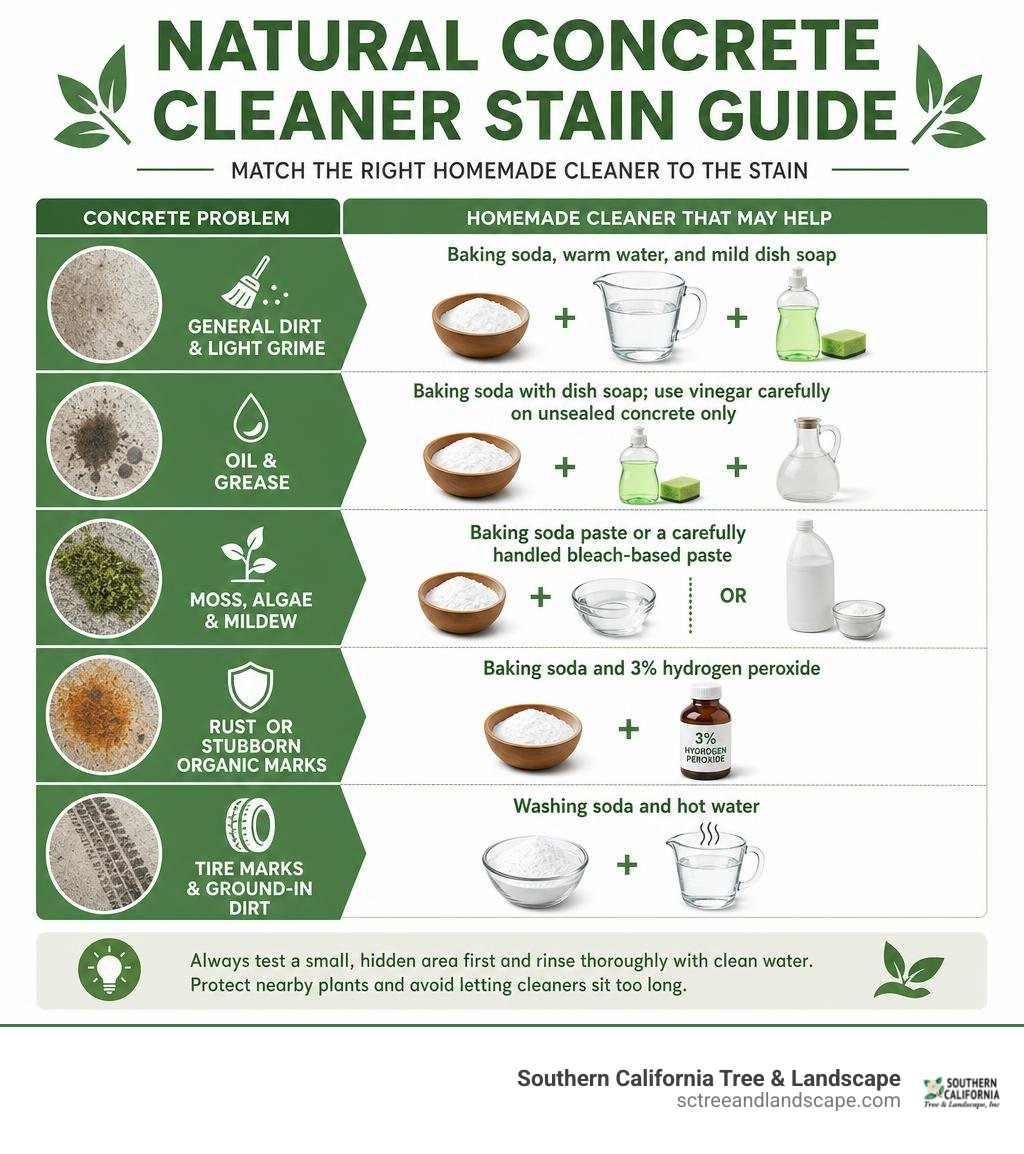
| Concrete problem | Homemade cleaner that may help |
|---|---|
| General dirt and light grime | Baking soda, warm water, and mild dish soap |
| Oil and grease | Baking soda with dish soap; use vinegar carefully on unsealed concrete only |
| Moss, algae, and mildew | Baking soda paste or a carefully handled bleach-based paste |
| Rust or stubborn organic marks | Baking soda and 3% hydrogen peroxide |
| Tire marks and ground-in dirt | Washing soda and hot water |
Natural cleaning can be a practical first step for patios, walkways, driveways, and common areas. But surface type matters: vinegar can etch concrete when left too long, especially on sealed, colored, polished, or stamped finishes. A small test spot and a thorough rinse protect both the concrete and nearby landscaping.
I am Troy Basmajian, President of Southern California Tree & Landscape, and I have spent more than a decade helping Southern California property owners maintain safe, clean, attractive outdoor spaces. When clients ask what is the best homemade concrete cleaner, the right answer starts with the stain, the concrete finish, and a plan that protects the surrounding landscape.
What Is the Best Homemade Concrete Cleaner for Every Stain Type?
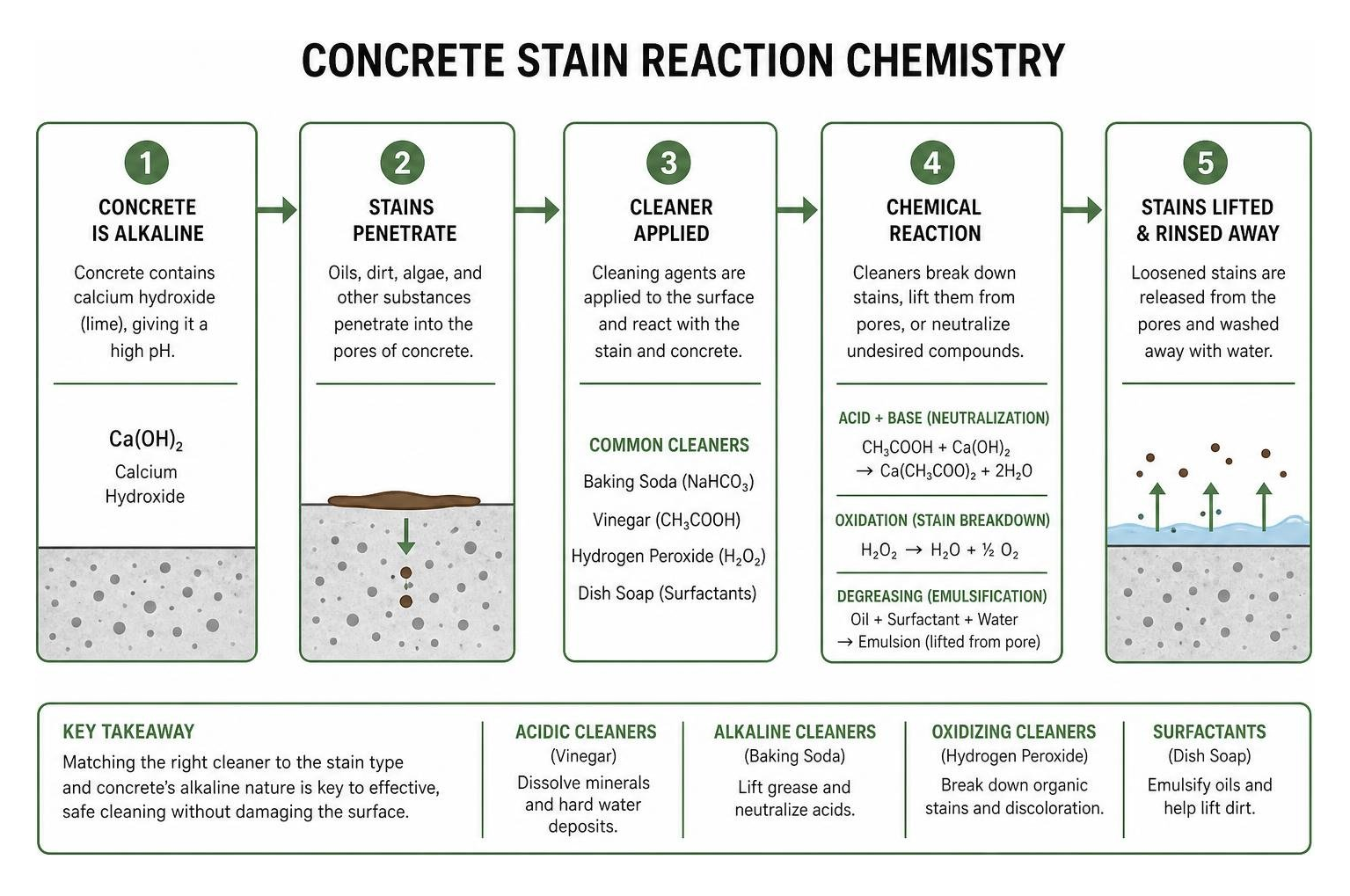
When tackling outdoor hardscapes across Torrance, Covina, or the South Bay, understanding concrete chemistry is half the battle. Concrete is inherently porous—it acts like a hard sponge full of microscopic capillaries. When liquids like motor oil, plant tannins, or rainwater sit on the surface, they soak deep into the slab.
Because concrete contains calcium hydroxide (lime), it has a natural alkaline pH. Selecting the ideal DIY cleaner requires matching the right household ingredient to the specific physical and chemical structure of the stain without harming the underlying slab.
Baking Soda and Vinegar Degreaser: What Is the Best Homemade Concrete Cleaner for Oil?
Motor oil, lawnmower grease, and cooking splatters create dark, unsightly patches on driveways and patios. When homeowners ask us what is the best homemade concrete cleaner for oil spills, we recommend a targeted foaming treatment that lifts grease out of the pores.
To create an effective DIY degreaser for unsealed concrete:
- 1 cup baking soda
- 1 cup white vinegar
- 1 cup warm water
- 2 tablespoons mild dish soap (such as Dawn)
Start by sprinkling a generous layer of dry baking soda directly onto the oil spot to absorb surface moisture. Next, mix the warm water, dish soap, and white vinegar in a spray bottle or bucket. As the acidic vinegar meets the alkaline baking soda, it creates a effervescent fizzing action. This bubbling motion breaks the surface tension of embedded grease, driving the grease-cutting dish soap deep into the concrete pores.
Allow the solution to dwell for 15 to 20 minutes without drying completely. Scrub vigorously in tight circles with a stiff-bristle nylon brush, then rinse thoroughly with clean water.
Baking Soda and Bleach Paste: What Is the Best Homemade Concrete Cleaner for Moss and Mildew?
Shaded outdoor walkways and patios around Harbor City and the South Bay frequently develop green algae, dark mildew, or moss during damp periods. Organic growth not only looks unsightly but also holds moisture against the slab and creates a dangerous slip hazard.
For stubborn biological growth on plain concrete, a thick, clingy paste works far better than liquid sprays because it provides maximum contact time:
- 2 parts baking soda (e.g., 2 cups)
- 1 part regular household liquid bleach (e.g., 1 cup)
Mix the ingredients in a plastic bucket until it forms a thick, spreadable paste with a consistency similar to peanut butter. Using a gong-style deck brush or trowel, coat the affected concrete generously. The baking soda acts as a mild scrub abrasive while holding the bleach in place on sloped or vertical surfaces.
Let the paste dwell for 15 to 20 minutes to break down organic spores, scrub firmly with your brush, and rinse with plenty of water. Note: Keep bleach runoff away from delicate garden beds, and never use bleach on composite decking or sealed decorative concrete.
Washing Soda and Hydrogen Peroxide Stain Lifters
When dealing with tough rust ring marks from iron patio furniture, plant pots, or heavy tire marks across a garage floor, standard kitchen vinegar may fall short. In these scenarios, switching to sodium carbonate (washing soda) or 3% hydrogen peroxide provides superior liftoff.
Washing soda has a higher pH than standard baking soda, making it a heavy-duty degreaser for ground-in dirt and tire rubber. Mix ½ cup of washing soda into 1 gallon of hot water, pour it over the affected driveway section, let sit for 20 minutes, and scrub clean.
For organic leaf stains or orange rust spots, pair oxidation with mild abrasion:
- ½ cup baking soda
- 1 cup 3% hydrogen peroxide
- 1 cup warm water
Pour this mixture directly over rust or leaf spots. Hydrogen peroxide acts as a non-toxic oxygen bleach that oxidizes iron and lifts plant dyes without releasing harsh chemical fumes into your outdoor living area.
How to Prepare and Safely Apply DIY Concrete Cleaners
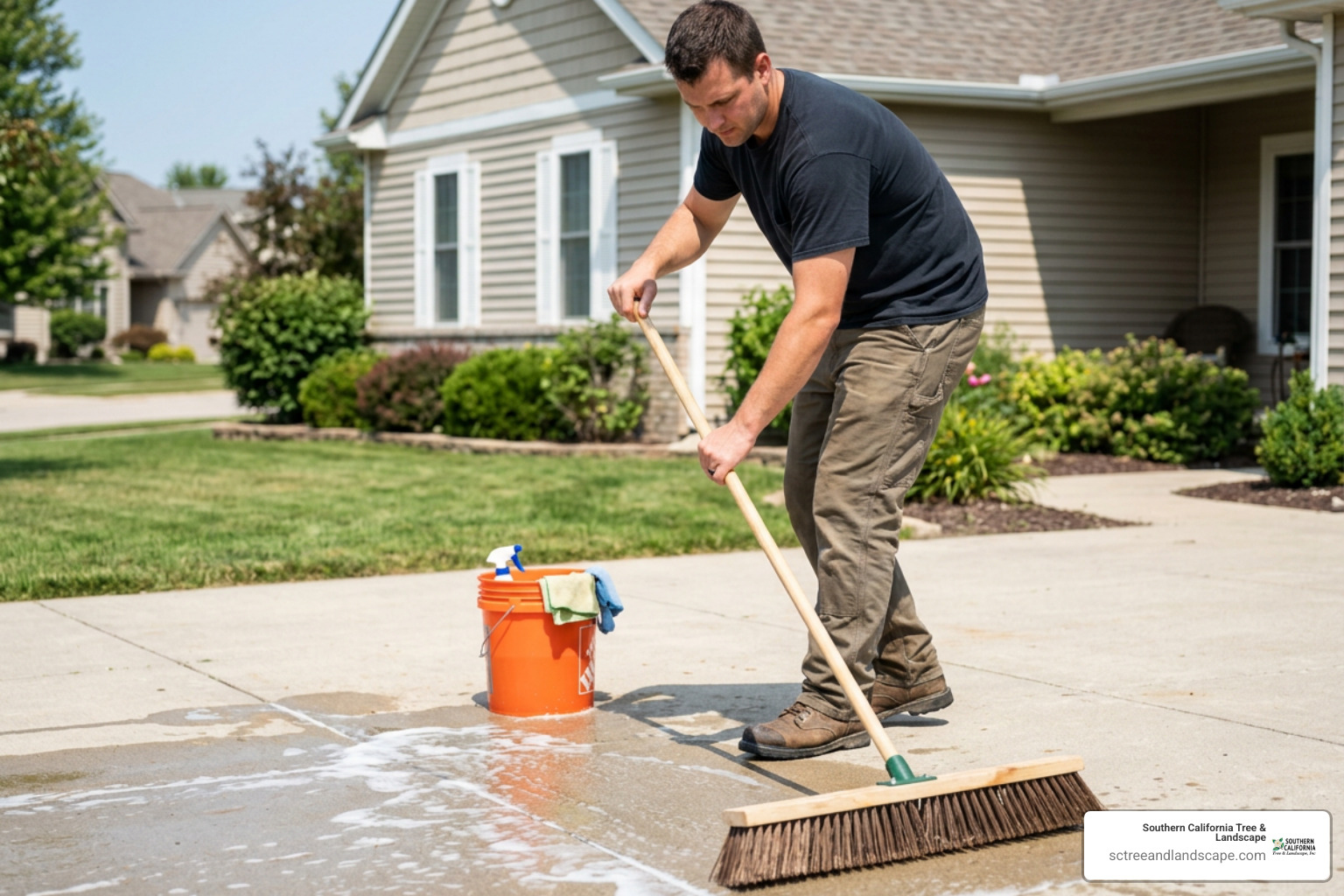
Achieving professional-quality concrete restoration without commercial chemicals requires a structured, multi-step application strategy. Skipping preparation steps often results in soap film residue that actually attracts fresh dirt faster.
For best results, follow this proven manual cleaning process:
- Clear and Sweep the Surface: Remove all patio furniture, outdoor rugs, and potted plants. Sweep away loose leaves, sand, and surface dust using a heavy outdoor push broom or leaf blower.
- Pre-Saturate Surrounding Vegetation: Before applying any cleaning agents, soak all adjacent lawn grass, shrubs, and flower beds with fresh water from a garden hose. Saturated plant leaves absorb far less chemical runoff.
- Apply the Solution and Allow Dwell Time: Spread your chosen DIY cleaner over the concrete in workable sections. Allow a dwell time of 15 to 30 minutes so the ingredients can penetrate the pores. Spray a light mist of water if the solution begins drying too quickly.
- Scrub with the Right Tool: Scrub thoroughly using a stiff-bristle deck broom or a long-handled gong brush. Avoid wire brushes on finished concrete, as metal bristles can scratch the surface and leave behind tiny steel bits that rust later.
- Rinse and Neutralize: Flush the area thoroughly using a high-pressure nozzle attached to your garden hose or a pressure washer set between 2,000 and 3,000 PSI. If you used acidic vinegar on unsealed concrete, rinse with a neutralizing solution of ½ cup baking soda in 1 gallon of water.
- Allow Complete Drying: Let the concrete air-dry for 24 to 48 hours before returning heavy furniture, parking vehicles, or applying sealers.
For a deeper look at surface preparation, review this guide on How To Clean Concrete in 6 Steps.
Sealed vs. Unsealed Concrete: Crucial Safety Precautions and Mistakes to Avoid
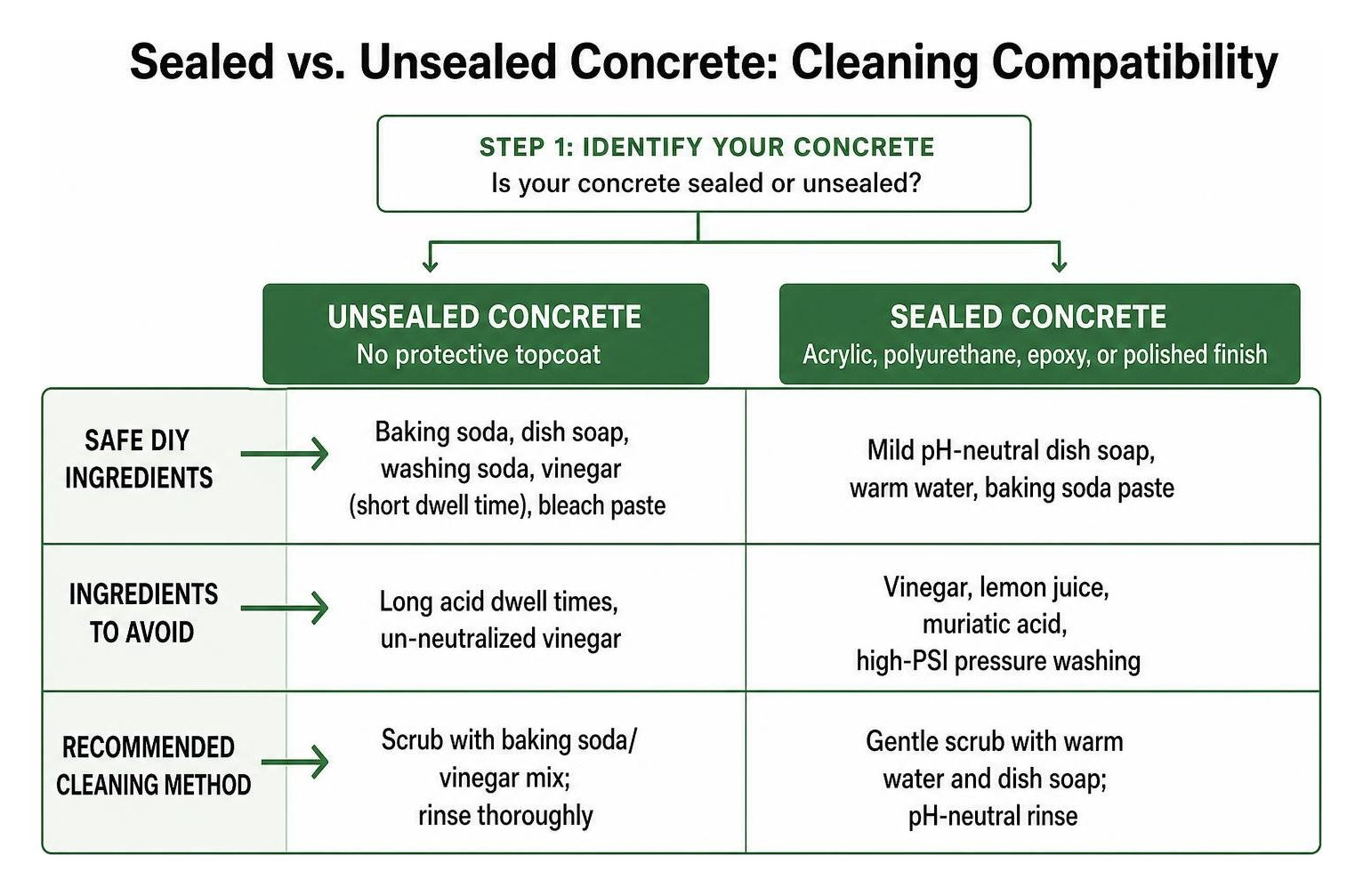
Before mixing up a bucket of DIY cleaner, you must identify whether your concrete is sealed or unsealed. Sealed concrete (including stamped, stained, or polished finishes) features a protective acrylic, polyurethane, or epoxy topcoat that seals the surface pores.
Using acidic ingredients like vinegar or lemon juice on sealed or decorative concrete can chemically eat into (etch) the sealer, leaving dull cloudy patches and permanent discoloration.
| Concrete Type | Safe DIY Ingredients | Ingredients to Avoid | Recommended Cleaning Method |
|---|---|---|---|
| Unsealed Standard Concrete (Broom-finish driveways, sidewalks) | Baking soda, dish soap, washing soda, vinegar (short dwell time), bleach paste | Long acid dwell times, un-neutralized vinegar | Scrub with baking soda/vinegar mix; rinse thoroughly |
| Sealed or Stamped Concrete (Decorative patios, colored driveways) | Mild pH-neutral dish soap, warm water, baking soda paste | Vinegar, lemon juice, muriatic acid, high-PSI pressure washing | Gentle scrub with warm water and dish soap; pH-neutral rinse |
| Polished Concrete (Indoor garage or interior floors) | Warm water, pH-neutral cleaners, micro-abrasives | All acids, bleach, harsh scouring powders | Damp mop with mild soapy water; buff dry |
To avoid costly damage, keep these essential precautions in mind:
- Never Mix Bleach and Acids or Ammonia: Combining bleach with vinegar, lemon juice, or ammonia-based soaps produces hazardous chloramine gas. Always keep bleach and acidic recipes strictly separate.
- Perform a Spot Test First: Always test your homemade cleaner on an inconspicuous corner of the slab (such as behind a planter or along a hidden edge) and wait 10 minutes to verify color consistency.
- Protect Surrounding Landscaping: Cover nearby flower beds with drop cloths, pre-hydrate soil before cleaning, and wash down plant foliage with fresh water immediately after finishing. For extra tips on safe DIY formulations, check out How to Make Homemade Concrete Cleaner.
DIY Natural Cleaners vs. Commercial Products: Pros and Cons
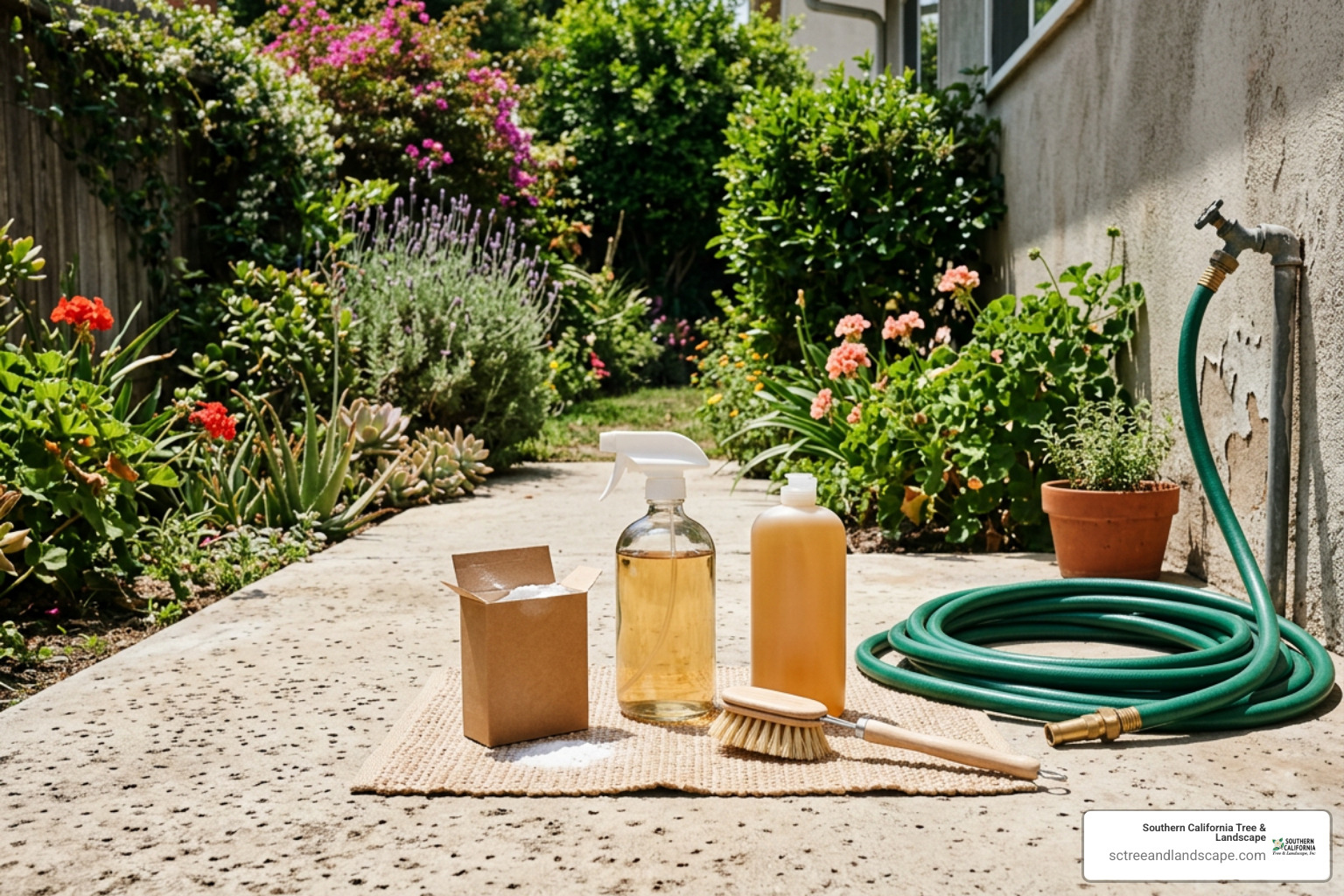
When evaluating what is the best homemade concrete cleaner versus commercial store-bought detergents, homeowners must weigh cost, safety, and labor requirements.
Pros of Homemade Concrete Cleaners
- Cost-Effective: Pantry staples like baking soda, vinegar, and dish soap cost a fraction of commercial chemical concentrates, saving you money on regular maintenance.
- Non-Toxic and Safe for Families: Natural mixes emit no harsh fumes and are far safer around children, pets, and beneficial garden insects when properly rinsed.
- Readily Available: You can whip up a fresh batch in minutes using household items you already own without an extra trip to the hardware store.
Cons of Homemade Concrete Cleaners
- Requires More Physical Scrubbing: DIY solutions lack synthetic surfactant boosters, meaning they rely more heavily on manual elbow grease and longer dwell times.
- Inconsistent on Heavy Industrial Oils: Years of deep-set transmission fluid or heavy diesel stains may require commercial enzymatic bioremediation or alkaline degreasers to fully break down.
- Risk of Etching if Misused: Using acidic vinegar carelessly on decorative or sealed surfaces can ruin expensive stamped finishes.
Frequently Asked Questions About DIY Concrete Cleaning
Is vinegar safe to use on all concrete surfaces?
No, vinegar is not safe for all concrete surfaces. White vinegar is acetic acid, which reacts with the calcium hydroxide in concrete. On plain, unsealed outdoor concrete driveways, dilute vinegar is useful for cutting grease when used briefly and rinsed well. However, on sealed, stamped, stained, or polished concrete, vinegar will etch the protective coating, causing dull, chalky spots and premature sealer failure.
How long should you leave a homemade cleaner on concrete before rinsing?
Most homemade concrete cleaning solutions work best with a dwell time of 15 to 30 minutes. This allows the active ingredients time to break down oil binder molecules or penetrate organic moss spores. Never allow acidic or bleach-based cleaning mixtures to dry completely on the concrete slab under hot direct sunlight, as drying can leave stubborn mineral rings and chemical streaks.
Can DIY concrete cleaners be used on brick, stone, or composite decking?
It depends on the specific cleaner recipe and surface material:
- Brick and Natural Stone: Baking soda and dish soap mixtures are generally safe. However, avoid acidic vinegar on limestone, marble, or travertine, as acid causes permanent etching on natural carbonate stones.
- Composite Decking: Never apply bleach and baking soda pastes to composite decks, as bleach can alter wood-plastic composite pigments and cause blotchy fading. Stick to warm water and mild dish soap for composite surfaces.
Conclusion
Finding what is the best homemade concrete cleaner comes down to identifying your specific stain, respecting your concrete’s finish, and matching it with simple household ingredients like baking soda, dish soap, or hydrogen peroxide. By following proper surface prep, allowing adequate dwell time, and rinsing thoroughly, you can maintain beautiful, stain-free driveways, walkways, and patios while keeping your family, pets, and garden safe.
Between deep cleanings, practical routine maintenance goes a long way:
- Sweep away leaves and organic debris weekly to prevent dark tannin stains.
- Blot fresh oil or fluid drips immediately with cat litter or baking soda before they soak into the porous concrete.
- Reseal outdoor concrete surfaces every 2 to 5 years to block liquid absorption.
At Southern California Tree & Landscape, we know that clean, well-maintained hardscapes are the foundation of vibrant outdoor spaces across Torrance, Covina, and the South Bay. If your property needs a complete outdoor refresh—from tree care and irrigation repair to complete landscape design—our expert team is here to help. Contact us today to explore our professional landscape and property maintenance services!