
Clean a Concrete Slab Safely in 5 Simple Steps
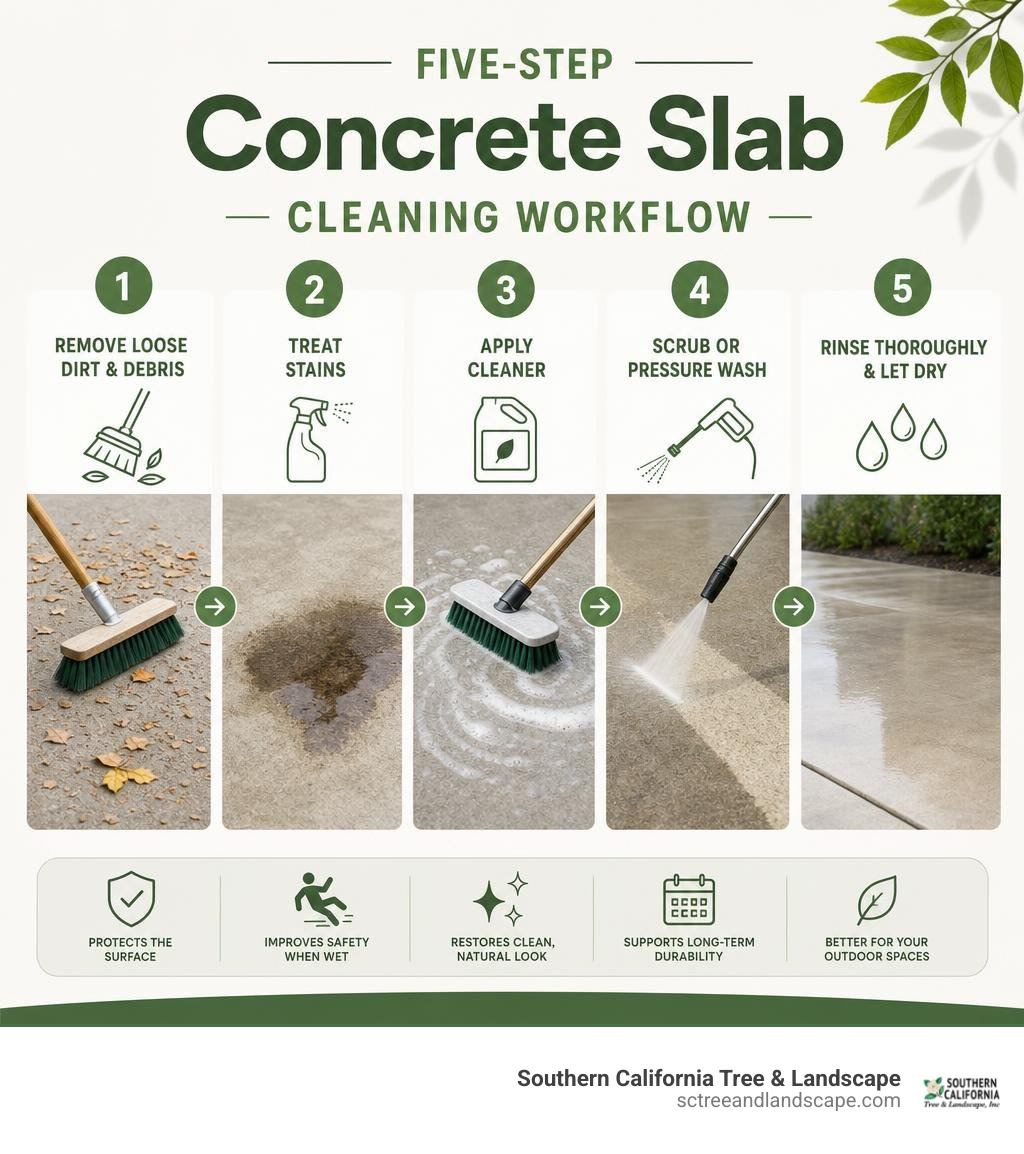
For effective cleaning concrete slab surfaces, first remove loose dirt and leaves, treat stains, apply a surface-safe cleaner, scrub or pressure wash carefully, then rinse fully and let the slab dry. Use a pH-neutral cleaner for sealed, painted, or polished concrete. For plain, unsealed outdoor concrete, a mild degreaser or baking soda solution can help lift grime without harsh scrubbing.
Concrete is tough, but it is not maintenance-free. Its tiny pores hold dust, oil, leaf stains, irrigation minerals, and algae. Left alone, that buildup can make patios, walkways, pool decks, and common areas look neglected and become slippery when wet.
Regular cleaning also protects the finish. Grit acts like sandpaper under foot traffic, wearing down sealers and dulling decorative concrete. For most Southern California properties, seasonal deep cleaning plus quick attention to spills and organic buildup helps preserve curb appeal and makes routine landscape maintenance easier.
I’m Troy Basmajian, President of Southern California Tree & Landscape. Through our work maintaining residential, commercial, HOA, and municipal properties, I have seen how consistent cleaning concrete slab areas supports safer, cleaner, more inviting outdoor spaces.
Identifying Concrete Finishes and Essential Tools
Before picking up a brush or turning on a hose, we need to know what kind of concrete we are dealing with. Concrete may look like solid rock, but it acts more like a rigid, dense sponge. It has microscopic capillary pores that absorb liquids, grease, and fine particulate matter. In high-traffic environments, 1,000 people can track roughly 1.8 lbs of abrasive dirt onto a floor in just one single week. When left unmanaged, surface grit grinds down protective coatings, while moisture pulls deep stains directly into the slab.
The treatment you choose depends entirely on whether your slab is bare, sealed, painted, or polished. Using the wrong chemical on the wrong finish can permanently etch the cement paste, strip delicate topcoats, or ruin colored pigments.
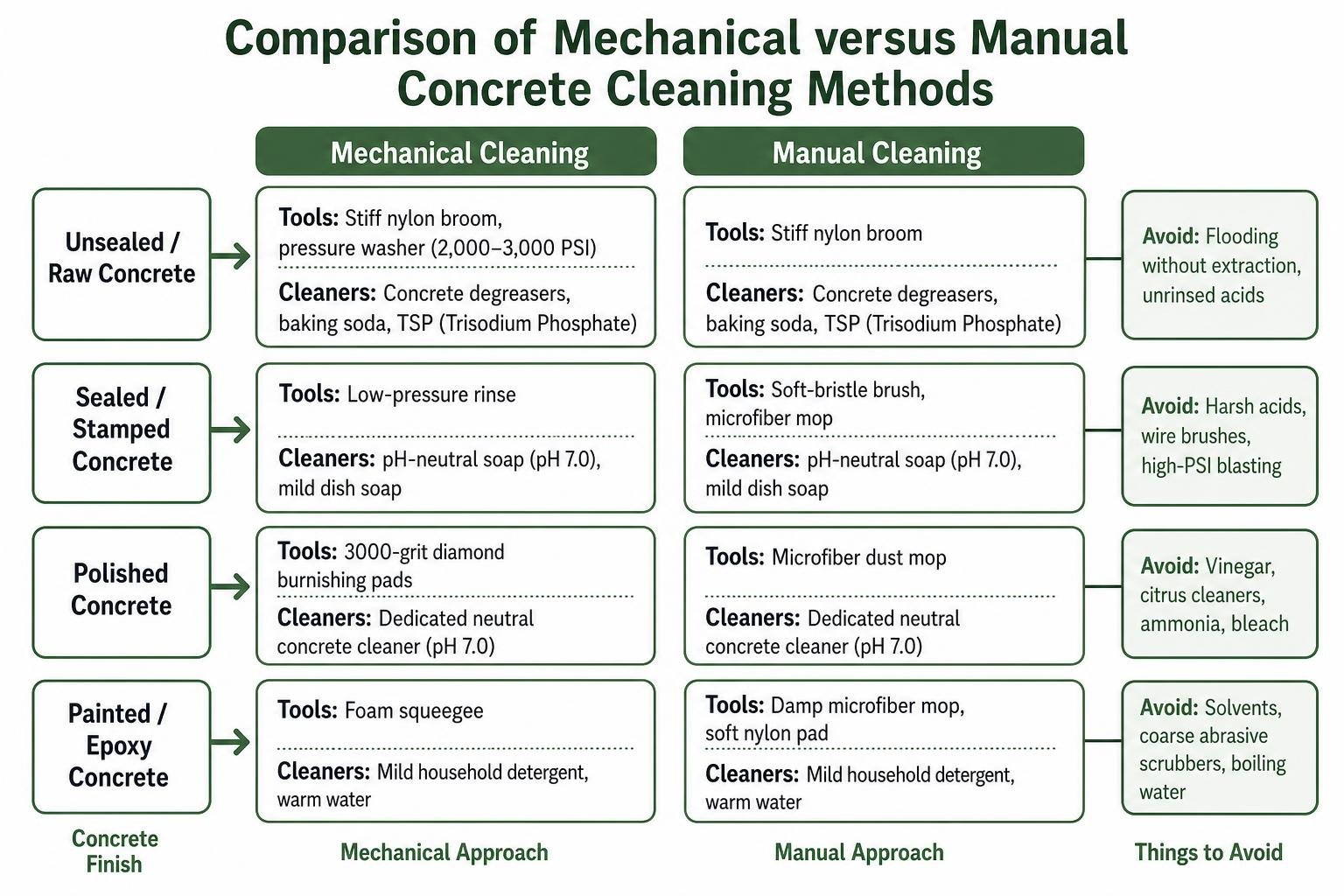
| Concrete Finish | Porosity Level | Recommended Cleaners | Tools to Use | Things to Avoid |
|---|---|---|---|---|
| Unsealed / Raw | High | Concrete degreasers, baking soda, TSP (Trisodium Phosphate) | Stiff nylon broom, pressure washer (2,000–3,000 PSI) | Flooding without extraction, unrinsed acids |
| Sealed / Stamped | Low to Moderate | pH-neutral soap (pH 7.0), mild dish soap | Soft-bristle brush, microfiber mop, low-pressure rinse | Harsh acids, wire brushes, high-PSI blasting |
| Polished Concrete | Low | Dedicated neutral concrete cleaner (pH 7.0) | Microfiber dust mop, 3000-grit diamond burnishing pads | Vinegar, citrus cleaners, ammonia, bleach |
| Painted / Epoxy | Non-porous | Mild household detergent, warm water | Foam squeegee, damp microfiber mop, soft nylon pad | Solvents, coarse abrasive scrubbers, boiling water |
Assessing Concrete Types Before Cleaning Concrete Slab Floors
Understanding the top layer of your slab ensures you do not accidentally compromise its surface integrity during the wash. We always look for these defining characteristics:
- Unsealed Concrete: Common on standard exterior driveways, utility walkways, and older patios. It has a rougher, broom-finished texture and absorbs water instantly, darkening the concrete upon contact.
- Polished Concrete: Ground smooth with progressive diamond abrasives and hardened with liquid densifiers. It produces a glossy sheen without a thick topical membrane. Following standardized surface maintenance guidelines is critical here, as acidic spills will chemically react with the alkaline slab and cause dull, etched patches.
- Stamped or Decorative Slabs: Patterned, colored concrete that mimics stone, brick, or tile. These are typically sealed with acrylic topical sealers to protect integral color pigments.
- Painted or Epoxy-Coated Concrete: Covered with a continuous topical coating that completely closes surface pores. These finishes require gentle, non-abrasive tools to avoid scuffing or delaminating the film.
Essential Supplies and Safety Gear
Having the right gear prevents surface scratches and ensures safe chemical handling. To get top results without overspending on unnecessary tools, we rely on smart, cost-effective paver cleaning strategies and durable essentials:
- PPE: Heavy-duty rubber gloves, safety goggles, and closed-toe rubber work boots to prevent slips.
- Sweeping Gear: A stiff-bristled outdoor push broom for raw slabs or a wide microfiber dust mop for smooth indoor/covered surfaces.
- Scrubbing Tools: A medium-to-stiff synthetic nylon scrub brush on an extension pole (never wire bristles).
- Water Extraction Tools: A commercial-grade floor squeegee or a wet-dry vacuum equipped with a squeegee attachment head.
- Chemical Solutions: A dedicated pH-neutral cleaner, concrete degreaser, and household baking soda.
5 Easy Steps for Cleaning Concrete Slab Patios and Walkways
A full deep clean takes roughly two to three hours for an average-sized outdoor slab or garage space, typically costing only $10 to $20 in basic cleaning supplies. By breaking the job down into sequential steps, you ensure that dirt is extracted from the pores rather than merely pushed around.
Step 1: Clear and Dry-Sweep the Area
Start by removing all outdoor furniture, planters, grill equipment, and doormats from the work area. Removing surface obstacles prevents cleaning solutions from pooling under table legs and helps protect your outdoor furnishings.
Next, conduct an exhaustive dry sweep. This is the single most overlooked step in the entire process. If you introduce water to a dusty, debris-covered slab, you immediately create an abrasive mud slurry that grinds deeper into the concrete pores. For comprehensive commercial or home prep, following a structured step-by-step concrete cleaning guide ensures you sweep from the outer perimeters inward, capturing loose soil, fine sand, and dried organic matter with a shop vac or dustpan.
Step 2: Pre-Treat Embedded Stains
Before washing the entire slab, locate and pre-treat isolated oil spots, rust rings, and heavy grease marks. If an automotive leak or grill spill is fresh, press a paper towel against the area to lift pooling fluid without wiping it across dry concrete.
For wet oil residue, cover the spot with an absorbent mineral powder such as clay-based cat litter, sawdust, or baking soda. Allow the absorbent to sit undisturbed for 24 hours to draw the petroleum oils out of the capillary network through capillary suction. Once the powder has absorbed the bulk of the oil, sweep it up into a dustpan for proper disposal before applying liquid cleaners.
Step 3: Apply the Safe Cleaning Solution
For general slab cleaning on sealed or decorative concrete, mix 1/8 to 1/4 cup of pH-neutral cleaner per 1 gallon of warm water. For raw, unsealed concrete slabs with ground-in dirt, mix 1/2 cup of baking soda and a squirt of mild dish soap into 1 gallon of warm water, or use a commercial water-based degreaser diluted at a 1:10 ratio.
For heavily soiled utility slabs or spaces being prepped for resurfacing, utilizing heavy-duty TSP application techniques (1 cup of Trisodium Phosphate dissolved in 1 gallon of warm water) provides aggressive grease-cutting power. Always apply the solution evenly, working in manageable 10-foot by 10-foot sections so the liquid does not dry into a cloudy residue before it can be agitated.
Step 4: Scrub Manually or Pressure Wash
Allow the solution to dwell on the slab for 5 to 10 minutes to break down surface grime. Agitate the surface using overlapping circular motions with your nylon scrub brush.
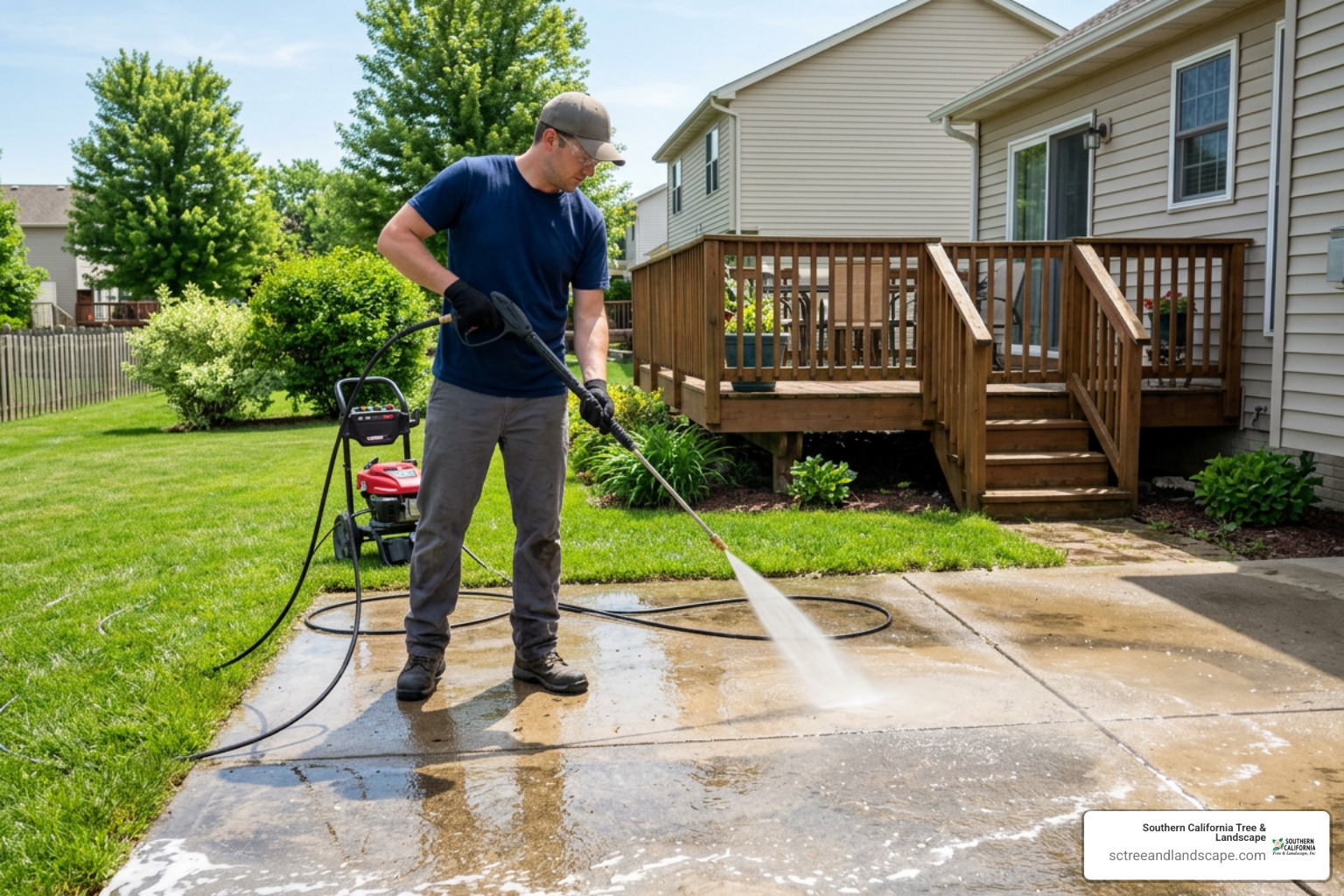
If you choose to use a pressure washer on unsealed exterior slabs:
- Set the machine to operate safely between 2,000 and 3,000 PSI (keep it closer to 1,500 PSI for soft or older concrete).
- Attach a 25-degree (green) or 40-degree (white) wide fan spray tip, or connect a rotary surface cleaner attachment to eliminate striping.
- Keep the spray nozzle at least 12 inches away from the slab surface, sweeping the wand steadily without hovering over one spot to avoid surface etching.
When working around delicate landscape beds or adjacent residential siding, using expert exterior power washing techniques protects architectural finishes and prevents dirty wash water from blasting back against your building.
Step 5: Rinse Completely and Allow Proper Dry Time
Rinse the concrete slab with clean water, working systematically from the highest elevation toward drainage outlets or landscape boundaries. Push the dirty slurry off the slab using a heavy-duty rubber floor squeegee to prevent dirty water puddles from settling back into the pores.
Allow the slab to air dry completely for 24 to 48 hours before replacing heavy patio furniture, driving vehicles onto the surface, or applying protective sealers. Walking on damp, freshly scrubbed concrete can create severe slipping hazards and tracks fresh dirt back into the wet pores.
Removing Stubborn Stains from Concrete Slabs
Standard washing lifts surface soil, but deep chemical, metallic, and organic stains require targeted remediation to extract embedded pigments from the slab’s internal matrix.

Motor Oil and Automotive Grease
Set-in motor oil binds tightly to the alkaline matrix of concrete. To remove old, dark oil stains, apply a poultice—a paste that combines an absorbent material with a solvent cleaner to chemically dissolve the oil and pull it upward.
Mix baking soda or diatomaceous earth with a concentrated commercial concrete degreaser until it reaches the consistency of thick peanut butter. Spread the poultice over the oil stain in a 1/4-inch thick layer. Cover the patch with plastic wrap, tape down the edges with painter’s tape, and let it sit for 24 hours. As the solvent breaks down the petroleum hydrocarbons, the drying powder wicks the fluid up and out of the concrete pores. Once dry, scrape the powder away with a plastic putty knife and rinse with warm water. You can find more detailed variations of this method in these proven concrete floor stain removal methods.
Rust, Tannins, and Irrigation Marks
Orange rust rings from metal patio furniture, nails, or fertilizer spreader pellets cannot be dissolved with simple degreasers.
- Fresh Rust Spots: Apply fresh lemon juice or distilled white vinegar directly onto the stain on unsealed slabs. Let it sit for 10 minutes, scrub vigorously with a stiff nylon brush, and flush thoroughly with clean water.
- Embedded Rust & Hard Water Deposits: Use an oxalic acid-based concrete cleaner. Oxalic acid safely chelates iron ions without causing severe surface pitting when used according to label instructions.
- Organic Tannins (Leaves, Berries, Tree Sap): Mix a paste using 3% hydrogen peroxide and a few drops of dish soap. Apply it to the brown organic stain, allow it to dwell for 15 minutes to oxidize the organic tannins, and scrub clean.
Dried Paint and Organic Growth
Accidental paint drips and green biological growth require mechanical and chemical balance:
- Dried Latex or Oil Paint: Scrape away loose, flaking layers with a stiff metal putty knife held flat to avoid gouging the concrete. Apply a non-caustic, soy- or citrus-based paint stripper, allow it to dwell according to label directions, and scrub with a wire-free scouring pad before rinsing.
- Moss, Algae, and Lichen: In shaded landscape environments, moss and algae thrive on damp concrete, creating slick fall hazards. Mix 1 quart of household bleach and 1 ounce of laundry detergent with 3 quarts of warm water. Apply to the growth, let it sit for 15 minutes to kill the spore roots, scrub with a push broom, and rinse clean.
Post-Cleaning Maintenance and Long-Term Surface Protection
Once your concrete slab is clean and dry, proactive maintenance will prevent stains from setting in and protect the concrete from premature wear. Finished concrete floors are two to three times cheaper to maintain than alternative floor options, but neglecting basic maintenance will quickly shorten their life.
Taking a whole-property approach by pairing hardscape maintenance with comprehensive landscape maintenance options keeps lawn clippings, mulch runoff, and irrigation overspray from dirtying your concrete surfaces.
Common Mistakes to Avoid When Cleaning Concrete Slab Patios
To keep your concrete in top shape and avoid costly repairs, steer clear of these common maintenance mistakes:
- Using Strong Acidic Cleaners on Finished Slabs: Pouring vinegar or muriatic acid over polished or sealed concrete causes instant chemical etching, stripping away protective coatings and leaving rough, permanently chalky spots. Reviewing proper concrete daily care and deep cleaning guidelines helps keep your surface chemistry balanced.
- Scrubbing with Wire Brushes: Steel and carbon wire brushes scratch concrete surfaces and leave behind tiny metal filaments that oxidize into permanent rust marks.
- Skipping the Pre-Sweep: Mopping a dusty slab turns surface grit into abrasive slurry that grinds away sealers and cuts into surface gloss.
- Leaving Soap Residue Behind: Failing to complete a thorough clean-water rinse leaves a sticky detergent film that attracts airborne dirt, creating dark, streaky footprints within days.
- Flooding Interior or Enclosed Slabs: Pouring standing puddles of water over unsealed indoor slabs without rapid extraction forces moisture deep into the ground, leading to long-term efflorescence and high indoor humidity.
Sealing, Resealing Intervals, and Preventative Care
Sealing your concrete creates an invisible protective barrier that blocks moisture, vehicle fluids, and biological spores from penetrating the slab pores:
- Perform the Water Bead Test: Pour a few tablespoons of clean water onto high-traffic areas of the slab. If the water beads up in tight droplets, the sealer is performing properly. If the water absorbs within seconds and turns the concrete dark, it is time to reseal.
- Select the Right Sealer Type: For outdoor patios, walkways, and driveways, apply a breathable, deep-penetrating silane/siloxane sealer. This protects against moisture and stains without creating a slippery topical film. For decorative, stamped, or interior slabs, use a water-based acrylic or polyurethane protective coat.
- Resealing Schedule: High-traffic outdoor concrete in sunny, exposed climates should be resealed every 2 to 5 years, while indoor decorative slabs can go 3 to 5 years between treatments.
- Install Preventative Walk-Off Mats: Place heavy rubber-backed mats at entry doors and transition areas from the garden. Quality walk-off mats trap up to 80% of outdoor dirt and grit before it ever reaches your finished slabs.
Frequently Asked Questions About Concrete Slab Cleaning
Can you clean outdoor concrete without a pressure washer?
Yes. You can deep clean an outdoor slab by sweeping thoroughly, wetting the concrete, and applying an eco-friendly cleaning mixture of 1/2 cup baking soda per 1 gallon of warm water with a squirt of liquid dish soap. Scrub the surface manually using a stiff synthetic nylon deck brush on a broom handle, working in circular patterns. Rinse the dirty soap away using a standard garden hose equipped with a high-pressure brass jet nozzle, and use a floor squeegee to direct the wash water away.
Is vinegar or bleach safe to use on concrete?
Vinegar is acidic (acetic acid) and will chemically attack the alkaline calcium carbonate in concrete, resulting in micro-etching and a dull finish on polished, sealed, or decorative slabs. You can review detailed polished concrete care insights to see how acidic products damage hardened topcoats. Diluted bleach (1 part bleach to 3 parts water) is safe for occasional use on unsealed or broom-finished exterior concrete to eradicate stubborn moss, mildew, and black algae, provided it is rinsed completely and kept away from surrounding lawn turf and garden plants.
How often should an outdoor concrete slab be cleaned and sealed?
Outdoor concrete slabs should be swept or dry-blown weekly to eliminate abrasive grit, with spot cleanings handled immediately whenever grease, oil, or berry drops appear. A full seasonal deep scrub should be conducted every 3 to 6 months to prevent organic film buildup. Protective penetrating sealers should be reapplied every 2 to 5 years, depending on sun exposure, rainfall, and foot or vehicle traffic volume.
Conclusion
Keeping your concrete slabs clean protects the structural durability, slip resistance, and curb appeal of your property’s hardscape. By matching your cleaning solutions to your specific concrete finish, pre-treating tough stains with absorbent poultices, and sticking to regular seasonal wash cycles, you can prevent ugly etching and extend the life of your paved surfaces for decades.
For property owners throughout Torrance, the South Bay, Covina, Harbor City, and the wider Southern California region, professional maintenance makes preserving expansive hardscape and landscape assets effortless. Contact our experienced team today for professional landscape and hardscape maintenance services tailored to keep your property safe, functional, and looking its best year-round.