
What Is Landscape Installation — and Why It Matters for Your Property
Landscape installation is the full process of transforming an outdoor space — from bare dirt or an outdated yard into a functional, attractive environment that adds real value to your property.
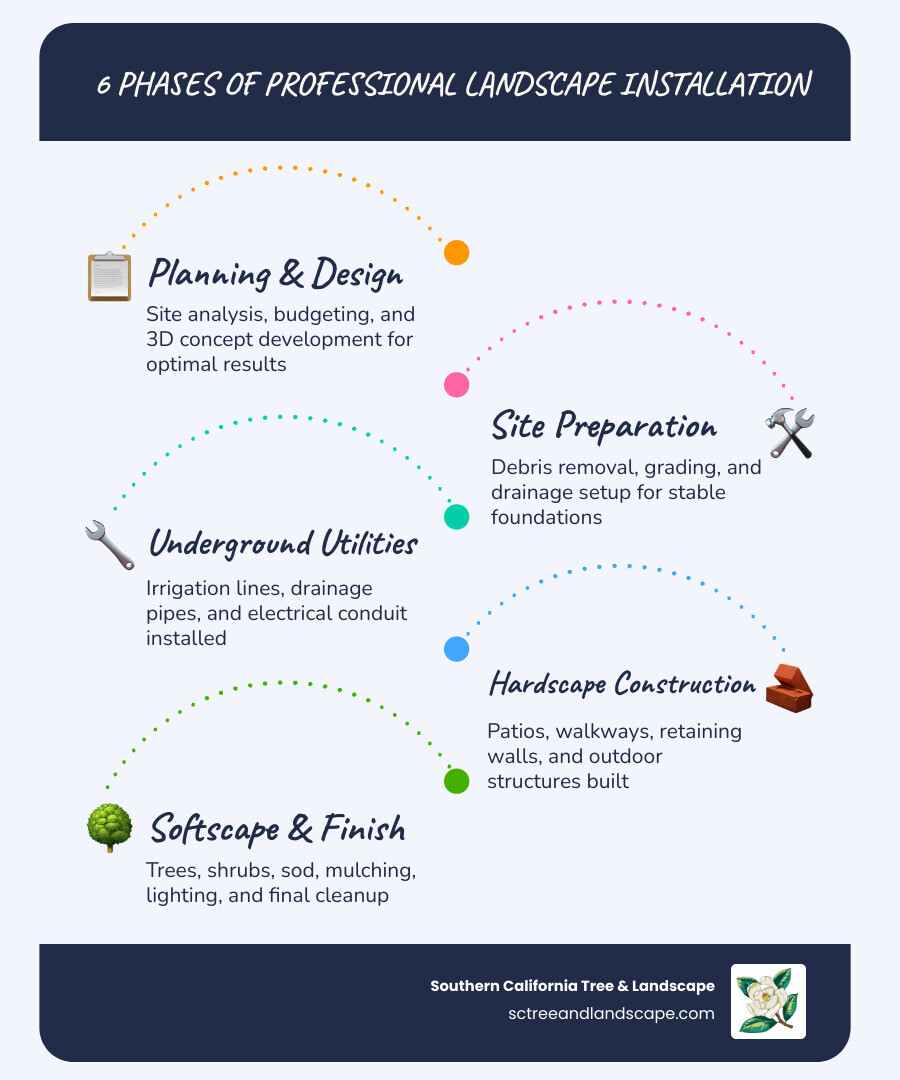
Here’s a quick overview of what professional landscape installation typically includes:
- Planning and design — site analysis, budgeting, 3D concept development
- Site preparation — debris removal, grading, drainage setup
- Underground utilities — irrigation lines, drainage pipes, electrical conduit
- Hardscape construction — patios, walkways, retaining walls
- Softscape installation — trees, shrubs, ground cover, sod or seed
- Finishing touches — mulching, lighting, edging, final cleanup
A well-executed installation can boost your property’s value by 10–20% and remain functional for 15–25 years with regular maintenance. For HOA managers and property owners in Southern California, getting it right from the start means fewer emergency repairs, lower long-term costs, and a landscape that stays healthy through every season.
The challenge? Without a clear plan and the right team, the process can become overwhelming — and costly mistakes made early (like poor drainage or skipped soil prep) can cost 2–5 times more to fix later.
This guide walks you through every phase so you know exactly what to expect.
Planning Your Landscape Installation: Budgeting and Site Prep
A stunning yard doesn’t happen by accident; it’s the result of a thoughtful, step-by-step process. In our experience serving the South Bay and Covina areas since 1991, the most successful projects are the ones where the “boring” stuff—the planning—gets the most attention.

Before a single shovel hits the dirt, we need to define your goals. Are you looking for a quiet garden retreat in Torrance or a vibrant entertaining space in Harbor City? Once the vision is clear, we move into the site analysis. This involves sun mapping (noticing where the scorching afternoon sun hits) and identifying existing features.
One of the most critical steps we take is calling 811. This prevents 99% of utility strikes. It might surprise you, but roughly 20,000 utility incidents occur yearly because someone decided to skip this step. We handle these logistics to ensure your landscape installation starts safely. You can find more info about our services to see how we manage these early phases.
Defining Your Landscape Installation Budget
Budgeting is where reality meets the dream. It is essential to account for material costs, labor rates, and permit fees. For example, structures like decks over 30 inches or retaining walls over 4 feet often require official permits, which can take four weeks or more to secure.
We always recommend homeowners set aside a 10–15% contingency fund. Whether it’s an old concrete footing buried three feet deep or unexpected soil issues, having a buffer prevents project delays. To get a head start on your numbers, you can research how much landscapers charge to plant shrubs, flowers, and bushes.
| Feature Level | Estimated Cost per Sq. Ft. | What’s Included |
|---|---|---|
| Basic | $3 – $8 | Simple planting, mulch, and basic irrigation |
| Standard | $10 – $25 | Planting, sod, pathways, and automated irrigation |
| Premium | $30 – $60+ | Patios, retaining walls, lighting, and specimen trees |
Site Assessment and Soil Preparation
If you want your plants to survive until 2027 and beyond, you have to look at the soil. In Southern California, we often deal with heavy clay or compacted “fill dirt” left behind by construction crews.
We perform soil testing to check pH levels and nutrient density. Most plants thrive in soil with a pH between 6.0 and 7.0. If the soil is compacted, we till it and incorporate 2–4 inches of organic compost into the top 6–8 inches. This simple act can boost plant survival rates by 30–50%. Proper drainage is also assessed here; skipping this leads to 70% of all landscape failures. Our team provides expert soil and site preparation to ensure your yard has a healthy foundation.
The Professional Landscape Installation Process: Step-by-Step
Once the planning is finished, the heavy lifting begins. This is the “messy middle” where your yard looks like a construction zone before it looks like a paradise.

The process starts with demolition and debris removal. We clear out the old, dying grass and cracked concrete to make room for the new. Then comes rough grading. This is where we shape the land to ensure water flows away from your home’s foundation.
To help you visualize the end result, we often use 3D rendering. This technology can reduce change orders by up to 40% because you can see exactly how the new layout fits your home. If you want to see how we landscape design installation transform your outdoor space, this phase is where the magic starts.
Before any “pretty” things go in, we install the underground utilities. This includes:
- Irrigation lines: Essential for the SoCal climate.
- Drainage pipes: To prevent pooling and erosion.
- Electrical conduits: For that custom outdoor lighting you’ve been dreaming of.
Hardscape Construction and Infrastructure
We always follow a specific order of operations: Hardscape before softscape. You don’t want a heavy tractor rolling over your brand-new lavender plants to deliver pavers for a patio!
Our professional hardscape installation services focus on structural integrity. Whether we are building a retaining wall in Palos Verdes or a walkway in Torrance, we prioritize base compaction. A patio is only as good as the 6 inches of compacted rock beneath it. We use polymeric sand in the joints of pavers to prevent weed growth and ensure the stones stay locked in place for decades.
Softscape and Final Landscape Installation Touches
Now for the greenery. As Southern California planting experts, we select species that can handle our unique environment. We look for native and drought-tolerant plants that offer year-round interest.
When planting, we dig holes twice as wide as the root ball but no deeper. We place specimen trees first—they are the “anchors” of the design—followed by shrubs, perennials, and ground cover. Finally, we apply a 3-inch layer of mulch to retain moisture and suppress weeds. If you’re curious about our aesthetic style, view our past projects for inspiration.
Essential Factors for a Successful Landscape Installation
A successful landscape installation is about more than just looks; it’s about engineering. One of the most vital rules we follow is the 2% minimum slope. This means the ground should drop about 1 inch for every 4 feet of distance away from your home. This prevents water from seepages into your foundation, potentially saving you thousands in future repairs.
We also account for microclimates. The north side of your house in Harbor City will be much cooler and shadier than the south side. We group plants with similar water and light needs together—a practice known as hydrozoning—to make maintenance easier and more efficient.
Timing also matters. While we can install hardscape year-round in Southern California, fall is actually an incredible time for planting. The cooler soil temperatures in the fall can lead to 20–30% higher root growth, giving plants a head start before the summer heat of 2027 arrives.
Maintenance and Aftercare for New Landscapes
The first year is the “nursery” phase of your landscape. Even the most “low-maintenance” yard requires a little extra love during the first 12 months.
- Watering: New sod establishes in about 2–3 weeks, but it needs consistent moisture during that window.
- Irrigation Monitoring: We recommend checking your smart controller regularly. These systems can cut water usage by 30%, but they need to be calibrated to the specific needs of new plants.
- Pruning: Light pruning helps plants focus their energy on root development rather than leggy top growth.
- Weed Suppression: Keep an eye on those mulch beds. Pulling a small weed today prevents a massive headache in six months.
Once your plants are established, their needs will decrease significantly. If you need help with the long-term health of your yard, our team at Southern California Tree & Landscape offers ongoing our services to keep your investment thriving.
Frequently Asked Questions about Landscape Installation
How long does a typical landscape installation take?
Most basic projects take 1–2 weeks once we break ground. If you are doing a standard installation with multiple features like a patio, irrigation, and extensive planting, expect it to take 2–4 weeks. Large-scale renovations involving permits and major construction can take several months from initial design to final walkthrough.
What is the best time of year for landscape installation in Southern California?
As of May 2026, we are seeing great success with year-round installations. However, spring and fall are the “goldilocks” zones for planting. Fall is particularly beneficial because the warm soil and cool air promote deep root establishment. Hardscaping can be done at any time, provided the weather is clear.
Should I choose a professional or DIY landscape installation?
While DIY can save on labor costs, it often takes 3–4 times longer and carries a high risk of “invisible” mistakes. Professional crews spend 20–40% of the project time on preparation—grading, soil health, and drainage—which are the most common areas where DIY projects fail. Plus, we have the heavy equipment and expert craftsmanship to ensure the job is done right the first time.
Conclusion
Transforming your outdoor space is a major investment, but it’s one that pays off in property value, curb appeal, and daily enjoyment. At Southern California Tree & Landscape, we take pride in being a family-owned business that has served this community since 1991. With our ISA-certified arborists and experienced crews, we ensure that every landscape installation is built to last.
Ready to turn your vision into a reality? Explore our services design installation and let us help you build a landscape that you’ll love for the next 25 years.