
Why Gardening and Lawn Care Make or Break Your Property’s Value
Gardening and lawn care are the foundation of any attractive, well-maintained property — whether you manage a single-family home or an entire HOA community in Southern California.
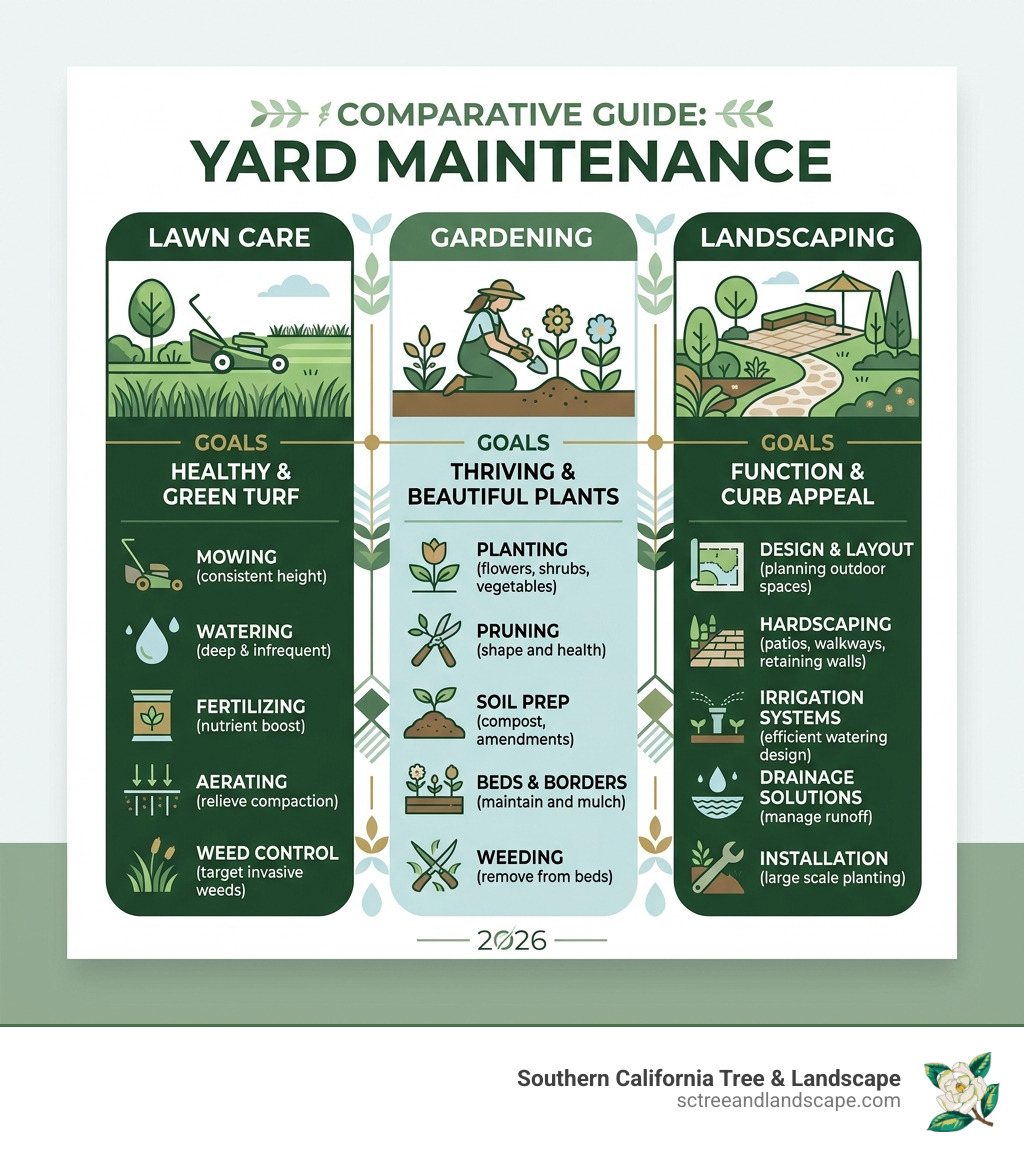
Here’s a quick breakdown of what each term actually means:
| Term | What It Covers | Goal |
|---|---|---|
| Lawn care | Mowing, watering, fertilizing, aerating, weed control | Healthy, green turf |
| Gardening | Planting, pruning, soil prep, beds and borders | Attractive, thriving plants |
| Landscaping | Design, hardscaping, irrigation, drainage, overall layout | Curb appeal and function |
Most yards need all three — just in different amounts depending on the property.
The challenge is knowing where to start. A lawn that looks rough might actually have a soil problem. Patchy grass might mean compaction, not drought. And spending money on fertilizer won’t help if your mower blades are tearing the grass instead of cutting it.
The good news: a handful of consistent habits can dramatically improve any yard — without guesswork or wasted spending.
This guide walks you through exactly what your yard needs, season by season.
The Fundamentals of Gardening and Lawn Care
Achieving a magazine-worthy yard in the South Bay or Covina isn’t about luck; it is about chemistry and consistency. Many homeowners think a lush lawn comes from a bag of expensive fertilizer, but we have found that the secret lies beneath the surface.
Soil Health and pH Balance
Everything starts with the soil. Think of your soil as the “stomach” of your lawn. If the pH is off, the grass cannot “digest” nutrients, no matter how much fertilizer you apply. Most turfgrasses thrive in a pH range between 6.5 and 7.0. In our region, soil can often become too alkaline or compacted.
We recommend performing a soil test every two to three years. This test identifies exactly what your soil is missing—whether it’s nitrogen, phosphorus, or potassium—and tells you if you need to adjust the pH. By understanding Lawn care research and turfgrass science, we can tailor treatments to your specific dirt, ensuring your plants actually absorb what you give them.

The Role of Organic Matter
Adding organic matter, such as high-quality compost, improves soil structure. It helps sandy soils hold onto water and helps clay soils drain better. For those seeking professional maintenance services, we often incorporate top-dressing into the routine to naturally boost nutrient levels and support the soil food web.
Essential Habits for Gardening and Lawn Care
Consistency is the best “fertilizer.” We’ve seen that the most beautiful yards in Torrance and Harbor City belong to owners who practice simple, daily habits.
- Daily Observation: Take a walk through your yard. Look for early signs of pests, wilting leaves, or “off-color” patches of grass. Catching a grub infestation or a broken sprinkler head early saves thousands in repair costs.
- Debris Removal: Don’t let fallen leaves or branches sit on your lawn. They block sunlight and trap moisture, which is an open invitation for fungal diseases.
- Tool Maintenance: A dull tool is a dangerous tool—both for you and your plants. Using sharpened garden tools ensures clean cuts that heal quickly.
- Safety First: When performing gardening and lawn care, always wear eye protection and sturdy shoes. Ensure mower shields are in place.
- Tree Care: Don’t forget your “green giants.” Proper tree care essentials involve pruning dead or dangerous limbs to allow more sunlight to reach the grass below.
Warm-Season vs. Cool-Season Grasses in Gardening and Lawn Care
In Southern California, choosing the right grass is half the battle. Because we live in a unique transition zone, you likely have one of two types:
- Warm-Season Grasses (Bermuda, Zoysia, St. Augustine): These are the “sun-worshippers.” They love our hot summers and grow aggressively from late spring through early fall. They are drought-tolerant and spread via runners, which helps them crowd out weeds. However, they will go dormant (turn brown) in the winter.
- Cool-Season Grasses (Tall Fescue, Ryegrass): These stay green year-round in our climate if watered properly. Tall Fescue is a favorite in the South Bay because of its deep root system and ability to handle some heat.
Understanding these cycles is vital for landscape design and installation. You don’t want to fertilize a dormant Bermuda lawn in January, just as you don’t want to heavily stress a Fescue lawn in the middle of a July heatwave.
Mastering the Mow: Height, Frequency, and Equipment
Mowing is the most frequent maintenance task you’ll perform, yet it’s the one most people get wrong. It’s not just about “cutting the grass”; it’s about managing a living organism.
The One-Third Rule
The golden rule of gardening and lawn care is to never remove more than one-third of the grass blade at a single time. If your grass is 3 inches tall, don’t cut it shorter than 2 inches. Cutting too deep (scalping) shocks the plant, starves the roots of energy, and allows sunlight to reach weed seeds in the soil.
Blade Sharpening: The 25-Hour Rule
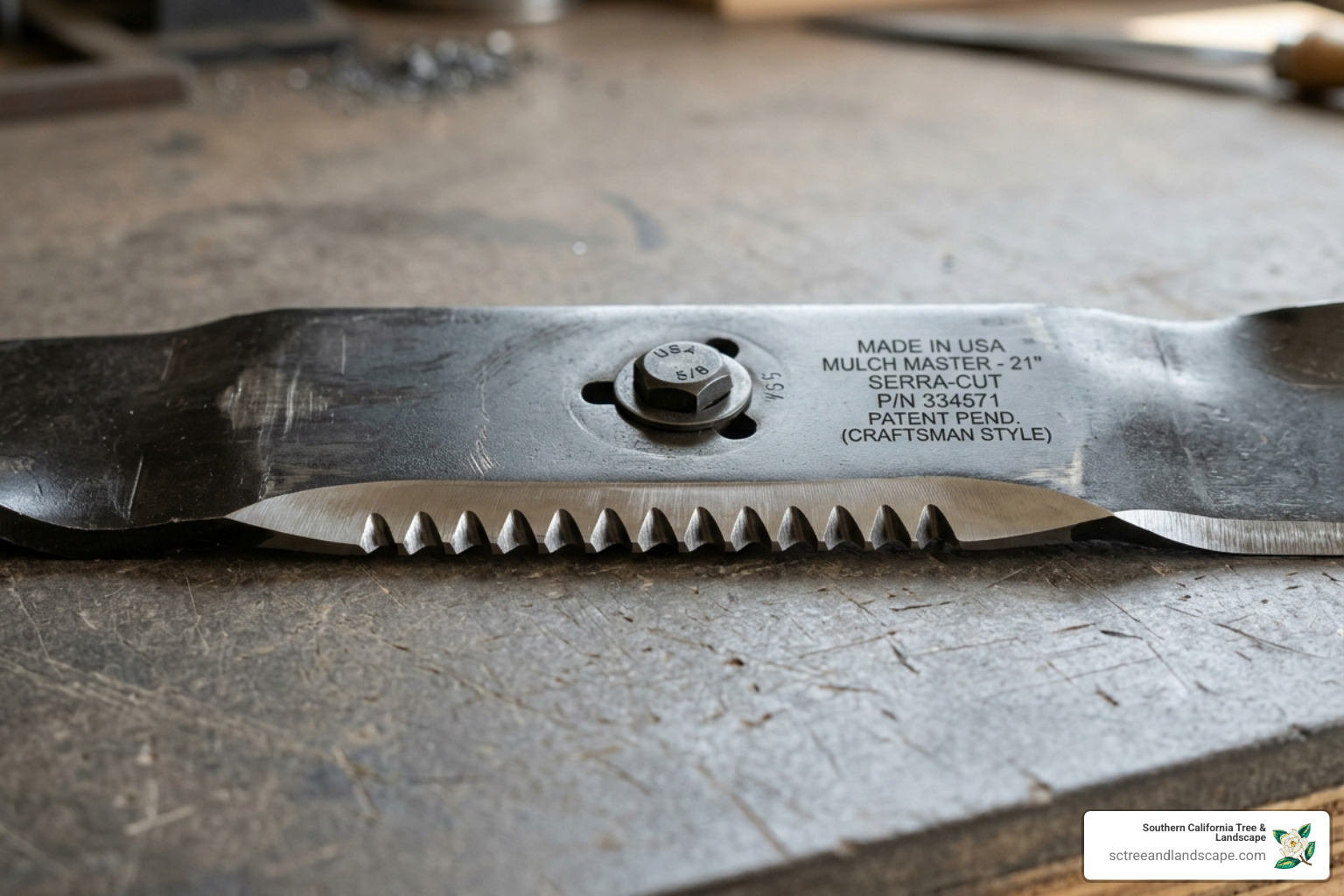
Imagine trying to cut a steak with a spoon. That is what a dull mower blade does to your grass. Instead of a clean slice, it tears the tissue, leaving jagged edges that turn brown and invite disease.
- The Pro Tip: Experts recommend sharpening mower blades after every 25 hours of use. For most homeowners, this means at least twice a season.
Grass Cycling: Free Fertilizer
Don’t bag those clippings! Practice “grass cycling” by leaving short clippings on the lawn.
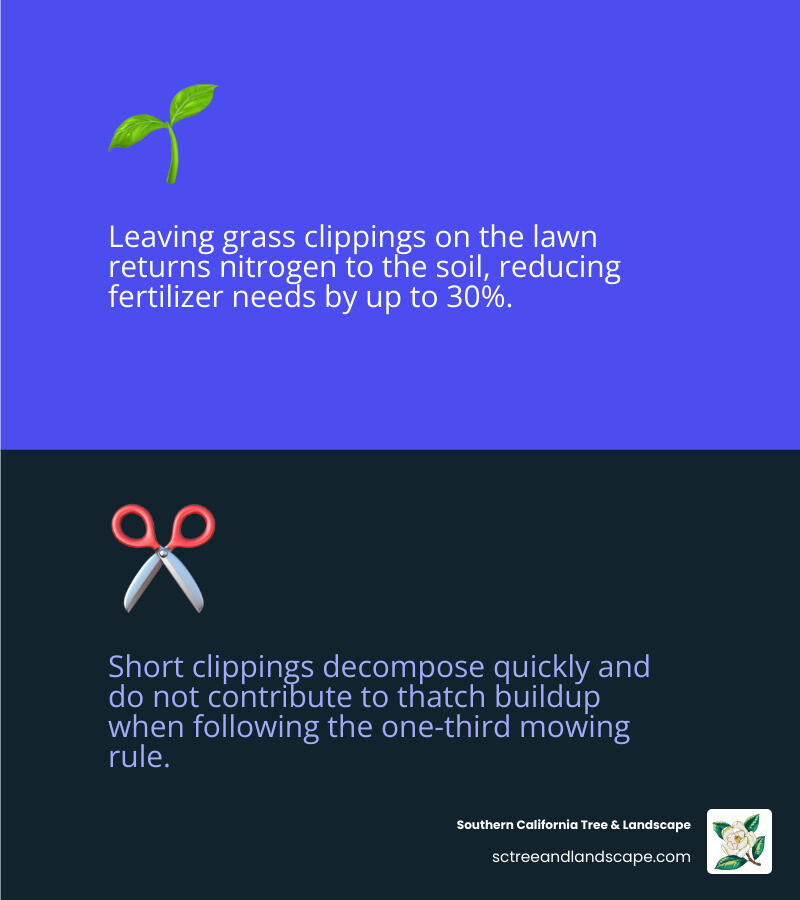
Research shows that leaving clippings on the lawn can reduce your fertilizer needs by up to 30%. It’s a sustainable way to return nitrogen to the soil. For more on this, check out research-based mowing practices.
Soil Health: Aeration, Dethatching, and Fertilization
If your lawn feels hard underfoot or water puddles on the surface, you likely have a compaction or thatch problem.
Core Aeration
Our Southern California clay soils compact easily under foot traffic. Core aeration involves pulling small “plugs” of soil out of the ground. This allows oxygen, water, and nutrients to reach the root zone.
- When to do it: Aerate when the grass is actively growing. For warm-season turf, this is late spring. For cool-season fescue, early fall is best.
Managing Thatch
Thatch is a layer of organic debris between the green grass and the soil surface. A little thatch (under 1/2 inch) is actually good—it acts like mulch. But once it exceeds that 1/2-inch threshold, it creates a waterproof barrier that suffocates your lawn. Using sustainable lawn care resources can help you determine the best dethatching schedule for your specific grass type.
Fertilization and Irrigation
Fertilizing without a plan is just guessing. Use your soil test results to choose an organic or slow-release fertilizer. In our area, we must be careful with phosphorus to avoid waterway pollution. We also recommend smart irrigation solutions to ensure that your water and nutrients aren’t just running off into the street.
Sustainable Irrigation and Weed Management
In April 2026, water conservation is more than a trend—it’s a necessity for every Southern California resident.
The 1-Inch Rule
Most lawns require about 1 inch of water per week. The best way to deliver this is through deep, infrequent watering. Instead of five minutes every day, try 20 minutes three times a week (depending on your soil and sprinkler output). This encourages roots to grow deep into the earth, making the lawn more drought-resilient.
Irrigation Optimization
A leaky valve or a misdirected head can waste hundreds of gallons. We specialize in irrigation repair and optimization to ensure every drop hits the target. You can find more water-saving strategies for home lawns through university extensions.
Weed Control: Prevention is Key
The best defense against weeds is a thick, healthy lawn. Weeds like crabgrass and nutsedge move in when the grass is thin or stressed.
- Pre-emergents: Apply these in late winter (February/March) to stop weed seeds from germinating.
- Organic Options: Corn gluten can act as a natural pre-emergent, though it takes a few years of consistent use to reach full strength.
- Hand-Pulling: For small gardens, nothing beats the old-fashioned way. Just make sure to get the root!
Frequently Asked Questions about Yard Maintenance
How often should I sharpen my mower blades?
As mentioned, the 25-hour rule is standard. However, if you hit a rock or notice the tips of your grass looking frayed and white after a mow, sharpen them immediately. Sharp blades ensure clean cuts, which prevent disease and help your mower last longer.
When is the best time to aerate a SoCal lawn?
Timing is everything. You want to aerate right before the grass enters its peak growth phase so it can recover quickly. For Bermuda or St. Augustine, that’s late spring (May/June). For Fescue, aim for the fall (September/October). Check out these lawn renovation tips for more detail.
How much water does my lawn actually need per week?
One inch is the standard. However, during a scorching South Bay July, you might need a bit more. Always water in the early morning (before 8:00 AM) to reduce evaporation and prevent fungal growth that happens when grass stays wet overnight.
Conclusion
Taking care of your yard doesn’t have to be a source of stress. Whether you are focused on gardening and lawn care for your own enjoyment or to boost your property’s market value, the key is working with nature rather than against it.
At Southern California Tree & Landscape, we’ve been family-owned since 1991. We bring decades of experience and ISA-certified arborist expertise to every property we touch. From Covina to Torrance, we understand the local climate, the soil, and exactly what your landscape needs to thrive in our beautiful Southern California environment.
Ready to take the guesswork out of your yard? Schedule your professional landscape maintenance with us today and let our family take care of yours.