
Clean Vinyl Siding Without Wrecking It: What You Need to Know First
Pressure wash vinyl siding the right way, and your home can look brand new in just a few hours. Do it wrong, and you risk cracking panels, forcing water behind the siding, or voiding your warranty.
Here’s the quick answer for safe vinyl siding cleaning:
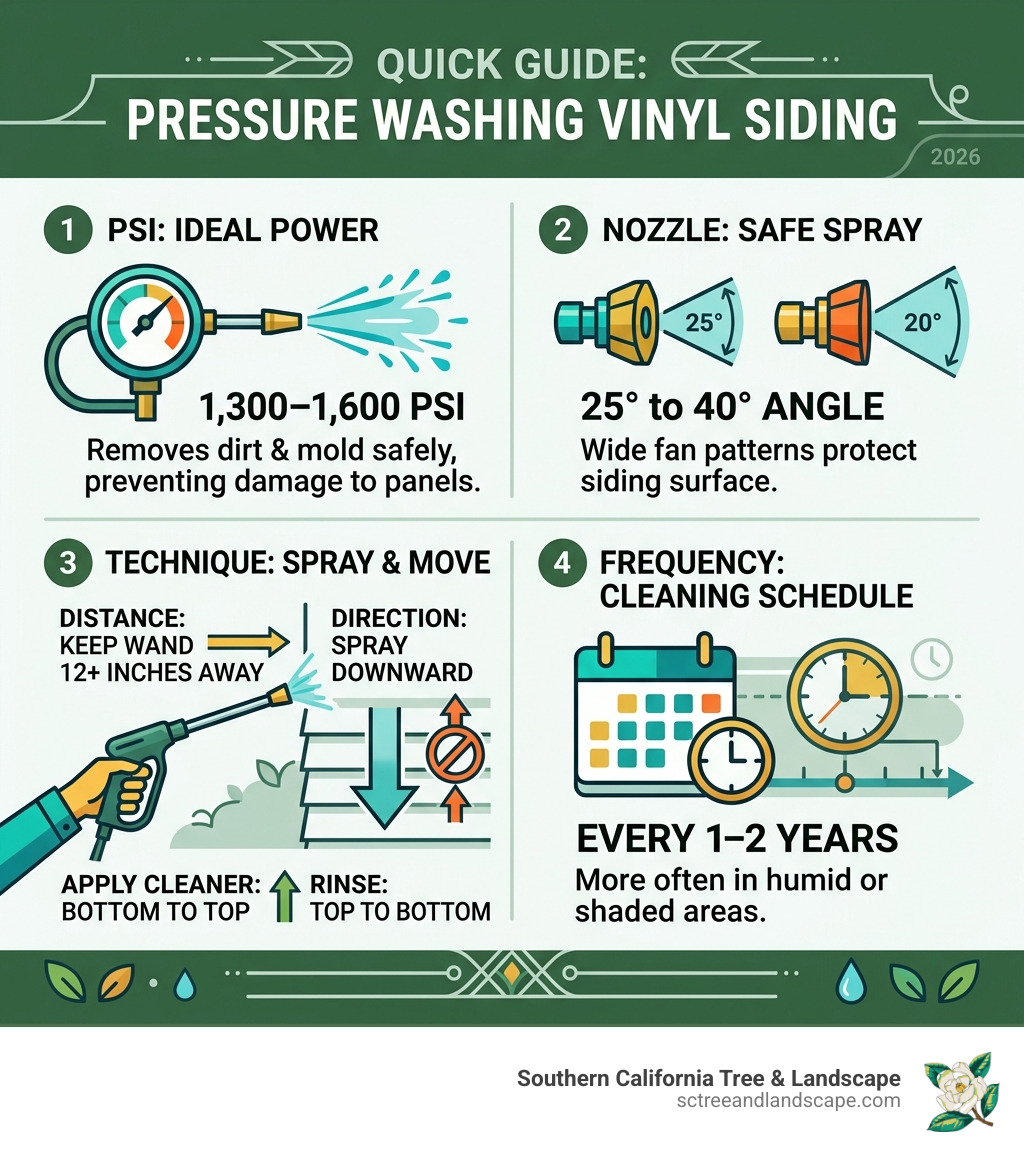
- Use 1,300–1,600 PSI — enough to remove dirt, mold, and algae without damaging panels
- Choose a 25° to 40° nozzle — wide angles protect the siding surface
- Keep the wand at least 12 inches away from the siding at all times
- Spray downward — never upward into panel seams or J-channels
- Apply cleaner bottom to top, then rinse top to bottom to prevent streaking
- Clean every 1–2 years — more often in humid or shaded areas
Southern California homes face their own challenges — UV exposure causes oxidation and chalky buildup on vinyl, while shaded north-facing walls are magnets for algae and mildew. Regular cleaning isn’t just about looks. It protects your investment and helps you catch hidden damage before it becomes expensive.
Whether you manage an HOA property or maintain your own home, this guide walks you through every step — safely and efficiently.
Is it Safe to Pressure Wash Vinyl Siding?
One of the most common questions we get at Southern California Tree & Landscape is whether you can actually use a power washer on vinyl without causing a disaster. The short answer is yes, but with a major asterisk. Vinyl is a durable material, but it is designed as a cladding, not a completely waterproof seal.
Vinyl siding panels overlap like shingles to shed water downward. When we use high-pressure water, we have to respect that design. If you blast water upward or at high pressure directly into the seams, you’re going to force moisture behind the panels. This can lead to trapped water, which eventually causes mold, mildew, and rot in your home’s wooden frame.
Furthermore, older vinyl can become brittle. As we move into April 2026, many homes in the South Bay and Covina areas have siding that has seen decades of intense California sun. This UV exposure leads to oxidation—that chalky white powder you might see when you rub your hand across the siding. Aggressive pressure washing can “etch” this oxidation unevenly, leaving your house looking tiger-striped.
Before you pull the trigger, check your siding warranty. Some manufacturers actually specify that high-pressure washing can void your protection. For a deeper dive into the safety protocols, check out this Can You Pressure Wash Vinyl Siding Safely? Guide to ensure you aren’t putting your home at risk.
Recommended PSI and Nozzle Settings to Pressure Wash Vinyl Siding
The “pressure” in pressure washing is where most DIYers go wrong. You aren’t trying to strip paint off a battleship; you’re trying to rinse away organic growth and dust.
For vinyl siding, we recommend staying within the 1,300 to 1,600 PSI range. While some gas-powered washers can reach 3,000 PSI, and heavy-duty vinyl can technically withstand it, there is almost no reason to go that high for a standard house wash. High pressure increases the risk of “driving” water into places it shouldn’t be.
The nozzle—or the “tip”—is just as important as the PSI.
- 40-Degree Nozzle (White Tip): This is your best friend. It provides a wide, gentle fan of water that covers more area with less focused force.
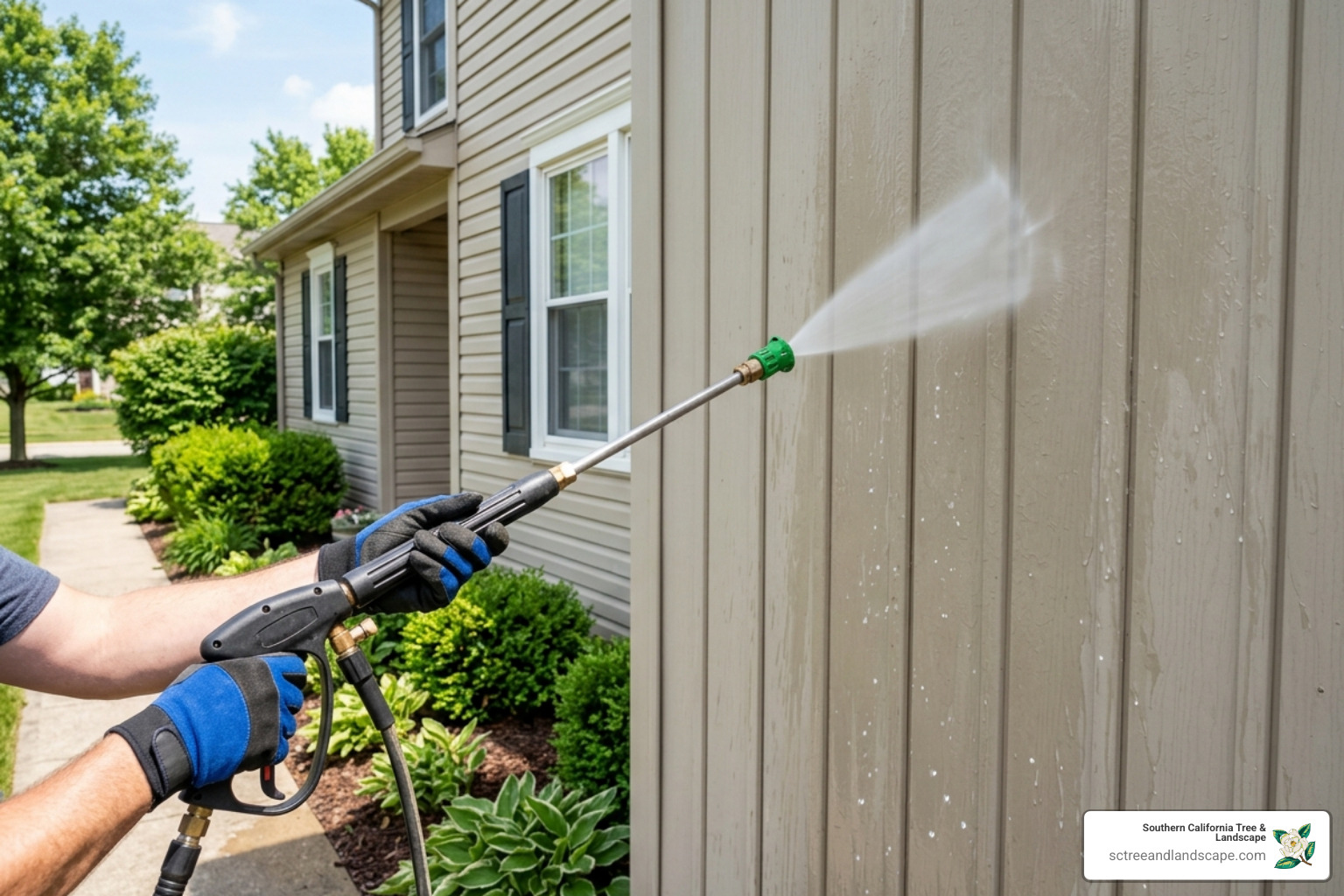
- 25-Degree Nozzle (Green Tip): Good for slightly more stubborn spots, but use it with caution and keep your distance.
- 0-Degree (Red) or 15-Degree (Yellow) Nozzles: Never use these on vinyl. A 0-degree nozzle is essentially a water laser that can cut right through a vinyl panel or shatter a window instantly.
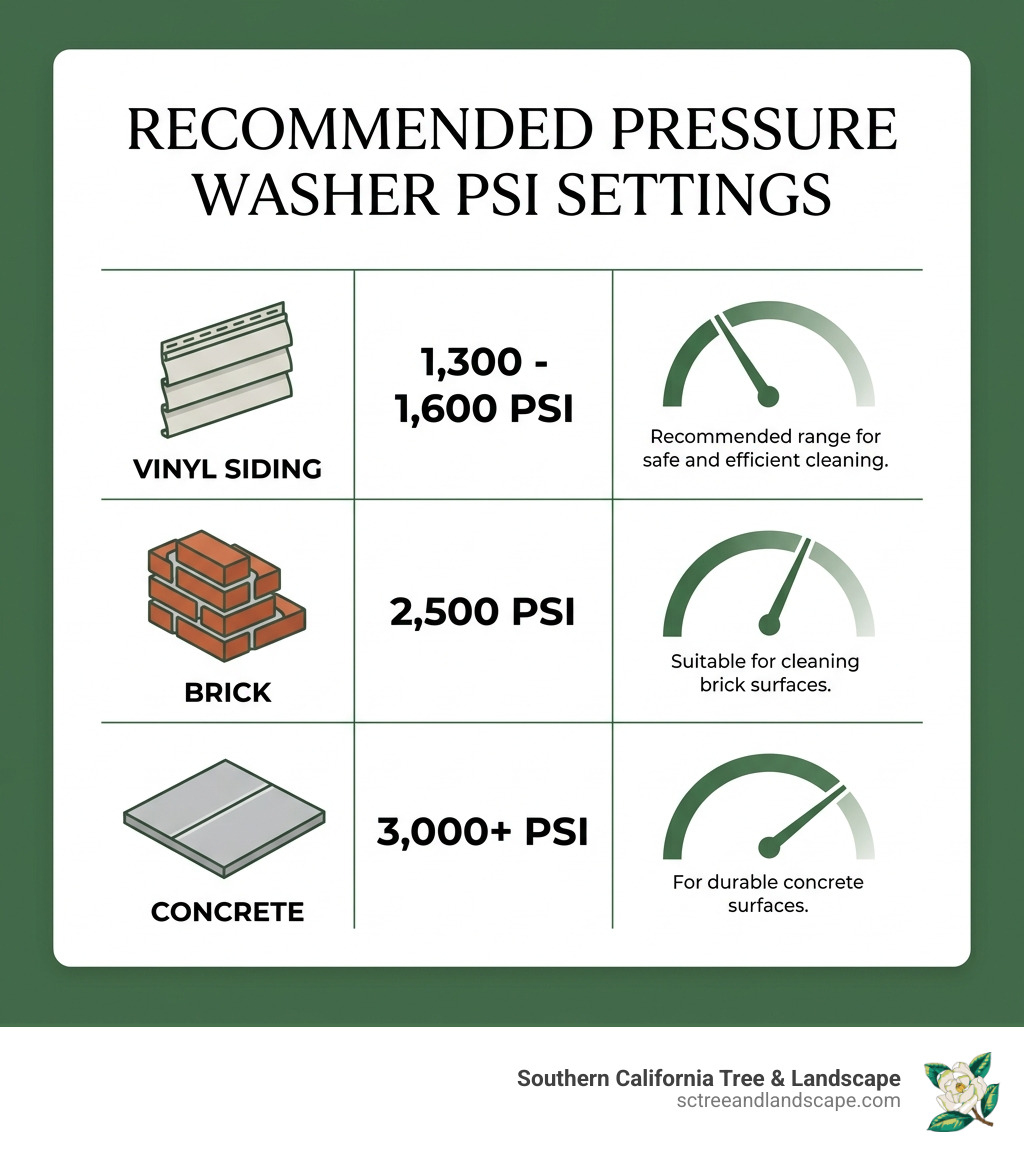
If you are using a gas-powered unit, you have more power than you need, so be sure to adjust the throttle or use the appropriate nozzle to keep the effective pressure low. Electric pressure washers are often perfect for vinyl siding because they naturally sit in that 1,300-2,000 PSI sweet spot.
Preparation and Safety Precautions
Preparation is 90% of a successful pressure washing job. Since we are a landscaping company, we have to emphasize: protect your plants! The cleaning solutions used to kill mildew on your siding can just as easily kill the prize-winning roses in your garden.
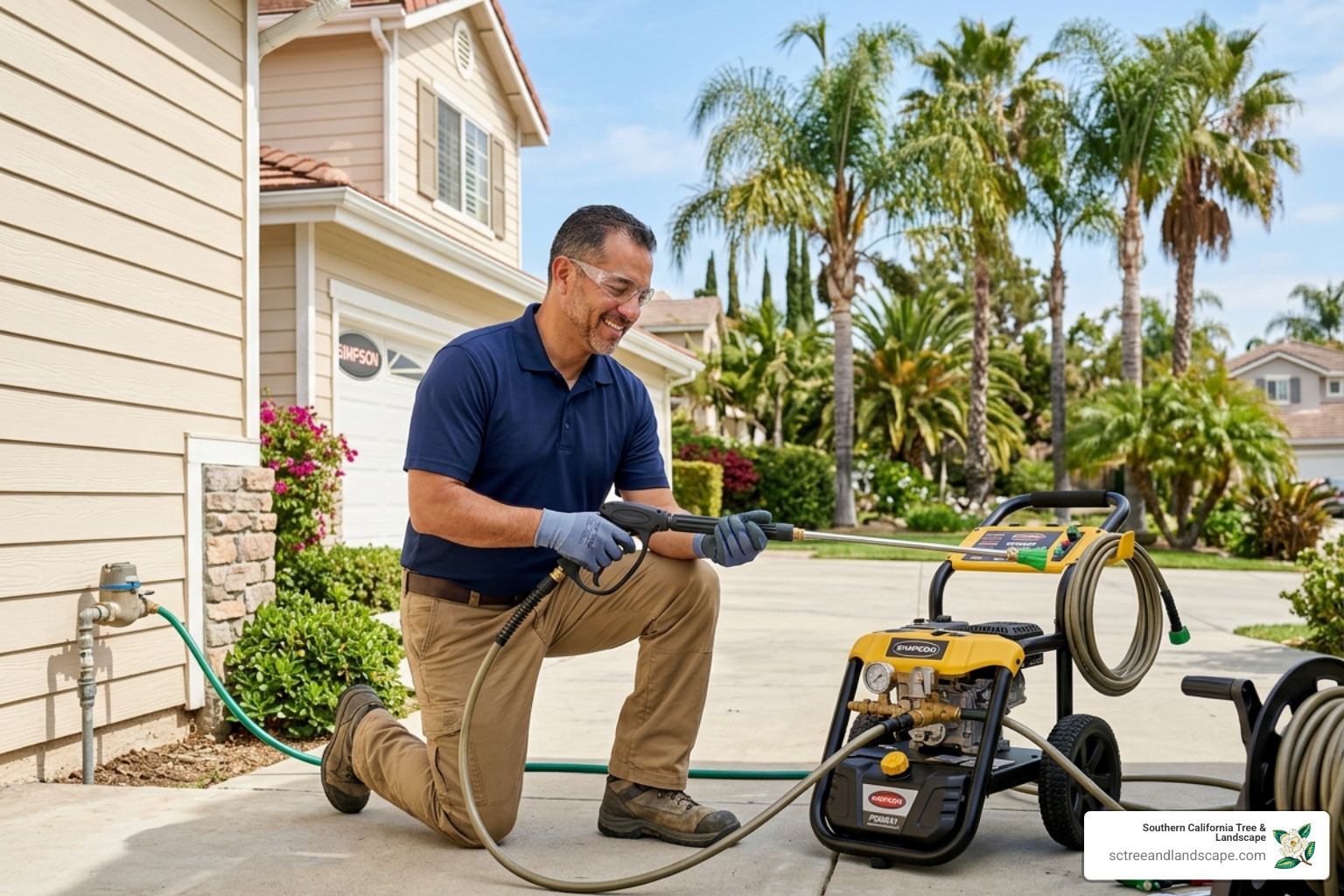
- Personal Protective Equipment (PPE): Never wash in flip-flops. The water stream can actually cut skin. Wear sturdy, closed-toe shoes, safety goggles (to protect against backsplash and chemicals), and gloves.
- Clear the Area: Move patio furniture, potted plants, and children’s toys at least 20 feet away from the house.
- Seal the House: Close all windows and doors tightly. Check for any gaps in window seals or old caulk that might let water in.
- Protect Electrics: Cover outdoor outlets, doorbells, and light fixtures with plastic bags and painter’s tape. Turn off the power to external outlets at the breaker if possible.
- Pre-Wet Landscaping: Before you start using any detergents, soak your grass, shrubs, and flowers with a garden hose. This dilutes any runoff that might hit the soil.
For more detailed prep tips, see this guide on How to Pressure Wash Vinyl Siding.
How to Prevent Water Intrusion Behind Siding Panels
As we mentioned, vinyl siding is “cladding.” It has weep holes on the bottom of the panels to allow condensation to escape. If you spray water upward, you are literally shooting water into the vents meant to keep the house dry.
To prevent water intrusion:
- Angle Downward: Always keep the wand pointed at a slight downward angle. Imagine the water is rain hitting the house; it should flow down the face of the siding.
- Respect J-Channels: These are the trim pieces around windows and doors. They are notorious for trapping water. Avoid spraying directly into these channels.
- Keep Your Distance: Maintain at least 12 to 18 inches of distance between the nozzle and the siding. This prevents the force of the water from “lifting” the overlapping panels.
Step-by-Step Instructions to Pressure Wash Vinyl Siding
Now that you’re prepped and geared up, it’s time to start. A typical power washing project for a standard home in Torrance or Harbor City takes about 2 to 4 hours.
Step 1: The Pre-Rinse
Start by rinsing the siding with plain water. This removes loose dust and cools the surface down so your cleaning solution doesn’t dry too quickly. In our Southern California heat, surfaces can get hot enough to “bake” the soap onto the vinyl, which creates nasty streaks.
Step 2: Apply Detergent (Bottom to Top)
This is the part that feels counterintuitive. You should apply your soap or cleaning solution starting from the bottom and working your way up. Why? Because if you start at the top, the soapy water will run down the dry siding below it, creating “clean streaks” that are nearly impossible to even out later. By soaping from the bottom up, you ensure the entire surface is evenly coated.
Step 3: Dwell Time
Let the solution sit on the siding for about 5 to 10 minutes. This is called “dwell time.” It allows the chemicals to break down the mold, algae, and grime. Do not let the soap dry. If it starts to dry, mist it lightly with water.
Step 4: Scrub Stubborn Spots
For areas with heavy algae (usually the north side of the house) or deep-set dirt, use a soft-bristle brush on an extension pole. A little manual agitation goes a long way and allows you to keep the water pressure low.
Step 5: Rinse (Top to Bottom)
Now, switch to your 40-degree nozzle and rinse from the top down. This ensures all the soap and loosened grime flow off the house completely. Use steady, overlapping horizontal strokes.
For a professional-level finish, you can follow the techniques outlined in How To Pressure Wash A House With Vinyl Siding Like A Pro.
Choosing the Best Cleaning Solutions to Pressure Wash Vinyl Siding
The “chemistry” of the wash is often more important than the pressure. You want a solution that kills organic growth without damaging the vinyl’s finish.
- The Bleach Mix: For heavy mold and mildew, a solution of 1 part bleach to 10 parts water is effective. However, bleach can be hard on landscaping and can fade certain siding colors if left too long.
- Oxygen-Based Cleaners: These are much safer for our Southern California gardens. They use sodium percarbonate to break down stains and are generally biodegradable.
- Vinegar Solution: For a mild, eco-friendly clean, a mix of 30% white vinegar and 70% water works surprisingly well on light dirt and some mold.
- Store-Bought House Washes: Products like Simple Green Oxy Solve are specifically formulated for pressure washers and are safe for vinyl.
Common Mistakes and Pro Tips for Multi-Story Homes
After decades of serving the South Bay and surrounding areas, we’ve seen it all. Here are the pitfalls to avoid:
- The Ladder Trap: Never, ever use a pressure washer while standing on a ladder. The “kickback” from the wand can easily throw you off balance. For two-story homes in Covina or Torrance, use an extension wand or a telescoping pole. These allow you to reach the second story while keeping your feet firmly on the ground.
- Upward Spraying: We can’t say it enough—spraying up forces water behind the siding. If you’re cleaning the second story, you still need to maintain a downward or perpendicular angle.
- The “Zebra Stripe” Gutter Problem: You might notice dark vertical stripes on your gutters. These are often caused by a chemical reaction between the asphalt in your shingles and the gutter paint. Standard pressure washing won’t remove these; they require a specific gutter cleaning solution and a soft brush.
- Ignoring the Wind: Always check the weather. If it’s a windy day in the South Bay, that spray (and the chemicals in it) is going to end up on your neighbor’s car or your own face.
Frequently Asked Questions about Pressure Washing Vinyl
How often should I pressure wash my siding?
In Southern California, we recommend a thorough wash every 1 to 2 years. If your home is in a particularly shaded area or near the coast where salt spray and humidity are higher, you might need an annual touch-up. Regular cleaning prevents the “permanent” staining that can happen when mold is left to bake in the sun for years.
Should I wash from the bottom up or top down?
Remember: Soap from the bottom up, rinse from the top down. This is the golden rule of pressure washing. It prevents sudsy streaks from drying on the “un-cleaned” portions of the siding.
When should I hire a professional instead of doing it yourself?
While DIY is great for a single-story home with light dirt, you should consider calling a pro if:
- You have a multi-story home and don’t have extension equipment.
- Your siding is heavily oxidized (chalky) and needs specialized restoration.
- You suspect there is already water damage or loose panels.
- You don’t want to risk the “learning curve” on an expensive home exterior.
Professionals often use a technique called soft washing, which uses high-volume, low-pressure water combined with stronger (but safe) cleaning solutions. This is the safest way to clean older or delicate siding.
Conclusion
Pressure washing your vinyl siding is one of the fastest ways to boost your curb appeal and protect your home’s value. By following these steps—using the right PSI, the correct nozzles, and a downward spray—you can achieve professional results without the professional price tag.
At Southern California Tree & Landscape, we’ve been family-owned since 1991, serving the South Bay, Torrance, and beyond. While we specialize in keeping your trees healthy (with our ISA-certified arborist) and your landscape beautiful, we know that a great yard looks even better against a clean house. Proper maintenance is about the “big picture”—from the tips of your trees to the siding on your home.
If you’re looking to upgrade your entire outdoor space, from irrigation repair to a complete landscape redesign, we’re here to help. More info about our services can be found on our website, where you can see how we help Southern California homeowners keep their properties in peak condition all year round.
Happy cleaning, and remember: keep that wand moving!